
• Menu
  • Skip to primary navigation
  • Skip to main content
  • Skip to primary sidebar

Country Life In BC Logo

The agricultural news source in British Columbia since 1915

  • Headlines
  • Calendar
  • Subscribe
  • Advertise
  • About
  • Archives
  • Contact
  • Search
  • Headlines
  • Calendar
  • Subscribe
  • Advertise
  • About
  • Archives
  • Contact
  • Search

Primary Sidebar

Originally published:

MAY 2019
Vol. 105 Issue 5

Subscribe Now!

Sign up for free weekly FARM NEWS UPDATES

Loading form…

Your information will not be
shared or sold ever

Stories In This Edition

Caribou recovery plan has ranchers worried

What on earth?

Opposition slams ALC bill

Sidebar: Protection & pushback

Global rhubarb glut hits home for BC growers

Editorial: Truth in labelling

Back Forty: So you don’t believe in climate change

Viewpoint: Don’t blame the cows for global warming

Ag council’s lobbying efforts produce results

Learning a new skill

Foundation’s nest egg for funding projects increases

Greenhouse growers see rebound in acreage

Province will hold the line on piece rates

New CEO aims to kindle team spirit at co-op

Shrinking hog industry faces disease threats

FIRB decision prompts rethink of pricing scheme

Beekeepers see potential in technology transfer

AgSafe markes quarter century

Raspberries hit hard by harsh February

Good deal

Blueberry growers anxious for new varieties

Biological controls for pests in demand

Sidebar: Pesticides in play

Growers urged to focus on fresh

Westgen celebrates 75 years of excellence

Top seller was no-show at Holstein sale

Spring show attracts exhibitors from Quebec

Cheesemakers unite to grow niche market

Range use permits under greater scrutiny

Sidebar: Range use plans go digital

Market Musings: Top bulls sell for top dollar at spring sales

Grapegrowers share sustainability objectives

Grape specialist honoured for dedication

Hazelnut production expands across BC

Sidebar: Pest pressures

Supporters take to AITC’s Sips & Sprouts

Research: Cultured meat fails to impress researchers

UAVs undergo testing for pesticide delivery

Sustainability goes beyond saving farmland

Father and daughter roll with the last of the steel wheels

Woodshed: Susan Henderson is warming to country life

Farm initiative puts heart back in agriculture

Wannabe: Farming is more than just a job

Surplus, cull fruit finds new purpose as tasty snacks

Jude’s Kitchen: Special food for special moms

More Headlines

Follow us on Facebook

Comments Box SVG iconsUsed for the like, share, comment, and reaction icons

10 hours ago

The Township of Langley Farm and Ranch Exhibition Society is hosting a public open house this evening to gather input on plans to transform the historic Belmont Farm into an agricultural exhibition, education and heritage hub. Farmers, ranchers, and community members are invited to share their feedback. The open house is at the George Preston Rec Centre, 6-8 pm.

Township of Langley Farm and Ranch Exhibition Society
#BCAg
... See MoreSee Less

The Township of Langley Farm and Ranch Exhibition Society is hosting a public open house this evening to gather input on plans to transform the historic Belmont Farm into an agricultural exhibition, education and heritage hub. Farmers, ranchers, and community members are invited to share their feedback. The open house is at the George Preston Rec Centre, 6-8 pm. 

Township of Langley Farm and Ranch Exhibition Society 
#BCAg
View Comments
  • Likes: 9
  • Shares: 0
  • Comments: 1

Comment on Facebook

Shucks, would have liked to attend but just seeing this now.

13 hours ago

The sold-out Southern Interior Horticulture show continues today. Education sessions range from rodent control to new tree fruit varieties, with the afternoon devoted to improving spraying techniques for orchardists and vineyard managers. When not listening to speakers, producers are checking the trade show.

#BCAg
... See MoreSee Less

The sold-out Southern Interior Horticulture show continues today. Education sessions range from rodent control to new tree fruit varieties, with the afternoon devoted to improving spraying techniques for orchardists and vineyard managers. When not listening to speakers, producers are checking the trade show.

#BCAg
View Comments
  • Likes: 8
  • Shares: 0
  • Comments: 0

Comment on Facebook

15 hours ago

The BC Poultry Association has lowered its avian flu biosecurity threat level from red to yellow, citing declining HPAI risk factors and fewer wild bird infections. Strong biosecurity practices helped BC limit cases this winter to 38 premises, down from 81 last year. For more, see today's Farm News Update from Country Life in #BCAg#BCAg ... See MoreSee Less

Link thumbnail

Poultry biosecurity notches down

www.countrylifeinbc.com

Declining risk factors for highly pathogenic avian influenza (HPAI) have prompted the BC Poultry Association to lower the industry’s biosecurity threat level from red to yellow. The decision…
View Comments
  • Likes: 11
  • Shares: 2
  • Comments: 1

Comment on Facebook

🐥💛

1 day ago

The application deadline for cost-shared funding through the Buy BC program is coming up on February 20. Up to $2 million through the Buy BC Partnership Program is available annually to BC producers and processors to support local marketing activities that increase consumer awareness of BC agriculture and BC food and beverages. For more information, visit buybcpartnershipprogram.ca/.

Buy BC

#BCAg
... See MoreSee Less

Link thumbnail

Home - Buy BC Partnership Program

buybcpartnershipprogram.ca

Buy BC Partnership Program Increase your visibility with Buy BC The Buy BC Partnership Program is a fundamental component of Buy BC that provides up to $2 million in cost-shared funding annually to lo...
View Comments
  • Likes: 3
  • Shares: 0
  • Comments: 0

Comment on Facebook

2 days ago

The Sik-E-Dakh (Glen Vowell) First Nation's Skeena Fresh hydroponic operation has doubled production capacity thanks to a $130,632 Northern Development Infrastructure Trust grant. Growing lettuce, kale, herbs and more in shipping containers, the operation uses 90% less water than traditional farming while providing 1,200 people with year-round access to fresh, locally grown greens. Their story is in the February edition of Country Life in BC, the agricultural news source for BC’s farmers and ranchers.

Northern Development Initiative Trust
#BCAg
... See MoreSee Less

The Sik-E-Dakh (Glen Vowell) First Nations Skeena Fresh hydroponic operation has doubled production capacity thanks to a $130,632 Northern Development Infrastructure Trust grant. Growing lettuce, kale, herbs and more in shipping containers, the operation uses 90% less water than traditional farming while providing 1,200 people with year-round access to fresh, locally grown greens. Their story is in the February edition of Country Life in BC, the agricultural news source for BC’s farmers and ranchers. 

Northern Development Initiative Trust 
#BCAg
View Comments
  • Likes: 15
  • Shares: 1
  • Comments: 0

Comment on Facebook

Subscribe | Advertise

The agricultural news source in British Columbia since 1915
  • Email
  • Facebook

Caribou recovery plan has ranchers worried

Plans set a precedent for conservation efforts

April 30, 2019 byTom Walker

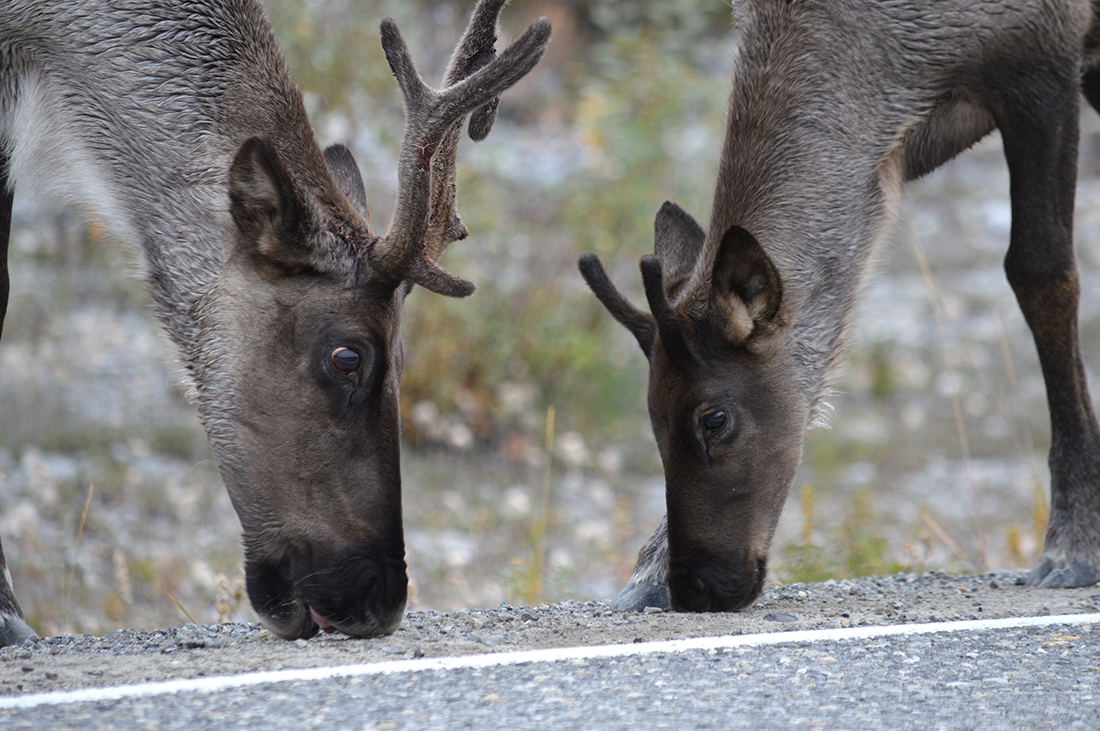
KAMLOOPS – The province has drafted two agreements to conserve the southern mountain caribou, and ranchers are among the groups weighing in as part of a public consultation that runs until May 31.

The agreements include one with the federal government outlining how it will work with the province to conserve the caribou, which range the length of BC from the US border north to the Yukon.

The second document is between Ottawa, the province and the West Moberly and Saulteau First Nations, and applies to the ‘central’ caribou population that range across an area between Mackenzie, Chetwynd and south past Tumbler Ridge through to the Alberta border. The partnership is a model for future management agreements in other areas of the province.

While the plans won’t have a direct impact on ranchers, the BC Cattlemen’s Association is concerned with the approach to protecting the caribou.

“The areas we use as range might border a bit on the caribou habitat, but it won’t be a huge issue yet,” says BCCA general manager Kevin Boon. “Where our concern comes now is how they are implementing a strategy for protecting them.”

Boon expects that when subsequent plans are developed for the Chilcotin, for example, there will be much more conflict with rangeland.

“The proposal that we have seen for the Peace is to completely close 300,000 hectares of land to all activity, whether it is ranching, forestry, oil and gas, or recreation,” says Boon. “We are okay with that, but only if they are doing something else to actively manage that habitat.”

Boon echoes the concerns of many critics who feel that simply setting aside habitat is not a robust strategy.

“Just making more land available does not mean they will survive better,” he says.

What conservation strategies need to address is what’s killing the caribou in the first place: wolves.

While the plans consider predator control as a strategy, Boon doesn’t think it will happen.

“Even though they have admitted that wolf predation is the biggest cause for the decline in the population, they will not be doing anything to manage predators because it is not socially acceptable,” he says.

An increase in the population of moose, deer and elk is one reason given for an increase in wolves. The province says it will manage these animals by managing habitat to make it less desireable for these species. Boon doesn’t believe reducing ungulates will be effective.

“They are willing to kill off the deer, elk and moose in those areas with the expectation that the wolves will leave,” Boon says. “Well, they’re not going to leave; they will just prey more heavily on the caribou that are left.”

This mirrors all wildlife management in the province, Boon maintains.

“They are willing to do very little to manage predators and as a result we are never going to see the rest of the wildlife become a healthy population,” he says. “If you don’t manage [the wolves], the others have no chance.”

Boon says that research in other jurisdictions shows that a combination of predator control and support for endangered populations delivers the best chance of survival.

“It doesn’t mean they wipe out [the predators]; it means they manage them,” he says. “But until they are willing to manage all of the species as one big picture, they are not going to be successful in managing any of them.”
 

Related Posts

You may be interested in these posts from the same category.

Previous Post: « Global rhubarb glut hits home for BC growers
Next Post: Children can keep helping »

Copyright © 2026 Country Life in BC · All Rights Reserved