
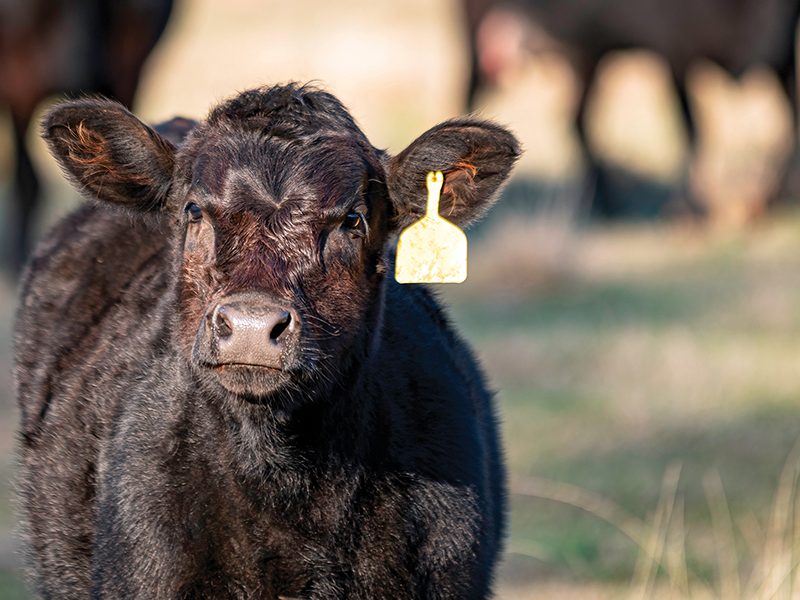
VANDERHOOF – Proposed amendments to the identification and traceability sections of the federal Health of Animals Regulations are receiving mixed responses from industry, who support the changes but say they come with added tagging and reporting requirements, and could compromise safety.
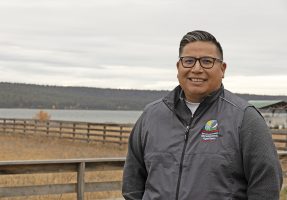
“[The Canadian Food Inspection Agency] is moving to make traceability requirements more robust with practical measures for disease tracking and we support that,” says Alex Kulchar, a rancher and backgrounding operator near Vanderhoof who chairs the BC Cattlemen’s Association’s beef production and innovation committee. “But some of the specific requirements are fairly substantial.
Overall, it appears CFIA is looking to develop a database that tracks animal movements without the involvement of producers, Kulchar says.
“It seems like CFIA is looking to put pins on a map to know the whereabouts of animals,” he says. “I believe that if they want to know where animals are, they are still going to have to talk to the producer.”
CFIA is proposing the amendments as part of its efforts to provide “accurate and up-to-date livestock identity, movement and location information” to address the risk and limit the impact of animal disease outbreaks, food safety incidents and natural disasters.
The proposed amendments seek to address gaps in the current livestock identification and traceability system. They call for including goats and cervids (deer) as species subject to traceability requirements; shortening the time period allowed to report an event to seven days from the current 30-60 days; adding a requirement to identify the location of sites where animals are located and requiring the reporting rather than simply the recording of domestic movements of livestock. (Animals moved within the same farm property or to and from a leased pasture where all animals are from the same farm are exempt.)
Premises Identification (PID) information and identification tags linked to that PID, are at the core of traceability protocols.
“Premises ID is pretty universal in commercial livestock operations,” says Kulchar.
Premises information, including the number of animals on farm, must be kept up to date.
“If I buy 50 calves for my backgrounding operation, I will be required to update my PID within seven days,” Kulchar explains.
Tracking livestock movements is a key to the new regulations. Animals that remain on a single farm their entire life don’t have to be tagged.
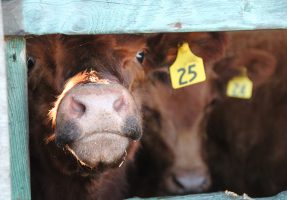
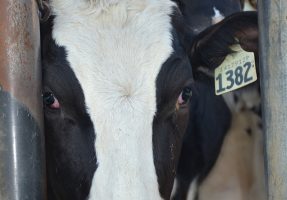
Tags are to be re-named “approved indicators.” They will be linked to the premises where the animals are located. When animals move off farm, tag numbers will be used to report the movement.
There is no requirement to report when animals leave a site. But before they leave the farm of origin, they must be tagged, and departure and arrival information including both PIDs, the number of animals, and the licence plate of the transport, must be delivered in a manifest to the arrival site within 24 hours of arrival and the arrival site must report that information within seven days.
The regulations also apply to animal carcasses.
Carcasses that move off-farm for disposal must be tagged and their movements reported. Tagged carcasses that are disposed of on-site must also be reported. (The disposal of animals that have remained on their farm of origin throughout their lives and lack tags is not reportable.)
There is a retagging requirement that cause some producers concern.
Any animal that loses its tag during transport must receive a new one at the destination site linked to the destination site’s PID.
Kulchar says that wouldn’t be a problem for him, as all of the animals he takes in for backgrounding are put through a squeeze, health-checked and vaccinated and can have a new tag attached at the time if needed.
However, if an animal loses a tag while on site, producers must apply a new tag and report the information within seven days.
“That seems like busy work,” says Kulchar, who feels it’s enough for animals to be tagged at departure from a site. “I will still be checking tags when the animals leave my ranch.”
On-farm tagging could be a problem for some small producers, says Merritt pork producer Julia Smith, who also serves as executive director of the Small-Scale Meat Producers Association. “I’m pretty good at pig wrestling and don’t mind doing it, but we have some 7,500 members who are mostly small operations. They don’t move their animals very often and may not have a lot of experience. I worry that someone will get hurt.”
BC ranch safety specialist Reg Steward, superintendent of field operations with AgSafe BC, also stresses the safety issues.
He describes his own experience taking three animals to an abattoir on a November morning, noticing a tag is missing and having to rope the animal in the dark, on an icy landing, in order to put on a missing tag.
“It’s always the ornery cow,” Steward recalls. “It’s not safe and it takes extra time and now you are worried that you’ll miss your booking time. You’ve got a 300 to 400 km drive to the abattoir, so you might speed.”
Stewart fully supports the traceability requirements, but says there is no sense in trading traceability for safety.
“A signed affidavit that this is an animal from your farm would accomplish the same thing, without putting extra stress on the farmer or the abattoir, who must report the animal’s arrival,” he says. “To put people at risk to accomplish what is doable by other safe and humane means borders on irresponsibility. As the goals of the regulations and requirements are easily met by a safer means, it seems ridiculous to insist on a method that can and does put the handlers at risk unnecessarily.”
CFIA notes that there are exceptions for animals that might cause serious injury and proposes that they be transported to an identification site for tagging.
“Having animals putting handlers and equipment in jeopardy isn’t worth the risk,” says BC Bison Association president Conrad Schiebel. “But we haven’t heard that a special site has been identified for BC.”
If animals need to be moved in an emergency, the requirements for tagging as they leave a site are waived.
“That’s pretty important if we have to evacuate animals in a wildfire emergency,” Kulchar says.
Kulchar adds that it is very important for individual livestock owners to make their voices heard before the June 16 deadline.
“Look up the regs to know what is coming and comment as to what their thoughts are,” he says. “And let your individual associations know as well. The more voices they can say that they represent, the more clout we will have.”
All content on this website is copyrighted, and cannot be republished or reproduced without permission.




 Task force presents blueprint for growth