
• Menu
  • Skip to primary navigation
  • Skip to main content
  • Skip to primary sidebar

Country Life In BC Logo

The agricultural news source in British Columbia since 1915

  • Headlines
  • Calendar
  • Subscribe
  • Advertise
  • About
  • Archives
  • Contact
  • Search
  • Headlines
  • Calendar
  • Subscribe
  • Advertise
  • About
  • Archives
  • Contact
  • Search

Primary Sidebar

Originally published:

DECEMBER 2021
Vol. 107 Issue 12

Subscribe Now!

Sign up for free weekly FARM NEWS UPDATES

Select list(s) to subscribe to


By submitting this form, you are consenting to receive marketing emails from: Country Life in BC. You can revoke your consent to receive emails at any time by using the SafeUnsubscribe® link, found at the bottom of every email. Emails are serviced by Constant Contact
Your information will not be
shared or sold ever

Stories In This Edition

Catastrophic flooding

Wash out

Editorial: Rebuilding food security

Back 40: A farmer’s journey doesn’t always pay for itself

Viewpoint:

Dairy industry takes swift action on animal abuse

Producers urged to make emergency plans

Province sets agenda for tree fruit future

Ag Briefs: Province moves to shut down mink farms

Ag Briefs: Interior Opportunities

Ag Briefs: BCAC meetings bear fruit

Ag Briefs: Trade focus

North Okanagan ranchers brief on key issues

Sidebar: Strong retail, disappointing feeder prices

Frustration over ‘timber-centric’ range bill

Livestock protection program up for review

Honey producers get technology transfer program

Chicken squadron

Quality over quantity for blueberry pollination

New slaughter regs helpful but not enough

Sidebar: Changes welcome

Sheep producers have tough year

The old heave-ho

Grant revives Pacific field corn trials

Cannabis grower eyes mushroom production

New poinsettia varieties trialed in Abbotsford

Nursery sales stay brisk through pandemic

Job satisfaction has deep roots

Newcomers revitalize Lake Country orchard

Cariboo research looks to extend growing season

Full circle operation upcycles food waste

BC company specializes in bio control

Farm Story: Idyllic worlds have very little idleness in them

Blueberry farming is stress-busting for new chair

Research: To till or not to till? That’s actually not the question

Christmas tree growers face a grim future

Woodshed: An awkward encounter; a clever diversion

A century of dairy farming in Pitt Meadows

Jude’s Kitchen: Celebrate! Celebrate

More Headlines

Follow us on Facebook

Comments Box SVG iconsUsed for the like, share, comment, and reaction icons

2 weeks ago

The Canadian Food Inspection Agency is preparing to implement changes to its livestock traceability rules that will include mandatory computer reporting within seven days on movement of animals for veterinary appointments, community pastures, exhibitions, carcass and on-farm disposal and the births and deaths of every animal on your farm. Writer Tom Walker first brought these changes to the attention of our readers back in June 2023. We've posted his story to our website:

www.countrylifeinbc.com/cfia-proposes-traceability-updat#BCAg#BCag
... See MoreSee Less

The Canadian Food Inspection Agency is preparing to implement changes to its livestock traceability rules that will include mandatory computer reporting within seven days on movement of animals for veterinary appointments, community pastures, exhibitions, carcass and on-farm disposal and the births and deaths of every animal on your farm. Writer Tom Walker first brought these changes to the attention of our readers back in June 2023. Weve posted his story to our website: 

https://www.countrylifeinbc.com/cfia-proposes-traceability-updates/

#BCag
View Comments
  • Likes: 11
  • Shares: 21
  • Comments: 15

Comment on Facebook

I love hpw the cow in the picture hasn't even got a RFID tag in it but I digress. We can not read the link, it says "we are not permitted to read drafts". Please post again with the correct link.

Dairy farmers having been doing this several years. The app we use has become quite simple to use

Including equine?

Premise ID was slowly rolled through the country, voluntary then mandatory. Transparency and 'Consultation' has been light. Those who tried to bring this for discussion a couple years ago, because of forseen overreach, were quite often labeled conspiracy theorists and that it wasnt meant to be so heavily regulated and controlled. Gardens and seeds will be next. "Invasive species" reporting, check out the plants medicinal properties. Read the BC intentions papers. The premise ID that already heavy regulated commodities have claims to be treated different in the intentions papers on page 8. www2.gov.bc.ca/assets/gov/farming-natural-resources-and-industry/agriculture-and-seafood/food-saf...

Says i am "not allowed to preview draft".

Also concerning is the part on compliance...they can 'stumble onto' any farm and if you're not complying there are consequences.

When the CFIA stumbles into the wrong place compliance will be met with civil engagement

Says I can't preview draft

This is government overreach - Do Not Comply!

Do not comply

Fu

As if the price of beef isn't bad enough for consumers,,,,,be prepared to be gouged some more now

Ridiculous!!

Let's hold up on the beef exports tell we can get our own house in order... we need to deregulated, cheapen up the supply chain back into a 5 buck a pound rage so the good people canada can eat healthy food.. fuck your bean diets, that's retarded

This, along with the majority of new legislation pertaining to any type of farm, is a blatant squeeze on any sort of small, alternative agricultural venture. I am a massive believer in working together and sharing resources and costs and solutions - do not get me wrong - but this and the water registration among others, is an overreach (at most generous) and an absolute killer to smaller, local initiatives that LITERALLY save lives during extreme events. There is ONE ROAD into and out of my community. We don’t need or want some sort of backlogged government response when shit goes sideways. We want the ability AND SUPPORT to provide for our communities without penalty when things go badly. We want to produce sustainability for our communities. We live here, we work here, we want to STAY HERE. Stop making it harder.

View more comments

3 weeks ago

BC's minimum piece rates for 15 hand-harvested crops increased 2.6% on December 31. Crops include peaches, apricots, brussels sprouts, daffodils, mushrooms, apples, beans, blueberries, cherries, grapes, pears, peas, prune plums, raspberries and strawberries. Farm-worker piece rates in BC were increased by 11.5% in January 2019 and 6.9% in December 2024. BC’s current minimum wage sits at $17.85 per hour.

#BCAg
... See MoreSee Less

BCs minimum piece rates for 15 hand-harvested crops increased 2.6% on December 31. Crops include peaches, apricots, brussels sprouts, daffodils, mushrooms, apples, beans, blueberries, cherries, grapes, pears, peas, prune plums, raspberries and strawberries. Farm-worker piece rates in BC were increased by 11.5% in January 2019 and 6.9% in December 2024. BC’s current minimum wage sits at $17.85 per hour. 

#BCAg
View Comments
  • Likes: 10
  • Shares: 0
  • Comments: 2

Comment on Facebook

I'm not sure what they're telling us. Did peace rates have to increase so that Farm workers could make minimum wage?

They deserve it, but the general public will be whining about increased prices in the stores. Will need to make more information average to the g.p.

3 weeks ago

... See MoreSee Less

View Comments
  • Likes: 14
  • Shares: 0
  • Comments: 1

Comment on Facebook

105 Mile Ranch

4 weeks ago

... See MoreSee Less

View Comments
  • Likes: 7
  • Shares: 0
  • Comments: 0

Comment on Facebook

1 month ago

Water volumes from the Nooksack River are at levels similar to 1990 and 2021, but the province says flows should peak at 10pm tonight. The shorter duration, as well as conditions in other watercourses within the watershed and performance of flood protection infrastructure should avoid a catastrophe on the scale of 2021. However, several landslides mean road closures have once again effectively isolated the Lower Mainland from the rest of the province.

#BCAg
... See MoreSee Less

Water volumes from the Nooksack River are at levels similar to 1990 and 2021, but the province says flows should peak at 10pm tonight. The shorter duration, as well as conditions in other watercourses within the watershed and performance of flood protection infrastructure should avoid a catastrophe on the scale of 2021. However, several landslides mean road closures have once again effectively isolated the Lower Mainland from the rest of the province.

#BCAg
View Comments
  • Likes: 9
  • Shares: 3
  • Comments: 1

Comment on Facebook

Family living in Sumas WA say it's very much like '21. They have the same amount of water in their house as last time.

Subscribe | Advertise

The agricultural news source in British Columbia since 1915
  • Email
  • Facebook

Christmas tree growers face a grim future

Climate change proving to be a Grinch

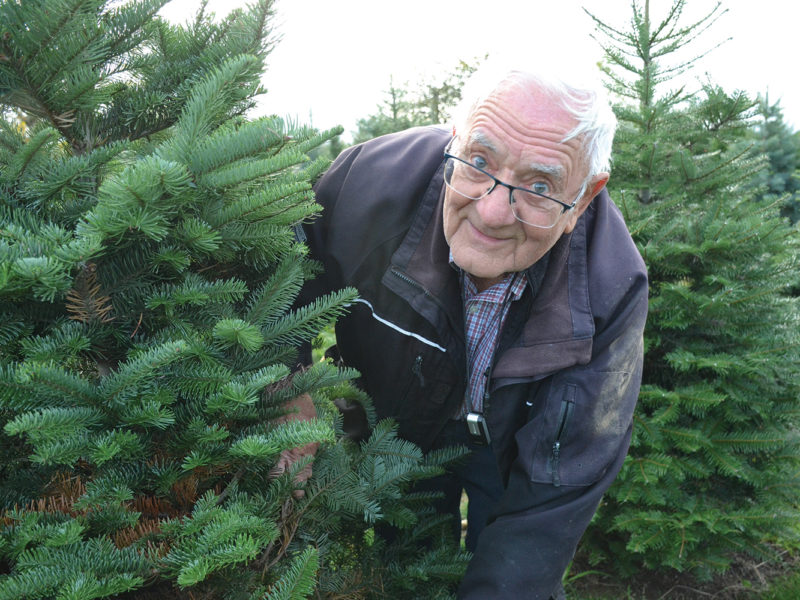
little pessimistic, I guess, but I can see the future of the Christmas trees declining over the next decade.” Art Loewen of Pine Meadows Tree Farms in Chilliwack has been growing Christmas trees since 1970. RONDA PAYNE

December 1, 2021 byRonda Payne

CHILLIWACK – BC residents should be able to find their annual Christmas tree this year, but the annual pilgrimage to the tree lot stands to become more challenging.

Art Loewen, founder of Pine Meadows Tree Farms in Chilliwack, is a past president of the Canadian Christmas Trees Association and has been growing trees since 1970. He’s one of nearly 400 Christmas tree growers in the province, down from more than 500 in 2011.

“We’re really hoping we’re going to have enough for anyone who needs a Christmas tree, but we’re cutting back on wholesale to do that,” he says of the lot at his farm. “We are holding back probably 1,000 from wholesale that will be sold here.”

Loewen’s son Tim now runs the family business, which is mostly in nursery trees, while Loewen remains very much involved with the Christmas tree side of things. He stays up to speed on what’s happening in the industry and despite his ingenuity and efforts, says the industry is in decline.

The unprecedented heat wave that rolled across the province this past June is one of a number of factors contributing to the woes.

“We’ll see next spring if they recover,” Loewen says. “Fortunately, we’ve been growing fewer and fewer Fraser firs over the years.”

Up to half the Fraser firs at Loewen’s farm were damaged by the heat, which exceeded 40°C. This compares to just 5% of other varieties, much of which was limited to the tips. Pruning removed minor damage for these varieties, but Loewen expects he’ll end up destroying about 10% of his younger Fraser firs, which suffered most. Many seedlings planted over the past two seasons died, however.

The losses will impact tree availability this year and into the future.

In Enderby, Bud Collis of Christmas Ranch Tree Farm experienced similar issues on his two-acre farm. He expects at least half of his Fraser firs will survive, but he was already low on trees. Strong demand last year cut into his plantings as families showed up to cut their own trees – one of the few allowed outings during the restrictions in place to curb COVID-19 last year.

“I think it was people wanting to get outside with their kids and came to the

u-cut,” he says. “A lot of trees were cut out of there last year.”

It left him short of stock going into this season, so a friend is supplying him with cut trees to supplement his own production. He will have a limited number of u-cut trees available as well as evergreen swags and handcrafted birch items.

“I’ve been selling Fraser fir for 20 years and never had a problem,” he says, blaming the heat for this year’s shortage.

Dry seasons

In Duncan, Robert Russell with Sahtlam Tree Farm says drought has been an increasing issue for both the hard-hit Fraser firs and other varieties.

“For the last four years, I’ve lost seedlings with the droughts that we’ve had,” he says. “So basically, I’ve always planted in the spring. But last year, I planted in the fall and even those trees that went through one of our coastal winters, even they succumbed to the long drought and the situation that occurred in late June.”

He says that Fraser firs about three years old and older were more likely to survive, but younger trees were significantly damaged. On the plus side, higher prices this year will offset the losses. According to Statistics Canada, the farmgate value of BC trees has quadrupled since 2016, and are now worth $13.4 million to growers.

Unfortunately, drought makes for a lower-quality tree.

“The people will be paying more for not quite as good of a product,” he says.

High land prices have made it difficult to attract new entrants as older farmers retire. Russell knows of at least two farms on Vancouver Island that have shut down or are about do so. Russell, now 83, plans to wind down his own wholesale business as a lifestyle choice and will focus exclusively on u-cut in a couple of years.

“The money in a Christmas tree is so low, the next generation isn’t continuing,” says Loewen. “The price of land in BC … is too high to make it worth your while.”

He says even cole crops are more valuable. His son is thinking about inter-planting garlic with young Christmas tree seedlings to increase the return from the land.

Loewen’s pessimism resonates with Russell, who says a combination of more severe weather and basic economics makes it tough for BC growers to continue, even with indigenous species like the Fraser fir.

“It’s going to be harder on the next generation or two to continue in the trees,” he says Russell. “I’m a little pessimistic, I guess, but I can see the future of the Christmas trees declining over the next decade.”
Related Posts

You may be interested in these posts from the same category.

Christmas trees in demand

Previous Post: « Catastrophic flooding
Next Post: Frustration over “timber-centric” range bill »

Copyright © 2026 Country Life in BC · All Rights Reserved