• Menu
  • Skip to primary navigation
  • Skip to main content
  • Skip to primary sidebar

Country Life In BC Logo

The agricultural news source in British Columbia since 1915

  • Headlines
  • Calendar
  • Subscribe
  • Advertise
  • About
  • Archives
  • Contact
  • Search
  • Headlines
  • Calendar
  • Subscribe
  • Advertise
  • About
  • Archives
  • Contact
  • Search

Primary Sidebar

Originally published:

December 2018
Vol. 104 Issue 12

Subscribe Now!

Sign up for free weekly FARM NEWS UPDATES

Select list(s) to subscribe to


By submitting this form, you are consenting to receive marketing emails from: Country Life in BC. You can revoke your consent to receive emails at any time by using the SafeUnsubscribe® link, found at the bottom of every email. Emails are serviced by Constant Contact
Your information will not be
shared or sold ever

Stories In This Edition

Province tightens rules in ALR

Farming isn’t what it used to be

Ag waste reg “nearly” ready

Sidebar: New commissioners

Proposed foreign worker registry raises concerns

Fall harvest

Editorial: ‘Tis the season

Back Forty: Time to address climate change head-on

Viewpoint: Ottawa needs to stop milking dairy sector

Sweet times for BC honey producers

Public trust key as grade designation clarified

Apiarists wary as new prescription rules kick in

Pipeline explosion creates uncertainty

Farmers, chefs cook up deals at networking event

Ag Briefs: Safe Food regs require producer registration

Ag Briefs: Reus receives recognition

Keeping the end in mind

Heppell’s Potato Corp

US milk offered for sale in Canada

Volatile blend price hitting home for dairy sector

Landowners see development as only solution

Good soil makes good drinks even better

DNA analysis opens doors in hop renaissance

Tour builds trust between foodies, farmers

New entrant egg producer has long-term goals

Farmers, ranchers grapple with climate change

Drought results in record low water flows

BC ranchers face mounting regulations

Seaweed finds a home on the range

Co-op model recommended for beef plant

Farm market banks on relationship-building

Tour showcases local farm entrepreneurs

Young farmers share experiences at Farm Fest

Research: The complexity of colours

Nutsedge demands strong, decisive response

Wool classifying can add value to sheep flocks

Print remains top media choice for producers

Sidebar: Canadians read more

Communication key to four-way success

Cannabis shows mainstream retail potential

Nurseries change up offerings to stay relevant

Irrigation protocols critical for greenhouses

Producers need to think like retailers

Organic farmer values food education

Wannabe: The greatest gift is friendship

Ag in the Classroom

Woodshed: A present for Deborah sparks inquisition

Jude’s Kitchen: Celebration food

More Headlines

Follow us on Facebook

Comments Box SVG iconsUsed for the like, share, comment, and reaction icons

7 days ago

... See MoreSee Less

View Comments
  • Likes: 4
  • Shares: 0
  • Comments: 0

Comment on Facebook

7 days ago

On the last day of the BC Organic Conference, Thursday, Molly Thurston of Pearl Agricultural Consulting helped growers learn how to manage bugs such as codling moth, wireworm, and rootworm in organic growing systems. Her talk alongside Renee Prasad included hands-on activities in which participants checked out various traps and examined pests under microscopes. Be sure to look for more upcoming ag events on our online calendar at www.countrylifeinbc.com/calendar/

#BCAg
... See MoreSee Less

On the last day of the BC Organic Conference, Thursday, Molly Thurston of Pearl Agricultural Consulting helped growers learn how to manage bugs such as codling moth, wireworm, and rootworm in organic growing systems. Her talk alongside Renee Prasad included hands-on activities in which participants checked out various traps and examined pests under microscopes. Be sure to look for more upcoming ag events on our online calendar at www.countrylifeinbc.com/calendar/

#BCAg
View Comments
  • Likes: 15
  • Shares: 0
  • Comments: 0

Comment on Facebook

1 week ago

Well-known organic farmer and podcaster Jordan Marr gets interviewed by Country Life in BC’s own columnist and potato mavin Anna Helmer during the opening session of the BC Organic Conference at Harrison Hot Springs yesterday. Sessions run today (Wednesday) and Thursday and include organic and regenerative growing practices and expanding and advocating for the organic sector, all under the background of the newly launched Organic BC banner.

#BCAg
... See MoreSee Less

Well-known organic farmer and podcaster Jordan Marr gets interviewed by Country Life in BC’s own columnist and potato mavin Anna Helmer during the opening session of the BC Organic Conference at Harrison Hot Springs yesterday. Sessions run today (Wednesday) and Thursday and include organic and regenerative growing practices and expanding and advocating for the organic sector, all under the background of the newly launched Organic BC banner.

#BCAg
View Comments
  • Likes: 37
  • Shares: 2
  • Comments: 1

Comment on Facebook

Interested in finding out more about this

3 weeks ago

Today, we remember those who sacrificed their lives or their well-being for our freedom. Lest we forget. ... See MoreSee Less

Today, we remember those who sacrificed their lives or their well-being for our freedom. Lest we forget.
View Comments
  • Likes: 8
  • Shares: 0
  • Comments: 0

Comment on Facebook

1 month ago

FarmFolk CItyFolk is hosting its biennial BC Seed Gathering in Harrison Hot Springs November 27 and 28. Farmers, gardeners and seed advocates are invited to learn more about seed through topics like growing perennial vegetables for seed, advances in seed breeding for crop resilience, seed production as a whole and much more. David Catzel, BC Seed Security program manager with FF/CF will talk about how the Citizen Seed Trail program is helping advance seed development in BC. Expect newcomers, experts and seed-curious individuals to talk about how seed saving is a necessity for food security. ... See MoreSee Less

Link thumbnail

BC Seed Gathering - FarmFolk CityFolk

farmfolkcityfolk.ca

Save the date for our upcoming 2023 BC Seed Gathering happening this November 3rd and 4th at the Richmond Kwantlen Polytechnic University campus.
View Comments
  • Likes: 1
  • Shares: 0
  • Comments: 0

Comment on Facebook

Subscribe | Advertise

The agricultural news source in British Columbia since 1915
  • Email
  • Facebook

Drought results in record low water flows

Hay production greatly reduced across BC’s Northwest, Central Interior

November 28, 2018 byTom Walker

VANDERHOOF – Producers in the Northwest and Central Interior of BC hope snowfall this winter will help recharge local aquifers.

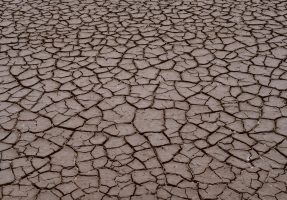
While most regions are recovering from the extremely dry conditions of early October, the improvement comes after surface water dropped to some of the lowest levels in living memory.

“Stream levels were at near-historic lows,” Ministry of Forest, Lands and Natural Resource Operations staff told Country Life in BC. FLNRORD has been formally tracking and documenting drought levels only since 2010 but hydrometric records on some streams go back 90 years.

“These records indicate that there have been similarly dry periods in the past, though not commonly,” says FLNRORD.

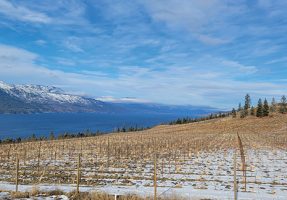
Snowpack levels last winter were particularly low in the Peace, Skeena-Nass and Stikine. A high-pressure ridge starting in April set the tone for a warm and dry summer.

“Precipitation levels were well below normal, thus creating the drought conditions we are currently observing,” says FLNRORD.

Indeed, Prince George recorded just 2 mm of rain in August, while Smithers had none at all.

Two producers who have been in the Central Interior for 25 years agree that conditions are the driest they’ve ever seen.

“These were the poorest growing conditions I have ever experienced,” says Martin Ruiter, who raises cattle and hay near Vanderhoof.

Les Yates, who with his wife Chris farms 250 kilometres to the west outside of Telkwa, agreed.

“The Bulkley River is at record lows and that’s an indication of the poor groundwater situation,” he says.

A creek running through the Yates’ property went dry this year towards the end of August, something that isn’t unusual. However, a pond the Yates use as backup was also exceptionally low.

“What was really strange is that when the creek started running again after a bit of rain in the third week of September, it ran past our house and about 200 metres downstream it simply disappeared underground,” Yates says. “The water flow did not continue on. My neighbour downstream said that the water did not show up in his part of the creek.”

Yates is concerned that groundwater levels have gotten unusually low.

“If this hot and dry weather is going to be more of the norm, ranchers are going to have to look at ways to capture surface water in the spring,” he says.

“My dry land hay was a disaster this year,” says Ruiter. “We had a hard frost down to -5, -6 right at the end of May, beginning of June, and it really never recovered. It probably would have come back if we had had good moisture but it was dry and stressed.”

Ruiter has about 550 acres of hay under pivot which gave a good crop. He has water rights to the Nechako River, and while it was low, he says he is not concerned that his irrigation would be restricted in a drought situation.

“The water flows are controlled by the Kenney dam to ensure adequate water for fish stocks so there is always enough water for irrigation,” he explains.

But his range lands did not fare as well.

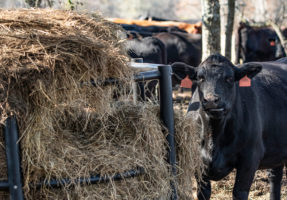
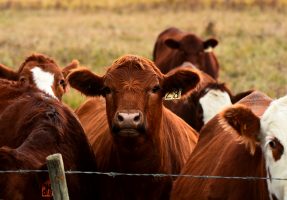
“We had to bring the cows off pasture early because it was in such poor shape,” says Ruiter.

BC Ministry of Agriculture staff confirm that fall grazing is limited, with poor regrowth conditions due to the lack of moisture. Production Insurance is receiving notification of losses in the range of 20% to 45%.

“With the decrease in grazing and increased cost of feed, there is pressure on the need to use winter feed supplies,” the ministry says.

“I’m sold out of hay,” says Ruiter. “I’m getting six to 10 phone calls a day as well as enquiries on the Internet. There is definitely a shortage of the high-quality horse hay that I produce.”

To meet demand in the northwest, hay is being sourced from the Peace River region.

Rains that started in mid September have continued through the fall, with Prince George receiving 88 mm by mid November.

“It’s that transition season when everything is a mess,” says Ruiter. “But we really won’t know how things have recharged until next spring.”
 

Related Posts

You may be interested in these posts from the same category.

Cattle

Regions selected for livestock tax deferral

A dry season continues

Snowpack sends mixed signals

Senate flood report released

Dry fall, wet winter ahead

Drought fears washed away

Ranchers face rangeland losses

Wildfire state of emergency ends

Province announces wildfire recovery funds

Farmers take issue with water restrictions

Province pledges emergency funding

Drought puts focus on livestock nutrition

Previous Post: « Tour builds trust between foodies, farmers
Next Post: Farm market banks on relationship-building »

Copyright © 2025 Country Life in BC · All Rights Reserved