• Menu
  • Skip to primary navigation
  • Skip to main content
  • Skip to primary sidebar

Country Life In BC Logo

The agricultural news source in British Columbia since 1915

  • Headlines
  • Calendar
  • Subscribe
  • Advertise
  • About
  • Archives
  • Contact
  • Search
  • Headlines
  • Calendar
  • Subscribe
  • Advertise
  • About
  • Archives
  • Contact
  • Search

Primary Sidebar

Originally published:

October 2018
Vol. 104 Issue 10

Subscribe Now!

Sign up for free weekly FARM NEWS UPDATES

Select list(s) to subscribe to


By submitting this form, you are consenting to receive marketing emails from: Country Life in BC. You can revoke your consent to receive emails at any time by using the SafeUnsubscribe® link, found at the bottom of every email. Emails are serviced by Constant Contact
Your information will not be
shared or sold ever

Stories In This Edition

Sheep thrills

Farm employers on edge

Right-to-farm case upheld

Snow puts the brakes on Peace grain harvest

Editorial: The hands that feed us

Back Forty: Saving farmland fruitless without water

Op Ed: US could learn a thing (or two) from Canada

Piece-rate study sets stage for payday changes

Photo: Day at the Farm

Berry growers report decent growing season

FIRB posed to set live BC chicken prices – again

BCYAF grants support key 4-H initiatives

Cherry growers hit hardest by wildfire smoke

Ag Briefs: Winner

Ag Briefs: Right to Farm Act review cancelled

Local governments can’t undermine ALR rules

Winfield grower has ambitious cannabis plans

Province funds land-matching program

BC Fresh expands to meet national demand

Challenging year fails to daunt new producer

Corn trials focus on lower heat units for BC

When the right thing turns out to be wrong

Wildfires prompt local response planning

Mixer-feeder offers all-in-one feeding option

Non-traditional forage mixtures promising

Small farmers network targets knowledge gap

Hazelnut renewal enters second phase

Research: Scratch that itch

Partners announced for farmers’ market trail

FV land limitations means higher density

Fair lives up to its farm roots

Pumpkin growers use crop to reach out to public

Wannabe Farmer: The usual gives plenty of cause for thanks

Woodshed: Wishful thinking as Caribbean holiday nears

Jude’s Kitchen: Fall heralds heartier meals, yummy appies


More Headlines

Follow us on Facebook

Comments Box SVG iconsUsed for the like, share, comment, and reaction icons

2 hours ago

... See MoreSee Less

View Comments
  • Likes: 5
  • Shares: 0
  • Comments: 0

Comment on Facebook

1 day ago

Four 4-H members were walking the Islands Ag Show Friday sharing leftover flower lollipops to exhibitors. The colourful pops were prizes for those who guessed answers based on the 4-H project boards on display at the show. Left to right, Talia Prenger, Kate Barter, Ella Prenger and Emma Barter of Parksville and Qualicum thought making lollipops into flowers "was really cute," says Kate. The Islands Ag Show wraps up today at 2 pm at the Cowichan Exhibition Centre. Stop by our booth and say hi to Ronda, Bob and Ann!

#BCAg
... See MoreSee Less

Four 4-H members were walking the Islands Ag Show Friday sharing leftover flower lollipops to exhibitors. The colourful pops were prizes for those who guessed answers based on the 4-H project boards on display at the show. Left to right, Talia Prenger, Kate Barter, Ella Prenger and Emma Barter of Parksville and Qualicum thought making lollipops into flowers was really cute, says Kate. The Islands Ag Show wraps up today at 2 pm at the Cowichan Exhibition Centre. Stop by our booth and say hi to Ronda, Bob and Ann! 

#BCAg
View Comments
  • Likes: 23
  • Shares: 4
  • Comments: 0

Comment on Facebook

3 weeks ago

The Canadian Food Inspection Agency is preparing to implement changes to its livestock traceability rules that will include mandatory computer reporting within seven days on movement of animals for veterinary appointments, community pastures, exhibitions, carcass and on-farm disposal and the births and deaths of every animal on your farm. Writer Tom Walker first brought these changes to the attention of our readers back in June 2023. We've posted his story to our website:

www.countrylifeinbc.com/cfia-proposes-traceability-updat#BCAg#BCag
... See MoreSee Less

The Canadian Food Inspection Agency is preparing to implement changes to its livestock traceability rules that will include mandatory computer reporting within seven days on movement of animals for veterinary appointments, community pastures, exhibitions, carcass and on-farm disposal and the births and deaths of every animal on your farm. Writer Tom Walker first brought these changes to the attention of our readers back in June 2023. Weve posted his story to our website: 

https://www.countrylifeinbc.com/cfia-proposes-traceability-updates/

#BCag
View Comments
  • Likes: 11
  • Shares: 21
  • Comments: 15

Comment on Facebook

I love hpw the cow in the picture hasn't even got a RFID tag in it but I digress. We can not read the link, it says "we are not permitted to read drafts". Please post again with the correct link.

Dairy farmers having been doing this several years. The app we use has become quite simple to use

Including equine?

Premise ID was slowly rolled through the country, voluntary then mandatory. Transparency and 'Consultation' has been light. Those who tried to bring this for discussion a couple years ago, because of forseen overreach, were quite often labeled conspiracy theorists and that it wasnt meant to be so heavily regulated and controlled. Gardens and seeds will be next. "Invasive species" reporting, check out the plants medicinal properties. Read the BC intentions papers. The premise ID that already heavy regulated commodities have claims to be treated different in the intentions papers on page 8. www2.gov.bc.ca/assets/gov/farming-natural-resources-and-industry/agriculture-and-seafood/food-saf...

Says i am "not allowed to preview draft".

Also concerning is the part on compliance...they can 'stumble onto' any farm and if you're not complying there are consequences.

When the CFIA stumbles into the wrong place compliance will be met with civil engagement

Says I can't preview draft

This is government overreach - Do Not Comply!

Do not comply

Fu

As if the price of beef isn't bad enough for consumers,,,,,be prepared to be gouged some more now

Ridiculous!!

Let's hold up on the beef exports tell we can get our own house in order... we need to deregulated, cheapen up the supply chain back into a 5 buck a pound rage so the good people canada can eat healthy food.. fuck your bean diets, that's retarded

This, along with the majority of new legislation pertaining to any type of farm, is a blatant squeeze on any sort of small, alternative agricultural venture. I am a massive believer in working together and sharing resources and costs and solutions - do not get me wrong - but this and the water registration among others, is an overreach (at most generous) and an absolute killer to smaller, local initiatives that LITERALLY save lives during extreme events. There is ONE ROAD into and out of my community. We don’t need or want some sort of backlogged government response when shit goes sideways. We want the ability AND SUPPORT to provide for our communities without penalty when things go badly. We want to produce sustainability for our communities. We live here, we work here, we want to STAY HERE. Stop making it harder.

View more comments

4 weeks ago

BC's minimum piece rates for 15 hand-harvested crops increased 2.6% on December 31. Crops include peaches, apricots, brussels sprouts, daffodils, mushrooms, apples, beans, blueberries, cherries, grapes, pears, peas, prune plums, raspberries and strawberries. Farm-worker piece rates in BC were increased by 11.5% in January 2019 and 6.9% in December 2024. BC’s current minimum wage sits at $17.85 per hour.

#BCAg
... See MoreSee Less

BCs minimum piece rates for 15 hand-harvested crops increased 2.6% on December 31. Crops include peaches, apricots, brussels sprouts, daffodils, mushrooms, apples, beans, blueberries, cherries, grapes, pears, peas, prune plums, raspberries and strawberries. Farm-worker piece rates in BC were increased by 11.5% in January 2019 and 6.9% in December 2024. BC’s current minimum wage sits at $17.85 per hour. 

#BCAg
View Comments
  • Likes: 9
  • Shares: 0
  • Comments: 2

Comment on Facebook

I'm not sure what they're telling us. Did peace rates have to increase so that Farm workers could make minimum wage?

They deserve it, but the general public will be whining about increased prices in the stores. Will need to make more information average to the g.p.

1 month ago

... See MoreSee Less

View Comments
  • Likes: 14
  • Shares: 0
  • Comments: 1

Comment on Facebook

105 Mile Ranch

Subscribe | Advertise

The agricultural news source in British Columbia since 1915
  • Email
  • Facebook

Farm employers on edge

Changes to foreign worker program creating uncertainty

October 2, 2018 byPeter Mitham

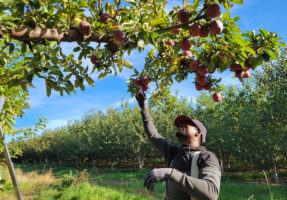
ABBOTSFORD – Another round of changes to the Seasonal Agricultural Worker Program has farm employers on edge after the hassles of obtaining workers for the 2018 season.

Come 2019, workers from Mexico will have to provide biometric identification prior to arrival while employers face new housing standards against a backdrop of an ongoing review of the standards themselves.

The concern was palpable at an all-day workshop the BC Agriculture Council organized in Abbotsford on September 21 to help growers understand what lies ahead. Biometrics and housing dominated the concerns expressed by the approximately 50 growers and 30 government and farm sector representatives in the room.

“God help us with the biometrics,” quipped Hugo Velázquez Vázquez, co-ordinator of the SAWP program at Mexico’s consulate in Vancouver, towards the end of the day, having previously congratulated growers on surviving a season that saw 5,777 workers from Mexico arrive in BC despite processing delays that left many applications unfilled.

Alarm bells regarding Canada’s plans to collect biometric data have been going off since July, when growers were still grappling with the lack of workers needed for this year’s harvest.

Approximately 24,000 workers will have to be processed and the information is good for 10 years. While a commitment exists to ensure a processing capacity of 1,000 people a week, up from an original estimate of 250, the work will still take nearly half a year. It will also mean a second trip to Mexico City for participants, which could cost them hundreds of dollars. There’s a fear some workers may say it’s not worth the expense.

However, workers approved for SAWP by December 31 won’t have to provide biometric data, so long as they arrive within six months of approval.

Service Canada began accepting applications on August 10. BCAC advises growers to submit completed applications by November 7. Growers have been told it could take six months from application to a worker’s arrival. Approximately eight applications had been received as of last month’s meeting, and at least one grower had already received an approval. Once an application arrives in Mexico, it can take 144 days before a worker lands in Canada.

Mexico is a particular problem because of systemic issues related to how applications are processed. A worker’s name may be typed five times prior to arriving in Canada, for example, because Canada’s confidentiality protocols require documents to be faxed or snail-mailed rather than submitted electronically. Re-typing increases the risk of misspellings and delays.

This isn’t the case with workers from Jamaica, which has collected biometric data since 2013 and after an initial hiccup has eliminated delays. Processing now takes about two months. Jamaica sent nearly 1,400 workers to BC this year, and the number is growing.

Under the table

Reports this summer that an increasing number of foreign nationals with tourist visas were working on BC farms for cash is heightening concerns regarding access to foreign workers. BCAC could not give examples, but it issued a stern warning to members that such practices could jeopardize existing labour programs, including the agriculture stream of the temporary foreign worker (TFW) program as well as work provisions of visas for youth exchange participants.

Those programs are already coming under provincial scrutiny. The province has announced plans to establish a registry of foreign workers as part of a $3 million overhaul of how employment standards are managed and enforced.

BC labour minister Harry Bains was not available for interviews, but ministry staff confirmed that SAWP workers would be included in the registry. The registry will facilitate government audits of workplaces where employees may be ignorant of their rights or subject to abuse.

“The goal is to strengthen protections for these vulnerable workers,” Bains’ staff told Country Life in BC.

Mexico removed 260 workers over safety and rights violations last year, and at least 125 this year. The latest incident regarded a farm that was paying workers a piece rate rather than the hourly wage stipulated by the program.

Glen Lucas, assistant general manager of the BCAC-owned Western Agriculture Labour Initiative, says any registry should incorporate the one that exists for SAWP workers. Rather than duplicating SAWP’s registry, BCAC would like to see government channel agriculture’s portion of the new registry’s costs into SAWP education, such as last month’s workshop.

A key area for education is bullying and harassment.

Consular staff have been asking to see farms’ bullying and harassment policies in personnel manuals, something required since 2013 but seldom requested prior to 2018. Vázquez said it would be a key priority in 2019, as housing issues are resolved and harassment becomes responsible for a greater proportion of worker removals.

Paul Bergin, a prevention officer with WorkSafeBC, told growers a bullying and harassment policy must be part of staff manuals. This must be in the workers’ language, and signed along with the employment contract. However, agriculture accounts for a small fraction of the 1,100 complaints WorkSafeBC has investigated over the past five years.

Housing standards continue to evolve and a new standard isn’t likely to be ready until sometime in 2019. However, growers’ primary concern last month was with the furnishings required, from mattress types to appliances.

Growers were reminded that housing must be exclusively for workers and be equipped with a stationary stovetop or standard range and oven, as well as washing machines and dryers.

A fire safety plan is also a must.

A fire in Abbotsford this spring that displaced dozens of foreign workers was a wake-up call. Vázquez told growers that if someone dies in a blaze and appropriate fire detection and suppression systems weren’t in place, it could jeopardize SAWP altogether.

BCAC is working with the provincial fire commissionaire to develop a uniform standard for worker housing, as standards currently vary by municipality.


Related Posts

You may be interested in these posts from the same category.

Province defrays COVID-19 costs

Rules for young workers

Fruit growers seek workers

BCAC shifts to advocacy

BC minimum wage increases

Flight ban strands workers

Don Dahr

Farm injury rate falls

Foreign worker vaccination prioritized

Growers anxious about labour

New year, new openness

SAWP requirements waived

Ottawa announces new rules for foreign workers

Previous Post: « FIRB poised to set live BC chicken prices – again
Next Post: Cherry growers hit hardest by wildfire smoke »

Copyright © 2026 Country Life in BC · All Rights Reserved