• Menu
  • Skip to primary navigation
  • Skip to main content
  • Skip to primary sidebar

Country Life In BC Logo

The agricultural news source in British Columbia since 1915

  • Headlines
  • Calendar
  • Subscribe
  • Advertise
  • About
  • Archives
  • Contact
  • Search
  • Headlines
  • Calendar
  • Subscribe
  • Advertise
  • About
  • Archives
  • Contact
  • Search

Primary Sidebar

Originally published:

MAY 2021
Vol. 107 Issue 5

Subscribe Now!

Sign up for free weekly FARM NEWS UPDATES

Loading form…

Your information will not be
shared or sold ever

Stories In This Edition

Water licence angst

Green gold

Pandemic puts pinch on finances

Province to lift restrictions on second homes

Editorial: On the level

Back 40: Asian giant hornets aren’t welcome here

OpEd: Proposed meat regs a step in the right direction

Province plans pilot for new drought ratings

Sidebar: Universal

High snowpack limits drought

Jack Frost nips potential for huge cherry crop

Ag Briefs: Dog attacks put sheep producers on alert

Ag Briefs: Poultry scholarship established

Ag Briefs: BC Tree Fruits extends CEO contract

Letters: Build soil with carbon tax

Funding revived for local gov’t agriculture plans

Sidebar: Mission expands definition of accessory use agriculture

Record funding flowed through IAFBC last year

Lotsa tomatoes

AgSafe embraces new governance structure at AGM

ALR exclusion fails to win ag committee support

BC dairy industry sees steady demand

Dairy producers work to resolve quality issues

Tree fruit consultations off to flying start

Canada holds off Asian giant hornet restructions

Strawberry groewrs eye new varieties

Funding stopped up for raspberry replant

Beekeepers welcome technology transfer program

Island couple step up to revive local abattoir

Tech crucial to speed variety development

Research: Urban farms can contribute to food security

Building soil structure with organic compost

Locally grown asparagus fills a niche market

BC propagator awarded research grant

Understanding the methodology to farm financing

Seed bank continues legacy of seed-savers

New owners to extend Woodside Farm’s legacy

Ruckle Farm looks toward the future

Farm Story: Spring deliveries inspire the urge to get farming

Farmer-chef connections still paying off

Woodshed: Henderson between a rock and a hard place

Pandemic forces BC agricultural fairs to adapt

Jude’s Kitchen: Herbs & sprouts

More Headlines

Follow us on Facebook

Comments Box SVG iconsUsed for the like, share, comment, and reaction icons

6 days ago

A BC Forest Practices Board investigation has found overgrazing has damaged grasslands in the Coutlee Range Unit near Merritt — and the range-use plan meant to prevent it was unenforceable. With complaints about overgrazing on the rise and grasslands covering just 1% of BC's land mass, the findings raise fresh questions about how the province manages one of its most vulnerable — and valuable — food-producing ecosyste#BCAg#BCAg ... See MoreSee Less

Link thumbnail

Board finds overgrazing rules unenforceable unmeasurable

www.countrylifeinbc.com

MERRITT – A BC Forest Practices Board investigation has found instances of non-compliance related to overgrazing have damaged open grasslands in the Mine pasture, part of the Coutlee Range Unit near...
View Comments
  • Likes: 6
  • Shares: 6
  • Comments: 6

Comment on Facebook

Several ranchers in recent years have gone into temporary non use on that range , so that means the grass should grow. But drought conditions/lack of rain and snow don’t allow that to happen . Dried up springs , creeks waterholes in various pastures add to over grazing where there is water , as livestock and everything else stay close to the water source . So even though less cattle are on it , over grazing appears. There is a large volume of horses on it 365 days/year which is wrong ! They pull grass right out of the ground when it’s just trying to grow ,, opens the door for weeds to grow in. That don’t help it. Aging infrastructure ( fences) laying on the ground, pipe line building , ( lack of commitment to fence maintenance) amongst all users contributes also to over grazing. Recreational atv users leaving gates open between pastures allows livestock to go back or ahead in pastures also expidites over grazing. Logging ( bcts) has no problem laying out cut locks on both sides of a fence , then it gets smashed down during logging and they don’t take responsibility to stand it back up or clean the cattle gaurds out when they are done , that happened 4 years ago on pasture 5 up there . I bet it is still not fixed . There are lots of contributing factors to the problem.

Tragedy of the commons.

I looked through the report. I saw nothing about the effects of noxious weeds on productive grasslands. This particular area is vulnerable because of the Ministry’a efforts to diversify the use of the Grasslands.

This pasture is under tremendous pressure not only from cattle but from irresponsible local residents who treat it as a landfill dumping all manner of household debris here. And don't even get me started on the mud bogging and camping in sensitive riparian areas. The feral horses are in this pasture 365 days a year just hammering it. Would sure be nice to see some enforcement action on people who are intentionally ripping up the grasslands and riparian areas. Cattle could be a valuable resource for rebuilding soils and native grasses in this area with the help of electric fencing and/or e-collars. The humans will be harder to manage.

The Forest and Range Practices Act was written by lawyers for global forest licencee shareholders. Results-based = unenforceable.

Also, can we talk about the impact of a pipeline being built through the middle of this field for multiple years?

View more comments

1 week ago

East Kootenay rancher Randy Reay is digging a new well after two natural water sources dried up on his Crown tenures. A new Living Lakes Canada assessment found 15% of mapped aquifers in the region are high-priority for monitoring, yet 80% of those go unmonitored. With over 48% of BC's provincial observation wells reporting below-normal groundwater levels, ranchers and researchers are sounding the alarm on water security. The story is in our March edition, and we've posted it to our website thi#BCAgk.

#BCAg
... See MoreSee Less

Link thumbnail

Water woes: groundwater under pressure across BC

www.countrylifeinbc.com

JAFFRAY – As a young boy growing up in the Kootenay-Boundary region, Randy Reay never expected to run out of water. But this year, in mid-February, his fields are bare. There is no snow halfway up t...
View Comments
  • Likes: 8
  • Shares: 7
  • Comments: 1

Comment on Facebook

Jaffrey is in the east Kootenays not kooteney boundary

2 weeks ago

BC farmers are bracing for prolonged higher input costs as war in the Middle East drives up fuel and fertilizer prices. Nitrogen fertilizer costs were already climbing before the Iran conflict began, with prices still roughly 60% above pre-pandemic levels. Farm Credit Canada warns that unlike 2022, strong commodity prices may not offset rising costs this time. Local suppliers expect supply challenges and further price increases ahead.

#BCAg
... See MoreSee Less

Link thumbnail

Fertilizer prices on the rise

www.countrylifeinbc.com

War in the Middle East has delivered a generational shock to energy prices, meaning BC farmers can expect a prolonged period of higher costs not just for fuel but also for fertilizer.
View Comments
  • Likes: 2
  • Shares: 1
  • Comments: 0

Comment on Facebook

2 weeks ago

... See MoreSee Less

View Comments
  • Likes: 1
  • Shares: 0
  • Comments: 0

Comment on Facebook

2 weeks ago

Cameron Stockdale is the new executive director of provincial farm safety organization AgSafeBC. Find out more in this week's Farm News Update from Country Life in B#BCAg#BCAg ... See MoreSee Less

Link thumbnail

New leadership at AgSafe BC

www.countrylifeinbc.com

Cameron Stockdale is the new executive director of provincial farm safety organization AgSafeBC, succeeding Wendy Bennett. Bennett left AgSafeBC in September 2025, following 12 years with the…
View Comments
  • Likes: 5
  • Shares: 1
  • Comments: 0

Comment on Facebook

Subscribe | Advertise

The agricultural news source in British Columbia since 1915
  • Email
  • Facebook

Farmer-chef connections still paying off

Postponed during the pandemic, producers are still reaping benefits

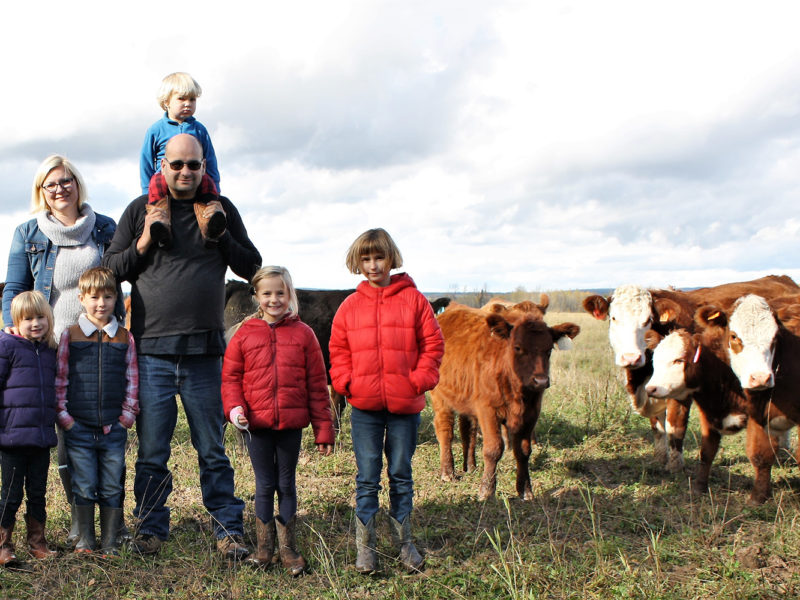
Matt L’Heureux and his family raise and sell organic beef from 1,200 acres that make up Aurora View Farms in Prince George. He’s one of several livestock producers who credit the BC agriculture ministry’s Every Chef Needs a Farmer event with helping them expand their sales networks. SUBMITTED

May 1, 2021 byKate Ayers

FORT STEELE – The province’s showcase of local food producers has been on hold during the pandemic, but the first two Every Chef Needs a Farmer, Every Farmer Needs a Chef events continue to repay attendees.

Held in 2018 and 2019, the conferences attracted a total of 500 farmers, chefs and food service professionals from across the province to Vancouver for presentations, panel discussions and networking, including Tyler and Sacha McNaughton of Cutter Ranch in Fort Steele.

The couple chose to focus on direct-to-consumer sales because it was a way to ensure the quality of the product reaching consumers, and consumer connections with ranching.

“We wanted to have an outdoor-based operation … to start this first-generation farm business and get consumers back in contact with producers and know how their food is produced,” says Sacha.

In the beginning, the McNaughtons had a simple marketing strategy – leave no stone unturned. They reached out to friends, family and their direct network to generate sales. But they now supply restaurants and niche grocery stores with their products, too.

“We took the small-scale model and built it into something that has scalability and can service more consumers on a year-round basis,” says Sacha.

“As we built up the sheep, beef and pork herds, we could start servicing larger customers. … It’s old-time selling. You knock on doors, make calls and network however you can,” says Tyler.

They continue to develop new markets. Every Chef Needs a Farmer helps facilitate this process by bringing members of the entire food supply chain together. Attending the 2019 event helped the McNaughtons make valuable connections.

“We had never experienced a tradeshow like that before, with buyers and sellers in one room. We have been to industrial events that were … targeted towards higher-level industry (stakeholders) and we didn’t really fit in,” says Tyler.

Every Chef Needs a Farmer was welcoming and applicable to their business.

“We need more (collaboration of stakeholders) in this province. You get a great sense of satisfaction from growing your own products, but you also need a platform to sell them on and the industry to back them up,” Tyler explains. “To have that event for our industry, in concert with the larger-scale industry events, it is the perfect complement to further food production in this province.”

Worthwhile networking

Matt L’Heureux of Aurora View Farms Ltd. in Prince George, agrees that local support and networking are impactful.

He and his family manage 1,200 acres of certified organic land and sell organic beef. In 2018, Matt and his wife Liz gathered ideas from Every Chef Needs a Farmer and made business connections. The following year, the couple presented on the success of those connections.

As a farmer, building relationships with restaurant owners for meat sales is challenging because chefs want one cut, L’Heureux says.

“That is a hard go for us,” he says. “(But) I think people are a bit more concerned about the food supply chain since the pandemic started and there definitely is a push to eat locally. Buy BC and Every Chef Needs a Farmer help promote that (movement).”

While last year’s event was cancelled due to COVID-19 safety protocols, an event this year is possible.

“We won’t be hosting an in-person ECNF event but are currently looking into how we could host a similar and perhaps smaller event virtually,” says Andrea Hoerger, senior manager of domestic market development with the  BC Ministry of Agriculture, Food and Fisheries.

The province is also planning its annual Buy BC: Eat Drink Local campaign this summer in partnership with the BC Restaurant and Food Services Association.

Related Posts

You may be interested in these posts from the same category.

Female ranchers excited for mentorship opportunities

Beef export markets grow

Ranchers watching bluetongue outbreak

Drought puts focus on livestock nutrition

Beef impact bumps up

Canada at “negligible risk” for BSE

Producers beef up support for Island cattle

Buy BC program delivers

Strong fundamentals for beef market

Province updates watering intentions

Province boosts online funding

Cattle industry seeks cash

Previous Post: « Canada holds off Asian giant hornet restrictions
Next Post: Building soil structure with organic compost »

Copyright © 2026 Country Life in BC · All Rights Reserved