• Menu
  • Skip to primary navigation
  • Skip to main content
  • Skip to primary sidebar

Country Life In BC Logo

The agricultural news source in British Columbia since 1915

  • Headlines
  • Calendar
  • Subscribe
  • Advertise
  • About
  • Archives
  • Contact
  • Search
  • Headlines
  • Calendar
  • Subscribe
  • Advertise
  • About
  • Archives
  • Contact
  • Search

Primary Sidebar

Originally published:

November 2017
Vol. 103 Issue 11

Subscribe Now!

Sign up for free weekly FARM NEWS UPDATES

Select list(s) to subscribe to


By submitting this form, you are consenting to receive marketing emails from: Country Life in BC. You can revoke your consent to receive emails at any time by using the SafeUnsubscribe® link, found at the bottom of every email. Emails are serviced by Constant Contact
Your information will not be
shared or sold ever

Stories In This Edition

Horse Power

Buy BC rollout in works

Hullcar report delayed

Breaking new ground

Perfecting the straight and narrow

Editorial: A new deal

The good, the bad, the disturbing: climate change Blueberry growers must rise above the competition

Vitala Foods cracks open free range egg market

Regulating the range

Winner! Winner

Sentence loosened for dairy worker

Farmers must take lead in building public trust

Food system confidence growing but costs still bite

Foodlands Trust initiative moves forward

Cost of record wildfires continues to rise

New range, new challenge

Peace grain yeilds good but drying needed

New hire for research

BC Tree Fruits singled out for excellence

Land commision to allow breweries on farmland

Greens seek limits on foreign ownership

Salmon farms work towards sustainability

Fruit growers stepping up replant lobby

Arctic apples make official debut

3 million pounds!

Cannabis hopes more than a pipe dream

More government regulation needed

Hop farm burns but demand fuels hope

Predators, politicians worry sheep producers

Mother Nature to blame for late cranberries

Hard work pays off for family business

Research breeds better bees for Vancouver Island

Persistence is the key to success: innovation

What investors want

Penicillium is an insidious Blue Meany for fruit growers

Collaboration key to extension programming

BC sheep breeders honoured with GenOvis awards

Good breeding, feeding are keys to strong replacement ewes

Next Generation

Strong appetite for female purebreds at fall sales

Range management strategies highlight symposium

Dairy sale average one of the best

Keremeos fair has ambitious plans for future

Leiutenant Governor honoured by 4-H BC

Wannabe

Woodshed: Henderson loses ground

Delicious diet foods

More Headlines

Follow us on Facebook

Comments Box SVG iconsUsed for the like, share, comment, and reaction icons

5 hours ago

... See MoreSee Less

View Comments
  • Likes: 6
  • Shares: 0
  • Comments: 0

Comment on Facebook

1 day ago

Four 4-H members were walking the Islands Ag Show Friday sharing leftover flower lollipops to exhibitors. The colourful pops were prizes for those who guessed answers based on the 4-H project boards on display at the show. Left to right, Talia Prenger, Kate Barter, Ella Prenger and Emma Barter of Parksville and Qualicum thought making lollipops into flowers "was really cute," says Kate. The Islands Ag Show wraps up today at 2 pm at the Cowichan Exhibition Centre. Stop by our booth and say hi to Ronda, Bob and Ann!

#BCAg
... See MoreSee Less

Four 4-H members were walking the Islands Ag Show Friday sharing leftover flower lollipops to exhibitors. The colourful pops were prizes for those who guessed answers based on the 4-H project boards on display at the show. Left to right, Talia Prenger, Kate Barter, Ella Prenger and Emma Barter of Parksville and Qualicum thought making lollipops into flowers was really cute, says Kate. The Islands Ag Show wraps up today at 2 pm at the Cowichan Exhibition Centre. Stop by our booth and say hi to Ronda, Bob and Ann! 

#BCAg
View Comments
  • Likes: 23
  • Shares: 4
  • Comments: 0

Comment on Facebook

3 weeks ago

The Canadian Food Inspection Agency is preparing to implement changes to its livestock traceability rules that will include mandatory computer reporting within seven days on movement of animals for veterinary appointments, community pastures, exhibitions, carcass and on-farm disposal and the births and deaths of every animal on your farm. Writer Tom Walker first brought these changes to the attention of our readers back in June 2023. We've posted his story to our website:

www.countrylifeinbc.com/cfia-proposes-traceability-updat#BCAg#BCag
... See MoreSee Less

The Canadian Food Inspection Agency is preparing to implement changes to its livestock traceability rules that will include mandatory computer reporting within seven days on movement of animals for veterinary appointments, community pastures, exhibitions, carcass and on-farm disposal and the births and deaths of every animal on your farm. Writer Tom Walker first brought these changes to the attention of our readers back in June 2023. Weve posted his story to our website: 

https://www.countrylifeinbc.com/cfia-proposes-traceability-updates/

#BCag
View Comments
  • Likes: 11
  • Shares: 21
  • Comments: 15

Comment on Facebook

I love hpw the cow in the picture hasn't even got a RFID tag in it but I digress. We can not read the link, it says "we are not permitted to read drafts". Please post again with the correct link.

Dairy farmers having been doing this several years. The app we use has become quite simple to use

Including equine?

Premise ID was slowly rolled through the country, voluntary then mandatory. Transparency and 'Consultation' has been light. Those who tried to bring this for discussion a couple years ago, because of forseen overreach, were quite often labeled conspiracy theorists and that it wasnt meant to be so heavily regulated and controlled. Gardens and seeds will be next. "Invasive species" reporting, check out the plants medicinal properties. Read the BC intentions papers. The premise ID that already heavy regulated commodities have claims to be treated different in the intentions papers on page 8. www2.gov.bc.ca/assets/gov/farming-natural-resources-and-industry/agriculture-and-seafood/food-saf...

Says i am "not allowed to preview draft".

Also concerning is the part on compliance...they can 'stumble onto' any farm and if you're not complying there are consequences.

When the CFIA stumbles into the wrong place compliance will be met with civil engagement

Says I can't preview draft

This is government overreach - Do Not Comply!

Do not comply

Fu

As if the price of beef isn't bad enough for consumers,,,,,be prepared to be gouged some more now

Ridiculous!!

Let's hold up on the beef exports tell we can get our own house in order... we need to deregulated, cheapen up the supply chain back into a 5 buck a pound rage so the good people canada can eat healthy food.. fuck your bean diets, that's retarded

This, along with the majority of new legislation pertaining to any type of farm, is a blatant squeeze on any sort of small, alternative agricultural venture. I am a massive believer in working together and sharing resources and costs and solutions - do not get me wrong - but this and the water registration among others, is an overreach (at most generous) and an absolute killer to smaller, local initiatives that LITERALLY save lives during extreme events. There is ONE ROAD into and out of my community. We don’t need or want some sort of backlogged government response when shit goes sideways. We want the ability AND SUPPORT to provide for our communities without penalty when things go badly. We want to produce sustainability for our communities. We live here, we work here, we want to STAY HERE. Stop making it harder.

View more comments

4 weeks ago

BC's minimum piece rates for 15 hand-harvested crops increased 2.6% on December 31. Crops include peaches, apricots, brussels sprouts, daffodils, mushrooms, apples, beans, blueberries, cherries, grapes, pears, peas, prune plums, raspberries and strawberries. Farm-worker piece rates in BC were increased by 11.5% in January 2019 and 6.9% in December 2024. BC’s current minimum wage sits at $17.85 per hour.

#BCAg
... See MoreSee Less

BCs minimum piece rates for 15 hand-harvested crops increased 2.6% on December 31. Crops include peaches, apricots, brussels sprouts, daffodils, mushrooms, apples, beans, blueberries, cherries, grapes, pears, peas, prune plums, raspberries and strawberries. Farm-worker piece rates in BC were increased by 11.5% in January 2019 and 6.9% in December 2024. BC’s current minimum wage sits at $17.85 per hour. 

#BCAg
View Comments
  • Likes: 9
  • Shares: 0
  • Comments: 2

Comment on Facebook

I'm not sure what they're telling us. Did peace rates have to increase so that Farm workers could make minimum wage?

They deserve it, but the general public will be whining about increased prices in the stores. Will need to make more information average to the g.p.

1 month ago

... See MoreSee Less

View Comments
  • Likes: 14
  • Shares: 0
  • Comments: 1

Comment on Facebook

105 Mile Ranch

Subscribe | Advertise

The agricultural news source in British Columbia since 1915
  • Email
  • Facebook

Farmers must take lead in building public trust

November 1, 2017 byMyrna Stark Leader

CALGARY, AB – Two-thirds of Canadians consider farmers as trusted sources about the state of Canada’s food system says a new report by the Canadian Centre for Food Integrity (CCFI), but farmers need to be more accessible if they want their stories to get through.

The average farmer has a circle of friends and a circle of influence, whether they talk to them via social media or at the coffee shop, but CCFI president Crystal Mackay says farmers need to find new ways to share their information – and more of it.

“The first step is to be part of the conversation. Share information. If you’re a grain farmer, don’t just take a picture of your harvest,” she says. “Say, ‘Look at the Doritos I am producing’ or ‘Check out the crackers I am making.’ Talk about the pasta. Turn your acres into plates!”

The next step is reaching new audiences, something that’s difficult because farmers are the low-key stars of the food sector.

“The chance of these folks being profiled in the top Google search on animal welfare is very slim so this is something our sector needs to invest in,” Mackay says. “We need to create platforms for credible sources – farmers, researchers at universities or environmental engineers – to share and reach the volume of Canadians that they need to.”

Mackay says many farm associations are having success putting a face to farming. The fact that major retailers are using a cranberry producer or a rancher in their campaigns reflects this.

“But despite all our efforts, if you divide them up by commodity, by province, by company, they’re too small. We’re not shaping a grand narrative. We’re telling many, many small stories,” Mackay explains. “If we are going to reach 16 million Canadians who are unsure, one person at a time is great and I believe that is where this needs to start, but we need to turn it up to the millions.”

Mackay likens the food system to hockey. There’s the peewee league, the regional and provincial leagues, but there’s no NHL of agriculture – at least not one that’s industry-driven.

CCFI aims to encourage collaboration across the entire Canadian food system to do long-term planning, talk about issues and messages and get everyone around a table talking – the farmer, the retailer, the grocer, food processor, equipment dealer, the food service person, the seed processor and so on.

Co-ordinating the conversation is part of what it sees as its role.

“We all need public trust in the food system, so what can we do bigger and better together?” Mackay asks. “It’s a big challenge, not for the faint of heart or inexpensive. This is a 25-year plan, not a one-time ad campaign.”

Right now, CCFI claims 31 members and an annual budget of $1.5 million, to which government partners have contributed $100,000.

Groups like the BC Agriculture Council are on board. BCAC representatives attended a summit in Calgary on September 19 to hear and discuss the results of CCFI’s latest survey. BCAC has also welcomed Sharon Eistetter in September on a one-year contract to manage public trust initiatives. She’s focusing on creating a short-term and a longer-term plan to help get the 28 commodity groups BCAC represents to better share and communicate with the public.

“My role is to bring a group of industry leaders together to see how we can share best practices,” Eistetter explains from her home office. “Farmers are doing the right thing but we need to demystify information for consumers. It’s a massive undertaking. The end goal is to improve consumer confidence in the food system in BC, in the areas of environmental care, animal care, farm worker care, food safety and quality.”

A national public trust steering committee headed by Myrna Grahn is working to bring together industry stakeholders like grocery stores, restaurants and farmers. Grahn is working with the value-chain round tables, groups that are amplifiers of agriculture and food promotion, CCFI and representatives of the provincial farm organizations.

“We want producers across the country to have more consistent messages to share with the public and we want to avoid siloed work,” Grahn explains from Winnipeg. “We know that actions must be taken to build and regain public trust and we know that we need to do this in a more collaborative way.”

Glen Lucas, general manager of the 520-member BC Fruit Growers Association, says the issue of public trust is on the radar.

“There’s a lot of work to do, but we are seeing more interest in public trust,” he says.

But if CCFI and others create the forums, it’s up to all those involved in the food system to lead.

“When we look at who the public holds accountable for food safety, it is the whole food supply chain. And to be meaningful on public trust, it includes doing the right thing and telling people about it. It’s not just an ad campaign,” Mackey says. “If it is viewed as a government program by the industry and they don’t own it, it won’t be successful.”
Related Posts

You may be interested in these posts from the same category.

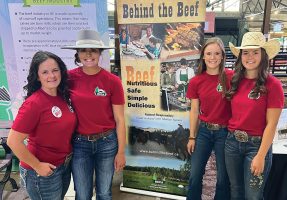
Ranchers get the backstory on public perception

BC farmers have public trust

Canada recognizes agriculture

Where’s the beef?

Tour builds trust between foodies, farmers

Previous Post: « Research breeds better bees for Vancouver Island
Next Post: Hullcar report delayed »

Copyright © 2026 Country Life in BC · All Rights Reserved