• Menu
  • Skip to primary navigation
  • Skip to main content
  • Skip to primary sidebar

Country Life In BC Logo

The agricultural news source in British Columbia since 1915

  • Headlines
  • Calendar
  • Subscribe
  • Advertise
  • About
  • Archives
  • Contact
  • Search
  • Headlines
  • Calendar
  • Subscribe
  • Advertise
  • About
  • Archives
  • Contact
  • Search

Primary Sidebar

Originally published:

SEPTEMBER 2021
Vol. 107 Issue 9

Subscribe Now!

Sign up for free weekly FARM NEWS UPDATES

Select list(s) to subscribe to


By submitting this form, you are consenting to receive marketing emails from: Country Life in BC. You can revoke your consent to receive emails at any time by using the SafeUnsubscribe® link, found at the bottom of every email. Emails are serviced by Constant Contact
Your information will not be
shared or sold ever

Stories In This Edition

Wildfire response improves

Bad timing for election call

Hay there!

Food sales still reeling from the pandemic

Editorial: Restart, regenerate

Back 40: Anti-vax rhetoric is far worse than the cure

Viewpoint: Organic practices key to our collective well-being

Producers face unannounced welfare checks

Livestock feel the heat as forage dries up

Farmers take issue with water restrictions

Ag Briefs: Grape growers optimistic as harvest approaches

Ag Briefs: Greenhouse nursery specialist named

Feed BC connects producers with opportunities

Sidebar: Nutrition program continues

Growers welcome grocer code of conduct

Chicken growers address heat stress

Greenhouse growers undertake strategic plan

Turning manure into renewable energy

Sidebar: Biogas gets a boost with changes to regulations

Blueberry growers welcome higher berry prices

Ranchers, farmers on the wildfire frontlines

Sidebar: Water and fans keep cattle cool

Province halts livestock watering reg update

BC farm sales sets new monthly record

Mental wellness resources meet a growing need

Sidebar: Mental health resources

Saving the farm business hinges on planning

Hot potatoes

Farmers produce crops, and loads of plastic

Barnston Island farmers face uncertain future

Market garden rises from battle of the weeds

Sidebar: Oostenbrink’s tips for no-till vegetables

Research: Bumblebee declines not as dire as study states

A non-family succession plan that worked

Living plants are revolutionizing herb sales

Food hub readies for fall opening

Farm Story: Good help at the right time

Small-scale abattoir in the works for Island

Breeding better tasting beets

Woodshed Chronicles: Plans unfold for the ride of a lifetime

Young entrepreneur weaves new use for twine

Jude’s Kitchen: Simpler eats for a new, normal September

More Headlines

Follow us on Facebook

Comments Box SVG iconsUsed for the like, share, comment, and reaction icons

2 weeks ago

The Canadian Food Inspection Agency is preparing to implement changes to its livestock traceability rules that will include mandatory computer reporting within seven days on movement of animals for veterinary appointments, community pastures, exhibitions, carcass and on-farm disposal and the births and deaths of every animal on your farm. Writer Tom Walker first brought these changes to the attention of our readers back in June 2023. We've posted his story to our website:

www.countrylifeinbc.com/cfia-proposes-traceability-updat#BCAg#BCag
... See MoreSee Less

The Canadian Food Inspection Agency is preparing to implement changes to its livestock traceability rules that will include mandatory computer reporting within seven days on movement of animals for veterinary appointments, community pastures, exhibitions, carcass and on-farm disposal and the births and deaths of every animal on your farm. Writer Tom Walker first brought these changes to the attention of our readers back in June 2023. Weve posted his story to our website: 

https://www.countrylifeinbc.com/cfia-proposes-traceability-updates/

#BCag
View Comments
  • Likes: 11
  • Shares: 21
  • Comments: 15

Comment on Facebook

I love hpw the cow in the picture hasn't even got a RFID tag in it but I digress. We can not read the link, it says "we are not permitted to read drafts". Please post again with the correct link.

Dairy farmers having been doing this several years. The app we use has become quite simple to use

Including equine?

Premise ID was slowly rolled through the country, voluntary then mandatory. Transparency and 'Consultation' has been light. Those who tried to bring this for discussion a couple years ago, because of forseen overreach, were quite often labeled conspiracy theorists and that it wasnt meant to be so heavily regulated and controlled. Gardens and seeds will be next. "Invasive species" reporting, check out the plants medicinal properties. Read the BC intentions papers. The premise ID that already heavy regulated commodities have claims to be treated different in the intentions papers on page 8. www2.gov.bc.ca/assets/gov/farming-natural-resources-and-industry/agriculture-and-seafood/food-saf...

Says i am "not allowed to preview draft".

Also concerning is the part on compliance...they can 'stumble onto' any farm and if you're not complying there are consequences.

When the CFIA stumbles into the wrong place compliance will be met with civil engagement

Says I can't preview draft

This is government overreach - Do Not Comply!

Do not comply

Fu

As if the price of beef isn't bad enough for consumers,,,,,be prepared to be gouged some more now

Ridiculous!!

Let's hold up on the beef exports tell we can get our own house in order... we need to deregulated, cheapen up the supply chain back into a 5 buck a pound rage so the good people canada can eat healthy food.. fuck your bean diets, that's retarded

This, along with the majority of new legislation pertaining to any type of farm, is a blatant squeeze on any sort of small, alternative agricultural venture. I am a massive believer in working together and sharing resources and costs and solutions - do not get me wrong - but this and the water registration among others, is an overreach (at most generous) and an absolute killer to smaller, local initiatives that LITERALLY save lives during extreme events. There is ONE ROAD into and out of my community. We don’t need or want some sort of backlogged government response when shit goes sideways. We want the ability AND SUPPORT to provide for our communities without penalty when things go badly. We want to produce sustainability for our communities. We live here, we work here, we want to STAY HERE. Stop making it harder.

View more comments

3 weeks ago

BC's minimum piece rates for 15 hand-harvested crops increased 2.6% on December 31. Crops include peaches, apricots, brussels sprouts, daffodils, mushrooms, apples, beans, blueberries, cherries, grapes, pears, peas, prune plums, raspberries and strawberries. Farm-worker piece rates in BC were increased by 11.5% in January 2019 and 6.9% in December 2024. BC’s current minimum wage sits at $17.85 per hour.

#BCAg
... See MoreSee Less

BCs minimum piece rates for 15 hand-harvested crops increased 2.6% on December 31. Crops include peaches, apricots, brussels sprouts, daffodils, mushrooms, apples, beans, blueberries, cherries, grapes, pears, peas, prune plums, raspberries and strawberries. Farm-worker piece rates in BC were increased by 11.5% in January 2019 and 6.9% in December 2024. BC’s current minimum wage sits at $17.85 per hour. 

#BCAg
View Comments
  • Likes: 10
  • Shares: 0
  • Comments: 2

Comment on Facebook

I'm not sure what they're telling us. Did peace rates have to increase so that Farm workers could make minimum wage?

They deserve it, but the general public will be whining about increased prices in the stores. Will need to make more information average to the g.p.

3 weeks ago

... See MoreSee Less

View Comments
  • Likes: 14
  • Shares: 0
  • Comments: 1

Comment on Facebook

105 Mile Ranch

4 weeks ago

... See MoreSee Less

View Comments
  • Likes: 7
  • Shares: 0
  • Comments: 0

Comment on Facebook

1 month ago

Water volumes from the Nooksack River are at levels similar to 1990 and 2021, but the province says flows should peak at 10pm tonight. The shorter duration, as well as conditions in other watercourses within the watershed and performance of flood protection infrastructure should avoid a catastrophe on the scale of 2021. However, several landslides mean road closures have once again effectively isolated the Lower Mainland from the rest of the province.

#BCAg
... See MoreSee Less

Water volumes from the Nooksack River are at levels similar to 1990 and 2021, but the province says flows should peak at 10pm tonight. The shorter duration, as well as conditions in other watercourses within the watershed and performance of flood protection infrastructure should avoid a catastrophe on the scale of 2021. However, several landslides mean road closures have once again effectively isolated the Lower Mainland from the rest of the province.

#BCAg
View Comments
  • Likes: 9
  • Shares: 3
  • Comments: 1

Comment on Facebook

Family living in Sumas WA say it's very much like '21. They have the same amount of water in their house as last time.

Subscribe | Advertise

The agricultural news source in British Columbia since 1915
  • Email
  • Facebook

Farmers take issue with water restrictions

Food security requires access to water, say growers

built a 500,000 gallon dugout six years ago to stabilize her water supply. SUBMITTED

September 1, 2021 byKate Ayers And Peter Mitham

GIBSONS – With a growing number of watersheds reaching Level 4 drought restrictions or higher, some farmers say regulators need to make greater allowances for food production.

Sunshine Coast Regional District recently implemented Level 4 drought restrictions which prohibit all outdoor water use, including for agriculture.

That doesn’t sit well with Raquel Kolof of Hough Heritage Farm in Gibsons and president of the Sunshine Coast Farmers Institute.

“All farmers, including commercial food farmers, were cut off from outdoor water use on August 10, 2021, as the SCRD went into stage 4 water restrictions on the Sunshine Coast,” she says. “[But] breweries, distilleries and industrial cannabis grow ops have unrestricted water use simply due to the fact that their operations are indoors.”

The farmers institute promptly sent a letter to the Sunshine Coast Regional District asking it to exempt soil-based farmers from the restrictions. It had previously changed the rules in 2019 to exempt farmers until Level 4, but Kolof says allowing industrial users to draw water while prohibiting growers from watering their crops doesn’t make sense.

“Water restrictions based on indoor versus outdoor water use are arbitrary, unfair and not in the best interest of our communities’ need for food security, nor our aquifer’s and ecosystem’s long-term health,” the letter says. “Soil-based farming supports our ecosystem and reverses climate change. Soil-based farmers with healthy living crops and livestock-grazed pastures sequester carbon. This carbon drawdown into living roots feeds our soil microbiome and cools our climate.”

The letter also notes that healthy pastures, cropland and orchards also support wildlife and feed pollinators, which are essential to the food supply as well as being an environmental benefit.

Nature Tech Nursery

co-owner Thom O’Dell in Courtenay also flags the environmental benefits of maintaining agricultural water use.

Drought ratings in two watersheds in the Comox Valley are at Level 4, a stage at which adverse impacts become likely. While maintaining stream flows protects fish, O’Dell would like to see the province support greater investment in on-farm water management.

Nature Tech has yet to hear back regarding its water licence application 19 months after submission and is now considering whether or not to develop a dugout for water storage.

“We hope that the province will implement funding for water storage as it is increasingly clear that we need to do much more to adapt to climate change,” he says. “We think that is a simple and cost-effective contribution that would serve complementary goals of assisting small farmers to be more sustainable in terms of their water use while also enhancing conservation efforts for salmon and other riparian species by reducing the use of surface water by farmers in the growing season.”

Courtenay beef producer Brad Chappell of Heart of the Valley Farms says the federal government also needs to step up.

“If the federal government truly wants to help agriculture, they should develop a plan through grants and financing in regions to develop off-stream and extra watering facilities like dugouts and wells,” he says.

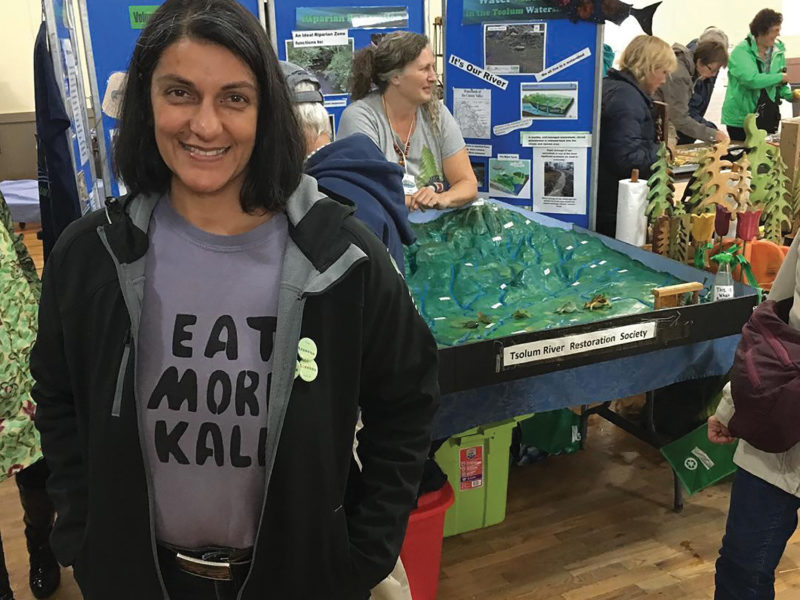
Courtenay organic producer Arzeena Hamir has ensured a stable supply of water for her four acres of vegetables with a dugout she built in 2015. It stores 500,000 gallons of water, augmenting what her well delivers.

Water access is most acute in the Koksilah watershed, one of a growing number of watersheds in the province now rated Level 5, when a “high likelihood of significant irreversible harm to the aquatic ecosystem” are almost certain.

Growers along the Koksilah River became the first in the province to face restrictions under BC’s Water Sustainability Act in 2019 when water access was cut as stream flows fell below 180 litres per second.

“All the streams and wells that are in the Koksilah watershed and support the river and are used for irrigation were also included,” says David Tattam, a producer and environmental farm plan advisor. To manage the risk, a group of 19 producers developed an irrigation scheduling system that sees half of them irrigate four days then the other half irrigate for four days during drought conditions. This approach helped maintain water use until midnight on August 17 when the province once again cut off users as flow levels dropped.

However, some farmers in the area decided not to irrigate at all this year, says Tattam.

“They have to put so much water on that it wasn’t cost effective,” he explains. “Farmers take a pretty big hit financially even with the scheduling. It’s better than no irrigation but you’re only irrigating half the time. They reduce the opportunity of getting second and third crops off. … We’re hoping in the future that we can come up with something better than scheduling and find opportunities to develop access to water.”

Secure access to water will be key for agricultural production to continue in BC. This point was highlighted in a 2006 report for the province, which estimated that an additional 92,000 hectares of irrigated farmland would be needed by 2025 for BC farmers to continue supplying 48% of the province’s food supply.

Climate change, and the responses of local government, has only exacerbated the importance of secure access to water.

The urgency of the situation is prompting some producers to get political.

Cammy and James Lockwood of Lockwood Farms in Cobble Hill have 6,000 laying hens and a market garden, both of which suffered during this summer’s heat waves. They did their best to keep the lettuce and brassicas cool so it wouldn’t go to seed but still lost about 4,000 heads of lettuce.

“Plants were literally just getting scorched. On the nursery side, a lot of the leaves just burnt even when they were well watered,” says Cammy, noting that the farm’s well struggled to keep up with demand.

Growers in the eastern Fraser Valley also made huge demands on their aquifers, and Lockwood says governments need to pay attention.

“I feel not enough is being done about this,” she says. “The government is not treating it like the crisis it is. Food security is at top of mind through the wildfires and heat dome.”

This summer’s events pushed Lockwood to become more politically involved in her region and she will support the Green Party in the upcoming federal election.

“As farmers, we are on the front lines of the climate crisis and it’s getting harder and harder to grow food,” Lockwood says.

With files from Barbara Johnstone Grimmer
Related Posts

You may be interested in these posts from the same category.

Cattle

Regions selected for livestock tax deferral

A dry season continues

Snowpack sends mixed signals

Senate flood report released

Dry fall, wet winter ahead

Drought fears washed away

Ranchers face rangeland losses

Province falls short on dam safety oversight

Don’t blame the wildfires

Wildfire state of emergency ends

Province announces wildfire recovery funds

Province pledges emergency funding

Previous Post: « Producers face unannounced welfare checks
Next Post: Turning manure into renewable energy »

Copyright © 2026 Country Life in BC · All Rights Reserved