• Menu
  • Skip to primary navigation
  • Skip to main content
  • Skip to primary sidebar

Country Life In BC Logo

The agricultural news source in British Columbia since 1915

  • Headlines
  • Calendar
  • Subscribe
  • Advertise
  • About
  • Archives
  • Contact
  • Search
  • Headlines
  • Calendar
  • Subscribe
  • Advertise
  • About
  • Archives
  • Contact
  • Search

Primary Sidebar

Originally published:

APRIL 2020
Vol. 106 Issue 4

Subscribe Now!

Sign up for free weekly FARM NEWS UPDATES

Select list(s) to subscribe to


By submitting this form, you are consenting to receive marketing emails from: Country Life in BC. You can revoke your consent to receive emails at any time by using the SafeUnsubscribe® link, found at the bottom of every email. Emails are serviced by Constant Contact
Your information will not be
shared or sold ever

Stories In This Edition

Sheep labour

Growers scramble for workers

Province implements Bill 15

Farmers’ markets help communities recover

Looking ahead

Back 40: Food security demands out-of-box thinking

Viewpoint: Government needs to step up farm support

Groundwater bill causes confusion for Island farmer

Cannabis expansion goes up in smoke

Dairy producers surveyed on regulation impact

Institute keeps ALR changes on the front burner

Organic growers face mainstream competition

Egg producers reflect on productive year

Better together: Broilers, hating eggs collaborate

A job well done

Turkey growers see slow demand for birds

Dairy driving increase in semen sales

Beef conference BC-bound

Dairy producers rail against new transport rules

Beef industry looks beyond pandemic

Abattoirs required to cut back overtime

Tax credit review

Cattlemen take their concerns to Ottawa

Cattle sales an essential service

Funding will help farmers address nutrient runoff

Manure management guide updated for small-lot farmers

Potato growers optimistic

Hazelnut growers survey indsutry

Cherry growers focus on export opportunities

Weather woes drive cranberry yields lower

NFU highlights role for ag in climate crisis

Research: Reducing dairy production’s carbon footprint

Independent corn trials a priority for group

Silage management must be taken seriously

Brewing a local future

Orchardists urged to work smarter, not harder

Breakout sessions take growers deeper

Farm News: With spring comes a field of dreams

BCAFM considers Alberta vendors in border markets

Woodshed: Kenneth reaches a new low in the Bahamas

Authentic stories will resonate with consumers

Jude’s Kitchen: Food for holy days

More Headlines

Follow us on Facebook

Comments Box SVG iconsUsed for the like, share, comment, and reaction icons

7 days ago

... See MoreSee Less

View Comments
  • Likes: 4
  • Shares: 0
  • Comments: 0

Comment on Facebook

7 days ago

On the last day of the BC Organic Conference, Thursday, Molly Thurston of Pearl Agricultural Consulting helped growers learn how to manage bugs such as codling moth, wireworm, and rootworm in organic growing systems. Her talk alongside Renee Prasad included hands-on activities in which participants checked out various traps and examined pests under microscopes. Be sure to look for more upcoming ag events on our online calendar at www.countrylifeinbc.com/calendar/

#BCAg
... See MoreSee Less

On the last day of the BC Organic Conference, Thursday, Molly Thurston of Pearl Agricultural Consulting helped growers learn how to manage bugs such as codling moth, wireworm, and rootworm in organic growing systems. Her talk alongside Renee Prasad included hands-on activities in which participants checked out various traps and examined pests under microscopes. Be sure to look for more upcoming ag events on our online calendar at www.countrylifeinbc.com/calendar/

#BCAg
View Comments
  • Likes: 15
  • Shares: 0
  • Comments: 0

Comment on Facebook

1 week ago

Well-known organic farmer and podcaster Jordan Marr gets interviewed by Country Life in BC’s own columnist and potato mavin Anna Helmer during the opening session of the BC Organic Conference at Harrison Hot Springs yesterday. Sessions run today (Wednesday) and Thursday and include organic and regenerative growing practices and expanding and advocating for the organic sector, all under the background of the newly launched Organic BC banner.

#BCAg
... See MoreSee Less

Well-known organic farmer and podcaster Jordan Marr gets interviewed by Country Life in BC’s own columnist and potato mavin Anna Helmer during the opening session of the BC Organic Conference at Harrison Hot Springs yesterday. Sessions run today (Wednesday) and Thursday and include organic and regenerative growing practices and expanding and advocating for the organic sector, all under the background of the newly launched Organic BC banner.

#BCAg
View Comments
  • Likes: 37
  • Shares: 2
  • Comments: 1

Comment on Facebook

Interested in finding out more about this

3 weeks ago

Today, we remember those who sacrificed their lives or their well-being for our freedom. Lest we forget. ... See MoreSee Less

Today, we remember those who sacrificed their lives or their well-being for our freedom. Lest we forget.
View Comments
  • Likes: 8
  • Shares: 0
  • Comments: 0

Comment on Facebook

1 month ago

FarmFolk CItyFolk is hosting its biennial BC Seed Gathering in Harrison Hot Springs November 27 and 28. Farmers, gardeners and seed advocates are invited to learn more about seed through topics like growing perennial vegetables for seed, advances in seed breeding for crop resilience, seed production as a whole and much more. David Catzel, BC Seed Security program manager with FF/CF will talk about how the Citizen Seed Trail program is helping advance seed development in BC. Expect newcomers, experts and seed-curious individuals to talk about how seed saving is a necessity for food security. ... See MoreSee Less

Link thumbnail

BC Seed Gathering - FarmFolk CityFolk

farmfolkcityfolk.ca

Save the date for our upcoming 2023 BC Seed Gathering happening this November 3rd and 4th at the Richmond Kwantlen Polytechnic University campus.
View Comments
  • Likes: 1
  • Shares: 0
  • Comments: 0

Comment on Facebook

Subscribe | Advertise

The agricultural news source in British Columbia since 1915
  • Email
  • Facebook

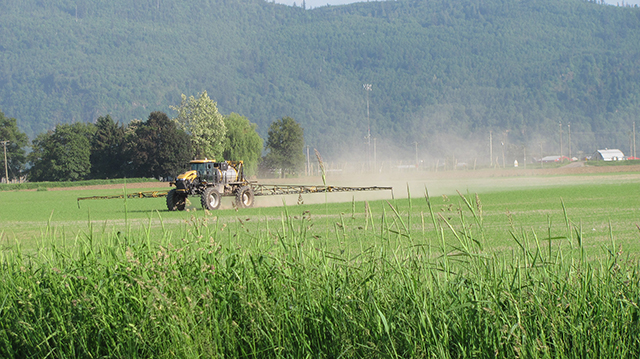
Funding will help farmers address nutrient runoff

Agriculture seen as a contributor to Shuswap watershed issues

April 1, 2020 byJackie Pearase

SALMON ARM – Water quality in the Shuswap region will benefit from $100,000 in grants over the coming year through a new program launched this spring.

The Shuswap Watershed Council is making the funds available to projects aimed at protecting long-term water quality in the region through better nutrient management.

“What we’re looking for is projects in the ground such as things that can capture nutrients – phosphorus in particular – before it goes into the water,” says the council’s senior regional manager Mike Simpson. “We can’t necessarily pay for your soil testings and some of the requirements that you have to do as part of your regular business, but if there’s things that you can and want to do, maybe we can help with that.”

He hopes to see the gamut of initiatives by the April 30 deadline and suggests manure management and wetland creation on agricultural land as good project examples.

Simpson says projects will be evaluated on scope, scale and location. The funds may go to one large project or several smaller ones, depending on the applications received. The funds could even go to a group project that encompasses smaller projects on a number of farms in an area highlighted as having nutrient problems.

The grant program is the result of research the council undertook in partnership with UBC-Okanagan on nutrients and water quality in the Shuswap and Salmon rivers. The study identified which regions of the watershed and which land-use types contribute the highest concentrations of nutrients to the two rivers.

“Completing this study is a great accomplishment for the council,” says council chair Paul Demenok. “The results show us where new nutrient management initiatives would be most effective.”

The study indicates that small streams, ditches, groundwater and surface water run-off in the valley bottoms contribute nutrient-rich water to the rivers. The results also indicate that agricultural land contributes more nutrients on per-hectare than urban areas or forested land. (Specific agricultural uses were not singled out.)

The council is seeking nutrient management initiatives from landowners and farmers within the key problem areas.

“We’re looking for projects in the Lower Shuswap River, from Mabel Lake to Mara Lake, and the Salmon River, from essentially Westwold down to Salmon Arm Bay,” Simpson says.

More information about the grant program, and the new report on nutrients and water quality, are available online at [www.shuswapwater.ca].

Related Posts

You may be interested in these posts from the same category.

Dairy producers surveyed on regulation impact

Waste management webinar

New waste control rules kick in October 1

Manure spreading

Ten-year plan

Province releases waste control regulation

Ag waste reg “nearly” done

Previous Post: « Consumers buying local
Next Post: Abattoirs required to cut back overtime »

Copyright © 2025 Country Life in BC · All Rights Reserved