
• Menu
  • Skip to primary navigation
  • Skip to main content
  • Skip to primary sidebar

Country Life In BC Logo

The agricultural news source in British Columbia since 1915

  • Headlines
  • Calendar
  • Subscribe
  • Advertise
  • About
  • Archives
  • Contact
  • Search
  • Cart
  • Checkout
  • Headlines
  • Calendar
  • Subscribe
  • Advertise
  • About
  • Archives
  • Contact
  • Search
  • Cart
  • Checkout

Primary Sidebar

Originally published:

March 2019
Vol. 105 Issue 3

Subscribe Now!

Sign up for free weekly FARM NEWS UPDATES

Loading form…

Your information will not be
shared or sold ever

Stories In This Edition

Ten-year plan

Simon Answerth

Province boosts ag spending

It’s a draw!

Well registrations lag in advance of final deadline

Editorial: Vice grip

Back Forty: Snow days make good days for seed selection

Viewpoint: Farmers need to prepare for annual snow melt

Smooth start to season as foreign workers arrive

Sidebar: Province mulls piece rates

Late winter has some Okanagan growers on edge

Ag show attracts near-record attendance

Ag Briefs: Traceability funding available for producers

Ag Briefs: Cattlemen’s launches webinar series

Ag Briefs: Grant winner announced

Labour remains a priority for fruit growers

Dairy, aquaculture take home awards at gala

Farmers need to prepare for uncertainty

Ag critic listens to concerns at farmers’ institute

Growers are responsible for workers’ safety

Robotic milkers sized up during dairy tour

Safe, high-quality silage depends on preparation

Young farmers crack open new vending concept

Diversification makes orchard a landmark

Going green boosts ranch’s credibility

Ranchers need to match forage with herd needs

Tru-Grit

Reducing waste will save money on winter feed

Producers question new Indigenous rights law

Hosting TRU students a way to give back

Livestock co-op provides selling, buying options

Sidebar: Market set to stay steady

Research: Bluetongue outbreaks expected to increase

Filling a niche for gourmet mushrooms

Regulations, housing key issues in Langley

Sheep producers seeing value in genetic program

Above and beyond

Vegetation fundamental to farms, landscape

Studies continue on forage, corn crop pests

4-H BC leader singled out

Growers go with the grain of beer revival

Agri-tourism has plenty of room for growth

Rose stem girdler poses threat to cranberries

Site prep critical for healthy hazelnut orchards

Sidebar: BC renewal program opens up

Wannabe: Renewal comes with a new generation of farmers

Mentorship gives Kelowna grower a headstart

Woodshed: Deborah and Doug McLeod turn up the heat

A good place to meet up

Jude’s Kitchen: Celebrate spring by eating outside

All content on this website is copyrighted, and cannot be republished or reproduced without permission.
More Headlines

Follow us on Facebook

Comments Box SVG iconsUsed for the like, share, comment, and reaction icons

1 day ago

The committee of MLAs charged with setting priorities for the next provincial budget is recommending regular, annual funding for water storage infrastructure associated with food production, including for engineering inspections, maintenance and upgrades. The recommendation builds on the BC Cattlemen's Association's recommendation of an annual allocation of $5 million for water storage infrastructure related to food production, noting that it could also support resilience in the face of climate-related events. While the province has allocated $120 million for agricultural water infrastructure, agriculture minister Lana Popham told Country Life in BC this week that other ministries and the federal government will need to be involved in funding future p#BCAgts#BCAgCAg

#BCAg
... See MoreSee Less

The committee of MLAs charged with setting priorities for the next provincial budget is recommending regular, annual funding for water storage infrastructure associated with food production, including for engineering inspections, maintenance and upgrades. The recommendation builds on the BC Cattlemens Associations recommendation of an annual allocation of $5 million for water storage infrastructure related to food production, noting that it could also support resilience in the face of climate-related events. While the province has allocated $120 million for agricultural water infrastructure, agriculture minister Lana Popham told Country Life in BC this week that other ministries and the federal government will need to be involved in funding future projects.

#BCAg

#BCAg
View Comments
  • Likes: 23
  • Shares: 6
  • Comments: 3

Comment on Facebook

A typical small-to-medium farming operation featuring a house, main barn, and machine shed generally has around 8,000 to 12,000 square feet of total roof surface. The Okanagan Valley is one of the driest regions in Canada, averaging roughly 300 millimetres (11.8 inches) of annual precipitation. Storing a full year's collected rainwater from those roofs yields roughly 262,500 litres. In the three regional districts that make up the Okanagan valley proper (North Okanagan, Central Okanagan, and Okanagan-Similkameen), the 2021 Statistics Canada Census of Agriculture records roughly 3,100 total farms. Multiply that number by 262,500 litres of harvested rainwater equals 813.75 million litres of water saved per year. Capturing that volume of water across every farm roof in the region would significantly ease peak summer pumping pressure on local groundwater aquifers and Okanagan Lake.

Fantastic!! We will work hard to be involved and do what we can as well as a collective group on the Salmon River!

Absolutely! Long over due and very welcomed. Let's make this happen.

1 day ago

... See MoreSee Less

View Comments
  • Likes: 2
  • Shares: 0
  • Comments: 0

Comment on Facebook

2 days ago

About 40 community members gathered at Silver Creek Community Hall near Salmon Arm last Thursday to discuss ways to improve water availability for both farms and spawning salmon. While the province has since rescinded a fish protection order for the watershed that shut down irrigation, future risks to water access remain top of mind. "We are here because water matters to each of us," says rancher and organizer Trudy Schweb. Farmland Riparian Interface Stewardship Program manager Lee Hesketh outlined the potential for upland water storage while Rob Dinwoodie highlighted cost-shared funding opportunities through the Environmental Farm Plan program for riparian assessments, irrigation efficiency upgrades and other water-related projects available to producers. Photo credit | Facebook/Trudy Schweb

#BCAg
... See MoreSee Less

About 40 community members gathered at Silver Creek Community Hall near Salmon Arm last Thursday to discuss ways to improve water availability for both farms and spawning salmon. While the province has since rescinded a fish protection order for the watershed that shut down irrigation, future risks to water access remain top of mind. We are here because water matters to each of us, says rancher and organizer Trudy Schweb. Farmland Riparian Interface Stewardship Program manager Lee Hesketh outlined the potential for upland water storage while Rob Dinwoodie highlighted cost-shared funding opportunities through the Environmental Farm Plan program for riparian assessments, irrigation efficiency upgrades and other water-related projects available to producers. Photo credit | Facebook/Trudy Schweb

#BCAg
View Comments
  • Likes: 36
  • Shares: 4
  • Comments: 4

Comment on Facebook

Salmon River Watershed Roundtable should be looked into again.

Well done my girl,the voice of Silver Creek ranchers and more

Thanks for covering this🌟

2 days ago

The BC Fruit Growers Association is urging Greater Vernon Water and the Regional District of North Okanagan to halt water shut-offs hitting 2,100+ acres of Okanagan orchards mid-season. With losses potentially topping $250 million, fruit growers say decisions of this scale demand a coordinated plan with farmers and the province — not one-sided cuts. They’re not the only producers affected by this year’s dry conditions.

#BCAg
... See MoreSee Less

Cash Flows

www.countrylifeinbc.com

VERNON – Water restrictions intensified across the southern Interior in late July, with record low stream flows clouding the cash outlook for ranches and orchards. Fourteen agricultural water users...
View Comments
  • Likes: 5
  • Shares: 3
  • Comments: 1

Comment on Facebook

Food should ALWAYS come first. Allow the farmers their water. My grandad watered the apples by flume from the mountain. Let’s get on with AG and get out of the way!

3 days ago

The BC Fruit Growers Association has joined Apples Canada, a new national voice for provincial apple organizations in BC, Ontario, Quebec, New Brunswick and Nova Scotia. Charles Stevens of Ontario chairs the new group, an evolution of the apple working group within Fruit & Vegetable Growers Canada (FVGC), the new group will tackle production, sustainability, research and policy issues as well as advocate for market access in partnership with FVGC. It follows the creation of the Greenhouse Produce Alliance of Canada earlier this year, which replaced the former greenhouse vegetable working group. The berry and field vegetable sectors will continue to maintain working groups with FVGC, while the long-estblished Canadian Potato Council serves the interests of potato growers under the FVGC umbrella.

#BCAg
... See MoreSee Less

The BC Fruit Growers Association has joined Apples Canada, a new national voice for provincial apple organizations in BC, Ontario, Quebec, New Brunswick and Nova Scotia. Charles Stevens of Ontario chairs the new group, an evolution of the apple working group within Fruit & Vegetable Growers Canada (FVGC), the new group will tackle production, sustainability, research and policy issues as well as advocate for market access in partnership with FVGC. It follows the creation of the Greenhouse Produce Alliance of Canada earlier this year, which replaced the former greenhouse vegetable working group. The berry and field vegetable sectors will continue to maintain working groups with FVGC, while the long-estblished Canadian Potato Council serves the interests of potato growers under the FVGC umbrella.

#BCAg
View Comments
  • Likes: 4
  • Shares: 0
  • Comments: 0

Comment on Facebook

Subscribe | Advertise

The agricultural news source in British Columbia since 1915
  • Email
  • Facebook

Going green boosts ranch’s credibility

Third-party certification helps consumers understand claims

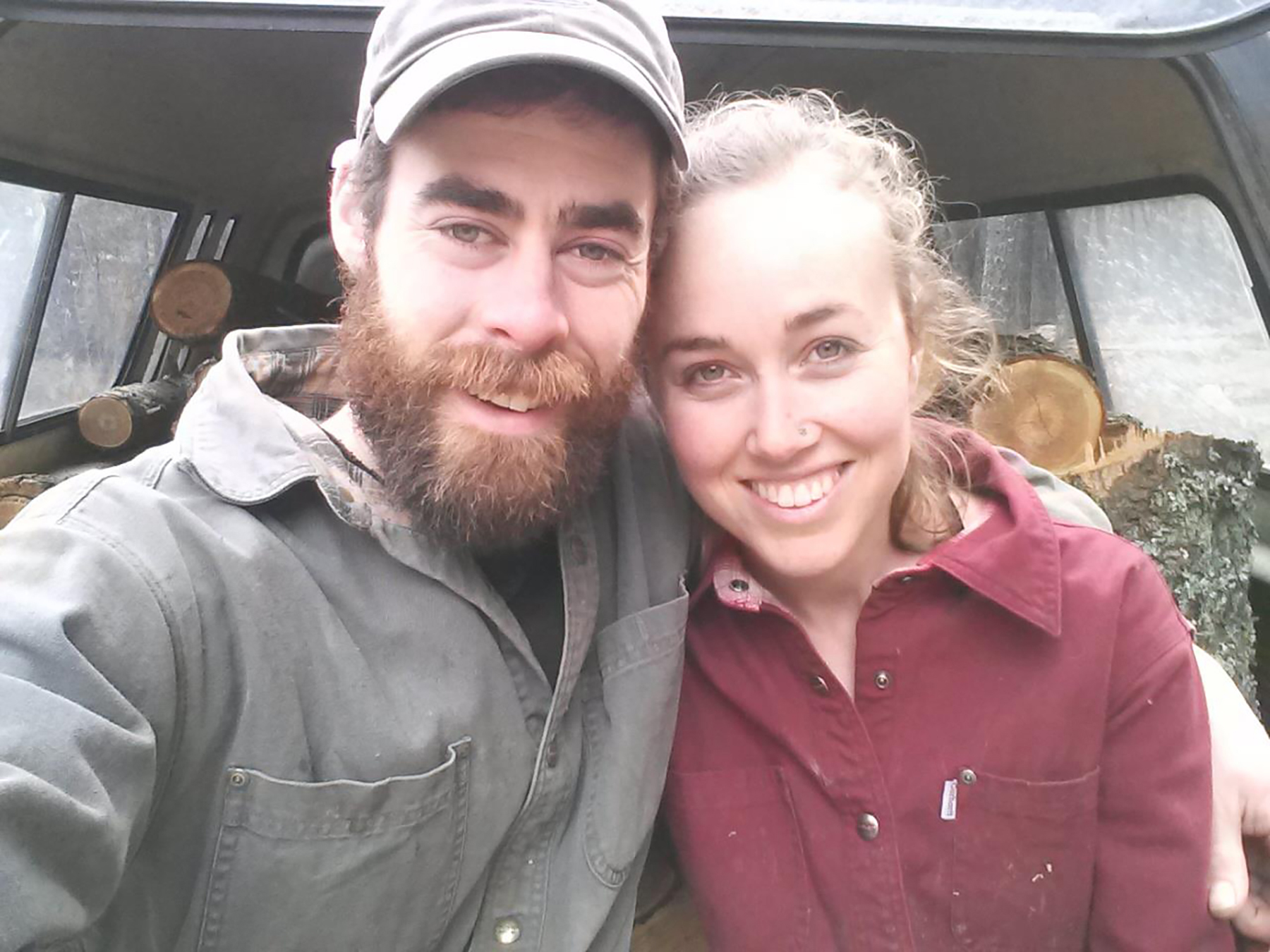
Tristan & Aubyn Banwell

February 26, 2019 byJackie Pearase

LILLOOET – Spray Creek Ranch owners Tristan and Aubyn Banwell say becoming one of five BC farms certified by A Greener World (AGW), a five-year-old certification body based in Terrebonne, Oregon, has been worth the extra effort.

They opted for Certified Animal Welfare Approved and Certified Grassfed from AGW because it best aligns with their regenerative farming practices.

“When we looked at all of the different options for animal certifications, this is the one that most closely reflected the types of practices that we are putting in place on the farm,” Tristan Banwell explains. “The other certifications have their place but they didn’t cover all the innovative practices that we are doing on our farm. We felt this was the best match.”

The Banwells farm about 130 of their 260 acres. The ranch is home to 400 laying hens and ships 20 to 40 beef cattle to market annually, as well as 50 hogs, 2,000 chickens and 300 turkeys.

Spray Creek operates a Class D slaughter facility and uses an animal welfare-approved Class A slaughter facility for its pork and beef.

Raising multiple species makes the work more challenging when dealing with multiple types and levels of marketing boards and regulating bodies, but it works better for them than the commodity cow-calf operation that existed before they arrived in 2014.

“We had to look at ways to diversify and start direct marketing in order to be able to make a living from the farm. And that’s what we’re doing. So neither of us work off-farm. We focus 100% on our farm production,” Banwell says. “I think if we were working off farm we wouldn’t be able to move the farm forward as quickly as we are, obviously, because we dedicate all our time to it.”

The farm’s livestock is certified organic through the North Okanagan Organic Association but Banwell says third-party audits by AGW add an extra layer of trust to their business, of which three-quarters is direct-to-consumer sales.

“The fact that we have third-party audits on our practices means that consumers can look at those standards that we’re adhering to and know that the claims we’re making about our products have been verified by an independent third party,” Banwell adds.

The audits include comprehensive farm visits that look at all processes and procedures, a detailed lifecycle analysis of a product chosen at random from the farm’s receipts, and – for the animal welfare certification – witnessing a test slaughter of each species certified on the farm, and audits on any source farms supplying Spray Creek.

The paperwork required for the additional certifications is considerable but, with detailed records already required for its organic certification, expanding the farm’s record-keeping was simple.

“We feel like record-keeping is a really important part of running a business and running a farm, so we already keep really detailed and good records using different types of software tools,” Banwell explains. “So that makes our audit pretty easy.”

AGW communications and outreach director Emily Moose says AGW’s certifications, which also includes Certified Non-GMO, offer more transparency, improve customer loyalty and create more reliable markets for farmers.

Moose says sustainability to AGW refers to food production and distribution systems that work in harmony with the natural environment, ensure high animal welfare standards, provide fair and secure income for farms, and provide high-quality, nutritious and reasonably priced goods to consumers.

“Truly sustainable production systems satisfy the food needs of the present without compromising the ability of future generations to meet their own needs,” she says.

Lemieux Creek Ranch, Big Bear Ranch, Grassy Gnome Acres and Lost Savanna Farm are other BC producers certified by AGW, and Banwell thinks those numbers will only grow.

“It is the most rigorous and in-depth certification, I think, for animal welfare that’s available to farmers today. It’s gaining more traction in Canada,” he says.

Since starting in 2014, AGW has certified over 1,500 farms and ranches in North America, including about 150 in Canada, and over 6,000 globally. It recently launched in Europe and Africa.

“Canada currently accounts for about 10% of our work, but that rate is growing significantly and we expect that percentage to grow with the increased interest in third-party-certified labeling,” Moose says.

All content on this website is copyrighted, and cannot be republished or reproduced without permission.

Related Posts

You may be interested in these posts from the same category.

Farmers Market Organic

Organic growers prepare for the mainstream

Previous Post: «Simon Answerth Mentorship gives Kelowna grower a headstart

Next Post: Young farmers crack open new vending concept Kristin Poortvliet»

© 2026 COUNTRY LIFE IN BC - ALL RIGHTS RESERVED