• Menu
  • Skip to primary navigation
  • Skip to main content
  • Skip to primary sidebar

Country Life In BC Logo

The agricultural news source in British Columbia since 1915

  • Headlines
  • Calendar
  • Subscribe
  • Advertise
  • About
  • Archives
  • Contact
  • Search
  • Headlines
  • Calendar
  • Subscribe
  • Advertise
  • About
  • Archives
  • Contact
  • Search

Primary Sidebar

Originally published:

January 2019
Vol. 105 Issue 1

Subscribe Now!

Sign up for free weekly FARM NEWS UPDATES

Loading form…

Your information will not be
shared or sold ever

Stories In This Edition

Victoria tweaks ALR rules

Ranch must allow anglers

Grappling with challenges

Editorial: Learning from leopards

Back forty: Livestock protection is a grey matter

Viewpoint: One zone shows foresight as BC ag evolves

Popham pursues ambitious agenda as 2019 arrives

Milk stocks rebuild but skimmed milk an issue

Holstein spring show grows, moves to Chilliwack

Dairy producers withhold national levies

Wave of retirements sweeps through dairy associations

Fund aims to give BC fruit growers a competitive edge

Ag Brief: New chair for Farm Industry Review Board

Ag Brief: BC Tree Fruits shake-up

Ag Brief: Thompson retires from dairy centre

New trap set to reduce Okanagan starling flocks

Consumer prices could buoy farm cash receipts

BC potatoes yield increase in 2018

‘Green rush’ overwhelms OK planning staff

Show, gala showcases BC agriculture

Hort show covers buds to spuds

Sidebar: Budding interest

Spotlight on dairy, innovation

Popular dairy tour showcases diversity

Overseas markets demand top quality

Sidebar: Gerbrandt coordinates berry research

Local seed initiative shifts focus to economics

Big dreams for small pepper growers

Cattle feeders bullish on packing plant

Research: Increasing green fodder could decrease allergies

Beekeepers learn to defend against wildlife

Online platform connects producers, consumers

Public trust programming to expand in 2019

Farmers institutes meet to forge connections

The rock road of water buffalo in BC

Wannabe: Pulling together

Woodshed: Deborah finds it’s better to give than receive

Jude’s Kitchen: Start healthy

More Headlines

Follow us on Facebook

Comments Box SVG iconsUsed for the like, share, comment, and reaction icons

6 days ago

A BC Forest Practices Board investigation has found overgrazing has damaged grasslands in the Coutlee Range Unit near Merritt — and the range-use plan meant to prevent it was unenforceable. With complaints about overgrazing on the rise and grasslands covering just 1% of BC's land mass, the findings raise fresh questions about how the province manages one of its most vulnerable — and valuable — food-producing ecosyste#BCAg#BCAg ... See MoreSee Less

Link thumbnail

Board finds overgrazing rules unenforceable unmeasurable

www.countrylifeinbc.com

MERRITT – A BC Forest Practices Board investigation has found instances of non-compliance related to overgrazing have damaged open grasslands in the Mine pasture, part of the Coutlee Range Unit near...
View Comments
  • Likes: 6
  • Shares: 6
  • Comments: 6

Comment on Facebook

Several ranchers in recent years have gone into temporary non use on that range , so that means the grass should grow. But drought conditions/lack of rain and snow don’t allow that to happen . Dried up springs , creeks waterholes in various pastures add to over grazing where there is water , as livestock and everything else stay close to the water source . So even though less cattle are on it , over grazing appears. There is a large volume of horses on it 365 days/year which is wrong ! They pull grass right out of the ground when it’s just trying to grow ,, opens the door for weeds to grow in. That don’t help it. Aging infrastructure ( fences) laying on the ground, pipe line building , ( lack of commitment to fence maintenance) amongst all users contributes also to over grazing. Recreational atv users leaving gates open between pastures allows livestock to go back or ahead in pastures also expidites over grazing. Logging ( bcts) has no problem laying out cut locks on both sides of a fence , then it gets smashed down during logging and they don’t take responsibility to stand it back up or clean the cattle gaurds out when they are done , that happened 4 years ago on pasture 5 up there . I bet it is still not fixed . There are lots of contributing factors to the problem.

Tragedy of the commons.

I looked through the report. I saw nothing about the effects of noxious weeds on productive grasslands. This particular area is vulnerable because of the Ministry’a efforts to diversify the use of the Grasslands.

This pasture is under tremendous pressure not only from cattle but from irresponsible local residents who treat it as a landfill dumping all manner of household debris here. And don't even get me started on the mud bogging and camping in sensitive riparian areas. The feral horses are in this pasture 365 days a year just hammering it. Would sure be nice to see some enforcement action on people who are intentionally ripping up the grasslands and riparian areas. Cattle could be a valuable resource for rebuilding soils and native grasses in this area with the help of electric fencing and/or e-collars. The humans will be harder to manage.

The Forest and Range Practices Act was written by lawyers for global forest licencee shareholders. Results-based = unenforceable.

Also, can we talk about the impact of a pipeline being built through the middle of this field for multiple years?

View more comments

1 week ago

East Kootenay rancher Randy Reay is digging a new well after two natural water sources dried up on his Crown tenures. A new Living Lakes Canada assessment found 15% of mapped aquifers in the region are high-priority for monitoring, yet 80% of those go unmonitored. With over 48% of BC's provincial observation wells reporting below-normal groundwater levels, ranchers and researchers are sounding the alarm on water security. The story is in our March edition, and we've posted it to our website thi#BCAgk.

#BCAg
... See MoreSee Less

Link thumbnail

Water woes: groundwater under pressure across BC

www.countrylifeinbc.com

JAFFRAY – As a young boy growing up in the Kootenay-Boundary region, Randy Reay never expected to run out of water. But this year, in mid-February, his fields are bare. There is no snow halfway up t...
View Comments
  • Likes: 8
  • Shares: 7
  • Comments: 1

Comment on Facebook

Jaffrey is in the east Kootenays not kooteney boundary

2 weeks ago

BC farmers are bracing for prolonged higher input costs as war in the Middle East drives up fuel and fertilizer prices. Nitrogen fertilizer costs were already climbing before the Iran conflict began, with prices still roughly 60% above pre-pandemic levels. Farm Credit Canada warns that unlike 2022, strong commodity prices may not offset rising costs this time. Local suppliers expect supply challenges and further price increases ahead.

#BCAg
... See MoreSee Less

Link thumbnail

Fertilizer prices on the rise

www.countrylifeinbc.com

War in the Middle East has delivered a generational shock to energy prices, meaning BC farmers can expect a prolonged period of higher costs not just for fuel but also for fertilizer.
View Comments
  • Likes: 2
  • Shares: 1
  • Comments: 0

Comment on Facebook

2 weeks ago

... See MoreSee Less

View Comments
  • Likes: 1
  • Shares: 0
  • Comments: 0

Comment on Facebook

2 weeks ago

Cameron Stockdale is the new executive director of provincial farm safety organization AgSafeBC. Find out more in this week's Farm News Update from Country Life in B#BCAg#BCAg ... See MoreSee Less

Link thumbnail

New leadership at AgSafe BC

www.countrylifeinbc.com

Cameron Stockdale is the new executive director of provincial farm safety organization AgSafeBC, succeeding Wendy Bennett. Bennett left AgSafeBC in September 2025, following 12 years with the…
View Comments
  • Likes: 5
  • Shares: 1
  • Comments: 0

Comment on Facebook

Subscribe | Advertise

The agricultural news source in British Columbia since 1915
  • Email
  • Facebook

‘Green rush’ overwhelms OK planning staff

Local governments waiting for the smoke to clear on cannabis

December 31, 2018 byJackie Pearase

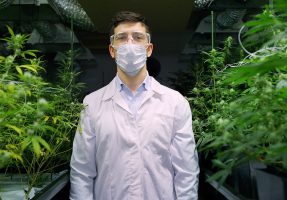
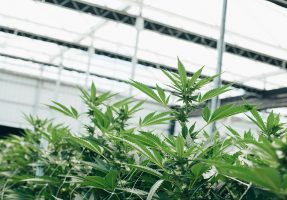
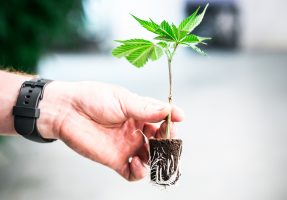
LUMBY – Some local governments in the Okanagan are facing a “green rush” as proposals blossom to meet the demand for recreational cannabis.

Regional District of North Okanagan (RDNO) planning and building general manager Rob Smailes said changes made to its zoning bylaw to address the Access to Cannabis for Medical Purposes Regulations in 2016 are now being adjusted to deal with the legalization of recreational cannabis this past October.

“What we’ve said from our perspective is growing cannabis is cannabis; whether it’s for medical or recreational purposes, it ought to be regulated,” Smailes says.

RDNO’s zoning bylaw allows for cannabis production facilities in industrial zones. Cannabis production is an acceptable use within the Agricultural Land Reserve (ALR), though a new regulation introduced July 13 requires that all production systems now be soil-based.

RDNO is currently dealing with about six proposals for cannabis production facilities within the ALR. Two propose concrete foundations, contrary to the new regulation, and RDNO has requested they submit an application for a non-farm use to the Agricultural Land Commission (ALC).

“There’s some frustration, certainly, on some of these people’s behalf,” says Smailes. “A couple of them made it past the post; a couple of them didn’t. One’s trying to do something, trying to get [ALC] approval; the other’s trying to find a way around it by using a different type of building.”

The proposal with a soil floor is basically using large steel screws to anchor the greenhouse frame to the ground, Smailes explains.

One of the concrete-based proposals is a 52,718-square-foot production facility and 10,000-square-foot processing facility Kosha Projects Inc. is proposing for Pleasant Valley Road in Spallumcheen. RDNO handles planning and building services for Spallumcheen, and decided to forward the plans to the ALC for consideration.

RDNO’s regional agricultural advisory committee (RAAC) recently considered the other proposal using concrete, from Green Amber (Canada) Corp., to create a facility of approximately 100,000 square feet on Shafer Road in Electoral Area D near Lumby, and recommended that it be forward to the ALC with a vote of six to five.

Committee members expressed a number of concerns about the proposal, including its overall benefit to agriculture, the size of the concrete footprint, and why the non-farm use covers the entire acreage rather than just the building footprint.

The Electoral Area Advisory Committee opted to defer consideration of the proposal on December 6 until there was “more info on water and a public meeting.”

ALR rules curbing proposals

Kelowna’s community planning department manager Ryan Smith said a number of cannabis production facilities have been approved on industrial land within the city but it has no such proposals within the ALR. He says the province’s new regulation likely curbed such plans.

“It’s made it more difficult, and that’s probably a good thing,” Smith says.

With the value of agricultural land much lower than industrial land, Smith has concerns that any loopholes for establishing these facilities in the ALR would be destructive for the local tree fruit industry.

“I think there’s room to work together if cannabis is on industrial land,” he adds.

Regional District of Okanagan-Similkameen (RDOS) planning supervisor Christopher Garrish says one of the two proposed production facilities in the ALR within his regional district has a building permit for a foundation while the other has yet to get a building permit.

“They are aware of the ALC’s requirements and one of them has amended their plans accordingly,” he said. “The other one has not yet submitted for a building permit so I am not sure how they are going to address the requirement for the soil floor.”

ALC director of policy and planning Martin Collins said the commission has yet to consider an application for a recreational cannabis production facility but sees them going into two streams: those with concrete bases requiring a non-farm use and those with soil bases.

He has concerns about proposals that veer away from a greenhouse concept.

“I would think the commission would be fairly sympathetic to a greenhouse type, concrete base facility and less sympathetic to a dark facility…a facility with no translucent roof or walls,” he explains. “I don’t think they’d be supportive of just maintaining properties for agricultural use in the long term because inevitably many will fail. And when they fail, what will happen to those buildings? One hundred thousand to a million square feet? Nothing agricultural is ever going to happen in them.”

Collins also questions the viability of growing cannabis with a soil base when mould, mildew and bugs are a constant concern with such a crop.

“This idea to try and design their way out of the regulations may be a bit of a problem. I’m not sure if they can realistically grow in the kind of facility the regulation demands,” he notes.

Greenhouse conversions

While the ALC does have a few such applications in the queue from more rural regions like the RDNO, Collins sees the majority of such facilities being established in already-licensed medical cannabis operations and crop greenhouses converted to grow marijuana in areas like the Fraser Valley where it won’t result in too much conflict (the use of pre-existing crop structures does not require ALC approval).

“That’s probably where most of the actual real production is going to take place,” he says. “But if you’re in an area that’s all forested and somebody clears 40 acres and puts up 250,000 square feet of industrial building, that would get people pretty excited.”

Smailes expects to hear from neighbouring property owners when these proposals arise but, as a farm use, cannabis facilities do not require a public hearing, only ALC approval. However, the regulations has raised questions.

“As a result, that creates uncertainty and it certainly means conflict,” he says.

In fact, neighbours upset with the Green Amber proposal attended the RAAC meeting and an online petition to quash the project started soon after the meeting. It has attracted more than 350 signatures.

Cannabis legislation has not demanded excessive staff time at the RDOS, Garrish says, but West Kelowna has a ‘go-to’ person in the planning department for such information. RDNO employs a planning staff member full-time on cannabis inquiries and applications.

“We’ve spent an inordinate amount of time and money and resources on this,” adds Smailes. “There’s a lot of activity around us. We’re calling it the new green rush.”

Smailes expects greater clarity once the initial proposals are processed and proponents better understand the requirements.

“We’ll see if the [RDNO] board decides to send the proposals on to the [ALC] for their decision or not and, if they do, what the commission does,” he says. “That first one wil


Related Posts

You may be interested in these posts from the same category.

BC farm cash receipts up

Neighbours raise stink over cannabis farms

Raising a stink

BCAC defends pot growers

Greenhouse vegetables rebound from cannabis

Cannabis growers see the light

Weed will be an ag product unlike any other

Previous Post: « Cattle feeders bullish on packing plant

Next Post: Wave of retirements sweeps through dairy associations »

Copyright © 2026 Country Life in BC · All Rights Reserved