• Menu
  • Skip to primary navigation
  • Skip to main content
  • Skip to primary sidebar

Country Life In BC Logo

The agricultural news source in British Columbia since 1915

  • Headlines
  • Calendar
  • Subscribe
  • Advertise
  • About
  • Archives
  • Contact
  • Search
  • Headlines
  • Calendar
  • Subscribe
  • Advertise
  • About
  • Archives
  • Contact
  • Search

Primary Sidebar

Originally published:

January 2017
Vol. 103 Issue 1

Subscribe Now!

Sign up for free weekly FARM NEWS UPDATES

Select list(s) to subscribe to


By submitting this form, you are consenting to receive marketing emails from: Country Life in BC. You can revoke your consent to receive emails at any time by using the SafeUnsubscribe® link, found at the bottom of every email. Emails are serviced by Constant Contact
Your information will not be
shared or sold ever

Stories In This Edition

Help wanted

Freight farm feeds local niche

Winter wallop

Dairy commits to healthier future

Marketing board reviewing dairy quota

Organic production set for a major boost

Weather patterns forcing change for FV farmers

Okanagan growth curve drains water supplies

Maple Ridge writing new soil deposit bylaw

Non-native stink bug poses threat to fruit growers

Arguments for wind power grow as hydro closes in

BC farm leaders make Top 50 list

Former politician awarded lifetime achievement

No surprise about pipeline

Food prices on the increase

Ag briefs

PAS aims for record attendance

Short course offers variety + sidebar

Innovation Expo makes debut

Dairy Expo starts with tour of nine FV dairies

Holstein assessements will establish benchmarks

Eto leaves BC Dairy

Incubator farm seeks to re-invirorate local seed industry

Islands Ag Show puts spotlight on Alberni Valley

Save the birds but share the cost

Nurseries seek fresh blood

BCLNA grows local markets

Comment sought on bison code

Corn and the battle with bugs

Starling control program renewed in Okanagan

Staring down the bottom line

Kootenay Food Producers Co-op goes non-profit

Got milk? Water buffalo dairy cultivates following

Born to teach

More Headlines

Follow us on Facebook

Comments Box SVG iconsUsed for the like, share, comment, and reaction icons

2 weeks ago

The Canadian Food Inspection Agency is preparing to implement changes to its livestock traceability rules that will include mandatory computer reporting within seven days on movement of animals for veterinary appointments, community pastures, exhibitions, carcass and on-farm disposal and the births and deaths of every animal on your farm. Writer Tom Walker first brought these changes to the attention of our readers back in June 2023. We've posted his story to our website:

www.countrylifeinbc.com/cfia-proposes-traceability-updat#BCAg#BCag
... See MoreSee Less

The Canadian Food Inspection Agency is preparing to implement changes to its livestock traceability rules that will include mandatory computer reporting within seven days on movement of animals for veterinary appointments, community pastures, exhibitions, carcass and on-farm disposal and the births and deaths of every animal on your farm. Writer Tom Walker first brought these changes to the attention of our readers back in June 2023. Weve posted his story to our website: 

https://www.countrylifeinbc.com/cfia-proposes-traceability-updates/

#BCag
View Comments
  • Likes: 11
  • Shares: 21
  • Comments: 15

Comment on Facebook

I love hpw the cow in the picture hasn't even got a RFID tag in it but I digress. We can not read the link, it says "we are not permitted to read drafts". Please post again with the correct link.

Dairy farmers having been doing this several years. The app we use has become quite simple to use

Including equine?

Premise ID was slowly rolled through the country, voluntary then mandatory. Transparency and 'Consultation' has been light. Those who tried to bring this for discussion a couple years ago, because of forseen overreach, were quite often labeled conspiracy theorists and that it wasnt meant to be so heavily regulated and controlled. Gardens and seeds will be next. "Invasive species" reporting, check out the plants medicinal properties. Read the BC intentions papers. The premise ID that already heavy regulated commodities have claims to be treated different in the intentions papers on page 8. www2.gov.bc.ca/assets/gov/farming-natural-resources-and-industry/agriculture-and-seafood/food-saf...

Says i am "not allowed to preview draft".

Also concerning is the part on compliance...they can 'stumble onto' any farm and if you're not complying there are consequences.

When the CFIA stumbles into the wrong place compliance will be met with civil engagement

Says I can't preview draft

This is government overreach - Do Not Comply!

Do not comply

Fu

As if the price of beef isn't bad enough for consumers,,,,,be prepared to be gouged some more now

Ridiculous!!

Let's hold up on the beef exports tell we can get our own house in order... we need to deregulated, cheapen up the supply chain back into a 5 buck a pound rage so the good people canada can eat healthy food.. fuck your bean diets, that's retarded

This, along with the majority of new legislation pertaining to any type of farm, is a blatant squeeze on any sort of small, alternative agricultural venture. I am a massive believer in working together and sharing resources and costs and solutions - do not get me wrong - but this and the water registration among others, is an overreach (at most generous) and an absolute killer to smaller, local initiatives that LITERALLY save lives during extreme events. There is ONE ROAD into and out of my community. We don’t need or want some sort of backlogged government response when shit goes sideways. We want the ability AND SUPPORT to provide for our communities without penalty when things go badly. We want to produce sustainability for our communities. We live here, we work here, we want to STAY HERE. Stop making it harder.

View more comments

3 weeks ago

BC's minimum piece rates for 15 hand-harvested crops increased 2.6% on December 31. Crops include peaches, apricots, brussels sprouts, daffodils, mushrooms, apples, beans, blueberries, cherries, grapes, pears, peas, prune plums, raspberries and strawberries. Farm-worker piece rates in BC were increased by 11.5% in January 2019 and 6.9% in December 2024. BC’s current minimum wage sits at $17.85 per hour.

#BCAg
... See MoreSee Less

BCs minimum piece rates for 15 hand-harvested crops increased 2.6% on December 31. Crops include peaches, apricots, brussels sprouts, daffodils, mushrooms, apples, beans, blueberries, cherries, grapes, pears, peas, prune plums, raspberries and strawberries. Farm-worker piece rates in BC were increased by 11.5% in January 2019 and 6.9% in December 2024. BC’s current minimum wage sits at $17.85 per hour. 

#BCAg
View Comments
  • Likes: 10
  • Shares: 0
  • Comments: 2

Comment on Facebook

I'm not sure what they're telling us. Did peace rates have to increase so that Farm workers could make minimum wage?

They deserve it, but the general public will be whining about increased prices in the stores. Will need to make more information average to the g.p.

3 weeks ago

... See MoreSee Less

View Comments
  • Likes: 14
  • Shares: 0
  • Comments: 1

Comment on Facebook

105 Mile Ranch

4 weeks ago

... See MoreSee Less

View Comments
  • Likes: 7
  • Shares: 0
  • Comments: 0

Comment on Facebook

1 month ago

Water volumes from the Nooksack River are at levels similar to 1990 and 2021, but the province says flows should peak at 10pm tonight. The shorter duration, as well as conditions in other watercourses within the watershed and performance of flood protection infrastructure should avoid a catastrophe on the scale of 2021. However, several landslides mean road closures have once again effectively isolated the Lower Mainland from the rest of the province.

#BCAg
... See MoreSee Less

Water volumes from the Nooksack River are at levels similar to 1990 and 2021, but the province says flows should peak at 10pm tonight. The shorter duration, as well as conditions in other watercourses within the watershed and performance of flood protection infrastructure should avoid a catastrophe on the scale of 2021. However, several landslides mean road closures have once again effectively isolated the Lower Mainland from the rest of the province.

#BCAg
View Comments
  • Likes: 9
  • Shares: 3
  • Comments: 1

Comment on Facebook

Family living in Sumas WA say it's very much like '21. They have the same amount of water in their house as last time.

Subscribe | Advertise

The agricultural news source in British Columbia since 1915
  • Email
  • Facebook

Help wanted

January 1, 2017 byPeter Mitham

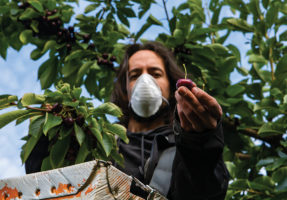
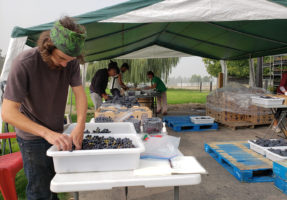
VANCOUVER – Demand for farm workers will hit 45,000 by 2025, up from approximately 43,300 in 2014, and while the increase doesn’t sound like a lot, an older, diminishing farm work force means there are a lot fewer people available than there was once was.

A recent report from the Canadian Agricultural Human Resource Council (CAHRC) pegs the shortfall in workers at 11,200 by 2025, up from approximately 9,000 today. Statistics Canada, in turn, estimates BC’s farm workforce at just 27,500 in 2014, suggesting the gap between demand and available workers could be even bigger.

To address the shortfall, the province announced $43,500 for a BC agriculture-horticulture sector labour market partnership on December 6.

“It’s looking at the semi-skilled and skilled level – the manager and above,” BC Agriculture Council executive director Reg Ens explains. “We’ve had a problem with low-skilled for a long time, and there’s some things that we’ve been doing to meet that need, but now we’ve identified this semi-skilled/skilled [shortfall].”

BCAC and the BC Landscape and Nursery Association will administer the funds, which will assist in bringing together industry associations and employers to determine the horticulture sector’s key labour force challenges.

“It’s cultivating connections and looking for opportunities. Are there pools of under-employed people that we’re not attracting?” Ens says. “Do these under-employed people that are interested know where the opportunities are?”

The project is set to complete by March 15. It complements similar initiatives for the landscape and abattoir sectors.

No small task

But resolving the labour issue isn’t easy. The lack of workers who are both reliable and equipped with the skills to handle the unique challenges of farm work has been a perennial problem in BC.

While proximity to urban areas should ensure ready access to a large pool of labour, there’s also greater competition from other sectors for workers. Often, the alternatives also pay better and have more attractive working conditions than field work.

“There is not a simple way forward,” says Debra Hauer, project manager with CAHRC.

She notes that BC is already doing plenty of things right: many employers in the province have low turnover and there are more than the usual amount of training programs, both formal and informal, highlighting opportunities in the sector. These include everything from Agriculture in the Classroom programs to sector-specific initiatives such as the organic sector provides.

“There’s lots of groups doing interesting things in British Columbia,” she says.

While some sectors, such as dairy and poultry, have embraced automation and face a shortage of workers with appropriate skills, the backbone of the BC farm labour force is horticultural workers. Approximately 48% of farm workers are engaged in producing and harvesting fruits, vegetables, flowers and other products.

CAHRC says the fact that many of these jobs are seasonal in nature works against employers.

Since few of the positions are year-round, many operations find themselves forced to let workers go, and then scramble to rehire staff in subsequent seasons.

The temporary nature of the work also creates a highly mobile workforce. This has led to many hort operations turning to foreign workers.

CAHRC said the shortfall in 2014 was made up through 6,800 temporary foreign workers (TFWs) – and even then, there was still a need for approximately 3,000 more domestic workers. The labour shortfall costs the sector approximately $70 million annually, CAHRC says.

With the shortfall in domestic workers increasing over the next decade, there are growing efforts to make it easier for farmers to hire foreign help.

“This may include re-evaluating the effectiveness of Canada’s immigration programs in terms of meeting the needs of the agriculture sector,” writes the Conference Board of Canada in a recent briefing paper, produced with CAHRC’s support. “Without TFWs, we may face the prospect of a significant portion of Canada’s arable land lying fallow. That would be a tragedy.”
Related Posts

You may be interested in these posts from the same category.

Province defrays COVID-19 costs

Rules for young workers

Fruit growers seek workers

BCAC shifts to advocacy

BC minimum wage increases

Flight ban strands workers

Don Dahr

Farm injury rate falls

Foreign worker vaccination prioritized

Growers anxious about labour

New year, new openness

SAWP requirements waived

Ottawa announces new rules for foreign workers

Previous Post: « Dairy vs eggs in outstanding young farmer competition
Next Post: Chilliwack dairy fined for allowing “culture of abuse” »

Copyright © 2026 Country Life in BC · All Rights Reserved