• Menu
  • Skip to primary navigation
  • Skip to main content
  • Skip to primary sidebar

Country Life In BC Logo

The agricultural news source in British Columbia since 1915

  • Headlines
  • Calendar
  • Subscribe
  • Advertise
  • About
  • Archives
  • Contact
  • Search
  • Headlines
  • Calendar
  • Subscribe
  • Advertise
  • About
  • Archives
  • Contact
  • Search

Primary Sidebar

Originally published:

NOVEMBER 2019
Vol. 105 Issue 11

Subscribe Now!

Sign up for free weekly FARM NEWS UPDATES

Loading form…

Your information will not be
shared or sold ever

Stories In This Edition

ALC gets an earful

Herding Hens

Food hub funding boost

Municipalities challenge ALC over process

No bad apples

Editorial: Taking stock

Back Forty: Remembering Aunt Dolly, and others

Viewpoint: Keeping BC farms (and farmers) growing

Farm status undermined by local bylaws

Big green gourd

Heavy rains don’t wash out potato hopes

Giant hornets headline beekeepers’ concerns

Honey producers honour industry leaders

Country Life in BC wins awards at conference

Bridging the urban-rural divide

New skills needed for technology-driven agriculture

Data drives more efficient poultry farming

Ag Briefs: New CEO appointed at BC Tree Fruits

Ag Briefs: Site launched for farmers’ institutes

Ag Briefs: Child labour feedback sought

Demand underpins cheesemaker’s expansion

Cranberry growers expect lower yields

Neighbours raise stink over cannabis farms

Sheep farmers share their experiences

Lots (and lots) of pumpkins

Federation moves forward on key initiatives

Riparian assessment requirements updated

On-farm slaughter a key skill for producers

On the move

Sidebar: Better than offal

Feedback on new watering regs a concern

Market Musings: The future in beef looks like a slam dunk

Growers all ears at silage corn field day

UBC dairy centre signs five-year lease

Falkland Dairy volume buyer at Holstein Sae

Mega-dairies are the future of US farms

Research: Bacterial leaf streak lacks chemical controls

Big beef show at BC Ag Expo

Farm News: Growing prospects brighten dark autum days

BC Young Farmers look to grow north

Horse Power

Day-long 4-H event puts emphasis on safety

Woodshed: Newt schemes to rescue Kenneth’s tractor

Good gourd! Giant vegetables weigh off

Jude’s Kitchen: Late fall harvest

More Headlines

Follow us on Facebook

Comments Box SVG iconsUsed for the like, share, comment, and reaction icons

2 hours ago

The Agricultural Land Commission is laying off staff after years of flat funding under the BC NDP. ALC chair Jennifer Dyson warns that application volumes, enforcement activity and legal obligations have all risen while its operating budget has stayed effectively flat — meaning longer wait times ahead for some services.

#BCAg
... See MoreSee Less

Link thumbnail

Land Commission lays off staff

www.countrylifeinbc.com

With no budget increase this year, the Agricultural Land Commission (ALC) is laying off six staff to make ends meet. “Ongoing financial constraints and the requirement to operate within the approved...
View Comments
  • Likes: 0
  • Shares: 1
  • Comments: 0

Comment on Facebook

6 days ago

A BC Forest Practices Board investigation has found overgrazing has damaged grasslands in the Coutlee Range Unit near Merritt — and the range-use plan meant to prevent it was unenforceable. With complaints about overgrazing on the rise and grasslands covering just 1% of BC's land mass, the findings raise fresh questions about how the province manages one of its most vulnerable — and valuable — food-producing ecosyste#BCAg#BCAg ... See MoreSee Less

Link thumbnail

Board finds overgrazing rules unenforceable unmeasurable

www.countrylifeinbc.com

MERRITT – A BC Forest Practices Board investigation has found instances of non-compliance related to overgrazing have damaged open grasslands in the Mine pasture, part of the Coutlee Range Unit near...
View Comments
  • Likes: 6
  • Shares: 6
  • Comments: 6

Comment on Facebook

Several ranchers in recent years have gone into temporary non use on that range , so that means the grass should grow. But drought conditions/lack of rain and snow don’t allow that to happen . Dried up springs , creeks waterholes in various pastures add to over grazing where there is water , as livestock and everything else stay close to the water source . So even though less cattle are on it , over grazing appears. There is a large volume of horses on it 365 days/year which is wrong ! They pull grass right out of the ground when it’s just trying to grow ,, opens the door for weeds to grow in. That don’t help it. Aging infrastructure ( fences) laying on the ground, pipe line building , ( lack of commitment to fence maintenance) amongst all users contributes also to over grazing. Recreational atv users leaving gates open between pastures allows livestock to go back or ahead in pastures also expidites over grazing. Logging ( bcts) has no problem laying out cut locks on both sides of a fence , then it gets smashed down during logging and they don’t take responsibility to stand it back up or clean the cattle gaurds out when they are done , that happened 4 years ago on pasture 5 up there . I bet it is still not fixed . There are lots of contributing factors to the problem.

Tragedy of the commons.

I looked through the report. I saw nothing about the effects of noxious weeds on productive grasslands. This particular area is vulnerable because of the Ministry’a efforts to diversify the use of the Grasslands.

This pasture is under tremendous pressure not only from cattle but from irresponsible local residents who treat it as a landfill dumping all manner of household debris here. And don't even get me started on the mud bogging and camping in sensitive riparian areas. The feral horses are in this pasture 365 days a year just hammering it. Would sure be nice to see some enforcement action on people who are intentionally ripping up the grasslands and riparian areas. Cattle could be a valuable resource for rebuilding soils and native grasses in this area with the help of electric fencing and/or e-collars. The humans will be harder to manage.

The Forest and Range Practices Act was written by lawyers for global forest licencee shareholders. Results-based = unenforceable.

Also, can we talk about the impact of a pipeline being built through the middle of this field for multiple years?

View more comments

1 week ago

East Kootenay rancher Randy Reay is digging a new well after two natural water sources dried up on his Crown tenures. A new Living Lakes Canada assessment found 15% of mapped aquifers in the region are high-priority for monitoring, yet 80% of those go unmonitored. With over 48% of BC's provincial observation wells reporting below-normal groundwater levels, ranchers and researchers are sounding the alarm on water security. The story is in our March edition, and we've posted it to our website thi#BCAgk.

#BCAg
... See MoreSee Less

Link thumbnail

Water woes: groundwater under pressure across BC

www.countrylifeinbc.com

JAFFRAY – As a young boy growing up in the Kootenay-Boundary region, Randy Reay never expected to run out of water. But this year, in mid-February, his fields are bare. There is no snow halfway up t...
View Comments
  • Likes: 8
  • Shares: 7
  • Comments: 1

Comment on Facebook

Jaffrey is in the east Kootenays not kooteney boundary

2 weeks ago

BC farmers are bracing for prolonged higher input costs as war in the Middle East drives up fuel and fertilizer prices. Nitrogen fertilizer costs were already climbing before the Iran conflict began, with prices still roughly 60% above pre-pandemic levels. Farm Credit Canada warns that unlike 2022, strong commodity prices may not offset rising costs this time. Local suppliers expect supply challenges and further price increases ahead.

#BCAg
... See MoreSee Less

Link thumbnail

Fertilizer prices on the rise

www.countrylifeinbc.com

War in the Middle East has delivered a generational shock to energy prices, meaning BC farmers can expect a prolonged period of higher costs not just for fuel but also for fertilizer.
View Comments
  • Likes: 2
  • Shares: 1
  • Comments: 0

Comment on Facebook

2 weeks ago

... See MoreSee Less

View Comments
  • Likes: 1
  • Shares: 0
  • Comments: 0

Comment on Facebook

Subscribe | Advertise

The agricultural news source in British Columbia since 1915
  • Email
  • Facebook

Honey producers honour industry leaders

New challenges demand new leaders for association

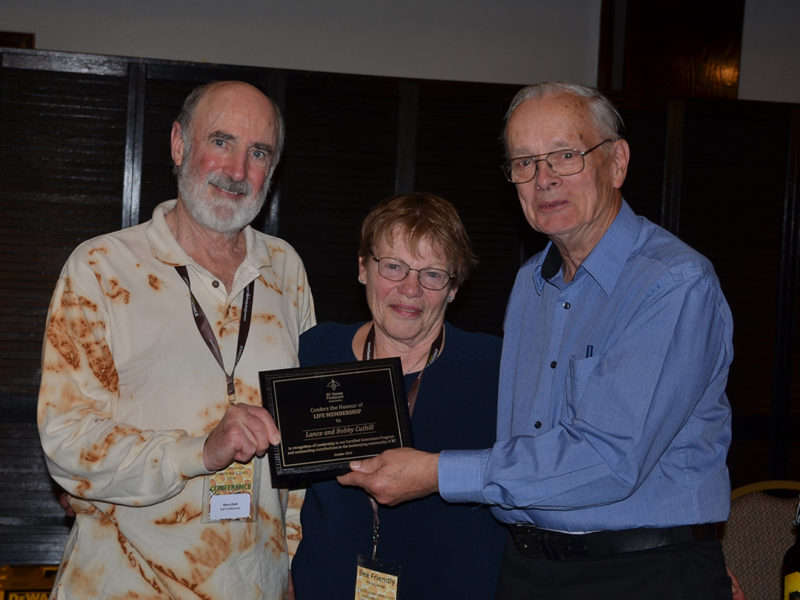
BC Honey Producers Association president Kerry Clark, left, presents Bobby and Lance Cuthill with a lifetime achievement award. TOM WALKER PHOTO

November 1, 2019 byTom Walker

by TOM WALKER

PRINCE GEORGE — The BC Honey Producers Association presented two lifetime achievement awards at its annual general meeting and conference in Prince George on October 4-6.

Lance Cuthill was honoured for his work in educating beekeepers.

“Lance’s volunteer work benefits all beekeepers across the province,” said BCHPA president Kerry Clark as he presented the award to Lance and his wife Bobby. “The program began in 2013 with three [certified instructors] and there are now 54 certified instructors who have taught over 1,200 people.”

The association also honoured former president and Duncan beekeeper Blaine Hardie, who passed away this past summer.

Stan Reist was one of several members who recounted the role Hardie and his wife Jan played in the association as well as his social contributions.

“BCHPA wouldn’t be in the position it is today without the two of them,” says Reist.

BCHPA is a much stronger organization than in the past, Jeff Lee, the outgoing first vice-president noted in his report during the association’s business meeting.

“The changes in the board have been a stabilizing force in the organization,” Lee says. “But ultimately the executive is guided by you, the membership.”

Young blood is also important.

While education days are a focal point for the association, many young apiarists can’t afford the time or money to attend.

“The education days have brought us out of debt,” Gerry Rozema of Rozehaven Farm in Campbell River observed. “But young members can’t afford to spend $600 to sit in a hotel room for three days.”

The club needs to consider ways to attract younger members to the executive, he said, noting: “There’s a lot of grey hair in this room.”

The need to cultivate new leaders comes at a time when the industry faces several challenges.

Reist, who represents BC on the Canadian Honey Council, gave the meeting an overview of the industry in his report.

In 2018, a total of 10,629 Canadian beekeepers kept 769,764 colonies producing an average of 123 pounds of honey each, or more than 93 million pounds worth $196.6 million.

But that is barely sustainable, says Reist.

“That revenue of $196 million equates to roughly $1.30 a pound, which is just above the cost of production for commercial operators on the Prairies,” he says.

Reist also discussed Germany’s planned ban on glyphosate, well-known as Roundup, which will be in effect by 2023.

“They are on the path to doing it regardless of the science that is published,” says Reist. “We do things differently.”

This includes publication by Agriculture and Agri-food Canada’s bee health roundtable, Practices to Reduce Bee Poisoning from Agricultural Pesticides, which is available at [www.pollinator.org].



Related Posts

You may be interested in these posts from the same category.

CFIA reports low honey adulteration

Asian Giant Hornet

Langley logs Asian hornet

Canada holds off Asian giant hornet restrictions

BC beekeepers go online

Bee

Agri-Innovation projects announced

Bee initiatives in focus

Better beekeeping, verified

Asian hornet identified

Fraser Valley bee shortage overstated

Research breeds better bees for Vancouver Island

Previous Post: « Ranchers voice ALR concerns at public meetings
Next Post: Peace funds start flowing »

Copyright © 2026 Country Life in BC · All Rights Reserved