
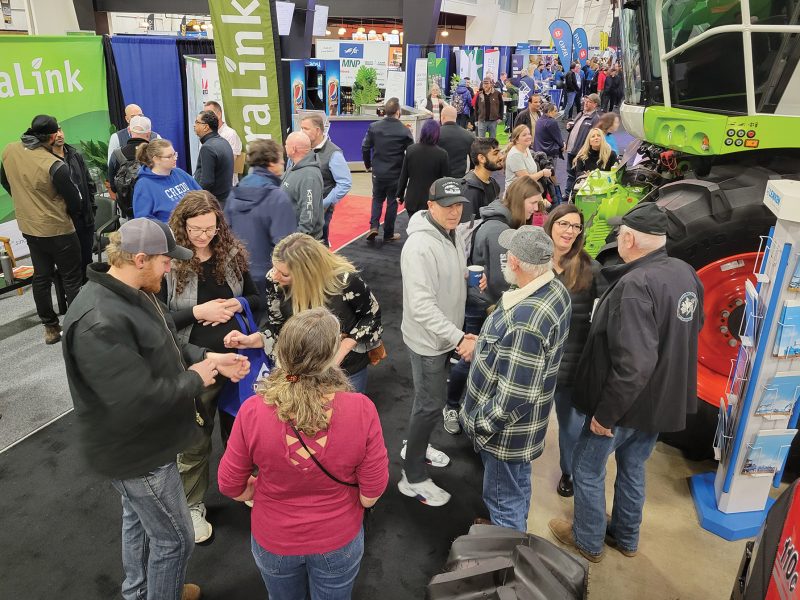
A key priority of the new provincial government when it comes to farmers and ranchers is water, and the Lower Mainland Horticultural Conference – organized by the province for the second year in a row this year – kicks off January 23 with an opening plenary dedicated to the topic.
University of the Fraser Valley assistant professor Chris Bodnar will lead the way with a presentation discussing how the agriculture sector can be a leader in water management, with a particular focus on the province’s nine-year-old water management regime. Sessions on soil moisture and irrigation management follow, while some participants may opt for the vegetable stream that digs into potato management or check out the farm business management sessions focused on managing teams and managing risk.
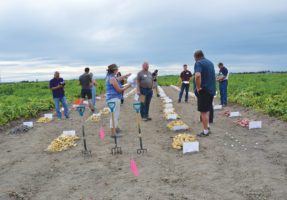
The vegetable stream flows throughout the day. The initial workshops on potatoes will review the results of the 2024 variety trials in Delta, pick up the water theme with a discussion of nutrient and water management and hear about blemish diseases such as scab, silver scurf and black dot from North Dakota State University researcher Gary Secor.
The afternoon sessions will treat field vegetable growers to presentations on pests and diseases, including cabbage root maggot and late blight, as well as tips on optimizing spray management. A panel discussion with representatives of Norseco, Stokes and West Coast Seeds will explore the options available to commercial growers in 2025, with a focus on the best options for local conditions.
Vegetables are a major focus of organic growers, as is pest and disease management in those crops given the limited number of acceptable options. While the toolbox for all growers is limited, organic growers face special needs. Mark Ledebuhr, principal consultant with Application Insight LLC of Lansing, Michigan, will discuss spray optimization in fruits and vegetables as well as strategies specific to organic systems. “Sprayers were never designed for modern organic materials, but that doesn’t mean they can’t be sprayed effectively,” he notes.
Tech check
The separate innovation day of years past is subsumed this year with the regular flow of the horticulture conference. Agritech has been a priority of the provincial government, which has supported a number of recent projects, and Bryan Wattie, director of agritech adoption at Innovate BC will moderate a panel discussion on Friday morning providing first-hand accounts of adopting technology from farmers themselves. Speakers include Chris Bodnar of Close to Home Organics in Abbotsford; Michel Van Eekelen, a partner in Van Eekelen Enterprises, also of Abbotsford; Andrew Budgell at Laughing Crow Organics in Pemberton and Raj Hayre, director of special projects at Randhawa Farms in Abbotsford. The discussion sets the stage for a second panel on the use of artificial intelligence (AI) to solve everyday challenges, improve efficiency, and transform farm operations. Panellists include berry grower Sukh Kahlon, plant propagator Leo Benne, greenhouse vegetable grower Ruben Houweling and Chris Payne, COO and CFO of 4ag Robotics, which has developed an autonomous mushroom harvester.
Of course, innovation takes money, and Farm Credit Canada will round out the morning with expert advice on preparing financially to acquire and deploy on-farm technology.
Hot house flourishes
Vertical farms have popularized the term controlled environment agriculture, but greenhouse growers have been controlling growing conditions for years with their technology-intensive systems.
Choosing the right technology that will maximize returns in the market is important, of course, and floriculture sessions on Friday morning will discuss marketplace trends for cut flower and nursery growers, as well as thrip-management strategies.
The focus will turn to greenhouse vegetables on Friday afternoon, with a mix of sessions focusing on managing diseases including greenhouse pepper fusarium rot and Tomato Brown Rugose Fruit Virus (ToBRFV) as well as the use of technology.
Yet management smarts come first, with Tim Dumas, executive strategy coach with BC-based Servus Leadership Inc. providing an overview of the business management skills and strategies that owners and operators of greenhouse vegetable facilities can utilize to run their businesses and manage their staff more effectively.
The afternoon sessions culminate in technologies for greenhouse growers. Well-known presenter Youbin Zheng from the University of Guelph will present on artificial intelligence applications in commercial greenhouses, while McGill University’s Mark Lefsrud will provide an update on current and upcoming options for substrate sensors to help greenhouse vegetable growers better understand their growing medium.
The day closes out with SFU professor Majid Bahrami reviewing the use of alternative energy sources in greenhouse vegetable production to reduce costs and increase efficiency of energy usage, as well as reduce greenhouse gas emissions.
Shell shocks
What does the year ahead hold for hazelnuts? Well-respected speaker Nik Wiman of Oregon State University will share management lessons from Willamette Valley growers on Friday afternoon while Kevin Hooge and Steve Hope of Fraser Valley Hazelnuts will offer a market outlook drawing on trends in local and international markets.
Following a short break, the importance of disease management as the resurgent threat of Eastern Filbert Blight looms will be on the agenda as well as lessons from Chile delivered by Jorge Mohr, co-founder of Chile’s Nefuen Trading.
Organic growth
Picking up where Thursday’s session on spraying practices left off, Saturday will offer a half-day of organic vegetable production sessions, including a session on controlling brassica diseases.
Nutrient management and estimating nitrogen release from cover crops will give growers time to geek out on understanding what’s in their soils and how to measure it.
Weed seeds are among the less desireable things that get into soils, and a panel discussion will cover off tractor-mounted weeding options, including both traditional options as well as robotic options.
Blue spread
Blueberries have typically been an all-day affair on the third day of workshops at the Pacific Agriculture Show, but the abbreviated schedule this year means the fun begins Friday, January 24 with sessions on field management beginning with this year’s top theme – water.
USDA research horticulturalist Dave Bryla will address the water needs of young blueberries, building on past sessions that focus on water uptake throughout the season under different circumstances.
Two sessions Friday afternoon on will focus on the assessment of fields, with Innova8.ag founder Steve Mantle discussing the US Highbush Blueberry Council’s BerrySmart project that aims at optimizing production, and Rick de Jong of Agro-K unpacking how nutrient sap analysis can contribute to better blueberry health and yields.
Blueberry health will continue to be in focus on Saturday, January 25, with sessions on blueberry scorch and a panel discussion on maintaining the health of new plantings.
But field health isn’t the only determinant of success: blueberries rely on bees, and pollination will be the topic of an hour’s worth of presentations on Saturday morning.
Of course, no blueberry session would be complete without an update from breeder Michael Dossett on variety development efforts, while Cort Brazelton returns with his take on global production and market trends.
Cream of the crop
This year marks the return of tours of Lower Mainland dairy farms the day before the Pacific Agriculture Show.
Prior to the pandemic, self-guided tours were a popular staple that gave farmers a chance to socialize and see what other local producers were doing to improve their operations.
This year, BC Dairy in partnership with Westgen has organized the WestGen Farm Tour for
January 22, billed as “an exclusive day of learning and innovation in dairy farming.”
A nominal fee of $20 buys participants a seat on the bus leaving WestGen’s headquarters in Abbotsford for four farms showcasing advances in dairy practices and technology. These include innovations related to herd health, robotics, manure management and the improvements possible when farms make the jump from bull breeding to artificial insemination powered by genomic testing.
The exact itinerary is subject to restrictions related to the ongoing avian influenza outbreak in the Fraser Valley. (The tour will respect control zones around infected poultry premises, while a positive bovine case would shut the event down entirely.)
The tour begins at 9 am and completes shortly before 4 pm, giving participants plenty of time to clean up for the BCAC Ag Gala that evening at the Clarion Hotel and Conference Centre.
Dairy producers will have a further chance for in-person learning and socializing the following day when BC Dairy hosts a hot buffet lunch for producers. The program, scheduled for 11:30 am-2 pm on January 23 in the FCC Lounge, features opportunities to learn about emergency management, the Temporary Foreign Worker Program and animal health.


 Growers Supply property sold