
SALT SPRING ISLAND – When the Islands Trust governing council met on Salt Spring Island on June 18-20, it took a moment to acknowledge its 50th anniversary as a special-purpose government stewarding more than 450 islands and the waters of what’s now known as the Salish Sea.
Created on June 5, 1974, the Islands Trust was one of a number of progressive initiatives the Dave Barrett government implemented with a view to protecting British Columbia at a time of heightened awareness of its precious natural resources and the wide variety of benefits they provide.
Originally designed to protect the Gulf Islands in the same way the Agricultural Land Reserve protects farmland, many farmers say the Islands Trust has delivered diminishing returns.
“Deep down, their idea of protecting farmland is just to protect it where absolutely nothing gets done on it,” says John Money, whose family farmed on Saturna Island and who served on the Islands Trust council for 21 years until 2010. “I’m all for protecting farmland, but let’s realize what you’re protecting it for.”
The original vision of protecting what made the Gulf Islands unique worked for several years but Money says the trust seems to have lost its way, paying less attention to sustaining complete communities on the islands.
“The Islands Trust has too many people trying to protect this perceived dream of living in utopia, but the fact is, everywhere should try and remain self-sustaining, so if you’re going to have a community, you need a mix of people and you need an economy,” he says, “You’ve got to meet a balance.”
The trust operates under the oversight of the BC Ministry of Municipal Affairs, and its wide-ranging responsibilities mean that agriculture is one of many interests it’s trying to balance. While the Agricultural Land Commission Act regulates 264 acres of farmland within the entire Islands Trust area (about 14% of the land base), agriculture itself is subject to the Islands Trust’s policy statement, now under revision as part of the Islands 2050 initiative launched in 2019.
The update is the first since 1994, and the draft statement addresses concerns that have come to the forefront since then, including reconciliation with Indigenous peoples, climate change and affordable housing.
A draft proposed in 2021 was shelved due to resident opposition. Many farm groups, including the Pender Island Farmers Institute, criticized a lack of transparency and consultation regarding the wording and policies around agriculture.
“We had some pushback around some of the regulations and thinking that was going on, and that communities and people are not necessarily ready for some more restrictive legislation,” says Islands Trust council chair Peter Luckham.
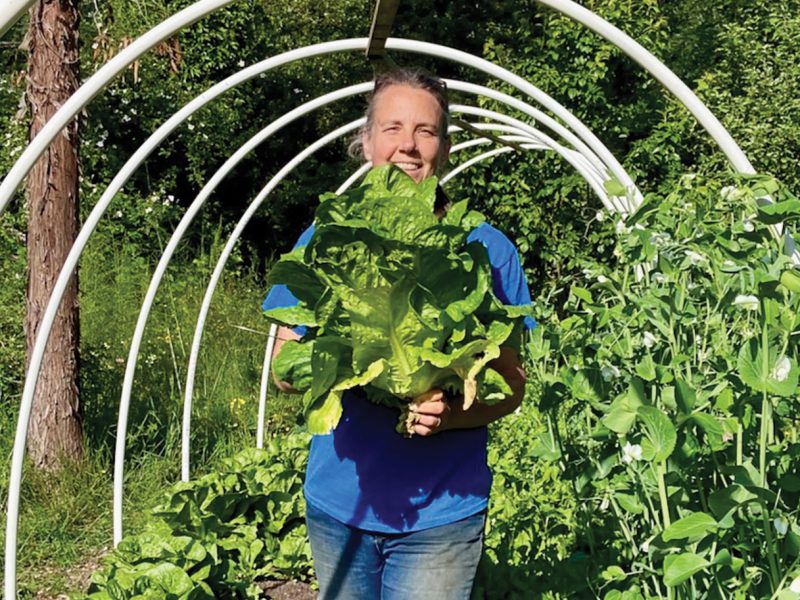
The first iteration of the statement was too prescriptive, says Gulf Islands Food Co-op president and grower Roz Kempe.
“If they were saying it should be sustainable, regenerative agriculture, that’s good, but then who are they to say what that is? How would they define that?” she says. “They’re getting a bit too far down into an area they shouldn’t be.”
On May 30, the trust council considered a second draft of the policy statement outlining five policies for local farmland: identify and protect agricultural lands for current and future use consistent with the Agricultural Land Commission Act; minimize any adverse impacts of land uses from adjacent properties on agricultural lands; ensure roads and utility corridors are appropriately situated to minimize agricultural land fragmentation; strive to preserve, protect and encourage sustainable farming and sustainability of farming; and strive to address land uses and activities that support the economic viability of farms without comprising the land’s integrity.
The new draft does not define “agriculture” or “regenerative,” and provides a generic definition for sustainable – “capable of being maintained indefinitely.”
Kempe is pleased that the new draft addresses housing and water, two issues that directly impact island producers.
“Housing is a massive issue,” Kempe says.
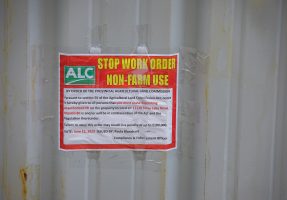
Agricultural Land Commission rules govern what happens within the ALR, and Islands Trust council members regularly correspond with the ALC to address issues related to farmland and food production.
But the Islands Trust has no published guidelines regarding what kinds of agritourism it deems acceptable and aligned with its own mandate to steward the Gulf Islands.
This includes units for vacation rentals, which the province has allowed so that farmers can diversify their revenue but which could also be addressing the shortage of Gulf Islands farm workers.
“It’s very much a gray area for the Islands Trust, and whether to allow buildings to be constructed for agritourism,” Kempe says. “The short-term vacation rental is such a problem area. Is that providing housing for temporary farm workers?”
Luckham says farm worker housing is important, but the jurisdiction of the ALC.
“Farm worker housing is an important element, and the Agricultural Land Commission has been restricting in the kinds and types and shapes of housing on agricultural land, and rightfully so. They don’t want any kind of housing to impact the agriculture there,” says Luckham. “We certainly look towards a future of more equitability there associated with housing and farmworker housing, particularly seasonal types of housing.”
Support for infrastructure including farmers markets, roads, composting facilities, abattoirs and water are embodied in the policy statement, Luckham says, but once again points to the ALC as the ultimate regulator.
“There will definitely be some impacts. Ultimately, however, the Agricultural Land Commission has the authority to allow or disallow certain kinds of activities or exemptions,” he says.
Water is the one issue where the Islands Trust has greater authority, Kempe says. While it doesn’t regulate groundwater, it has the power to regulate the forestry companies operating within its area.
By engaging with forest managers, the Islands Trust could significantly benefit local aquifers.
“A lot of people don’t understand the physiological connection between forests and groundwater,” Kempe says. “I think if the Islands Trust could be successful in truly preserving and protecting [our forests], then agriculture would be better off.”
Following further council meetings this summer and a six-month public consultation period this fall, the new policy statement could be implemented as early as next year, setting the stage for the trust’s next 50 years.
“We’re committed to taking as much time as is necessary for everyone to understand what this means,” Luckham says. “We are interested in looking at how to alleviate hurdles … to support those in our community that are struggling to farm. We will be working with those communities rather than against them.”


 Agriculture ministers head north