• Menu
  • Skip to primary navigation
  • Skip to main content
  • Skip to primary sidebar

Country Life In BC Logo

The agricultural news source in British Columbia since 1915

  • Headlines
  • Calendar
  • Subscribe
  • Advertise
  • About
  • Archives
  • Contact
  • Search
  • Headlines
  • Calendar
  • Subscribe
  • Advertise
  • About
  • Archives
  • Contact
  • Search

Primary Sidebar

Originally published:

JULY 2025
Vol. 111 Issue 6

Subscribe Now!

Sign up for free weekly FARM NEWS UPDATES

Loading form…

Your information will not be
shared or sold ever

Stories In This Edition

Happy anniversary

Ranchers talk tough

New disease threatens birds

BC-bred blueberry set for commercial release next year

Editorial: The harvest of peace

Back 40: The good, the bad, and the so-so

Viewpoint: Dairy sector challenges misunderstood

Regulatory hurdles threaten farm income solutions

Task force tackles agricultural water crisis

Potato heads

Ag Briefs: Potato grower forge cross-border partnership

Ag Briefs: Fraser Valley recycles ag plastics

Ag Briefs: Province funds nutrition coupons

Early fire season highlights need for preparation

Berries ripen early into a jammed market

Greater enforcement needed to crack down on illegal fill

Shrinking cattle herd drives prices to record highs

Environmentally friendly

National leaders byoyed by strong beef market

BC bison producers eye growth opportunities

Turning reclaimed oil sites into good grass

Sustainable grazing practices drive success

Summer school cultivates future farmers

Saskatoon farmers distill success from berries

Farm powered by ingenuity and electricity

Small pests create big issues if left unchecked

Farm Story: Flips twixt the cup and farmer’s lip

Bountiful harvest

Woodshed: Ashley and Newt share one of Gladdie’s secrets

Institute provides farmers access to vital equipment

Jude’s Kitchen: Enjoy Canada Day appies on the patio

All content on this website is copyrighted, and cannot be republished or reproduced without permission.
More Headlines

Follow us on Facebook

Comments Box SVG iconsUsed for the like, share, comment, and reaction icons

1 week ago

Canada's mushroom growers will have to post countervailing duties next week following a US Department of Commerce determination that Canada's tax regime effectively subsidized growers, allowing them to cause "material injury" to US growers through their exports. Canada is a major exporter of mushrooms to the US, with the countries effectively operating as a single value chain thanks in part to one of the largest mushroom producers, South Mill Champs, headquartered in Pennsylvania.

#BCAg
... See MoreSee Less

Canadas mushroom growers will have to post countervailing duties next week following a US Department of Commerce determination that Canadas tax regime effectively subsidized growers, allowing them to cause material injury to US growers through their exports. Canada is a major exporter of mushrooms to the US, with the countries effectively operating as a single value chain thanks in part to one of the largest mushroom producers, South Mill Champs, headquartered in Pennsylvania.

#BCAg
View Comments
  • Likes: 2
  • Shares: 2
  • Comments: 0

Comment on Facebook

1 week ago

... See MoreSee Less

View Comments
  • Likes: 6
  • Shares: 0
  • Comments: 0

Comment on Facebook

1 week ago

The Jura Ranch near Princeton sold for nearly $5.3 million on May 12, the largest online ranch sale in BC in months, according to CLHBid.com, which handled the sale. The buyer was not named. Formerly owned by Rob and Kelly Lamoureux, which developed the successful Jura Grassfed brand, the ranch includes 2,625 deeded acres and a grazing licence totalling 83,698 acres. Originally offered at $4.2 million, the competitive bidding process delivered a higher value than the current market would suggest. Farm Credit Canada’s latest farmland value survey pointed to 1.7% decline in BC last year, which observers have attributed to tight margins and uncertainties related to Crown tenure.

#BCAg
... See MoreSee Less

The Jura Ranch near Princeton sold for nearly $5.3 million on May 12, the largest online ranch sale in BC in months, according to CLHBid.com, which handled the sale. The buyer was not named. Formerly owned by Rob and Kelly Lamoureux, which developed the successful Jura Grassfed brand, the ranch includes 2,625 deeded acres and a grazing licence totalling 83,698 acres. Originally offered at $4.2 million, the competitive bidding process delivered a higher value than the current market would suggest. Farm Credit Canada’s latest farmland value survey pointed to 1.7% decline in BC last year, which observers have attributed to tight margins and uncertainties related to Crown tenure.

#BCAg
View Comments
  • Likes: 40
  • Shares: 10
  • Comments: 4

Comment on Facebook

I sure hope it remains as farm land rather than a wind or solar installation.

Great grassland

yeah, who bought it? where are the checks and balances that ensure a ranch can continue being a ranch?

Uncertainty about crown land, aka native land grabs and unceded land claims being tossed around like it wasn't meant to destabilize the country?

2 weeks ago

American businessmen have quietly accumulated nearly 4,000 acres of farmland in the Robson Valley community of Dunster, sparking calls for restrictions on foreign and corporate agricultural land ownership in BC. Residents say the buy-up has driven population decline and priced out young farmers. MLAs from both parties and a UNBC professor are pointing to Quebec's new farmland protection legislation as a model BC should follo#BCAg#BCAg ... See MoreSee Less

Link thumbnail

Foreign land buyers hollow out Dunster

www.countrylifeinbc.com

DUNSTER – Purchases of swathes of farmland in the Robson Valley by wealthy American businessmen have some in BC demanding restrictions on foreign and corporate ownership of agricultural land.
View Comments
  • Likes: 26
  • Shares: 3
  • Comments: 1

Comment on Facebook

This is a serious issue in Dunster and one that has impacts for wildlife and human neighbours.

2 weeks ago

Representatives from Quail's Gate Winery Estate Winery in West Kelowna were panellists during the Okanagan Cultivates event held at Okanagan College's Kelowna campus on May 7. The college has been hosting events like this to help elevate conversations in the community about what's grown locally and its impact on the region's food, wine and tourism industry. The Quail's Gate panel, which included Ben Stewart, discussed the long history of grape growing and winemaking in front of a large crowd who came to listen, learn and taste products from a number of local wineries and restaurants. A new $48.8M food, wine and tourism centre is now under construction at the college to open in fall 2027. The building will have modern food labs, a student-led restaurant and café and specialized training spaces for culinary, viticultu#BCAgd tourism studies.

#BCAg
... See MoreSee Less

Representatives from Quails Gate Winery Estate Winery in West Kelowna were panellists during the Okanagan Cultivates event held at Okanagan Colleges Kelowna campus on May 7. The college has been hosting events like this to help elevate conversations in the community about whats grown locally and its impact on the regions food, wine and tourism industry. The Quails Gate panel, which included Ben Stewart, discussed the long history of grape growing and winemaking in front of a large crowd who came to listen, learn and taste products from a number of local wineries and restaurants. A new $48.8M food, wine and tourism centre is now under construction at the college to open in fall 2027. The building will have modern food labs, a student-led restaurant and café and specialized training spaces for culinary, viticulture and tourism studies.

#BCAg
View Comments
  • Likes: 8
  • Shares: 0
  • Comments: 0

Comment on Facebook

Subscribe | Advertise

The agricultural news source in British Columbia since 1915
  • Email
  • Facebook

Regulatory hurdles threaten farm income solutions

Powell River farmers struggle as ALC blocks diversification plans

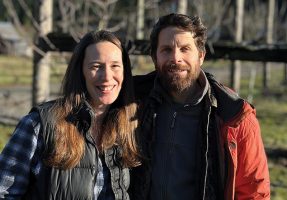
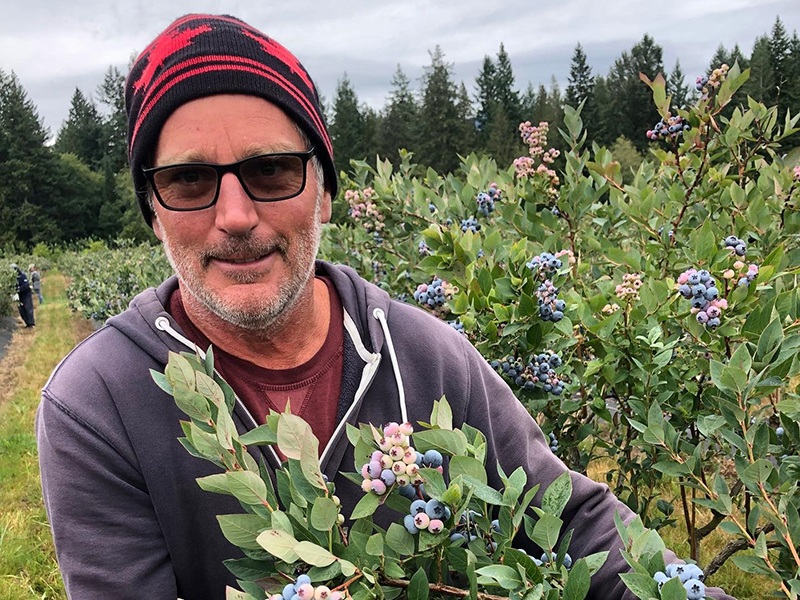
Roger Duyvesteyn is a fifth-generation farmer who with his wife Debbie built a successful berry business on the Sunshine Coast. Regulatory requirements have made it tough to diversify to meet rising costs, forcing tough decisions about the future. FACEBOOK / COAST BERRY CO. LTD.

July 1, 2025 byPeter Mitham

POWELL RIVER – Two decades of farming on the Sunshine Coast could be nearing their end for a Powell River couple following the Agricultural Land Commission’s rejection of proposals aimed at diversifying their operation.

“It’s not easy. With the cost of everything going up, most farmers are starting to go, ‘hey, we’ve got to diversify,’” says Debbie Duyvesteyn, who with her husband Roger operates Coast Berry Co. Ltd. in Powell River.

The couple established the farm in 2006, transforming the 43-acre property into a productive strawberry and blueberry operation engaged in direct sales and packing berries for sale at grocery stores south to Gibsons.

“We built a processing plant,” she said. “[But] the farm’s not making enough money to sustain it all.”

The past couple of years have been particularly hard.

The cost of strawberry plants rose to 60 cents from 13 cents, while the soil used in the farm’s raised-gutter production system tripled in cost.

“That soil has to be replaced every three years, due to a lack of nutrients,” Duyvesteyn says. “Last year and this year, we only planted half the field of strawberries because we couldn’t afford the soil.”

Yields have also been lower, due in part to weather, and it’s been tough to raise prices even on farmers market sales given the price-sensitivity of consumers.

“We didn’t raise the price too much last year; we put less berries in the containers to try to offset the cost (shrinkflation), which a lot of people did. And you barely cover the cost,” she says.

The result was an underwhelming income that prompted them to consider hiving off a 10-acre portion of their property for sale to others, potentially a family that wanted to establish a market garden. Application was made to the Agricultural Land Commission (ALC) last year, and a decision was handed down in December.

“We’re never going to farm over there; we can barely manage what we’ve got over here,” Duyvesteyn says. “But [the ALC] came back and said no, because it would give us opportunity to have more housing on the land and take away from valuable farmland.”

The couple then drafted a proposal for an agri-tourism operation, including 10 RV pads for seasonal accommodation. But in order to proceed, they needed a permit to bring in gravel.

“We already have approval to do septic and get a driveway put in, but the rules on ALR land are, if you want to bring one ounce of fill or gravel in or out of your farm, you need to have permission from the ALC,” she says. “And we were rejected.”

While the local farmers institute opposed the subdivision application on the grounds that it would open the door to housing on farmland, qathet Regional District endorsed the agri-tourism plans. Duyvesteyn says the ALC never provided a clear explanation for its rejection of seasonal accommodation.

“I said, ‘What box is it that we’re not ticking?’” she recalls. “[The planner] couldn’t tell me. … They told me, ‘Apply for a non-farm use.’”

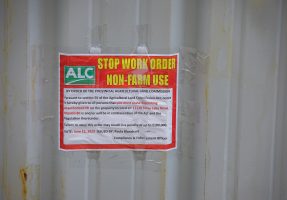
The rejection was especially frustrating because a property across the road from Coast Berry continues to receive loads of fill three years after the ALC issued a stop-work order.

Powell River is also home to year-round RV parks, a boat repair business and other ventures not engaged in agricultural production.

“How come no one’s inspecting all this protected farmland?” she asks. “Then you have people like us that are farming at a fairly decent rate and we ask to have a little bit of gravel on here to extend the farming business and they say ‘no.’ … We should have just gone and done it. We probably would have gotten away with it. How would anybody know?”

Underfunded, understaffed

ALC staff told her the pressure on their resources have been ongoing for the past three years, a point agriculture minister Lana Popham acknowledged when MLAs reviewed her ministry’s budget in the legislature earlier this year.

Nominal increases over the past five years have given the ALC an annual budget of $5.5 million this year, up from $4.9 million in 2020 – an increase that’s lagged inflation, even as demands on enforcement staff have increased.

With more people working from home during the pandemic, more eyes were on farm properties, meaning more issues came to the fore. Many people also saw opportunities to start home-based businesses, while cost pressures saw farmers look for ways to add income streams.

This has resulted in increases in fill deliveries as well as agri-tourism ventures that aren’t fully compliant with existing regulations. These contributed to 1,049 active investigations at

March 31, up 13% from a year earlier.

“The average workload per officer is now 171 files for each of the six officers and continues to grow,” said ALC operations director Avtar Sundher.

Several farmland owners have established event venues both in the Lower Mainland and less populated areas to capitalize on the appeal of a country setting.

Delta, for example, is taking a closer look at applications for new construction on farmland after the discovery that some structures that received approval as farm buildings were hosting events and providing accommodation.

While diversification of on-farm revenue was envisioned as part of provisions allowing for additional dwelling units on farms under rules that came into effect in 2022, the rules still need to be followed.

This is what frustrates the Duyvesteyns, who sought to follow the rules and have no desire to sidestep due process at this point. Doing so would be in direct contravention of ALC decisions, potentially complicating any future application.

But the frustrations have robbed them of any immediate desire to submit further applications, especially if there’s no guarantee of success. Instead, they plan to sit tight and bide their time.

Duyvesteyn’s husband is a fifth-generation farmer whose parents emigrated from Holland in the 1970s and established a thriving greenhouse in the Lower Mainland. Challenges aren’t unknown, but the restrictions on diversification present a near-existential challenge to them.

“We’re telling our kids, ‘Don’t be involved. Go get careers outside the farm because it’s not going to work,’” Duyvesteyn says. “You can’t just keep getting deeper and deeper into debt.”

Squeezed by production costs and without alternative sources of income, the Duyvesteyns find themselves quite literally at a loss. The only consolation is that they’re not the only farmers in BC facing tough choices.

“We don’t really want to stop. We love what we do. But we have to live,” she says. “I know we can’t be the only farmers going through this with the ALC.”


All content on this website is copyrighted, and cannot be republished or reproduced without permission.
Related Posts

You may be interested in these posts from the same category.

Reclassification sparks farm definition debate

Islands Trust sidelines ag in policy statement

ALC rejects Cowichan dike removal

Council calls for review of farm classification rules

Landowners push back against rail trail plans

ALC members appointed

Islands Trust turns 50

Illegal dumping surges on Fraser Valley farmland

Premier boosts fill enforcement

Kelowna fallow farmland returns

ALR policy review shows room for improvement

ALR settles Treaty 8 claims

Previous Post: « Showdown looms over co-op’s surplus
Next Post: On the rebound »

© 2026 COUNTRY LIFE IN BC - ALL RIGHTS RESERVED