• Menu
  • Skip to primary navigation
  • Skip to main content
  • Skip to primary sidebar

Country Life In BC Logo

The agricultural news source in British Columbia since 1915

  • Headlines
  • Calendar
  • Subscribe
  • Advertise
  • About
  • Archives
  • Contact
  • Search
  • Headlines
  • Calendar
  • Subscribe
  • Advertise
  • About
  • Archives
  • Contact
  • Search

Primary Sidebar

Originally published:

March 2017
Vol. 103 Issue 3

Subscribe Now!

Sign up for free weekly FARM NEWS UPDATES

Loading form…

Your information will not be
shared or sold ever

Stories In This Edition

Mother Nature packs a wallop

IAS Coleman Meadows Water Buffalo Cheese

PAS draws record attendance

Snow hampers annual FCC event

Enderby milk producer recognized: Gala

Editorial: Mind your business

Back Forty: It’s a tough long road

Viewpoint: BCCGA Sustainability, supply mgmt

Right to farm review concludes in fall

Safety without borders

BCFGA president returned by acclamation

Resolutions identify industry concerns

Coldstream reviewing noise bylaws

Biogas conference highlights opportunities

Well licensing frustrates producers

PAS photo – egg sorter

Ambitious export plans

New app helps stop spread of apple pest

Pressures increasing North of Fraser

Snow days at Islands Ag Show

Island farmers get direct marketing tips

Cherry growers eye new markets, pests

Rent surprise: UBC dairy centre

Photo: Scotia Bank Succession Award

Hazelnut growers eye new varieties

Food safety regs open for comment

Organic dairies embracing automation

Tour planner bids adieu

Specialist delivers rational for ration prep

Photo: Gala – ag safety award

Dairy advancements north of Fraser

Research: What the public thinks about dairies

Risk management key for beef producers

Water supplies will determine future’s food…

Co-operative effort puts food testing within reach

Photo: Poultry in motion IAS

On the election trail

Snow pack lows reduce flows

Photo: Spuds in Tubs

Top fruit growers honoured

Solar-powered weather stations

Results beginning to germinate

Forage manual now available

Make a statement with farm safety policy

Photo: PAS

Progress slow, steady on berry selections

Researchers have basketful of berry options

Photo: PAS

Berry growers face grim outlook

Photo Gala AITC

Soil compaction is preventable

Hopeful beekeepers swarm to courses

Night market fills gap

Wannabe

Got poop?

Working multiple jobs

Woodshed

Judes

All content on this website is copyrighted, and cannot be republished or reproduced without permission.
More Headlines

Follow us on Facebook

Comments Box SVG iconsUsed for the like, share, comment, and reaction icons

2 hours ago

A draft update to the Code of Practice for the Care and Handling of Beef Cattle is now open for public comment until June 12. The code, one of 14 animal care codes developed and maintained by the National Farm Animal Care Council, is undergoing a routine 10-year review. "Your feedback will help shape the industry's guide to cattle welfare for the next decade," says Canadian Cattle Association policy manager Jessica Radau, urging producers to weigh in. For more information, visit tinyurl.com/58a3u9fz.

#BCAg
... See MoreSee Less

A draft update to the Code of Practice for the Care and Handling of Beef Cattle is now open for public comment until June 12. The code, one of 14 animal care codes developed and maintained by the National Farm Animal Care Council, is undergoing a routine 10-year review.  Your feedback will help shape the industrys guide to cattle welfare for the next decade, says Canadian Cattle Association policy manager Jessica Radau, urging producers to weigh in. For more information, visit https://tinyurl.com/58a3u9fz.

#BCAg
View Comments
  • Likes: 2
  • Shares: 0
  • Comments: 1

Comment on Facebook

I sat in the webinar yesterday by the Canadian Cattle Association. My initial concern was that this would be another "play" into the government's hands. It has been worked on by people that are actually in the Beef industry from Cow calf to feedlot. The thrust is an update of the 2013 Code of Practice which was reviewed in 2018. The changes are more a move from "left to the producers discretion" to clearer directions regarding pain management, proper transport of animals which are impaired and keeping cattle in in good condition. Much of what is recommended is what producers who care about animal husbandry already do. The important part is to GIVE THEM FEEDBACK good, bad or otherwise. The document is about 60 pages long, and I ran it through CHAT to see what had been changed. It is important to understand that the PUBLIC is invited to comment on the draft not just producers. Think about it... do you really want the public influencing how you manage your cattle. If you think that this is just one of those things, I have been following Bill 22 in Alberta which will grant the SPCA a proactive roll in entering farms and checking on animals. When I asked CHAT how the new bill relates to the Cattle Code, it came back that the Code although not a regulation will be able to be used as a guide by producers for backup in dealing with the SPCA regarding cattle conditions, sick animal handling etc. Take the time.... Go onto the Canadian Cattle Association website and speak to those parts that you wish to input.

1 day ago

According to the BC River Forecast Centre, the Okanagan snowpack stood at just 58% of normal on April 1 — the lowest reading since measurements began in 1980 — raising concerns about drought conditions in the region this summer. The rest of the province sits at 92% of normal.

#BCAg
... See MoreSee Less

According to the BC River Forecast Centre, the Okanagan snowpack stood at just 58% of normal on April 1 — the lowest reading since measurements began in 1980 — raising concerns about drought conditions in the region this summer. The rest of the province sits at 92% of normal.

#BCAg
View Comments
  • Likes: 3
  • Shares: 0
  • Comments: 0

Comment on Facebook

2 days ago

At her first AGM as executive director of BC Meats, held Saturday in Abbotsford, Jennifer Busmann spoke about her strong ties to agriculture and her optimism for the organization's future. Busmann has cattle of her own and came to the role with existing relationships with members and the board of directors that helped her feel integrated from the start. She stepped into the position in Februa#BCAg#BCAg ... See MoreSee Less

At her first AGM as executive director of BC Meats, held Saturday in Abbotsford, Jennifer Busmann spoke about her strong ties to agriculture and her optimism for the organizations future. Busmann has cattle of her own and came to the role with existing relationships with members and the board of directors that helped her feel integrated from the start. She stepped into the position in February.

#BCAg
View Comments
  • Likes: 6
  • Shares: 0
  • Comments: 0

Comment on Facebook

4 days ago

Shannon Wiggins of Headwind Farm in North Saanich is this year's Mary Forstbauer Grant recipient from the BC Association of Farmers Markets. The $500 grant will help Wiggins expand her plot at Sandown Centre for Regenerative Agriculture, growing more storage crops to extend her harvest season. Wiggins credits farmers markets with inspiring her own farming journey and commitment to building community through food. Congratulations!

tinyurl.com/45bdd#BCAg#BCAg
... See MoreSee Less

Shannon Wiggins of Headwind Farm in North Saanich is this years Mary Forstbauer Grant recipient from the BC Association of Farmers Markets. The $500 grant will help Wiggins expand her plot at Sandown Centre for Regenerative Agriculture, growing more storage crops to extend her harvest season. Wiggins credits farmers markets with inspiring her own farming journey and commitment to building community through food. Congratulations!

https://tinyurl.com/45bddtw8

#BCAg
View Comments
  • Likes: 46
  • Shares: 2
  • Comments: 3

Comment on Facebook

Wahoo! Congrats Shannon! I love your produce. Can’t wait for the radishes 🫜

Congratulations!

Well done!! 🩷🩷🩷

6 days ago

New farmers can avoid costly mistakes by learning from those who've been there. At a Young Agrarians mixer in Penticton, five BC farmers shared hard-won lessons on pricing, pivoting, relationships and burnout. From coyote losses to business burnout, their message was clear: set prices that reflect true costs, make decisions quickly and don't let farming define your worth. Myrna Stark Leader's story appears in our April e-edition, now available to view online at: tinyurl#BCAg2uw53vvm

#BCAg
... See MoreSee Less

New farmers can avoid costly mistakes by learning from those whove been there. At a Young Agrarians mixer in Penticton, five BC farmers shared hard-won lessons on pricing, pivoting, relationships and burnout. From coyote losses to business burnout, their message was clear: set prices that reflect true costs, make decisions quickly and dont let farming define your worth. Myrna Stark Leaders story appears in our April e-edition, now available to view online at: https://tinyurl.com/2uw53vvm

#BCAg
View Comments
  • Likes: 15
  • Shares: 0
  • Comments: 0

Comment on Facebook

Subscribe | Advertise

The agricultural news source in British Columbia since 1915
  • Email
  • Facebook

Mother Nature packs a wallop

March 1, 2017 byDavid Schmidt

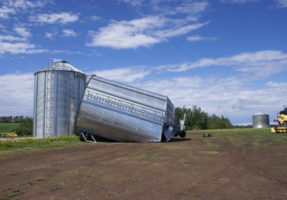
CHILLIWACK – Collapsed barns and greenhouses, missed milk shipments and broken trees: the early February storm which blanketed the Lower Mainland with snow and freezing rain left a trail of destruction in its wake.

The eastern Fraser Valley was hardest hit. BC Ministry of Agriculture provincial dairy technologist Roger Pannett has also been Environment Canada’s volunteer weather observer for Chilliwack since 1988. He reports Chilliwack received a total 90 cm of snow followed by 25.6 mm of freezing rain during the week-long storm.

For the past few years, the BC Climate Action Initiative has been predicting more extreme weather events and this storm certainly qualifies. However, it is far from the record of 67 cm of snow that fell on Chilliwack November 16, 1996, or the 66 cm on February 14, 1923. Nor was the freezing rain a record. Nursery grower Gord Matthies recalls seeing two inches of ice on Cannor Nursery’s trees as a youth in the 1970s.

“We lost all our trees that year,” he recalled.

The damage this year was more sporadic. Matthies says Cannor lost many of its evergreens and a group of maples although other groups were unscathed. However, it is not his problem as the family sold the 380-acre wholesale and retail nursery in mid-December.

“A number of caliper tree growers (like Cannor) had damage from the freezing rain and melting snow,” reported BC Landscape and Nursery Association president Len Smit.

Most nursery growers with dormant plants escaped damage, including Kato’s Nursery (where Smit is the production manager) and Bradner’s Growing Concern (where he is co-owner), but had to do a lot of work to keep up with snow removal.

“The wind caused huge snowdrifts in west Abbotsford,” Smit said. “I had drifts to the top of my hoophouses (nine feet).”

His brother was not so lucky, losing about 600 square feet of his 20,000-square-foot glass floriculture greenhouse to the heavy snow. He was not alone, as one glasshouse in Chilliwack was lost completely.

“Growers who didn’t have heat in their greenhouses had problems with the snowload,” Smit said. “I’ve heard of damaged vents and eaves in a number of glass houses.”

Dairy hit hard

The dairy industry may have suffered the most. Many milk pickups were delayed as tanker trucks could not get through.

“We had two farms which had to dump some milk because their farms were not accessible,” reports BC Milk Marketing Board general manager Bob Ingratta. Although milk is to be picked up from each farm at least every other day, milk may stay on-farm for up to four days in exceptional circumstances (if there is sufficient storage capacity).

There were also substantial delays in getting milk from Okanagan farms to plants in the Fraser Valley as all three highways connecting the Lower Mainland to the BC interior were shut down on February 9.

Ingratta said the impact on the dairy industry could have been much worse if not for the effort of both transporters and producers.

“Our compliments to Vedder Transport for working around the clock and substantial extra efforts…they battled through a lot of poorly plowed driveways and roads and a lot of wind on Sumas Prairie,” he stated, adding “most producers did an excellent job working with the transporters to clear driveways and roads as needed.”

Most of the milk got through but not all of the buildings did. A dairy barn on Nicomen Island collapsed as did a heifer barn in east Chilliwack. At least one farm lost part of its bunker silo while several others suffered some degree of damage.

In the Nicomen Island case, the damage was not as severe as it could have been. The milk had been picked up just prior to the collapse and quick, concerted efforts by neighbouring farmers and the fire department were able to free most of the 80 cows trapped within the barn with few injuries.

Poultry on two broiler breeder farms were not as lucky. One broiler breeder barn in east Chilliwack collapsed from the snow while another in east Abbotsford was lost due to fire a few days later. In that case, quick action by neighbours and the fire department kept the fire from spreading to other barns.

Both the BC Egg Marketing Board and BC Chicken Marketing Board reported no problems, noting there is some leeway as to when birds and eggs must be shipped.

“Table eggs are normally picked up once a week but can stay in an on-farm cooler for up to two weeks if necessary,” BCEMB executive director Katie Lowe said.

All content on this website is copyrighted, and cannot be republished or reproduced without permission.
Related Posts

You may be interested in these posts from the same category.

New year, old troubles

BC blueberry crop down 30%

Fruit growers face hard choices

Peace whipped by wild winds

Heatwave stresses livestock

Balanced conditions in 2020

Cherry Blossom

Frost nips cherry growers

Cold air hits cherries

Cherry growers see record crop losses in 2019

Agriculture ministers discuss concerns

Potato hopes mashed

Rains wash away burn bans

Previous Post: « Richmond exempts agri-tourism from rental ban
Next Post: Clock ticking for organic certification »

© 2026 COUNTRY LIFE IN BC - ALL RIGHTS RESERVED