
• Menu
  • Skip to primary navigation
  • Skip to main content
  • Skip to primary sidebar

Country Life In BC Logo

The agricultural news source in British Columbia since 1915

  • Headlines
  • Calendar
  • Subscribe
  • Advertise
  • About
  • Archives
  • Contact
  • Search
  • Headlines
  • Calendar
  • Subscribe
  • Advertise
  • About
  • Archives
  • Contact
  • Search

Primary Sidebar

Originally published:

September 2018
Vol. 104 Issue 9

Subscribe Now!

Sign up for free weekly FARM NEWS UPDATES

Loading form…

Your information will not be
shared or sold ever

Stories In This Edition

BC faces another summer of fire

Heather takes the cake

ALR report confirms agenda

Organic labelling regulations kick in September 1

Editorial: Inside information

Back Forty: Quantum change in the barn and kitchen

OpEd: Civic elections important for agriculture

Armyworm infestation hits North Okanagan

New entrants face scrutiny, but no waitlist

Surprise quota increase for dairies

Carrot field day

National apple programs focus of OK meeting

Okanagan tree fruits grab international spotlight

Farmers put food hub on wish list

Farming matters

Potato trials reflect change in consumer tastes

Veterinary partnership aimrs to improve service

Ag Brief: New public trust manager planning workshops

Ag Brief: BCAC hires new environmental programs mgr

Ag Brief: Poultry specialist joins IAF

Ag Brief: Salmon farmers hire new executive director

Ag Brief: New island agrologist

Automation good investment for nursery

Hort show offering more educational opportunities

Grant harnesses opportunities for farming

Flood management requires collaboration

Rancher goes wireless to manage irrigation

Wildfire lessons learned, but still work to be done

National park reserve consultations to resume

BC youth prevail at Western Canadian Classic

Land trust for Metro Vancouver floated again

Cawston market garden looks to future

Summer Institute plants seeds of knowledge

Cariboo farm thrives with mentorship

Research: Genetic editing stops deadline pig virus

Ploughing championship in sight

Coop rentals connect urbanites with farming

Maple Ridge consults on backyard chickens

Organic pioneers reflect on growth, changes in sector

Hooked on 4-H

Fair time

Woodshed: Sweet-talkin’ Henderson makes vacation plans

Wannabe: Here’s to the ordinary

Feast of Fields

Jude’s Kitchen: September and birthday celebrations

More Headlines

Follow us on Facebook

Comments Box SVG iconsUsed for the like, share, comment, and reaction icons

3 hours ago

The Agricultural Land Commission is laying off staff after years of flat funding under the BC NDP. ALC chair Jennifer Dyson warns that application volumes, enforcement activity and legal obligations have all risen while its operating budget has stayed effectively flat — meaning longer wait times ahead for some services.

#BCAg
... See MoreSee Less

Link thumbnail

Land Commission lays off staff

www.countrylifeinbc.com

With no budget increase this year, the Agricultural Land Commission (ALC) is laying off six staff to make ends meet. “Ongoing financial constraints and the requirement to operate within the approved...
View Comments
  • Likes: 0
  • Shares: 1
  • Comments: 0

Comment on Facebook

6 days ago

A BC Forest Practices Board investigation has found overgrazing has damaged grasslands in the Coutlee Range Unit near Merritt — and the range-use plan meant to prevent it was unenforceable. With complaints about overgrazing on the rise and grasslands covering just 1% of BC's land mass, the findings raise fresh questions about how the province manages one of its most vulnerable — and valuable — food-producing ecosyste#BCAg#BCAg ... See MoreSee Less

Link thumbnail

Board finds overgrazing rules unenforceable unmeasurable

www.countrylifeinbc.com

MERRITT – A BC Forest Practices Board investigation has found instances of non-compliance related to overgrazing have damaged open grasslands in the Mine pasture, part of the Coutlee Range Unit near...
View Comments
  • Likes: 6
  • Shares: 6
  • Comments: 6

Comment on Facebook

Several ranchers in recent years have gone into temporary non use on that range , so that means the grass should grow. But drought conditions/lack of rain and snow don’t allow that to happen . Dried up springs , creeks waterholes in various pastures add to over grazing where there is water , as livestock and everything else stay close to the water source . So even though less cattle are on it , over grazing appears. There is a large volume of horses on it 365 days/year which is wrong ! They pull grass right out of the ground when it’s just trying to grow ,, opens the door for weeds to grow in. That don’t help it. Aging infrastructure ( fences) laying on the ground, pipe line building , ( lack of commitment to fence maintenance) amongst all users contributes also to over grazing. Recreational atv users leaving gates open between pastures allows livestock to go back or ahead in pastures also expidites over grazing. Logging ( bcts) has no problem laying out cut locks on both sides of a fence , then it gets smashed down during logging and they don’t take responsibility to stand it back up or clean the cattle gaurds out when they are done , that happened 4 years ago on pasture 5 up there . I bet it is still not fixed . There are lots of contributing factors to the problem.

Tragedy of the commons.

I looked through the report. I saw nothing about the effects of noxious weeds on productive grasslands. This particular area is vulnerable because of the Ministry’a efforts to diversify the use of the Grasslands.

This pasture is under tremendous pressure not only from cattle but from irresponsible local residents who treat it as a landfill dumping all manner of household debris here. And don't even get me started on the mud bogging and camping in sensitive riparian areas. The feral horses are in this pasture 365 days a year just hammering it. Would sure be nice to see some enforcement action on people who are intentionally ripping up the grasslands and riparian areas. Cattle could be a valuable resource for rebuilding soils and native grasses in this area with the help of electric fencing and/or e-collars. The humans will be harder to manage.

The Forest and Range Practices Act was written by lawyers for global forest licencee shareholders. Results-based = unenforceable.

Also, can we talk about the impact of a pipeline being built through the middle of this field for multiple years?

View more comments

1 week ago

East Kootenay rancher Randy Reay is digging a new well after two natural water sources dried up on his Crown tenures. A new Living Lakes Canada assessment found 15% of mapped aquifers in the region are high-priority for monitoring, yet 80% of those go unmonitored. With over 48% of BC's provincial observation wells reporting below-normal groundwater levels, ranchers and researchers are sounding the alarm on water security. The story is in our March edition, and we've posted it to our website thi#BCAgk.

#BCAg
... See MoreSee Less

Link thumbnail

Water woes: groundwater under pressure across BC

www.countrylifeinbc.com

JAFFRAY – As a young boy growing up in the Kootenay-Boundary region, Randy Reay never expected to run out of water. But this year, in mid-February, his fields are bare. There is no snow halfway up t...
View Comments
  • Likes: 8
  • Shares: 7
  • Comments: 1

Comment on Facebook

Jaffrey is in the east Kootenays not kooteney boundary

2 weeks ago

BC farmers are bracing for prolonged higher input costs as war in the Middle East drives up fuel and fertilizer prices. Nitrogen fertilizer costs were already climbing before the Iran conflict began, with prices still roughly 60% above pre-pandemic levels. Farm Credit Canada warns that unlike 2022, strong commodity prices may not offset rising costs this time. Local suppliers expect supply challenges and further price increases ahead.

#BCAg
... See MoreSee Less

Link thumbnail

Fertilizer prices on the rise

www.countrylifeinbc.com

War in the Middle East has delivered a generational shock to energy prices, meaning BC farmers can expect a prolonged period of higher costs not just for fuel but also for fertilizer.
View Comments
  • Likes: 2
  • Shares: 1
  • Comments: 0

Comment on Facebook

2 weeks ago

... See MoreSee Less

View Comments
  • Likes: 1
  • Shares: 0
  • Comments: 0

Comment on Facebook

Subscribe | Advertise

The agricultural news source in British Columbia since 1915
  • Email
  • Facebook

National park reserve consultations to resume

Opponents stand firm against new protections for grasslands in south Okanagan

September 5, 2018 byPeter Mitham

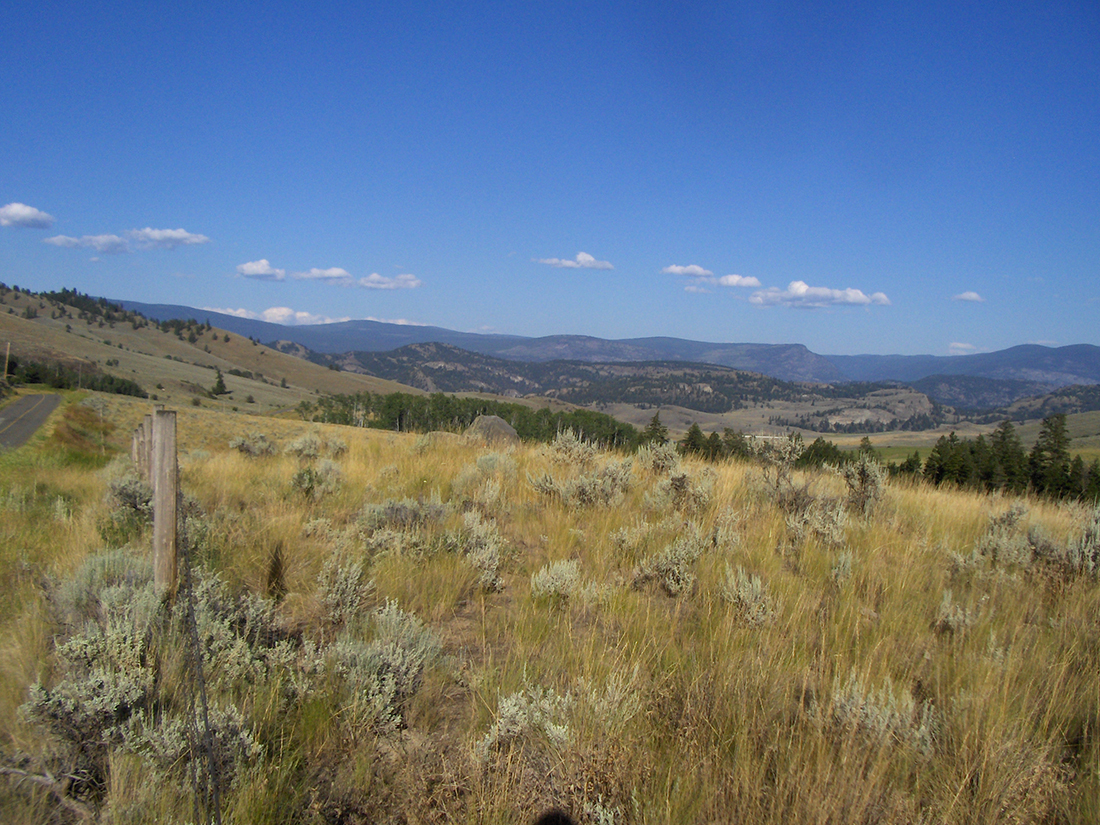
OLIVER – Plans for a national park reserve continue to advance despite the concerns of ranchers and conservation groups alike.

BC Ministry of Environment staff told Country Life in BC last month that “tripartite discussions are ongoing between [the] feds, province and the Okanagan Nation.”

The comment came after Parks Canada officials told media in a conference call that it hopes to initiate consultations this fall in the hopes of finalizing a concept for the a national park reserve, including boundaries, by mid-2019. It followed the province’s announcement last October 27 of a “renewed commitment” to work towards creating a national park reserve from three protected areas in the South Okanagan. The area includes  84,140 acres of grasslands in the South Okanagan west of Okanagan Falls and south to the US border between Oliver and Cawston.

A national park reserve is a step below a national park, and aims to respect Indigenous land rights in the area. Ranchers and conservation groups both say that their own property rights and activities will be impacted by the move, and oppose the proposal.

Linda Allison of the Southern Interior Stockmen’s Association met with federal environment minister Catherine McKenna on August 17, a day after a tour with Parks Canada project manager Sarah Boyle.

“We are disappointed that the minister and her staff were firm that the creation of a park reserve will be proceeding,” says Allison, who has been fighting park proposals since plans were put forward in 2003.

A dilemma for ranchers is that provisions regarding activities allowed in the park won’t be determined till after contractual agreements granting access to ranchers’ lands are signed.

“We as an association are not in favour of a national park,” says Dave Casorso of the Okanagan Simlikameen Stock Association.

Ranchers have been told that an agreement between Parks Canada and the province will allow grazing in the proposed reserve, something not allowed in a full-fledged national park save as a management tool. However, it requires an amendment to relevant legislation.

“It may sound pretty good if you trust the process, but there are many players,” notes Casorso, who says tenure costs may be expensive. “If grazing is allowed, it may not be affordable for ranchers to manage in-park.”

Unlikely ally

Ranchers may have an unlikely ally in the fight against the reserve: the BC Wildlife Federation, which recently asked the BC auditor general’s office to perform “an audit and examination of cattle grazing leases on Crown land, and related issues.”

But if BCWF has issues with cattle on Crown land, it also has equal concerns regarding a national park reserve because lands owned by conservation organizations could be subject to expropriation and mismanagement.

These include nine properties acquired with funds from the Habitat Conservation Trust Foundation by the Nature Conservancy of Canada and the Nature Trust of BC to conserve the area’s grassland habitat and associated ecosystems.

“The goal of the south Okanagan land purchases was to conserve and enhance sensitive ecosystems while allowing traditional uses such as hunting, fishing and enjoying outdoor recreation in a sustainable manner,” the BCWF says in a statement.

However, it cites a BC auditor general’s report to underscore that the province has fallen short in managing protected areas and directs even sharper criticism at Parks Canada.

“Parks Canada’s has a history of commercialization, and privatization within wilderness areas,” it claims.

BCWF also points out that Parks Canada doesn’t protect “traditional activities” – in its case, hunting, but from ranchers’ perspective, cattle grazing.

“The province’s framework states existing users are protected,” states BCWF. “[But] there is no evidence that traditional activities are protected in national parks.”

Rather than assume management of sensitive areas, BCWF asks for a collaborative approach that recognizes the value other stakeholders offer.

A consultation this fall would give stakeholders yet another chance to weigh in. Victoria previously sought public opinion on the future of the area in 2015. The process garnered 3,460 responses, and acknowledged the importance of hunting, fishing, tourism, ranching and recreation in the area.

“The supposed economic benefits of a park in terms of employment and tourism are at the top of the list,” Allison says.

The one ray of hope for ranchers is the stated desire of Ottawa to find common ground with stakeholders.

“She gave her personal commitment to those at the meeting, that she would listen and hope to bring people together while saying that a proposed park reserve is proceeding,” says Allison.
Related Posts

You may be interested in these posts from the same category.

Previous Post: « Wildfire lessons learned, but still work to be done
Next Post: New entrants face scrutiny, but no waitlist »

Copyright © 2026 Country Life in BC · All Rights Reserved