• Menu
  • Skip to primary navigation
  • Skip to main content
  • Skip to primary sidebar

Country Life In BC Logo

The agricultural news source in British Columbia since 1915

  • Headlines
  • Calendar
  • Subscribe
  • Advertise
  • About
  • Archives
  • Contact
  • Search
  • Cart
  • Checkout
  • Headlines
  • Calendar
  • Subscribe
  • Advertise
  • About
  • Archives
  • Contact
  • Search
  • Cart
  • Checkout

Primary Sidebar

Originally published:

FEBRUARY 2020
Vol. 106 Issue 2

Subscribe Now!

Sign up for free weekly FARM NEWS UPDATES

Loading form…

Your information will not be
shared or sold ever

Stories In This Edition

Perfect pruning

Open ears

Tough talk on animal activists

Peace, Cariboo top 2019 farm and ranch sales

Duckin’ a snow storm

Editorial: Change of heart

Back 40: Retirement is inevitable but less so for farmers

Viewpoint: Leading a decade of growth in organics

Banding together to attract domestic workers

Ag council helps avert seasonal worker delays

Dairy producers urged to polish public image

Snow day

New certification program launched for plant exporters

New executive director for COABC appointed

Ag Briefs: BC dairies push back on Class 7 proposal

Ag Briefs: Agri Innovation projects announced

Ag Briefs: Province selects Ruckle managers

Partnerships facilitate Langley learning farm

Feed BC program good in theory but has limitations

Opportunities and challenges

Halal demand rising in Western Canada

Trespass incident boosts public awareness

Sheep killings raise concerns in Lower Mainland

Pruning priorities different for FV grapegrowers

Farm plans offer new opportunities for rnachers

Number crunchers

Ranchers, foresters learn to share the road

Raise your claves so buyers play with a full deck

Boosting calf health starts before birth

Reseeding part of range restoration

Capacity crowd at Interior soils conference

Global blueberry growers look at substrate potential

Saving the peatlands

Blueberry breeding focuses on quality, exports

Research promises to help control SWD

Novel cherry trellising system saves money

Research: The effects of separating cows and calves

Farm News: Buckling down for winter conference season

Black walnuts are an option for water-logged land

Researcher provides deworming tips for sheep

Wasabi a hot option for wellness products

Technology key to tree fruit industry’s future

New broiler barn boosts comfort for birds

Woodshed Chronicles: Junkyard Frank’s plan is played to perfection

Give your marriage a relationship check-up

Bursary fund welcomes applications

Apple of your eye

All content on this website is copyrighted, and cannot be republished or reproduced without permission.
More Headlines

Follow us on Facebook

Comments Box SVG iconsUsed for the like, share, comment, and reaction icons

1 day ago

The committee of MLAs charged with setting priorities for the next provincial budget is recommending regular, annual funding for water storage infrastructure associated with food production, including for engineering inspections, maintenance and upgrades. The recommendation builds on the BC Cattlemen's Association's recommendation of an annual allocation of $5 million for water storage infrastructure related to food production, noting that it could also support resilience in the face of climate-related events. While the province has allocated $120 million for agricultural water infrastructure, agriculture minister Lana Popham told Country Life in BC this week that other ministries and the federal government will need to be involved in funding future p#BCAgts#BCAgCAg

#BCAg
... See MoreSee Less

The committee of MLAs charged with setting priorities for the next provincial budget is recommending regular, annual funding for water storage infrastructure associated with food production, including for engineering inspections, maintenance and upgrades. The recommendation builds on the BC Cattlemens Associations recommendation of an annual allocation of $5 million for water storage infrastructure related to food production, noting that it could also support resilience in the face of climate-related events. While the province has allocated $120 million for agricultural water infrastructure, agriculture minister Lana Popham told Country Life in BC this week that other ministries and the federal government will need to be involved in funding future projects.

#BCAg

#BCAg
View Comments
  • Likes: 23
  • Shares: 6
  • Comments: 3

Comment on Facebook

A typical small-to-medium farming operation featuring a house, main barn, and machine shed generally has around 8,000 to 12,000 square feet of total roof surface. The Okanagan Valley is one of the driest regions in Canada, averaging roughly 300 millimetres (11.8 inches) of annual precipitation. Storing a full year's collected rainwater from those roofs yields roughly 262,500 litres. In the three regional districts that make up the Okanagan valley proper (North Okanagan, Central Okanagan, and Okanagan-Similkameen), the 2021 Statistics Canada Census of Agriculture records roughly 3,100 total farms. Multiply that number by 262,500 litres of harvested rainwater equals 813.75 million litres of water saved per year. Capturing that volume of water across every farm roof in the region would significantly ease peak summer pumping pressure on local groundwater aquifers and Okanagan Lake.

Fantastic!! We will work hard to be involved and do what we can as well as a collective group on the Salmon River!

Absolutely! Long over due and very welcomed. Let's make this happen.

1 day ago

... See MoreSee Less

View Comments
  • Likes: 2
  • Shares: 0
  • Comments: 0

Comment on Facebook

2 days ago

About 40 community members gathered at Silver Creek Community Hall near Salmon Arm last Thursday to discuss ways to improve water availability for both farms and spawning salmon. While the province has since rescinded a fish protection order for the watershed that shut down irrigation, future risks to water access remain top of mind. "We are here because water matters to each of us," says rancher and organizer Trudy Schweb. Farmland Riparian Interface Stewardship Program manager Lee Hesketh outlined the potential for upland water storage while Rob Dinwoodie highlighted cost-shared funding opportunities through the Environmental Farm Plan program for riparian assessments, irrigation efficiency upgrades and other water-related projects available to producers. Photo credit | Facebook/Trudy Schweb

#BCAg
... See MoreSee Less

About 40 community members gathered at Silver Creek Community Hall near Salmon Arm last Thursday to discuss ways to improve water availability for both farms and spawning salmon. While the province has since rescinded a fish protection order for the watershed that shut down irrigation, future risks to water access remain top of mind. We are here because water matters to each of us, says rancher and organizer Trudy Schweb. Farmland Riparian Interface Stewardship Program manager Lee Hesketh outlined the potential for upland water storage while Rob Dinwoodie highlighted cost-shared funding opportunities through the Environmental Farm Plan program for riparian assessments, irrigation efficiency upgrades and other water-related projects available to producers. Photo credit | Facebook/Trudy Schweb

#BCAg
View Comments
  • Likes: 36
  • Shares: 4
  • Comments: 4

Comment on Facebook

Salmon River Watershed Roundtable should be looked into again.

Well done my girl,the voice of Silver Creek ranchers and more

Thanks for covering this🌟

2 days ago

The BC Fruit Growers Association is urging Greater Vernon Water and the Regional District of North Okanagan to halt water shut-offs hitting 2,100+ acres of Okanagan orchards mid-season. With losses potentially topping $250 million, fruit growers say decisions of this scale demand a coordinated plan with farmers and the province — not one-sided cuts. They’re not the only producers affected by this year’s dry conditions.

#BCAg
... See MoreSee Less

Cash Flows

www.countrylifeinbc.com

VERNON – Water restrictions intensified across the southern Interior in late July, with record low stream flows clouding the cash outlook for ranches and orchards. Fourteen agricultural water users...
View Comments
  • Likes: 5
  • Shares: 3
  • Comments: 1

Comment on Facebook

Food should ALWAYS come first. Allow the farmers their water. My grandad watered the apples by flume from the mountain. Let’s get on with AG and get out of the way!

3 days ago

The BC Fruit Growers Association has joined Apples Canada, a new national voice for provincial apple organizations in BC, Ontario, Quebec, New Brunswick and Nova Scotia. Charles Stevens of Ontario chairs the new group, an evolution of the apple working group within Fruit & Vegetable Growers Canada (FVGC), the new group will tackle production, sustainability, research and policy issues as well as advocate for market access in partnership with FVGC. It follows the creation of the Greenhouse Produce Alliance of Canada earlier this year, which replaced the former greenhouse vegetable working group. The berry and field vegetable sectors will continue to maintain working groups with FVGC, while the long-estblished Canadian Potato Council serves the interests of potato growers under the FVGC umbrella.

#BCAg
... See MoreSee Less

The BC Fruit Growers Association has joined Apples Canada, a new national voice for provincial apple organizations in BC, Ontario, Quebec, New Brunswick and Nova Scotia. Charles Stevens of Ontario chairs the new group, an evolution of the apple working group within Fruit & Vegetable Growers Canada (FVGC), the new group will tackle production, sustainability, research and policy issues as well as advocate for market access in partnership with FVGC. It follows the creation of the Greenhouse Produce Alliance of Canada earlier this year, which replaced the former greenhouse vegetable working group. The berry and field vegetable sectors will continue to maintain working groups with FVGC, while the long-estblished Canadian Potato Council serves the interests of potato growers under the FVGC umbrella.

#BCAg
View Comments
  • Likes: 4
  • Shares: 0
  • Comments: 0

Comment on Facebook

Subscribe | Advertise

The agricultural news source in British Columbia since 1915
  • Email
  • Facebook

New executive director for COABC appointed

Lang comes full circle with new leadership role in the organic sector

February 1, 2020 byPeter Mitham

VERNON – A new executive director has been found to lead the Certified Organic Associations of BC following the departure of Jen Gamble, who spent nine years at the helm of the organization.

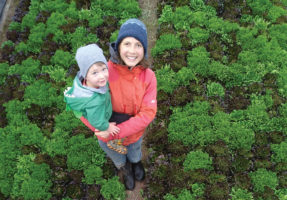
Eva-Lena Lang will step into the role on March 1, bringing with her a long association with organic farming and community-oriented agriculture.

“After conducting a thorough search, our hiring committee found the right candidate within our own community,” said COABC co-president Heather Stretch. “Eva-Lena grew up on an organic farm and throughout her academic and professional career has focused on community networking to build a strong organic agriculture sector within BC. We are delighted to welcome her into this role.”

Lang’s family farmed in the North Okanagan and she has worked with farmers in the region and overseas. She completed a Master’s degree in the Interdisciplinary Graduate Studies program at UBC Okanagan in 2019. The focus of her work was regional food systems. An offshoot of her studies was a project that led to the formation last year of the North Okanagan Land to Table Network.

Before starting graduate studies, she served as operations manager with COABC from 2015 to 2017. Her appointment as the association’s executive director brings her full circle, both to the organization and the community in which she was raised.

“I’d like to continue the momentum of the important work the organic sector has been doing in growing an organic BC,” says Lang. “I believe building relationships and trust is fundamental in this work. In that regard, I look forward to connecting with individuals and organizations from across the province.”

Gamble, for her part, will be returning to school. The decision to step down was a personal one, driven by the desire to continue her studies.

She made the decision last fall, and a search began shortly afterwards. The deadline for applications was December 2 and a decision was expected by the end of the year. The three-month delay between the selection of a new executive director and Lang taking the reins was designed to ensure a smooth transition between executive directors.

One of the first orders of business for Lang will be addressing the results of a core review of COABC. It follows on the heels of a strategic plan unveiled two years ago that aims for “a resilient organic movement” in BC.

“The core review provides valuable guidance on how to focus our energies during this time of transition both at the [executive director] level and the chair level,” says Stretch, who has been serving as co-president alongside Carmen Wakeling for the past year.

Stretch is set to become president during the association’s annual general meeting. It coincides with COABC’s annual conference, which takes place in Richmond, February 28-March 1.


All content on this website is copyrighted, and cannot be republished or reproduced without permission.
Related Posts

You may be interested in these posts from the same category.

RegenBC conference emphasizes context

Building soil structure with organic compost

Greenhouse sets example for others to follow

Passion and schooling pay off for young grower

BC organic growers flourish

Top grape grower recognized

Organic growers discuss challenges

COABC seeks new ED

Organics

Study compares organic, conventional diets

COABC

Organic sector undertakes core review

Farmers Market Organic

Organic growers prepare for the mainstream

Lillooet ranch goes green

Previous Post: « Farm plans offer new opportunities for ranchers
Next Post: Ag council helps avert seasonal worker delays »

© 2026 COUNTRY LIFE IN BC - ALL RIGHTS RESERVED