• Menu
  • Skip to primary navigation
  • Skip to main content
  • Skip to primary sidebar

Country Life In BC Logo

The agricultural news source in British Columbia since 1915

  • Headlines
  • Calendar
  • Subscribe
  • Advertise
  • About
  • Archives
  • Contact
  • Search
  • Cart
  • Checkout
  • Headlines
  • Calendar
  • Subscribe
  • Advertise
  • About
  • Archives
  • Contact
  • Search
  • Cart
  • Checkout

Primary Sidebar

Originally published:

OCTOBER 2026
Vol. 112 Issue 10

Subscribe Now!

Sign up for free weekly FARM NEWS UPDATES

Loading form…

Your information will not be
shared or sold ever

Follow us on Facebook

Comments Box SVG iconsUsed for the like, share, comment, and reaction icons

7 days ago

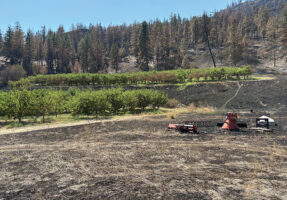
Channels of communication remain open between the provincial and federal governments with respect to financial relief for extraordinary costs stemming from this summer's ongoing drought and wildfires, but the BC Cattlemen's Association is urging producers to register for AgriStability to position themselves for any AgriRecovery package. "Hardworking families in the ranching and agriculture sectors, who provide food for the province, need the AgriRecovery program in place as soon as possible," says BC Cattlemen's president Alex Kuchar. But the provincial election creates an unfortunate delay. "It's not fair, in any form of the word, to see all those people who have lost so much in the fires to have to wait in limbo," says BC Cattlemen's general manager Kevin Boon.

Photo | Barb Edmonson / Firefly Ranch, Clinton

#BCAg
... See MoreSee Less

Channels of communication remain open between the provincial and federal governments with respect to financial relief for extraordinary costs stemming from this summers ongoing drought and wildfires, but the BC Cattlemens Association is urging producers to register for AgriStability to position themselves for any AgriRecovery package. Hardworking families in the ranching and agriculture sectors, who provide food for the province, need the AgriRecovery program in place as soon as possible, says BC Cattlemens president Alex Kuchar. But the provincial election creates an unfortunate delay. Its not fair, in any form of the word, to see all those people who have lost so much in the fires to have to wait in limbo, says BC Cattlemens general manager Kevin Boon. 

Photo | Barb Edmonson / Firefly Ranch, Clinton

#BCAg
View Comments
  • Likes: 6
  • Shares: 7
  • Comments: 0

Comment on Facebook

1 week ago

Feedback on changes to rules governing food processing in the Agricultural Land Reserve has drawn about 250 submissions. But the proposal now hangs in the balance with Premier David Eby's decision to call a snap election, which also delays discussions of assistance for farmers hit hard by this year's wildfires and historic #BCAght.

#BCAg
... See MoreSee Less

Feedback on changes to rules governing food processing in the Agricultural Land Reserve has drawn about 250 submissions. But the proposal now hangs in the balance with Premier David Ebys decision to call a snap election, which also delays discussions of assistance for farmers hit hard by this years wildfires and historic drought.

#BCAg
View Comments
  • Likes: 12
  • Shares: 1
  • Comments: 3

Comment on Facebook

What would you expect from the NDP, when they still had a 2 year mandate?

Ridiculous timing. We have people needing answers and have to plan for winter supplies. Fires are long past, months have gone by knowing there was going to be the need for support. Drought was written on the wall even before summer began with no snow pack. This is not new to government and they are calling for another year just as bad for 2027. I throw my hands up and wonder what else needs to be more challenging than what we've experienced over the last 6 years in BC?

250 submissions.... I'm pretty sure there are more than 250 farmers in BC

1 week ago

With a provincial election called for October 24, BC agriculture is set to enter a new era. Veteran agriculture minister Lana Popham is not seeking re-election in Saanich South after 17 years as an MLA. BC's longest-serving agriculture minister, she fought for a stronger Agricultural Land Reserve and celebrated the diversity of BC's agriculture sector, but also took flak for shutting down mink farming and not securing more funding for the Agricultural Land Commission. She was also on the front lines of responses to multiple disasters, including the 2021 floods on Sumas Prairie. In a statement announcing her departure from political life, she said, "I look forward to contributing in other ways and ensuring that food security, protection of the Agricultural Land Reserve, and the people who feed us remain in the spotlight for years to come."

#BCAg
... See MoreSee Less

With a provincial election called for October 24, BC agriculture is set to enter a new era. Veteran agriculture minister Lana Popham is not seeking re-election in Saanich South after 17 years as an MLA. BCs longest-serving agriculture minister, she fought for a stronger Agricultural Land Reserve and celebrated the diversity of BCs agriculture sector, but also took flak for shutting down mink farming and not securing more funding for the Agricultural Land Commission. She was also on the front lines of responses to multiple disasters, including the 2021 floods on Sumas Prairie. In a statement announcing her departure from political life, she said, I look forward to contributing in other ways and ensuring that food security, protection of the Agricultural Land Reserve, and the people who feed us remain in the spotlight for years to come.

#BCAg
View Comments
  • Likes: 132
  • Shares: 9
  • Comments: 21

Comment on Facebook

Lana is/was an amazing Minister of Ag. I may not support her party but I think the world of her for her knowledge of, and connection to, our industry! Amazing!

You will be missed and congratulations on new horizons!

What a loss it will be not to have you as a hardworking cabinet member! Thank you for your dedication to agriculture!

I remember that day Lana! Wishing you all the best!

I had really hoped to see Lana Popham as our Premiere at some point but I am also happy for her, moving onto her next chapter. 😊

Thank you Lana for all the years of service, I can't even imagine how challenging your work has been.

That is an amazing run, thank you for your service!💐

Lana is an awesome supporter of agriculture in BC, she was amazing to work with as a minister and always there to listen and try to find solutions. 🌽🐓🚜🌾🐮🍎

Thank you, Ms. Popham, for your service. With you in your portfolio many of us felt that we had truly 'responsible government.'

This is great loss to agriculture in BC .No matter your politics you have to appreciate the energy and empathy she brought to the industry.She will be difficult to replace.

You will be missed but wishing you all the best - thank you.

Lana is the Best Minister of Agriculture and we are going to miss her! Hardworking for the people and leads with heart. I wish more politicians were like her. Thank you Minister Popham for your service! 🐝💕

Great picture!

I love this picture of you Lana.

What a super pic! We are going to miss you Lana.

Thank you so much for your public service. Wishing you well in this next phase of your work.

Vote conservative! Save bc!

Too bad Eby ignored her and is pushing for the 95% out of province, and out of country, food processing facilities on the ALR. Probably why she stepped down.

Thank god. Time for new blood that gives a shit and not just show up for photo ops…

End Eby! Save BC!

View more comments

2 weeks ago

With the Surrey-Langley SkyTrain line turbocharging development of the Fraser Hwy corridor and surrounding agricultural lands, the BC NDP today announced it is naming the new line after former Premier Dave Barrett, whose government created the Agricultural Land Reserve to protect farmland. The announcment comes in advance of this Friday’s deadline for submitting feedback on a proposal to open the ALR to processors using as little as 5% local ingredients.

#BCAg
... See MoreSee Less

With the Surrey-Langley SkyTrain line turbocharging development of the Fraser Hwy corridor and surrounding agricultural lands, the BC NDP today announced it is naming the new line after former Premier Dave Barrett, whose government created the Agricultural Land Reserve to protect farmland. The announcment comes in advance of this Friday’s deadline for submitting feedback on a proposal to open the ALR to processors using as little as 5% local ingredients.

#BCAg
View Comments
  • Likes: 4
  • Shares: 1
  • Comments: 5

Comment on Facebook

Thousands of big round bales of hay got shipped, and are getting shipped from the lower mainland to the interior due to dry weather and low water supply up country. Those ranchers are sure glad that we still have a few acres down here that can produce when other parts of the province dry up.

No disrespect meant but perhaps they should have named it the "ALR Line" to help educate those who don't know what the ALR is and what it does and doesn't allow.

This NDP government has done more to destroy the ALR than any government since the legislation was enacted in 1973. The Skytrain will bring more people. Processing plants that process only 5% of local produce will require more people to work there and housing for them to live in. And the processing plants will take large acreages of farmland to process 95% non-local ingredients that may even compete with local producers.

The A.L.R is a pain in the A.S.S

I do not agree with this proposed change to the ALR. It is a trojan horse designed to open up the ALR for development. Gary Runka must be turning in his grave. :(

View more comments

2 weeks ago

More than two years after the BC Tree Fruits Co-op shut down, a payout of $11.5 million is heading to former members this week. The payout follows a share purchase agreement approved this spring allowing the new privately owned BC Tree Fruits partnership to acquire the co-op’s shares in addition to the assets previously acquired. A further, final payout to growers is expected in December, once other outstanding claims have been resolved.

#BCAg
... See MoreSee Less

More than two years after the BC Tree Fruits Co-op shut down, a payout of $11.5 million is heading to former members this week. The payout follows a share purchase agreement approved this spring allowing the new privately owned BC Tree Fruits partnership to acquire the co-op’s shares in addition to the assets previously acquired. A further, final payout to growers is expected in December, once other outstanding claims have been resolved.

#BCAg
View Comments
  • Likes: 6
  • Shares: 1
  • Comments: 0

Comment on Facebook

Subscribe | Advertise

The agricultural news source in British Columbia since 1915
  • Email
  • Facebook

Opening farmland to processors draws pushback

Farm groups united in opposition to open ALR to more processing

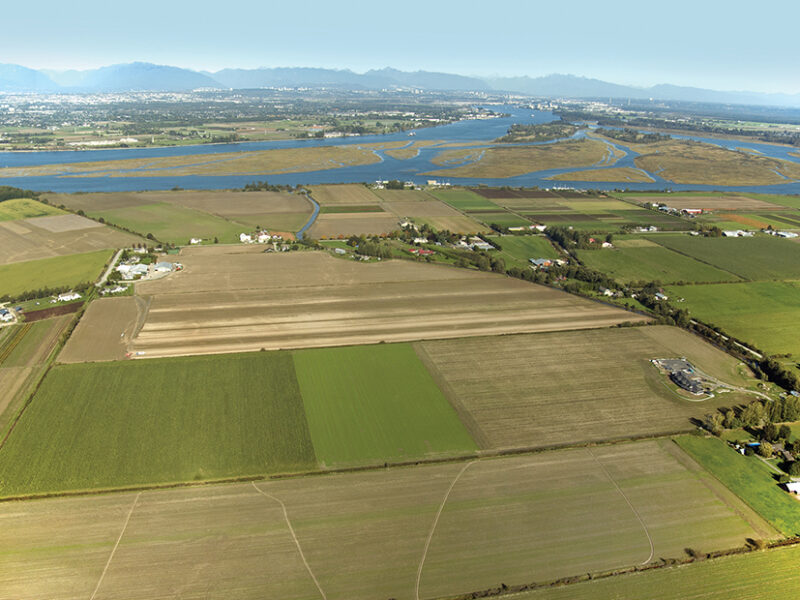
Fields and farms in the Delta of Fraser Valley

October 1, 2026 byPeter Mitham

BURNABY – The Agricultural Land Commission has come out swinging against the province’s proposal to eliminate a rule requiring processors located in the Agricultural Land Reserve to source at least half their ingredients from BC growers.

“The proposal represents a significant policy shift that has not been supported by evidence demonstrating the need for change or showing that the proposed change would increase agricultural production, improve farm viability, or enhance food security within British Columbia,” ALC chair Jennifer Dyson writes in an August 21 letter to BC agriculture minister Lana Popham.

Dyson notes that by creating a new industrial-use entitlement on protected farmland, despite being limited to Class 4-7 soils, the proposal is fundamentally opposed to encouraging primary agricultural production.

“The commission is alarmed not only with the immediate impact of the proposal, but also with its cumulative effect on the agricultural land base,” Dyson writes, noting that agriculture ministry staff have noted the potential for a broad range of production on lower class soils.

“The proposal would … contribute to the ongoing reduction of land available for primary agricultural production,” she states, noting it doesn’t explain how the proposed processing uses will strengthen ties with producers.

“The commission believes the fundamental policy question remains unanswered by this proposal: How does allowing facilities that may source up to 95% of their inputs from outside British Columbia and Canada materially help British Columbia farmers grow more food?”

The BC Agriculture Council (BCAC), Small-Scale Meat Producers Association (SSMPA) and other farm organizations have also voiced opposition to a lower threshold.

“The 5% threshold doesn’t hold,” says BCAC executive director Danielle Synotte. “Dropping the BC content from 50% to 5% does not meaningfully tie new processing to BC agriculture or the land; in fact, it opens the ALR land to industrial development and potentially attracts the wrong kind of investment.”

Given that both the province’s Look West economic strategy and the federal government’s national food security strategy prioritize local production and purchasing, Synotte says any reduction in local sourcing requirements is counterproductive.

“It feels like it’s working against the objectives that both Mark Carney and Premier Eby have been talking about, building from within,” she says. “Some processors in BC [could] actually increase the reliance on products being sourced from the US or other competitors, at a time when both the public and governments are calling for less reliance on inputs sourced from outside Canada. It’s making us and our members scratch our heads.”

SSMPA notes that eliminating the need for processors to source local product will do nothing to increase processing capacity for livestock producers, who must book processing time months in advance.

“[It] puts small and medium BC farms in direct competition with much larger extra-provincial suppliers for the very processing capacity the change is meant to create for them,” SSMPA says in its submission to Popham.

Some of BCAC’s member organizations have also noted the potential biosecurity risks associated with large processors locating in agricultural areas and importing raw product from outside the country.

“Up to 95% of the product moving through those facilities could be imported,” Synotte notes. “In theory, more imported produce moving through facilities sited directly on or beside agricultural land increases the risk of introducing more foreign pests and disease into BC’s farming regions at exactly the sites where an outbreak would do the most damage to primary production.”

Popham, for her part, sees opportunities for the rule change to give hazelnut growers a market by allowing, say, a chocolate factory to set up within the ALR.

“[Hazelnuts] wouldn’t be their main ingredient – but they would use BC dairy, they would use BC hazelnuts,” she said. “It literally could take all the hazelnuts that they grow.”

But critics of the rule say the one thing the proposed rule change will do, if adopted, is increase development of farmland. The province says land available for processors will be limited to 5.2 million acres, but BCAC doesn’t agree.

“The new rule, even with this cap, carries the significant potential to chill the investment climate for new entrants and existing producers who may have otherwise expanded their operations as increased competition for ALR lands from entities with greater access to financing opportunities risks raising prices beyond what farmers and ranchers can realistically afford,” it says in its submission.

During a roundtable at the Union of BC Municipalities convention on September 18, Premier David Eby showed little concern.

“We felt like the whole conversation around land prices, speculation … fell on deaf ears,” she says.

BCAC’s recent Farming at the Edge report, which examined the barriers to farm growth, found that farmland appreciated at nearly four times the rate of farm income, underscoring the capital pressures farms face.

While food processors might feel like they can’t compete with logistics companies in the Lower Mainland’s industrial market – despite the fact access to land has never been among their top concerns – it isn’t fair to shift the risk onto farmers, who are typically price takers in the market.

“Processors are feeling like they can’t actually compete with the Amazons,” Synotte says. “This will just be shifted from their industry to ours, and farmers will have to compete with food manufacturers. … They’re talking about companies like McCain’s. How can a farmer compete with a McCain’s?”

Richmond farmer Harold Steves, who led establishment of the Agricultural Land Reserve in 1973, agrees.

“The 95% non-local processing will not help bona fide farmers, but it will help those landowners that want to develop their land,” he says. “It will increase the price bona fide farmers have to pay for land. It will use up valuable farmland when we need more farmland in production to grow more local food, which would warrant more local processing.”

He notes that some of the most lucrative crops in Richmond – blueberries and cranberries – are grown in the Class 4 soils the province wants to open up to processors. Yet thanks to the growth of these crops, multiple processors now handle the fruit in the Lower Mainland.

The BC Ministry of Agriculture and Food reports that it received about 250 submissions when the comment period ended September 18.

But it won’t be Popham who decides the fate of the proposal, however.

The government was dissolved four days later and an election called. The day before the writ dropped, Popham announced that she would not seek re-election.

Yet the proposal is not dead.

Delta South MLA and long-time agriculture critic Ian Paton has supported more flexible rules for processors, underscoring broad-based interest across the political spectrum in opening the ALR.

Joan Sawicki, who worked at the ALC in its early days, says business interests have always looked longingly at the ALR, and even if the current proposal is rejected, some others will follow.

“These lobbies to get access to cheap farmland were one of the circumstances that brought the ALR in in the first place,” she says. “The pressure to erode the scarce amount of farmland we have, that farmers rely on to grow the food that feeds us, is non-ending.”

All content on this website is copyrighted, and cannot be republished or reproduced without permission.
Related Posts

You may be interested in these posts from the same category.

ALC opposes province’s rule change

Potato field day caps solid season

Ag critic Paton goes independent

Water restrictions collide with wildfire season

Ottawa commits $20M to flood mitigation

BCAC policy forum kicks off

ALR processing rules changing

Farm communities unite for provincial funding

Land Commission lays off staff

Reclassification sparks farm definition debate

Task force presents blueprint for growth

BC Tree Fruits relaunch

Previous Post: « Bright cranberry harvest begins
Next Post: Orchard embraces leasing to preserve family legacy »

© 2026 COUNTRY LIFE IN BC - ALL RIGHTS RESERVED