• Menu
  • Skip to primary navigation
  • Skip to main content
  • Skip to primary sidebar

Country Life In BC Logo

The agricultural news source in British Columbia since 1915

  • Headlines
  • Calendar
  • Subscribe
  • Advertise
  • About
  • Archives
  • Contact
  • Search
  • Headlines
  • Calendar
  • Subscribe
  • Advertise
  • About
  • Archives
  • Contact
  • Search

Primary Sidebar

Originally published:

April 2019
Vol. 105 Issue 4

Subscribe Now!

Sign up for free weekly FARM NEWS UPDATES

Select list(s) to subscribe to


By submitting this form, you are consenting to receive marketing emails from: Country Life in BC. You can revoke your consent to receive emails at any time by using the SafeUnsubscribe® link, found at the bottom of every email. Emails are serviced by Constant Contact
Your information will not be
shared or sold ever

Stories In This Edition

One province, one panel

Groundwater deadline extended

Happy as a pig!

Sidebar: Still waiting

Feds pour millions into tree fruit research

Sidebar: Will local procurement help?>

Editorial: Confined spaces

Back Forty: BC farmers need more than a land bank

Island Good campaign drives local sales

Poultry industry seeks to stop infighting

Good egg!

Egg farmers to receive biggest quota boost ever

New entrant focus

Decision day looms for chicken pricing appeal

Producers look to CanadaGAP for certification

Organic sector undertakes core review

Hopping to it!

Island couple named Outstanding Young Farmers

Turkey consumption continues to decline

BC potato growers enjoy a strong footing

Sudden tree fruit dieback a growing concern

Late season BC cherries in global demand

Farmers’ markets aim to be local food hubs

Field trial hopes to reduce phosphorus levels

Future looking bright for BC dairy producers

BC could benefit from US trade battles

Saputo puts its Courtenay plant out to pasture

The land of milk and salmon

Sidebar: Farming for the future

Out of the hands of BC farmers

Codes of practice need producer input

Preparation essential for wildfire response

Sidebar: Relief announced for drought, fire

Sidebar: Be FireSmart with these tips

New traceability regs to track movement

Agriculture a notable threat to species at risk

Improper pesticide use threatens access

Threat to neonics spurs scare in spud growers

Orchard presses forward with diversification

Climate-smart growing

Staying on top of soil health is key to sound farming

No small potatoes

Farm families need to have affairs in order

Rotary parlours go upscale at two FV dairies

Study compares organic, conventional diets

Advisory service foresees growing demand

Sidebar: Tree fruit cutbacks a concern

Island dairy producers hone first aid skills

Woodshed: And that’s how rumours get their teeth

Research farm showcases small projects

Jude’s Kitchen: Shooting stars of spring


More Headlines

Follow us on Facebook

Comments Box SVG iconsUsed for the like, share, comment, and reaction icons

2 weeks ago

The Canadian Food Inspection Agency is preparing to implement changes to its livestock traceability rules that will include mandatory computer reporting within seven days on movement of animals for veterinary appointments, community pastures, exhibitions, carcass and on-farm disposal and the births and deaths of every animal on your farm. Writer Tom Walker first brought these changes to the attention of our readers back in June 2023. We've posted his story to our website:

www.countrylifeinbc.com/cfia-proposes-traceability-updat#BCAg#BCag
... See MoreSee Less

The Canadian Food Inspection Agency is preparing to implement changes to its livestock traceability rules that will include mandatory computer reporting within seven days on movement of animals for veterinary appointments, community pastures, exhibitions, carcass and on-farm disposal and the births and deaths of every animal on your farm. Writer Tom Walker first brought these changes to the attention of our readers back in June 2023. Weve posted his story to our website: 

https://www.countrylifeinbc.com/cfia-proposes-traceability-updates/

#BCag
View Comments
  • Likes: 11
  • Shares: 21
  • Comments: 15

Comment on Facebook

I love hpw the cow in the picture hasn't even got a RFID tag in it but I digress. We can not read the link, it says "we are not permitted to read drafts". Please post again with the correct link.

Dairy farmers having been doing this several years. The app we use has become quite simple to use

Including equine?

Premise ID was slowly rolled through the country, voluntary then mandatory. Transparency and 'Consultation' has been light. Those who tried to bring this for discussion a couple years ago, because of forseen overreach, were quite often labeled conspiracy theorists and that it wasnt meant to be so heavily regulated and controlled. Gardens and seeds will be next. "Invasive species" reporting, check out the plants medicinal properties. Read the BC intentions papers. The premise ID that already heavy regulated commodities have claims to be treated different in the intentions papers on page 8. www2.gov.bc.ca/assets/gov/farming-natural-resources-and-industry/agriculture-and-seafood/food-saf...

Says i am "not allowed to preview draft".

Also concerning is the part on compliance...they can 'stumble onto' any farm and if you're not complying there are consequences.

When the CFIA stumbles into the wrong place compliance will be met with civil engagement

Says I can't preview draft

This is government overreach - Do Not Comply!

Do not comply

Fu

As if the price of beef isn't bad enough for consumers,,,,,be prepared to be gouged some more now

Ridiculous!!

Let's hold up on the beef exports tell we can get our own house in order... we need to deregulated, cheapen up the supply chain back into a 5 buck a pound rage so the good people canada can eat healthy food.. fuck your bean diets, that's retarded

This, along with the majority of new legislation pertaining to any type of farm, is a blatant squeeze on any sort of small, alternative agricultural venture. I am a massive believer in working together and sharing resources and costs and solutions - do not get me wrong - but this and the water registration among others, is an overreach (at most generous) and an absolute killer to smaller, local initiatives that LITERALLY save lives during extreme events. There is ONE ROAD into and out of my community. We don’t need or want some sort of backlogged government response when shit goes sideways. We want the ability AND SUPPORT to provide for our communities without penalty when things go badly. We want to produce sustainability for our communities. We live here, we work here, we want to STAY HERE. Stop making it harder.

View more comments

3 weeks ago

BC's minimum piece rates for 15 hand-harvested crops increased 2.6% on December 31. Crops include peaches, apricots, brussels sprouts, daffodils, mushrooms, apples, beans, blueberries, cherries, grapes, pears, peas, prune plums, raspberries and strawberries. Farm-worker piece rates in BC were increased by 11.5% in January 2019 and 6.9% in December 2024. BC’s current minimum wage sits at $17.85 per hour.

#BCAg
... See MoreSee Less

BCs minimum piece rates for 15 hand-harvested crops increased 2.6% on December 31. Crops include peaches, apricots, brussels sprouts, daffodils, mushrooms, apples, beans, blueberries, cherries, grapes, pears, peas, prune plums, raspberries and strawberries. Farm-worker piece rates in BC were increased by 11.5% in January 2019 and 6.9% in December 2024. BC’s current minimum wage sits at $17.85 per hour. 

#BCAg
View Comments
  • Likes: 10
  • Shares: 0
  • Comments: 2

Comment on Facebook

I'm not sure what they're telling us. Did peace rates have to increase so that Farm workers could make minimum wage?

They deserve it, but the general public will be whining about increased prices in the stores. Will need to make more information average to the g.p.

3 weeks ago

... See MoreSee Less

View Comments
  • Likes: 14
  • Shares: 0
  • Comments: 1

Comment on Facebook

105 Mile Ranch

4 weeks ago

... See MoreSee Less

View Comments
  • Likes: 7
  • Shares: 0
  • Comments: 0

Comment on Facebook

1 month ago

Water volumes from the Nooksack River are at levels similar to 1990 and 2021, but the province says flows should peak at 10pm tonight. The shorter duration, as well as conditions in other watercourses within the watershed and performance of flood protection infrastructure should avoid a catastrophe on the scale of 2021. However, several landslides mean road closures have once again effectively isolated the Lower Mainland from the rest of the province.

#BCAg
... See MoreSee Less

Water volumes from the Nooksack River are at levels similar to 1990 and 2021, but the province says flows should peak at 10pm tonight. The shorter duration, as well as conditions in other watercourses within the watershed and performance of flood protection infrastructure should avoid a catastrophe on the scale of 2021. However, several landslides mean road closures have once again effectively isolated the Lower Mainland from the rest of the province.

#BCAg
View Comments
  • Likes: 9
  • Shares: 3
  • Comments: 1

Comment on Facebook

Family living in Sumas WA say it's very much like '21. They have the same amount of water in their house as last time.

Subscribe | Advertise

The agricultural news source in British Columbia since 1915
  • Email
  • Facebook

Organic sector undertakes core review

COABC seeks higher profile as organics go mainstream

COABC

March 26, 2019 byPeter Mitham

VERNON – Celebrating organics while preparing for the next generation of consumers was a key theme of the annual conference of the Certified Organic Associations of BC in Vernon, February 22-24.

An open discussion on Friday night, a Saturday morning panel and a Sunday roundtable all touched on the challenges the sector faces as organic products become the norm rather than alternatives to conventional offerings.

While last year’s conference in Abbotsford heard from the sector’s pioneers, this year’s meeting looked to build on their foundation to serve the first generation raised in homes where organic products were the norm.

But some noted that forerunners such as Aaran Stephens of Richmond-based organic cereal maker Nature’s Path Foods Inc. were absent.

“He never comes to these conferences anymore,” noted Andrea Gunner during the Saturday morning panel discussion. “People who have been pivotal in growing this industry into much more of the mainstream … should be part of this discussion.”

While the conference attracted close to 200 people, COABC reports 764 producers registered with its certification programs in 2018. Nature’s Path wasn’t the only absence. Some of the province’s largest growers were absent, including some from the Interior.

Krystine McInnes of Athena Farm in Cawston is the largest organic vegetable grower in the Similkameen. She believes COABC is a critical organization for organic growers but as a producer farming 60 acres she would like to see it engage in greater outreach and advocacy on behalf of growers in the face of economic pressures and a variable climate.

“Personally, I don’t feel there is the value for me as a large producer at these events,” she said. “I’d love to see the COABC become a real resource in these times of disaster and crisis, so organic farmers know where they can go and how they can be supported, and to become a leader in – very loudly and relentlessly – educating the public on why supporting BC organic farmers is so important.”

Sessions at this year’s conference addressed some of the issues concerning McInnes, with presentations on business management and climate change, as well as social issues related to Indigenous peoples and seasonal workers.

The challenge of staying relevant isn’t lost on the association, which launched a core review last November to help it become more responsive to the needs of the sector and consumers.

The review coincides with the province’s new organic labelling regulation, which aims to reduce consumer confusion. The regulation kicked in smoothly, but using the word “organic” in business names is still problematic.

The province’s organic specialist, Emma Holmes, says the ministry’s compliance office can’t ticket companies as long as the term isn’t used to describe the company’s products. However, business names are being collected and could be handed over to the Canadian Food Inspection Agency for consideration under regulations governing misleading claims.

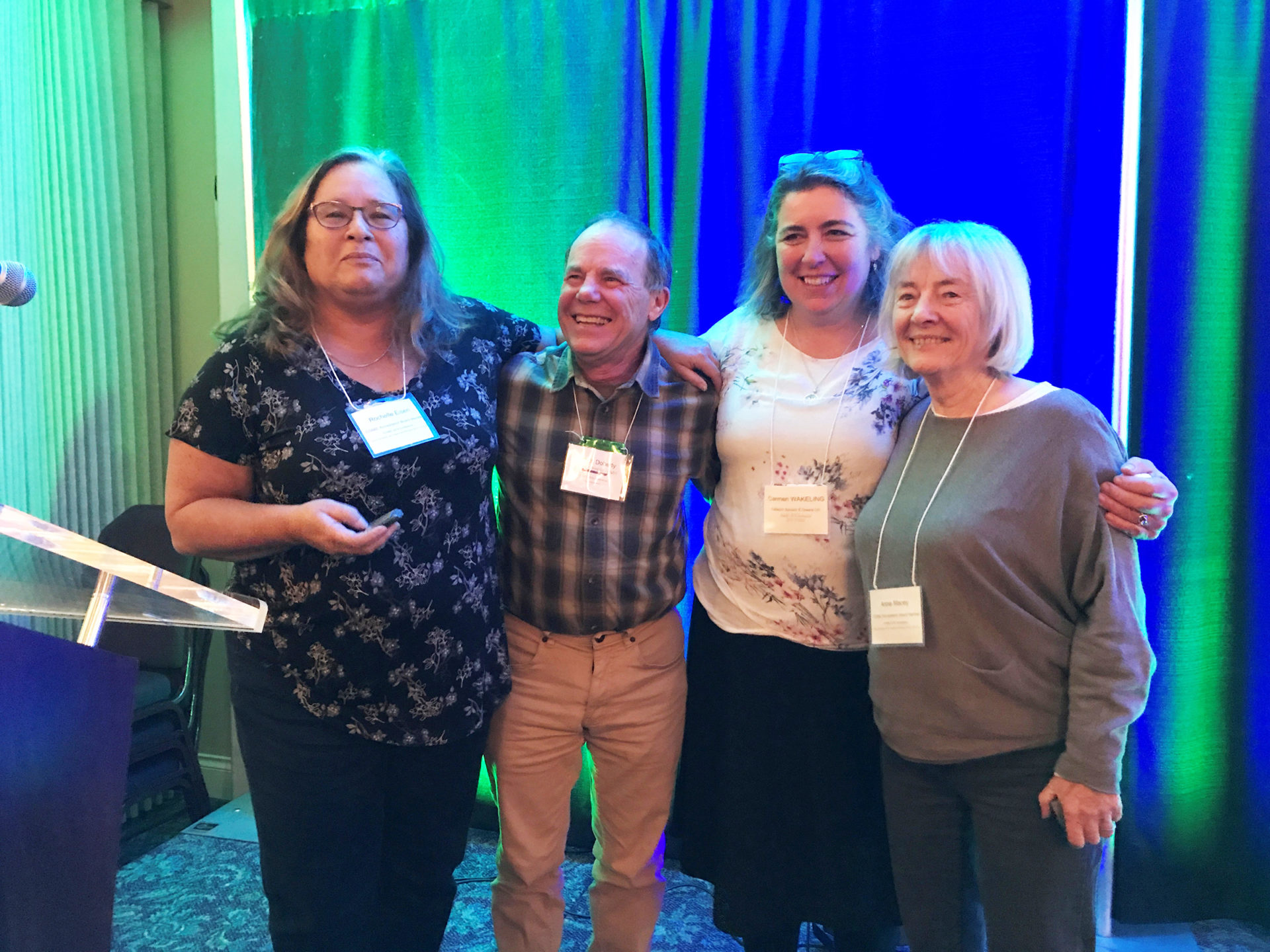
Rochelle Eisen, a long-time consultant to the sector and president of the Canadian Organic Growers, told the association’s business meeting that COABC membership isn’t growing at the same pace as the rest of the organic sector in BC. She feels it needs to reinvigorate its position in the public square, an element of the five-year strategic plan COABC adopted last year. The core review will assist it in meeting those objectives

Raising the public profile of COABC and the organic sector through greater use of the association’s checkmark logo is something COABC president Carmen Wakeling would like to see.

The logo has accumulated a degree of brand equity that risks being lost if producers don’t exercise it. It provides consumers with a recognizable brand for locally grown organic produce, something Wakeling said supports consumers’ desire to support local growers.

“If we can’t provide that, somebody else will,” she said.

But as farms grow larger, not everyone can use the logo.

Corry Spitters of Oranya Farms in Abbotsford, the province’s largest organic chicken farm, uses the checkmark on his business card. But his meat can’t carry the logo because it’s packaged under the Kirkland brand in a facility not certified through COABC certification bodies.

Such situations are prompting COABC to consider licensing the logo to non-COABC members to identify BC-grown organic products. The idea isn’t popular with everyone, but many endorsed the need to build relationships with other organizations.

“The foundation of it is relationships, and communication,” said Michelle Tsutsumi, who facilitated the round-table discussion. She encouraged more outreach and connections with farmers and the public, and greater engagement with the world beyond the organic sector.

“It’s absolutely essential,” Wakeling said “We’re scary to the world, I think, sometimes.”

She added that growth, even turning a profit, shouldn’t be seen as a bad thing.

“It’s okay to make money,” Wakeling told members. “It’s really important for you to celebrate it.”

She encouraged growers to see the potential to use money for good, rather than act like it’s a bad thing.

“Make sure your company’s making money, make sure you’re paying yourself, and give back,” she said.

 

Related Posts

You may be interested in these posts from the same category.

Organic growers discuss challenges

New executive director for COABC appointed

Previous Post: «Cattle Codes of practice need producer input
Next Post: “Island Good” campaign drives local sales »

Copyright © 2026 Country Life in BC · All Rights Reserved