
• Menu
  • Skip to primary navigation
  • Skip to main content
  • Skip to primary sidebar

Country Life In BC Logo

The agricultural news source in British Columbia since 1915

  • Headlines
  • Calendar
  • Subscribe
  • Advertise
  • About
  • Archives
  • Contact
  • Search
  • Headlines
  • Calendar
  • Subscribe
  • Advertise
  • About
  • Archives
  • Contact
  • Search

Primary Sidebar

Originally published:

November 2018
Vol. 104 Issue 11

Subscribe Now!

Sign up for free weekly FARM NEWS UPDATES

Select list(s) to subscribe to


By submitting this form, you are consenting to receive marketing emails from: Country Life in BC. You can revoke your consent to receive emails at any time by using the SafeUnsubscribe® link, found at the bottom of every email. Emails are serviced by Constant Contact
Your information will not be
shared or sold ever

Stories In This Edition

Dairy pays price in new trade deal

USMCA uncorks wine sales

ALC crippled while province mulls revitalization

Editorial: Think Big

Back Forty: If wishes were horses, beggars would ride

Viewpoint: Antibiotics are important tools for producers

Farms scramble as thousands of jobs go unfilled

Farmers’ institutes set to meet in Vancouver

Poultry growers adjust to reduced antibiotic use

Traceability regulations expected next year

UFV consolidates two centres

Plowman in the making

Letters: Animal welfare monitored

Success starts with a solid business plan

Turkey growers look to boost markets

Dairy sale

Strawberry growers rank fruit quality highest

Westcoast Holsteins brings home the prizes

Cannabis raises new workplace concerns

Tasty!

Ag Briefs: Cannabis conference alongside PAS

Ag Briefs: First Nations farms funded

Ag Briefs: Cannabis grower breaks ground

Ag Briefs: harvest conflict results in fewer plow match competitors

Pilot project in Delta supports perennial crops

Uvic research seeks perfect picking time for wine grapes

Ag council wants to get farmers CHATting

Sidebar: Remember to CHAT

Fleeced

Buying stations gain ground

Snow joke

Triple Threat

Meat processing review fails to meet expectations

Livestock transport under scrutiny by activists

Ranching program grads ready for next field

Yields high as cranberry season runs late

Tour features multi-generation farms

Horse Power

Edible flowers show promise for BC growers

Retirement blossoms into flower nursery

Research: Sunflower pollen can help improve colony health

Woodshed: The countdown begins for Kenneth, Deborah

4-H BC: Funding helps advance initiatives

Wannabe: Choosing gratitude

Jude’s Kitchen: Roots and keepers


More Headlines

Follow us on Facebook

Comments Box SVG iconsUsed for the like, share, comment, and reaction icons

7 days ago

... See MoreSee Less

View Comments
  • Likes: 4
  • Shares: 0
  • Comments: 0

Comment on Facebook

7 days ago

On the last day of the BC Organic Conference, Thursday, Molly Thurston of Pearl Agricultural Consulting helped growers learn how to manage bugs such as codling moth, wireworm, and rootworm in organic growing systems. Her talk alongside Renee Prasad included hands-on activities in which participants checked out various traps and examined pests under microscopes. Be sure to look for more upcoming ag events on our online calendar at www.countrylifeinbc.com/calendar/

#BCAg
... See MoreSee Less

On the last day of the BC Organic Conference, Thursday, Molly Thurston of Pearl Agricultural Consulting helped growers learn how to manage bugs such as codling moth, wireworm, and rootworm in organic growing systems. Her talk alongside Renee Prasad included hands-on activities in which participants checked out various traps and examined pests under microscopes. Be sure to look for more upcoming ag events on our online calendar at www.countrylifeinbc.com/calendar/

#BCAg
View Comments
  • Likes: 15
  • Shares: 0
  • Comments: 0

Comment on Facebook

1 week ago

Well-known organic farmer and podcaster Jordan Marr gets interviewed by Country Life in BC’s own columnist and potato mavin Anna Helmer during the opening session of the BC Organic Conference at Harrison Hot Springs yesterday. Sessions run today (Wednesday) and Thursday and include organic and regenerative growing practices and expanding and advocating for the organic sector, all under the background of the newly launched Organic BC banner.

#BCAg
... See MoreSee Less

Well-known organic farmer and podcaster Jordan Marr gets interviewed by Country Life in BC’s own columnist and potato mavin Anna Helmer during the opening session of the BC Organic Conference at Harrison Hot Springs yesterday. Sessions run today (Wednesday) and Thursday and include organic and regenerative growing practices and expanding and advocating for the organic sector, all under the background of the newly launched Organic BC banner.

#BCAg
View Comments
  • Likes: 37
  • Shares: 2
  • Comments: 1

Comment on Facebook

Interested in finding out more about this

3 weeks ago

Today, we remember those who sacrificed their lives or their well-being for our freedom. Lest we forget. ... See MoreSee Less

Today, we remember those who sacrificed their lives or their well-being for our freedom. Lest we forget.
View Comments
  • Likes: 8
  • Shares: 0
  • Comments: 0

Comment on Facebook

1 month ago

FarmFolk CItyFolk is hosting its biennial BC Seed Gathering in Harrison Hot Springs November 27 and 28. Farmers, gardeners and seed advocates are invited to learn more about seed through topics like growing perennial vegetables for seed, advances in seed breeding for crop resilience, seed production as a whole and much more. David Catzel, BC Seed Security program manager with FF/CF will talk about how the Citizen Seed Trail program is helping advance seed development in BC. Expect newcomers, experts and seed-curious individuals to talk about how seed saving is a necessity for food security. ... See MoreSee Less

Link thumbnail

BC Seed Gathering - FarmFolk CityFolk

farmfolkcityfolk.ca

Save the date for our upcoming 2023 BC Seed Gathering happening this November 3rd and 4th at the Richmond Kwantlen Polytechnic University campus.
View Comments
  • Likes: 1
  • Shares: 0
  • Comments: 0

Comment on Facebook

Subscribe | Advertise

The agricultural news source in British Columbia since 1915
  • Email
  • Facebook

Poultry growers adjust to reduced antibiotic use

Tighter management of feed, environment needed to ensure flock health

October 29, 2018 byPeter Mitham

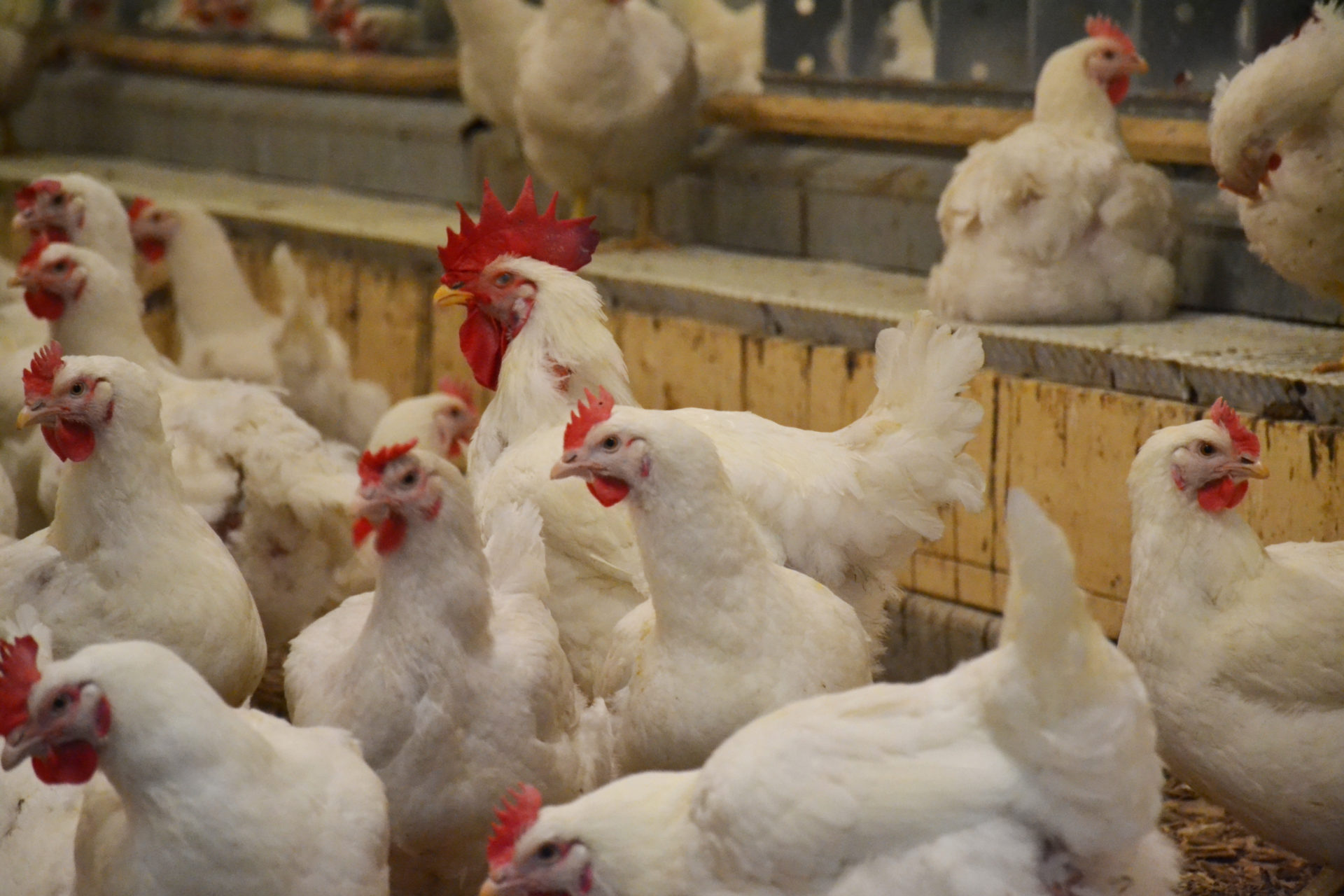
ABBOTSFORD – Approximately 60,000 chickens roam Ray Nickel’s four-level barn in Abbotsford. The environment in the facility is computer-controlled, with air flow and temperature closely monitored to ensure the birds are comfortable and – more important – healthy. Close quarters mean that if one bird gets sick, all are vulnerable.

To further reduce the risk of disease and boost birds’ resistance, a regular dose of antibiotics is mixed into the feed as a preventive measure. Some consumers object to the practice and opt for birds raised without antibiotics (RWA), but the practice keeps mortalities in commercial flocks manageable. The average mortality rate in BC broiler flocks last year was 6.8% versus 7.8% for antibiotic-free flocks.

Growing concerns about antibiotic resistance were also prompting Health Canada to mandate tighter controls on drugs administered to flocks.

Poultry in Canada is free of drug residues at slaughter but growers took note of concerns and voluntarily began reducing antibiotic use in 2014. Preventative use of Category 1 antibiotics (those critical to protecting humans from diseases such as tuberculosis) ended in May 2014. The second phase is a ban on Category 2 antibiotics, such as penicillin, at the end of 2018. By the end of 2020, the preventative use of Category 3 antibiotics in poultry will be finished.

Steps by the poultry industry to reduce antibiotic use combined with new Health Canada regulations that come into effect December 1 governing over-the-counter medications for livestock are good news for socially conscious consumers but mean changes in how producers raise flocks.

“This is going to be a bit of a struggle,” says Nickel, a director of the BC Chicken Marketing Board. “We’ve become conditioned to using products to reduce the risk of having [bad] things happen. … [Now] the only time we will use those products is if the birds are actually going to get sick, and then we will use them for treatment purposes. It will require more due diligence by producers to monitor their flocks.”

Closer monitoring of birds isn’t the only thing Nickel and other farmers are going to be doing. They’re also going to be taking a leaf out of the RWA playbook and vaccinating flocks.

“Strategies around initial bird placement and how you start your flocks could be a factor,” says Nickel, who is already changing how he manages his flocks. “We know there are other things available to use besides some of the traditional medications, such as vaccine programs. … The wetter your litter is, the more opportunities there are for flock stress, so litter management is a big deal.”

Producers can’t do it alone, however.

“The feed companies are going to be playing a pretty integral part in this as well because of the way that they put their programs together,” says Nickel, noting that producers and nutritionists will have to work together to make sure birds are getting the feed they need to ensure proper gut health.

Mike Leslie, a nutritionist with Ritchie Smith Feeds Inc. in Abbotsford, expects feeds will be milled to match flocks.

“What we have to do now is pay more attention, make sure we’re delivering the right nutrition to the bird and not to the bugs,” he says. “You work with the producers to monitor how performance goes and adjust as needed.”

The preventative use of antibiotics usually targets clostridium bacteria, which can release toxins that cause necrotizing enteritis. Clostridium feeds off any excess nitrogen in the bird’s gut, meaning feed needs to be easily digestable so nutrients are fully taken up. Canola feed may be used less than other ingredients in the future, but ultimately it will depend on the circumstances of the particular flock.

“We’re looking at all sorts of gut health-type products to try to make things as smooth as possible … and reduce the likelihood of a disease,” says Leslie.

Many producers fear the potential for mortality rates to increase. Average mortalities for BC broilers rose when Category 1 antibiotics were withdrawn in 2014, although this was explained as a function of lower quota utilization. RWA flocks typically have higher average mortalities but Nickel points out that the past year has seen it occasionally drop below that of the industry as a whole.

Yet the industry as a whole consistently reports mortalities above the 5.4% target the Chicken Farmers of Canada’s animal care program specifies. Getting on target as the medicines on which producers have relied are phased out is going to take work.

“The management levels are going to be more intense,” says Nickel. “We have the highest standards on chicken in the world. Maintaining that is really important for producers. … This may end up costing more down the road, but I think that’s a fair trade-off.”


Related Posts

You may be interested in these posts from the same category.

Previous Post: « Meat processing review fails to meet expectations
Next Post: Vole control in blueberries »

Copyright © 2025 Country Life in BC · All Rights Reserved