• Menu
  • Skip to primary navigation
  • Skip to main content
  • Skip to primary sidebar

Country Life In BC Logo

The agricultural news source in British Columbia since 1915

  • Headlines
  • Calendar
  • Subscribe
  • Advertise
  • About
  • Archives
  • Contact
  • Search
  • Headlines
  • Calendar
  • Subscribe
  • Advertise
  • About
  • Archives
  • Contact
  • Search

Primary Sidebar

Current Issue:

DECEMBER 2025
Vol. 111 Issue 11

Subscribe Now!

Sign up for free weekly FARM NEWS UPDATES

Select list(s) to subscribe to


By submitting this form, you are consenting to receive marketing emails from: Country Life in BC. You can revoke your consent to receive emails at any time by using the SafeUnsubscribe® link, found at the bottom of every email. Emails are serviced by Constant Contact
Your information will not be
shared or sold ever

Follow us on Facebook

Comments Box SVG iconsUsed for the like, share, comment, and reaction icons

6 days ago

... See MoreSee Less

View Comments
  • Likes: 4
  • Shares: 0
  • Comments: 0

Comment on Facebook

7 days ago

On the last day of the BC Organic Conference, Thursday, Molly Thurston of Pearl Agricultural Consulting helped growers learn how to manage bugs such as codling moth, wireworm, and rootworm in organic growing systems. Her talk alongside Renee Prasad included hands-on activities in which participants checked out various traps and examined pests under microscopes. Be sure to look for more upcoming ag events on our online calendar at www.countrylifeinbc.com/calendar/

#BCAg
... See MoreSee Less

On the last day of the BC Organic Conference, Thursday, Molly Thurston of Pearl Agricultural Consulting helped growers learn how to manage bugs such as codling moth, wireworm, and rootworm in organic growing systems. Her talk alongside Renee Prasad included hands-on activities in which participants checked out various traps and examined pests under microscopes. Be sure to look for more upcoming ag events on our online calendar at www.countrylifeinbc.com/calendar/

#BCAg
View Comments
  • Likes: 15
  • Shares: 0
  • Comments: 0

Comment on Facebook

1 week ago

Well-known organic farmer and podcaster Jordan Marr gets interviewed by Country Life in BC’s own columnist and potato mavin Anna Helmer during the opening session of the BC Organic Conference at Harrison Hot Springs yesterday. Sessions run today (Wednesday) and Thursday and include organic and regenerative growing practices and expanding and advocating for the organic sector, all under the background of the newly launched Organic BC banner.

#BCAg
... See MoreSee Less

Well-known organic farmer and podcaster Jordan Marr gets interviewed by Country Life in BC’s own columnist and potato mavin Anna Helmer during the opening session of the BC Organic Conference at Harrison Hot Springs yesterday. Sessions run today (Wednesday) and Thursday and include organic and regenerative growing practices and expanding and advocating for the organic sector, all under the background of the newly launched Organic BC banner.

#BCAg
View Comments
  • Likes: 37
  • Shares: 2
  • Comments: 1

Comment on Facebook

Interested in finding out more about this

3 weeks ago

Today, we remember those who sacrificed their lives or their well-being for our freedom. Lest we forget. ... See MoreSee Less

Today, we remember those who sacrificed their lives or their well-being for our freedom. Lest we forget.
View Comments
  • Likes: 8
  • Shares: 0
  • Comments: 0

Comment on Facebook

1 month ago

FarmFolk CItyFolk is hosting its biennial BC Seed Gathering in Harrison Hot Springs November 27 and 28. Farmers, gardeners and seed advocates are invited to learn more about seed through topics like growing perennial vegetables for seed, advances in seed breeding for crop resilience, seed production as a whole and much more. David Catzel, BC Seed Security program manager with FF/CF will talk about how the Citizen Seed Trail program is helping advance seed development in BC. Expect newcomers, experts and seed-curious individuals to talk about how seed saving is a necessity for food security. ... See MoreSee Less

Link thumbnail

BC Seed Gathering - FarmFolk CityFolk

farmfolkcityfolk.ca

Save the date for our upcoming 2023 BC Seed Gathering happening this November 3rd and 4th at the Richmond Kwantlen Polytechnic University campus.
View Comments
  • Likes: 1
  • Shares: 0
  • Comments: 0

Comment on Facebook

Subscribe | Advertise

The agricultural news source in British Columbia since 1915
  • Email
  • Facebook

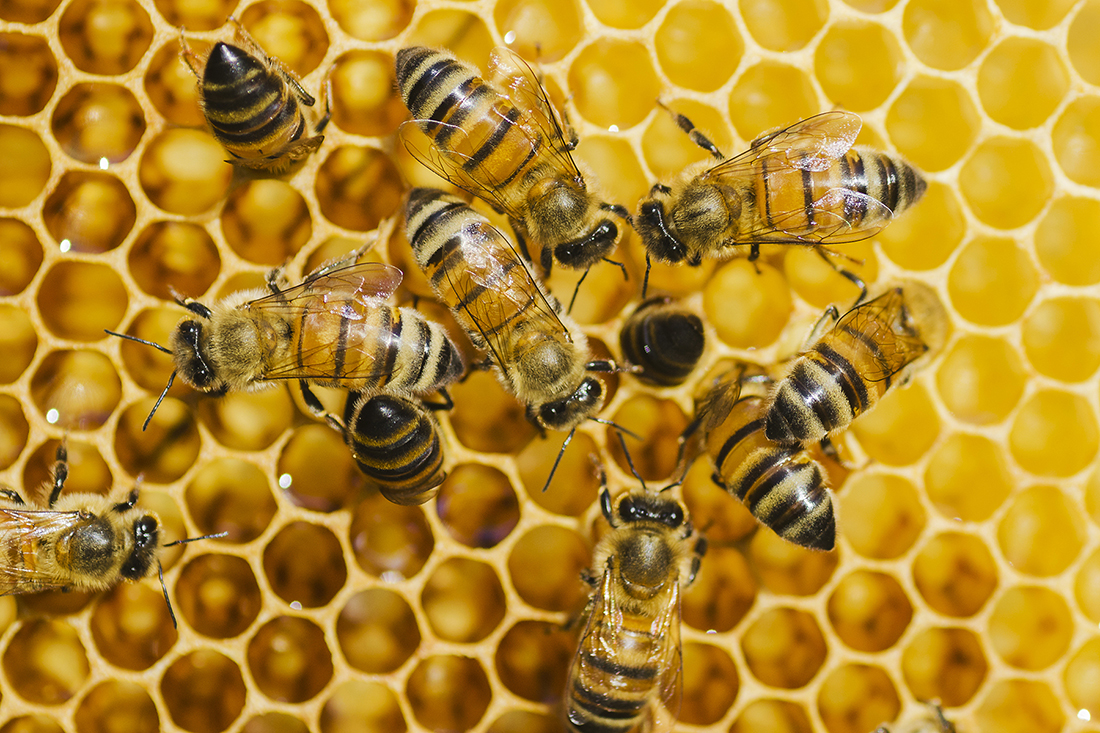
Colony losses have beekeepers on edge

Bee

April 3, 2019 byTom Walker

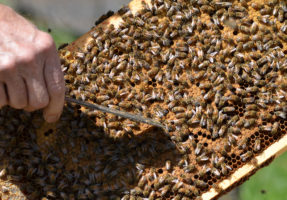
Reports of colony losses across the province have beekeepers on edge this spring, and government wants to know how bad the problem is.

“Victoria wants me to give them details right now and with the help of the inspection staff we have been able to collect a bit of information on colony losses,” provincial apiculturist Paul van Westendorp told the semi-annual meeting of the BC Honey Producers Association in Kamloops on March 23. “Of course, the farther north you go the harder it gets, and for some areas there is no data.”

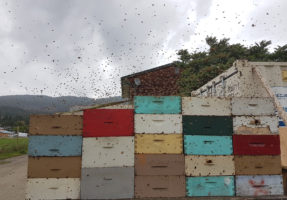
A survey of 5,500 colonies on the coast and in the southern Interior indicates an overall mortality rate of 48%, but it’s not the full story.

Van Westendorp says that as spring progresses, some colonies may recover.

“I already have an email from someone who says they cannot believe it but as soon as the weather changed, colonies that they thought that were in the process of collapsing bounced back up and are going full steam,” he says. “You need a bit of warm air, you need the first flowers to come in and things are starting to go.”

When pressed for reasons, van Westendorp was reluctant to draw conclusions, but shifting weather conditions could be one reason.

“We had an unusually mild winter until the end of January and somebody suddenly turned the switch and everything became super cold and exceedingly windy,” he said. “The Arctic out-flows really had a terrible impact on the bees.”

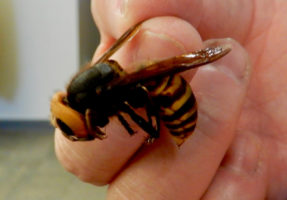
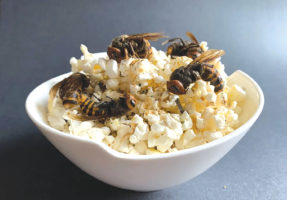
He said wasps are another factor, particularly for weaker colonies. But, since apiaries typically have a mix of weak and strong colonies, wasps try to induce chaos.

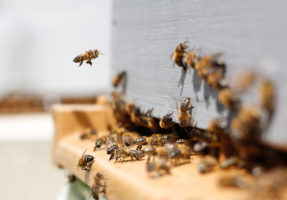
“Wasps will go in towards the weak colonies,” he explained. “They create an apiary-wide panic and start to try to get into all hives and then you have increased losses.”

Growers can mitigate wasp-related losses by setting up wasp traps early in the season to keep populations in check and give bees a fighting chance. If wasps are addressed later in the season, a colony may not have enough strength to survive the winter.

Van Westendorp wants beekeepers to complete the spring survey so the province has an accurate picture of mortalities. Beekeepers with 10 or more colonies will receive an email, but beekeepers can also visit [http://bit.do/BC-bee-survey].

“We would like to have information on where you operate your bees and what the wintering results have been in early May,” he says. “It’s painless, anonymous, and it takes about five minutes.”



Related Posts

You may be interested in these posts from the same category.

Contracts cancelled for beekeepers

Bee losses significant but not extreme

Asian Giant Hornet

BC watches Stateside hornets

Canada holds off Asian giant hornet restrictions

Beekeepers suffer colony losses

Asian Giant Hornet

Hornet surveillance plans outlined

Bee replacements grounded

Bee initiatives in focus

Grading requirements changing

Sweet times for BC honey producers

Previous Post: «Strawberry Federal funding delay hits berries
Next Post: Province prepares for a dry spell »

Copyright © 2025 Country Life in BC · All Rights Reserved