• Menu
  • Skip to primary navigation
  • Skip to main content
  • Skip to primary sidebar

Country Life In BC Logo

The agricultural news source in British Columbia since 1915

  • Headlines
  • Calendar
  • Subscribe
  • Advertise
  • About
  • Archives
  • Contact
  • Search
  • Headlines
  • Calendar
  • Subscribe
  • Advertise
  • About
  • Archives
  • Contact
  • Search

Primary Sidebar

Originally published:

NOVEMBER 2022
Vol. 108 Issue 11

Subscribe Now!

Sign up for free weekly FARM NEWS UPDATES

Loading form…

Your information will not be
shared or sold ever

Stories In This Edition

Final inspection

Dry Season

Country Life in BC wins awards

Duncan feed mill sounds supply chain alarm

The great pumpkin

Editorial: The price of peace

Back 40: Pumpkins make great conversation starters

Viewpoint: The roots of the ALR point a way to its future

Producers look beyond 2021’s flood

No quick fix

Ag Briefs: Plant centre breaks ground

Ag Briefs: 4-H LEADer recognized

Ag Briefs: New child worker rules

Movement of poultry banned to curb AI threat

Sentencing of animal activists disappoints industry

Weather makes for easier harvest in Peace

Western dairy groups target processors

Funding supports First Nations’ food security

Replant report targets industry over orchards

New national soil study underway

Honey producers target growth with new study

Sweet reward

Hazelnut industry continues to thrive

Producers push for social welfare in organic standards

Sidebar: Compliance rate high

Garlic grower cuts the mustard – and pests

Extended fall improves outcome at corn trial

Forest planning pilot includes range values

Diversification keeps families on the farm

Farm Story: Rethinking the sales strategy could improve profits

Automation boosts market garden’s efficiency

Fallow deer rattle Mayne Island farmers

Best of the best

Winery stakes its hopes on sur echalas planting

Woodshed: “One sweet deal” too hard for Kenneth to resist

Rising input costs create challenges for direct sales

Sidebar: Provincial farmer-chef event returns

Jude’s Kitchen: Comfort comes from the oven

All content on this website is copyrighted, and cannot be republished or reproduced without permission.
More Headlines

Follow us on Facebook

Comments Box SVG iconsUsed for the like, share, comment, and reaction icons

1 week ago

Canada's mushroom growers will have to post countervailing duties next week following a US Department of Commerce determination that Canada's tax regime effectively subsidized growers, allowing them to cause "material injury" to US growers through their exports. Canada is a major exporter of mushrooms to the US, with the countries effectively operating as a single value chain thanks in part to one of the largest mushroom producers, South Mill Champs, headquartered in Pennsylvania.

#BCAg
... See MoreSee Less

Canadas mushroom growers will have to post countervailing duties next week following a US Department of Commerce determination that Canadas tax regime effectively subsidized growers, allowing them to cause material injury to US growers through their exports. Canada is a major exporter of mushrooms to the US, with the countries effectively operating as a single value chain thanks in part to one of the largest mushroom producers, South Mill Champs, headquartered in Pennsylvania.

#BCAg
View Comments
  • Likes: 2
  • Shares: 2
  • Comments: 0

Comment on Facebook

1 week ago

... See MoreSee Less

View Comments
  • Likes: 6
  • Shares: 0
  • Comments: 0

Comment on Facebook

1 week ago

The Jura Ranch near Princeton sold for nearly $5.3 million on May 12, the largest online ranch sale in BC in months, according to CLHBid.com, which handled the sale. The buyer was not named. Formerly owned by Rob and Kelly Lamoureux, which developed the successful Jura Grassfed brand, the ranch includes 2,625 deeded acres and a grazing licence totalling 83,698 acres. Originally offered at $4.2 million, the competitive bidding process delivered a higher value than the current market would suggest. Farm Credit Canada’s latest farmland value survey pointed to 1.7% decline in BC last year, which observers have attributed to tight margins and uncertainties related to Crown tenure.

#BCAg
... See MoreSee Less

The Jura Ranch near Princeton sold for nearly $5.3 million on May 12, the largest online ranch sale in BC in months, according to CLHBid.com, which handled the sale. The buyer was not named. Formerly owned by Rob and Kelly Lamoureux, which developed the successful Jura Grassfed brand, the ranch includes 2,625 deeded acres and a grazing licence totalling 83,698 acres. Originally offered at $4.2 million, the competitive bidding process delivered a higher value than the current market would suggest. Farm Credit Canada’s latest farmland value survey pointed to 1.7% decline in BC last year, which observers have attributed to tight margins and uncertainties related to Crown tenure.

#BCAg
View Comments
  • Likes: 40
  • Shares: 10
  • Comments: 4

Comment on Facebook

I sure hope it remains as farm land rather than a wind or solar installation.

Great grassland

yeah, who bought it? where are the checks and balances that ensure a ranch can continue being a ranch?

Uncertainty about crown land, aka native land grabs and unceded land claims being tossed around like it wasn't meant to destabilize the country?

2 weeks ago

American businessmen have quietly accumulated nearly 4,000 acres of farmland in the Robson Valley community of Dunster, sparking calls for restrictions on foreign and corporate agricultural land ownership in BC. Residents say the buy-up has driven population decline and priced out young farmers. MLAs from both parties and a UNBC professor are pointing to Quebec's new farmland protection legislation as a model BC should follo#BCAg#BCAg ... See MoreSee Less

Link thumbnail

Foreign land buyers hollow out Dunster

www.countrylifeinbc.com

DUNSTER – Purchases of swathes of farmland in the Robson Valley by wealthy American businessmen have some in BC demanding restrictions on foreign and corporate ownership of agricultural land.
View Comments
  • Likes: 26
  • Shares: 3
  • Comments: 1

Comment on Facebook

This is a serious issue in Dunster and one that has impacts for wildlife and human neighbours.

2 weeks ago

Representatives from Quail's Gate Winery Estate Winery in West Kelowna were panellists during the Okanagan Cultivates event held at Okanagan College's Kelowna campus on May 7. The college has been hosting events like this to help elevate conversations in the community about what's grown locally and its impact on the region's food, wine and tourism industry. The Quail's Gate panel, which included Ben Stewart, discussed the long history of grape growing and winemaking in front of a large crowd who came to listen, learn and taste products from a number of local wineries and restaurants. A new $48.8M food, wine and tourism centre is now under construction at the college to open in fall 2027. The building will have modern food labs, a student-led restaurant and café and specialized training spaces for culinary, viticultu#BCAgd tourism studies.

#BCAg
... See MoreSee Less

Representatives from Quails Gate Winery Estate Winery in West Kelowna were panellists during the Okanagan Cultivates event held at Okanagan Colleges Kelowna campus on May 7. The college has been hosting events like this to help elevate conversations in the community about whats grown locally and its impact on the regions food, wine and tourism industry. The Quails Gate panel, which included Ben Stewart, discussed the long history of grape growing and winemaking in front of a large crowd who came to listen, learn and taste products from a number of local wineries and restaurants. A new $48.8M food, wine and tourism centre is now under construction at the college to open in fall 2027. The building will have modern food labs, a student-led restaurant and café and specialized training spaces for culinary, viticulture and tourism studies.

#BCAg
View Comments
  • Likes: 8
  • Shares: 0
  • Comments: 0

Comment on Facebook

Subscribe | Advertise

The agricultural news source in British Columbia since 1915
  • Email
  • Facebook

Replant report targets industry over orchards

Province has yet to extend tree fruit program that ended last year

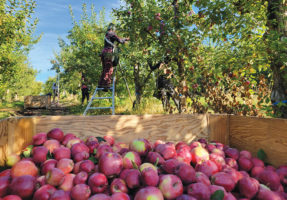
The province is rethinking the way the tree fruit replant program will be offered to orchardists in the future. Since 1991, it has invested over $50 million to help revitalize Okanagan orchards. MYRNA STARK LEADER

November 1, 2022 byPeter Mitham

KELOWNA – The future of BC’s tree fruit replant program is no clearer following an audit of the most recent iteration than it was when the province failed to renew the program 18 months ago.

The only thing that seems clear is that orchard renewal is likely to be secondary to industry renewal.

“We believe that a potential continued TFRP or some other form of replant-renewal can focus on the tree fruit industry needs that relate to communication and individual orchard planning,” states the report, prepared by KPMG in March but just released in September.

It notes that the challenges facing the tree fruit industry “are broader than those that a replant program can address,” and argues in favour of a renewal program that supports efforts to increase market share for BC apples, encourages new entrants to the industry and growers operating in niche markets and supports defined year-over-year increases in fruit quality.

New and small-scale growers could be barred from the program, and participants could be required to submit marketing plans detailing how the grower expects to market or sell fruit from trees funded by the program.

The program would be underpinned by an industry-led vision for itself.

“Once a vision has been established, the role and goals for the program can be developed to align with the industry’s overall vision,” KMPG states.

The BC Ministry of Agriculture and Food says KPMG’s recommendations are “consistent” with those of a stabilization plan the province developed in partnership with the tree fruit and grape industry last year.

The stabilization task force recommended “some form of program” geared to the needs of “business-oriented farmers” and potentially integrated with other commodity replant programs “to facilitate diversification and orchard regeneration.”

The province currently operates two other replant programs, one for hazelnuts and another for raspberries.

“We will continue working with the industry going forward on next steps,” the ministry states.

Lengthy history

Originally launched in 1991 and administered by the Okanagan Valley Tree Fruit Authority, the replant program has invested

$50 million in the industry through 2021.

The latest iteration launched in 2014. Program delivery for the final six years was through the BC Fruit Growers Association, which handed the reins to the province with six months left to run in its administration contract. The final work involved finalizing paperwork and making outstanding payments to growers, which the province delegated to the Investment Agriculture Foundation of BC.

The province’s decision to change the program’s administration fee, effectively cutting it in half, and other changes to the administration agreement prompted BCFGA to walk away.

KPMG’s review took issue with several aspects of BCFGA’s administration of the program, but it also highlights several shortcomings on the part of the province.

For example, administration agreements were incomplete or non-existent for several periods. In addition, BCFGA faced several challenges related to staff turnover at the agriculture ministry, while its own staff remained unchanged. BCFGA was also not compensated for administration of the program in the final year.

But regardless of the critiques of its management, the program has been a boon for growers.

BCFGA president Peter Simonsen says the program traces its roots to initiatives launched alongside the Agricultural Land Reserve to support the viability of farmers and protect local food security.

“It was very successful and while the funding never kept up to rising costs, the program had been continually recognized as a worthwhile incentive that shows faith in the industry,” he says.

The broader economy also benefitted, with every dollar of government investment supporting several dollars worth of spending by growers over the life of the orchard.

“It was continually renewed with little debate and is the model adopted and currently enjoyed by hazelnuts and raspberries,” he says.

With significant competition from imports and concentration among retailers forcing growers to take price rather than set the price for the fruit, a replant program helps growers reposition their orchards for the future.

“With an open border, worldwide competition and continuing retail concentration, we have experienced a market failure,” Simonsen says. “That needs to be addressed if the apple industry is to survive and farming be preserved.”

All content on this website is copyrighted, and cannot be republished or reproduced without permission.
Related Posts

You may be interested in these posts from the same category.

Sun-Rype moves concern growers

Snowpack declines – but winter’s not over

Cherry growers focus on labour

Federal budget kills Living Labs

Cherry bonanza no jubilee

Arts leads BCFGA forward

Tesche leaving BCFGA

United front for fruit growers

Apple growers discuss marketing commission

BC Fruit Growers list test orchard

New fruit co-op discussed

Peach report bullish on future opportunities

Previous Post: « Province rebrands hort course
Next Post: Apple soda breaks ground in saturated market »

© 2026 COUNTRY LIFE IN BC - ALL RIGHTS RESERVED