• Menu
  • Skip to primary navigation
  • Skip to main content
  • Skip to primary sidebar

Country Life In BC Logo

The agricultural news source in British Columbia since 1915

  • Headlines
  • Calendar
  • Subscribe
  • Advertise
  • About
  • Archives
  • Contact
  • Search
  • Headlines
  • Calendar
  • Subscribe
  • Advertise
  • About
  • Archives
  • Contact
  • Search

Primary Sidebar

Originally published:

November 2017
Vol. 103 Issue 11

Subscribe Now!

Sign up for free weekly FARM NEWS UPDATES

Select list(s) to subscribe to


By submitting this form, you are consenting to receive marketing emails from: Country Life in BC. You can revoke your consent to receive emails at any time by using the SafeUnsubscribe® link, found at the bottom of every email. Emails are serviced by Constant Contact
Your information will not be
shared or sold ever

Stories In This Edition

Horse Power

Buy BC rollout in works

Hullcar report delayed

Breaking new ground

Perfecting the straight and narrow

Editorial: A new deal

The good, the bad, the disturbing: climate change Blueberry growers must rise above the competition

Vitala Foods cracks open free range egg market

Regulating the range

Winner! Winner

Sentence loosened for dairy worker

Farmers must take lead in building public trust

Food system confidence growing but costs still bite

Foodlands Trust initiative moves forward

Cost of record wildfires continues to rise

New range, new challenge

Peace grain yeilds good but drying needed

New hire for research

BC Tree Fruits singled out for excellence

Land commision to allow breweries on farmland

Greens seek limits on foreign ownership

Salmon farms work towards sustainability

Fruit growers stepping up replant lobby

Arctic apples make official debut

3 million pounds!

Cannabis hopes more than a pipe dream

More government regulation needed

Hop farm burns but demand fuels hope

Predators, politicians worry sheep producers

Mother Nature to blame for late cranberries

Hard work pays off for family business

Research breeds better bees for Vancouver Island

Persistence is the key to success: innovation

What investors want

Penicillium is an insidious Blue Meany for fruit growers

Collaboration key to extension programming

BC sheep breeders honoured with GenOvis awards

Good breeding, feeding are keys to strong replacement ewes

Next Generation

Strong appetite for female purebreds at fall sales

Range management strategies highlight symposium

Dairy sale average one of the best

Keremeos fair has ambitious plans for future

Leiutenant Governor honoured by 4-H BC

Wannabe

Woodshed: Henderson loses ground

Delicious diet foods

More Headlines

Follow us on Facebook

Comments Box SVG iconsUsed for the like, share, comment, and reaction icons

6 days ago

... See MoreSee Less

View Comments
  • Likes: 4
  • Shares: 0
  • Comments: 0

Comment on Facebook

7 days ago

On the last day of the BC Organic Conference, Thursday, Molly Thurston of Pearl Agricultural Consulting helped growers learn how to manage bugs such as codling moth, wireworm, and rootworm in organic growing systems. Her talk alongside Renee Prasad included hands-on activities in which participants checked out various traps and examined pests under microscopes. Be sure to look for more upcoming ag events on our online calendar at www.countrylifeinbc.com/calendar/

#BCAg
... See MoreSee Less

On the last day of the BC Organic Conference, Thursday, Molly Thurston of Pearl Agricultural Consulting helped growers learn how to manage bugs such as codling moth, wireworm, and rootworm in organic growing systems. Her talk alongside Renee Prasad included hands-on activities in which participants checked out various traps and examined pests under microscopes. Be sure to look for more upcoming ag events on our online calendar at www.countrylifeinbc.com/calendar/

#BCAg
View Comments
  • Likes: 15
  • Shares: 0
  • Comments: 0

Comment on Facebook

1 week ago

Well-known organic farmer and podcaster Jordan Marr gets interviewed by Country Life in BC’s own columnist and potato mavin Anna Helmer during the opening session of the BC Organic Conference at Harrison Hot Springs yesterday. Sessions run today (Wednesday) and Thursday and include organic and regenerative growing practices and expanding and advocating for the organic sector, all under the background of the newly launched Organic BC banner.

#BCAg
... See MoreSee Less

Well-known organic farmer and podcaster Jordan Marr gets interviewed by Country Life in BC’s own columnist and potato mavin Anna Helmer during the opening session of the BC Organic Conference at Harrison Hot Springs yesterday. Sessions run today (Wednesday) and Thursday and include organic and regenerative growing practices and expanding and advocating for the organic sector, all under the background of the newly launched Organic BC banner.

#BCAg
View Comments
  • Likes: 37
  • Shares: 2
  • Comments: 1

Comment on Facebook

Interested in finding out more about this

3 weeks ago

Today, we remember those who sacrificed their lives or their well-being for our freedom. Lest we forget. ... See MoreSee Less

Today, we remember those who sacrificed their lives or their well-being for our freedom. Lest we forget.
View Comments
  • Likes: 8
  • Shares: 0
  • Comments: 0

Comment on Facebook

1 month ago

FarmFolk CItyFolk is hosting its biennial BC Seed Gathering in Harrison Hot Springs November 27 and 28. Farmers, gardeners and seed advocates are invited to learn more about seed through topics like growing perennial vegetables for seed, advances in seed breeding for crop resilience, seed production as a whole and much more. David Catzel, BC Seed Security program manager with FF/CF will talk about how the Citizen Seed Trail program is helping advance seed development in BC. Expect newcomers, experts and seed-curious individuals to talk about how seed saving is a necessity for food security. ... See MoreSee Less

Link thumbnail

BC Seed Gathering - FarmFolk CityFolk

farmfolkcityfolk.ca

Save the date for our upcoming 2023 BC Seed Gathering happening this November 3rd and 4th at the Richmond Kwantlen Polytechnic University campus.
View Comments
  • Likes: 1
  • Shares: 0
  • Comments: 0

Comment on Facebook

Subscribe | Advertise

The agricultural news source in British Columbia since 1915
  • Email
  • Facebook

Research breeds better bees for Vancouver Island

November 1, 2017 byTamara Leigh

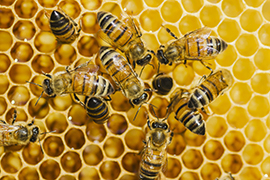
DUNCAN – A new initiative on Vancouver Island is bringing together small-scale and commercial beekeepers to breed bees that are better adapted to the local climate and pest pressures. Led by Iain Glass, a master bee breeder from North Vancouver, the project is selecting local hives that demonstrate specific traits to develop queens on the Island for the Island.

“The plan of action starts by stopping the dilution of the genetic pool,” says Glass. “There are probably 1,000 hives brought onto Vancouver Island from New Zealand every year. These bees are stressed from the travel and being taken out of season, and they don’t have any resistance to local pests or diseases.”

Rather than importing queens and nucleus colonies (nucs) to start new hives, Glass is teaching local beekeepers to select for specific traits and behaviours to develop their own queens and strengthen local bee populations.

“Vancouver Island has very little dependence on commercial pollination, so it’s a great environment for this,” he explains. “We need to educate beekeepers that they should [be] buying and producing locally. If we can accomplish that, stop the importation of bees, and be very careful with selection of local stock, we have a good shot at making a better Island bee.”

According to Glass, beekeepers should be building their stocks from only the top 3% to 5% of their hives, and getting rid of hives that are low to average producers, or that are susceptible to health issues.

“Any beekeeper who allows bad bees to live is diluting the gene pool,” he says. “The number one quality we are looking for is health. You want bees to be able to survive with the minimum amount of intervention.”

Hives on Vancouver Island are affected by varroa mite and a variety of the viruses that they carry, as well as three major bacterial infections: American Foulbrood, Chalkbrood and Sacbrood. While chemical treatments are available for these issues, there are also natural bee behaviours that increase their resistance to infestation and infection.

Some strains of bees, both domestic and feral, have developed a behaviour referred to as varroa sensitive hygiene (VSH). These bees can detect the presence of varroa mites and respond to manage them. In some cases, they can detect the varroa mite in the brood cell and will either kill the cell and get rid of it, or uncap the infected cells to disrupt the mite’s lifecycle.

Other bees, known as “leg maulers,” engage in grooming behaviour outside the hive. When they see a bee with a varroa mite on it, they chew at the leg of the mite until it falls off and dies.

“There has been a genetic adaptation with the blueprint of the bees that happens on a natural basis but the VSH traits can also be selected and bred for,” says Glass.

Glass and his collaborators will also be testing for hygienic behaviour in local hives, an important trait that reduces or eliminates the impact of bacterial infections like American Foulbrood.

“American Foulbrood is a nasty bacterium. It used to be [that] the best way to deal with it was to soak the hive in gasoline and torch it. It spreads very easily from hive to hive, with over 30,000 spores in a single cell,” says Glass. “It turns out the hygienic bees have no difficulty with it whatsoever.”

Glass tests for hygienic behavior by freezing a chunk of brood with liquid nitrogen and observing how much of the damaged brood they remove from the hive within 24 hours.

“Hygienic bees recognize the brood cells are dead and get them out as quickly as possible. If you go back 24 hours later and greater than 95% of the dead brood has been removed, the hive is considered hygienic,” says Glass.

He adds that roughly 10% of the North American bee population carries this gene. Not only are these bees resistant to pervasive diseases but they are consistently excellent honey producers.

“Hygienic behavior is fairly easy to select for and it exists in a fairly large population. If we went only to hygienic bees, we’d get rid of American Foulbrood, Chalkbrood and Sacbrood. It does not solve the varroa issue but we are looking for both varroa-sensitive hygiene and hygienic bees,” he explains.

While the behaviours are linked to different genes, VSH bees tend to also be hygienic.

Glass has presented to beekeeping groups across Vancouver Island promoting the project. He is gathering a core group of collaborators for a three-year learning cycle modelled after apprenticeship programs. In the first year for the project, he had 12 beekeepers on the project and and a further 20 people have expressed interest in his next advanced queen rearing workshop. By next summer, he expects to have 100 beekeepers participating in the project.

Related Posts

You may be interested in these posts from the same category.

BC beekeepers go online

Bee

Agri-Innovation projects announced

Honey producers honour industry leaders

Bee initiatives in focus

Better beekeeping, verified

Asian hornet identified

Fraser Valley bee shortage overstated

Previous Post: « Foodlands Trust initiative moves forward
Next Post: Farmers must take lead in building public trust »

Copyright © 2025 Country Life in BC · All Rights Reserved