
• Menu
  • Skip to primary navigation
  • Skip to main content
  • Skip to primary sidebar

Country Life In BC Logo

The agricultural news source in British Columbia since 1915

  • Headlines
  • Calendar
  • Subscribe
  • Advertise
  • About
  • Archives
  • Contact
  • Search
  • Headlines
  • Calendar
  • Subscribe
  • Advertise
  • About
  • Archives
  • Contact
  • Search

Primary Sidebar

Originally published:

June 2017
Vol. 103 Issue 6

Subscribe Now!

Sign up for free weekly FARM NEWS UPDATES

Select list(s) to subscribe to


By submitting this form, you are consenting to receive marketing emails from: Country Life in BC. You can revoke your consent to receive emails at any time by using the SafeUnsubscribe® link, found at the bottom of every email. Emails are serviced by Constant Contact
Your information will not be
shared or sold ever

Stories In This Edition

Vancouver tops BC in farm growth

Accident claims safety advocate

In Good Hands

Rain’s a pain, farmers say

Editorial: Fresh start

Back Forty: Census offers reality check

Viewpoint: Ranchers work ‘dam’ hard for public’s benefit

Agriculture council pledges to work with parties

Pork industry optimitic despite lean times

Vegetable commission priotizies trust, integrity

Fairs reach out-of-court settlement

Richmond sets large limit on farmhouse size

Drones promise to scare birds for berry growers

Small farm expo postponed

Ranchers resist expanding public roaming rights

Letter: Seasonal farm workers find

Canada a second home

Letter: Right to roam wrong

A national voice for greenhouse growers

Hothouse growers reduce risk with IPM strategies

Sidebar: Biocontrols cut costs

Training pregps advisors for growing demand

Hop growers hepped up about future

Controlling hop-loving pests necessary evil

YA mark five years of support small-scale ag

Wise Earth tracks numbers to plant savvy, sell smart

A wise approach to leases, labour and local

Garlic co-op pitched as supply, appetite expands

BC’s climate makes hardneck garlic a viable route

Northern athlete dives into beef marketing

Abattoirs target food safety, labour shortage

Volatile beef market raises questions, few answers

BC feedlot sector prepares cattle disease emergency plan

Drones ride a sky-high range in search of cattle

Spring fling connects sponsors with classroom outreach

Better management underpins farm improvement

Small farmers make it work in Alberni Valley

BCYF tour highlights fish and dairy management

4-H members on the quest for a future with food

Program delivery underway

Wannabe – All things big and small

Woodshed: How Henderson came to be at the end of his rope

Jude’s Kitchen: Summer patio treats

More Headlines

Follow us on Facebook

Comments Box SVG iconsUsed for the like, share, comment, and reaction icons

13 hours ago

... See MoreSee Less

View Comments
  • Likes: 6
  • Shares: 0
  • Comments: 0

Comment on Facebook

2 days ago

Four 4-H members were walking the Islands Ag Show Friday sharing leftover flower lollipops to exhibitors. The colourful pops were prizes for those who guessed answers based on the 4-H project boards on display at the show. Left to right, Talia Prenger, Kate Barter, Ella Prenger and Emma Barter of Parksville and Qualicum thought making lollipops into flowers "was really cute," says Kate. The Islands Ag Show wraps up today at 2 pm at the Cowichan Exhibition Centre. Stop by our booth and say hi to Ronda, Bob and Ann!

#BCAg
... See MoreSee Less

Four 4-H members were walking the Islands Ag Show Friday sharing leftover flower lollipops to exhibitors. The colourful pops were prizes for those who guessed answers based on the 4-H project boards on display at the show. Left to right, Talia Prenger, Kate Barter, Ella Prenger and Emma Barter of Parksville and Qualicum thought making lollipops into flowers was really cute, says Kate. The Islands Ag Show wraps up today at 2 pm at the Cowichan Exhibition Centre. Stop by our booth and say hi to Ronda, Bob and Ann! 

#BCAg
View Comments
  • Likes: 23
  • Shares: 4
  • Comments: 0

Comment on Facebook

3 weeks ago

The Canadian Food Inspection Agency is preparing to implement changes to its livestock traceability rules that will include mandatory computer reporting within seven days on movement of animals for veterinary appointments, community pastures, exhibitions, carcass and on-farm disposal and the births and deaths of every animal on your farm. Writer Tom Walker first brought these changes to the attention of our readers back in June 2023. We've posted his story to our website:

www.countrylifeinbc.com/cfia-proposes-traceability-updat#BCAg#BCag
... See MoreSee Less

The Canadian Food Inspection Agency is preparing to implement changes to its livestock traceability rules that will include mandatory computer reporting within seven days on movement of animals for veterinary appointments, community pastures, exhibitions, carcass and on-farm disposal and the births and deaths of every animal on your farm. Writer Tom Walker first brought these changes to the attention of our readers back in June 2023. Weve posted his story to our website: 

https://www.countrylifeinbc.com/cfia-proposes-traceability-updates/

#BCag
View Comments
  • Likes: 11
  • Shares: 21
  • Comments: 15

Comment on Facebook

I love hpw the cow in the picture hasn't even got a RFID tag in it but I digress. We can not read the link, it says "we are not permitted to read drafts". Please post again with the correct link.

Dairy farmers having been doing this several years. The app we use has become quite simple to use

Including equine?

Premise ID was slowly rolled through the country, voluntary then mandatory. Transparency and 'Consultation' has been light. Those who tried to bring this for discussion a couple years ago, because of forseen overreach, were quite often labeled conspiracy theorists and that it wasnt meant to be so heavily regulated and controlled. Gardens and seeds will be next. "Invasive species" reporting, check out the plants medicinal properties. Read the BC intentions papers. The premise ID that already heavy regulated commodities have claims to be treated different in the intentions papers on page 8. www2.gov.bc.ca/assets/gov/farming-natural-resources-and-industry/agriculture-and-seafood/food-saf...

Says i am "not allowed to preview draft".

Also concerning is the part on compliance...they can 'stumble onto' any farm and if you're not complying there are consequences.

When the CFIA stumbles into the wrong place compliance will be met with civil engagement

Says I can't preview draft

This is government overreach - Do Not Comply!

Do not comply

Fu

As if the price of beef isn't bad enough for consumers,,,,,be prepared to be gouged some more now

Ridiculous!!

Let's hold up on the beef exports tell we can get our own house in order... we need to deregulated, cheapen up the supply chain back into a 5 buck a pound rage so the good people canada can eat healthy food.. fuck your bean diets, that's retarded

This, along with the majority of new legislation pertaining to any type of farm, is a blatant squeeze on any sort of small, alternative agricultural venture. I am a massive believer in working together and sharing resources and costs and solutions - do not get me wrong - but this and the water registration among others, is an overreach (at most generous) and an absolute killer to smaller, local initiatives that LITERALLY save lives during extreme events. There is ONE ROAD into and out of my community. We don’t need or want some sort of backlogged government response when shit goes sideways. We want the ability AND SUPPORT to provide for our communities without penalty when things go badly. We want to produce sustainability for our communities. We live here, we work here, we want to STAY HERE. Stop making it harder.

View more comments

1 month ago

BC's minimum piece rates for 15 hand-harvested crops increased 2.6% on December 31. Crops include peaches, apricots, brussels sprouts, daffodils, mushrooms, apples, beans, blueberries, cherries, grapes, pears, peas, prune plums, raspberries and strawberries. Farm-worker piece rates in BC were increased by 11.5% in January 2019 and 6.9% in December 2024. BC’s current minimum wage sits at $17.85 per hour.

#BCAg
... See MoreSee Less

BCs minimum piece rates for 15 hand-harvested crops increased 2.6% on December 31. Crops include peaches, apricots, brussels sprouts, daffodils, mushrooms, apples, beans, blueberries, cherries, grapes, pears, peas, prune plums, raspberries and strawberries. Farm-worker piece rates in BC were increased by 11.5% in January 2019 and 6.9% in December 2024. BC’s current minimum wage sits at $17.85 per hour. 

#BCAg
View Comments
  • Likes: 9
  • Shares: 0
  • Comments: 2

Comment on Facebook

I'm not sure what they're telling us. Did peace rates have to increase so that Farm workers could make minimum wage?

They deserve it, but the general public will be whining about increased prices in the stores. Will need to make more information average to the g.p.

1 month ago

... See MoreSee Less

View Comments
  • Likes: 14
  • Shares: 0
  • Comments: 1

Comment on Facebook

105 Mile Ranch

Subscribe | Advertise

The agricultural news source in British Columbia since 1915
  • Email
  • Facebook

Richmond sets large limit on farmhouse size

June 1, 2017 byPeter Mitham

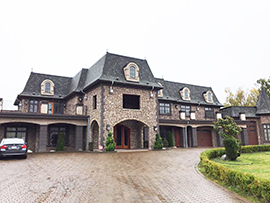
RICHMOND – Richmond council’s decision to permit farmhouses up to 10,764 square feet without having to seek a variance didn’t come without a fight.

During two long nights of public hearings in May, presenter after presenter spoke out against council’s bid to allow homes in the Agricultural Land Reserve (ALR) double the 5,382 square feet city staff recommended.

“The principle you should be going on is to protect as much farmland as possible,” said Sandra Bourque, a retired member of the Richmond School Board. “It should not be to house as many people as possible.”

The idea that certain “cultural practices” make large farmhouses acceptable was a “red herring,” she said, referring to arguments Indo-Canadian farm owners have made in favour of residences that can accommodate several generations of a single family.

“There are many cultural practices that are not accepted, with very good reason,” Bourque said.

The staff recommendation reflected BC Ministry of Agriculture guidelines for residential development on farmland as well as surveys of existing farmhouse sizes and feedback received during an open house in early March. However, Richmond Farmers Institute supported the larger cap of 10,764 square feet. (A call to RFI president Todd May for comment was not returned.)

But many speakers echoed Bourque’s argument that farmland is for food production and that smaller houses are better. Several speakers told council it should have acted earlier.

“Council’s inaction has created a divide and instability in our community,” said Laura Gillanders, who felt council should respect the BC Ministry of Agriculture’s guidelines for residential development on farmland. “The Ministry of Agriculture expects you to be doing your job as a local government.”

Such allegations prompted council to ask staff how houses, some approaching 30,000 square feet, have been built without council review before now. Staff responded that house sizes have been unregulated, meaning permits can’t be withheld on the basis of size alone. The fact prompted farmers and farmland owners to tell council they should have as much right as anyone else in the city to build the kind of house they want.

“Farmers should have the right,” said Bruce May, one of the city’s larger cranberry growers.

Gary Brar, a blueberry grower who has been a vocal participant in the debate over the proposed bylaw, said that he currently lives with his parents in a 4,100-square-foot house but expansion is planned when he marries and the family grows.

“We need large houses,” he said, noting, “We didn’t have these problems before a few bad eggs built unreasonably large homes.” (Speaking at the open house in March, Brar considered houses of up to 15,000 square feet adequate.)

The public wasn’t having anything to do with it.

Speculation is speculation, they argued, no matter who does it or by what means. Sure, farmers have a right to make a living from the land, but not through real estate development.

“We do not owe it to the farmer to cash out for development,” Gillanders said.

David Baines, a former business journalist with the Vancouver Sun, questioned the motivations of the Richmond Farmers Institute and why council had ignored staff’s recommendation.

“My suggestion is what you’re framing as a compromise is a political cop-out,” he said.

Perhaps the most reasonable comments of the night, which Baines encouraged staff to heed, came from Helmut Pastrick a local resident better known for his work as chief economist of the Central 1 Credit Union.

Pastrick told council that by not imposing a tight limit on the size of farmhouses, they were sacrificing the potential for long-term employment opportunities.

Pointing to the recently released figures from the 2016 federal census of agriculture, Pastrick said Richmond farms had become more productive despite diminishing in number from 211 to 189 between 2011 and 2016. They now generate $58 million in farm cash receipts versus $49 million in 2011, an 18% increase. He expects that figure could easily double to $120 million if land was farmed rather than developed.

“There’s a considerable amount of land that’s under-utilized that could be used for farming,” he said. “Under-utilized farmland is not contributing to our economy.”

However, when the final vote was taken on May 17, council voted 7-1 in favour of large homes. Councillor Carol Day cast the sole opposing vote; councillor Harold Steves, venerated for his involvement in establishing the ALR, quietly left the meeting before the vote.

The vote opens the door to tighter enforcement of how owners use housing within the ALR.

The city banned short-term rentals in January but exempted farm accommodation pending tighter regulation of farmland housing.

In the meantime, 45 applications for residential construction – all in excess of the new limit – will be processed under the rules in place prior to council declaring a moratorium on new applications in late March.

The debate isn’t quite settled, however. While restrictions are in place, staff will report on the effectiveness of the new limits in six months.
Related Posts

You may be interested in these posts from the same category.

Province allows secondary homes

Previous Post: « Small farm expo postponed
Next Post: Viewpoint: Ranchers work ‘dam’ hard for the public’s benefit »

Copyright © 2026 Country Life in BC · All Rights Reserved