• Menu
  • Skip to primary navigation
  • Skip to main content
  • Skip to primary sidebar

Country Life In BC Logo

The agricultural news source in British Columbia since 1915

  • Headlines
  • Calendar
  • Subscribe
  • Advertise
  • About
  • Archives
  • Contact
  • Search
  • Headlines
  • Calendar
  • Subscribe
  • Advertise
  • About
  • Archives
  • Contact
  • Search

Primary Sidebar

Originally published:

FEBRUARY 2022
Vol. 108 Issue 2

Subscribe Now!

Sign up for free weekly FARM NEWS UPDATES

Select list(s) to subscribe to


By submitting this form, you are consenting to receive marketing emails from: Country Life in BC. You can revoke your consent to receive emails at any time by using the SafeUnsubscribe® link, found at the bottom of every email. Emails are serviced by Constant Contact
Your information will not be
shared or sold ever

Stories In This Edition

Grain prices hit chicken growers

Farmers helping farmers

Groundwater deadline firm

IAFBC takes over environmental programs

Editorial: Spring shadows

Back 40: Old tractors pull loads of memories

Viewpoint: Animal agriculture is in the crosshairs

Dairy farmers assured recovery funding on its way

BC SPCA hits pause

Soaring fertilizer prices add to cost pressures

Higher milk prices, costs raise stakes at retail

Growers face recertification challenges

Ag Briefs: Omicron forces rescheduling of ag shows

Ag Briefs: Sumas Prairie farmers sue government

Ag Briefs: BC Tree sells another property

Weather deals another blow to berry growers

Cherry growers assessing winter damage

Grape growers grapple with cold damage

Sidebar: Grape bud hardiness index

Farmers face delays from lab closures

Forage council sets sights on growth

Farmers step up in emergency operations

The birds come first at B Jack

Ranchers waiting for federal fencing funds

Integrated control strategy keeps predators at bay

Sidebar: By the numbers

Peace producers work to expand meat processing

BC goats to benefit from genetics investment

Robson Valley family realizes its dreams

Creamery builds a taste for local connections

Research: Scientists learn how plants respond to heat stress

Blueberry growers on the hunt for pollination options

Viewpoint: Diversity, equity, inclusion is an ongoing process

Farm Story: Positive results arent always sensational

Sweet

Woodshed: Clay makes his intentions known to Ashley

FCC gives 4-H clubs a financial boost

Jude’s Kitchen: For your sweetie

More Headlines

Follow us on Facebook

Comments Box SVG iconsUsed for the like, share, comment, and reaction icons

2 weeks ago

The Canadian Food Inspection Agency is preparing to implement changes to its livestock traceability rules that will include mandatory computer reporting within seven days on movement of animals for veterinary appointments, community pastures, exhibitions, carcass and on-farm disposal and the births and deaths of every animal on your farm. Writer Tom Walker first brought these changes to the attention of our readers back in June 2023. We've posted his story to our website:

www.countrylifeinbc.com/cfia-proposes-traceability-updat#BCAg#BCag
... See MoreSee Less

The Canadian Food Inspection Agency is preparing to implement changes to its livestock traceability rules that will include mandatory computer reporting within seven days on movement of animals for veterinary appointments, community pastures, exhibitions, carcass and on-farm disposal and the births and deaths of every animal on your farm. Writer Tom Walker first brought these changes to the attention of our readers back in June 2023. Weve posted his story to our website: 

https://www.countrylifeinbc.com/cfia-proposes-traceability-updates/

#BCag
View Comments
  • Likes: 11
  • Shares: 21
  • Comments: 15

Comment on Facebook

I love hpw the cow in the picture hasn't even got a RFID tag in it but I digress. We can not read the link, it says "we are not permitted to read drafts". Please post again with the correct link.

Dairy farmers having been doing this several years. The app we use has become quite simple to use

Including equine?

Premise ID was slowly rolled through the country, voluntary then mandatory. Transparency and 'Consultation' has been light. Those who tried to bring this for discussion a couple years ago, because of forseen overreach, were quite often labeled conspiracy theorists and that it wasnt meant to be so heavily regulated and controlled. Gardens and seeds will be next. "Invasive species" reporting, check out the plants medicinal properties. Read the BC intentions papers. The premise ID that already heavy regulated commodities have claims to be treated different in the intentions papers on page 8. www2.gov.bc.ca/assets/gov/farming-natural-resources-and-industry/agriculture-and-seafood/food-saf...

Says i am "not allowed to preview draft".

Also concerning is the part on compliance...they can 'stumble onto' any farm and if you're not complying there are consequences.

When the CFIA stumbles into the wrong place compliance will be met with civil engagement

Says I can't preview draft

This is government overreach - Do Not Comply!

Do not comply

Fu

As if the price of beef isn't bad enough for consumers,,,,,be prepared to be gouged some more now

Ridiculous!!

Let's hold up on the beef exports tell we can get our own house in order... we need to deregulated, cheapen up the supply chain back into a 5 buck a pound rage so the good people canada can eat healthy food.. fuck your bean diets, that's retarded

This, along with the majority of new legislation pertaining to any type of farm, is a blatant squeeze on any sort of small, alternative agricultural venture. I am a massive believer in working together and sharing resources and costs and solutions - do not get me wrong - but this and the water registration among others, is an overreach (at most generous) and an absolute killer to smaller, local initiatives that LITERALLY save lives during extreme events. There is ONE ROAD into and out of my community. We don’t need or want some sort of backlogged government response when shit goes sideways. We want the ability AND SUPPORT to provide for our communities without penalty when things go badly. We want to produce sustainability for our communities. We live here, we work here, we want to STAY HERE. Stop making it harder.

View more comments

3 weeks ago

BC's minimum piece rates for 15 hand-harvested crops increased 2.6% on December 31. Crops include peaches, apricots, brussels sprouts, daffodils, mushrooms, apples, beans, blueberries, cherries, grapes, pears, peas, prune plums, raspberries and strawberries. Farm-worker piece rates in BC were increased by 11.5% in January 2019 and 6.9% in December 2024. BC’s current minimum wage sits at $17.85 per hour.

#BCAg
... See MoreSee Less

BCs minimum piece rates for 15 hand-harvested crops increased 2.6% on December 31. Crops include peaches, apricots, brussels sprouts, daffodils, mushrooms, apples, beans, blueberries, cherries, grapes, pears, peas, prune plums, raspberries and strawberries. Farm-worker piece rates in BC were increased by 11.5% in January 2019 and 6.9% in December 2024. BC’s current minimum wage sits at $17.85 per hour. 

#BCAg
View Comments
  • Likes: 10
  • Shares: 0
  • Comments: 2

Comment on Facebook

I'm not sure what they're telling us. Did peace rates have to increase so that Farm workers could make minimum wage?

They deserve it, but the general public will be whining about increased prices in the stores. Will need to make more information average to the g.p.

3 weeks ago

... See MoreSee Less

View Comments
  • Likes: 14
  • Shares: 0
  • Comments: 1

Comment on Facebook

105 Mile Ranch

4 weeks ago

... See MoreSee Less

View Comments
  • Likes: 7
  • Shares: 0
  • Comments: 0

Comment on Facebook

1 month ago

Water volumes from the Nooksack River are at levels similar to 1990 and 2021, but the province says flows should peak at 10pm tonight. The shorter duration, as well as conditions in other watercourses within the watershed and performance of flood protection infrastructure should avoid a catastrophe on the scale of 2021. However, several landslides mean road closures have once again effectively isolated the Lower Mainland from the rest of the province.

#BCAg
... See MoreSee Less

Water volumes from the Nooksack River are at levels similar to 1990 and 2021, but the province says flows should peak at 10pm tonight. The shorter duration, as well as conditions in other watercourses within the watershed and performance of flood protection infrastructure should avoid a catastrophe on the scale of 2021. However, several landslides mean road closures have once again effectively isolated the Lower Mainland from the rest of the province.

#BCAg
View Comments
  • Likes: 9
  • Shares: 3
  • Comments: 1

Comment on Facebook

Family living in Sumas WA say it's very much like '21. They have the same amount of water in their house as last time.

Subscribe | Advertise

The agricultural news source in British Columbia since 1915
  • Email
  • Facebook

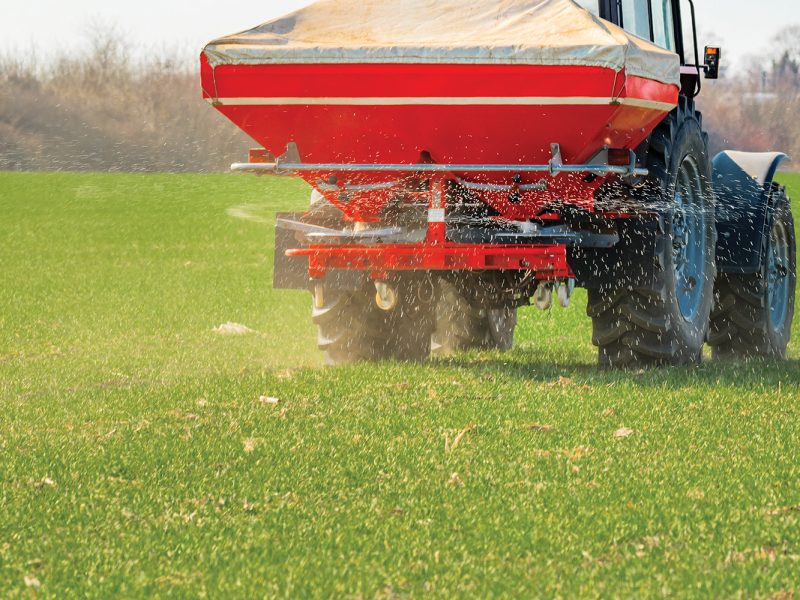
Soaring fertilizer prices add to cost pressures

Close management will have several benefits this year

February 1, 2022 byPeter Mitham

ENDERBY – Higher costs for fertilizer and other inputs are forcing BC producers to pay closer attention to where they spend their money this year.

Statistics Canada’s industrial price index pegs the price of chemical fertilizer at 225.7 in November, up from 97 a year earlier. That’s a 133% increase, with the sharpest rise happening since September. The increases have been driven by global demand and production constraints, including in Canada.

“We are seeing what in the industry we’d call a tightness in the supply chain on nitrogen fertilizer in particular,” says Ken Clancy, president and CEO of Okanagan Fertilizer Ltd., which operates bulk blending plants in Enderby and Williams Lake. “Everything that we’re hearing from North American producers is that they’re sold well into April and May already.”

This isn’t the first shortage Clancy has encountered in his 30-year career. The past decade has seen two major price spikes, one about seven years ago and the other during the financial crisis of 2008-2009.

But this year, a truck shortage is further complicating supply issues.

“It’s been extremely difficult for us to get trucks lined up, and either ship product into our fertilizer plants or to ship product out,” he says. “The whole supply situation is really, really complicated and difficult right now.”

The challenges were flagged in a presentation Christophe LaFougère, who oversees the dairy practice of international consulting and market research firm Gira Food, made to the BC Dairy Association, January 19.

Nitrogen fertilizers depend on natural gas, and soaring gas prices in Europe have prompted at least one major producer to shut down production. Others have scaled back output until gas prices fall back to reasonable levels.

“The major fertilizer producers have reduced, by around 40%, their fertilizer production, not to mention those who have closed their plants,” he says, noting that this could reduce forage production and in turn milk yields. “We tend to think there will be a problem with fertilizer this year, and that would mean we could see a slow reduction … in the yield per cow.”

Clancy doesn’t expect BC producers to scale back, however. Despite a doubling in prices and backlogged orders, fertilizer remains a better deal than feed.

“We haven’t seen a lot of reduced demand because of the high prices,” he says of fertilizer use. “It’s still economic to do it, even with these high prices on fertilizer, because the price increases on the commodities that they’re growing more than offset the prices on fertilizer.”

However, many may take a second look at how they use inputs.

“This is a good year for farmers to be managing their crop production and their fertilizer use quite intensively,” says Clyde Graham, executive vice-president of Fertilizer Canada, a national trade association with 50 member companies across Canada.

The association encourages farmers to use the right source of fertilizer at the right rate, the right time and the right place to get the biggest bang for their buck.

“Working with a certified crop advisor is important to get the best value out of every dollar spent on fertilizer,” adds Graham.

Strategic use of synthetic fertilizers is also an important element of environmental management, he says. Using less also means more for the industry as a whole.

Clancy says fertilizer suppliers are working to ensure domestic fertilizer supplies keep moving. While most of Canada’s phosphate fertilizers are imported, Canada is typically a net exporter of potash and nitrogen fertilizers.

“[Companies] are doing their level best to make sure that farmers get the quantities and the types of fertilizer that they need for spring seeding,” he says. “It’s really important that growers, as soon as they can, provide their agro-retailer with information about the kind of crops they’re growing … so they can plan for servicing their needs.”

Clancy, for his part, doesn’t expect any of his customers will be short this year.

“I do think we will be able to meet the needs of all our customers here this year. It’ll be a little bit more hair-pulling, a little bit more complicated,” he says. “Having said that, we’re still a couple of months away from spring.”
 

Related Posts

You may be interested in these posts from the same category.

Sumas flooding spurs call for action

BC distanced from TB concerns

BC producer groups give back

BC FIRB challenges WMP plans

AI risk for dairy discussed

Food costs public trust

Production cost bind

Corn rootworm hits Okanagan

Province funds feed access

BC Milk, Dairy grow closer

Berg appointed WMP CEO

Dairy farmers on the brink

Previous Post: « Peace producers work to expand meat processing capacity
Next Post: Groundwater deadline firm »

Copyright © 2026 Country Life in BC · All Rights Reserved