• Menu
  • Skip to primary navigation
  • Skip to main content
  • Skip to primary sidebar

Country Life In BC Logo

The agricultural news source in British Columbia since 1915

  • Headlines
  • Calendar
  • Subscribe
  • Advertise
  • About
  • Archives
  • Contact
  • Search
  • Headlines
  • Calendar
  • Subscribe
  • Advertise
  • About
  • Archives
  • Contact
  • Search

Primary Sidebar

Originally published:

December 2018
Vol. 104 Issue 12

Subscribe Now!

Sign up for free weekly FARM NEWS UPDATES

Loading form…

Your information will not be
shared or sold ever

Stories In This Edition

Province tightens rules in ALR

Farming isn’t what it used to be

Ag waste reg “nearly” ready

Sidebar: New commissioners

Proposed foreign worker registry raises concerns

Fall harvest

Editorial: ‘Tis the season

Back Forty: Time to address climate change head-on

Viewpoint: Ottawa needs to stop milking dairy sector

Sweet times for BC honey producers

Public trust key as grade designation clarified

Apiarists wary as new prescription rules kick in

Pipeline explosion creates uncertainty

Farmers, chefs cook up deals at networking event

Ag Briefs: Safe Food regs require producer registration

Ag Briefs: Reus receives recognition

Keeping the end in mind

Heppell’s Potato Corp

US milk offered for sale in Canada

Volatile blend price hitting home for dairy sector

Landowners see development as only solution

Good soil makes good drinks even better

DNA analysis opens doors in hop renaissance

Tour builds trust between foodies, farmers

New entrant egg producer has long-term goals

Farmers, ranchers grapple with climate change

Drought results in record low water flows

BC ranchers face mounting regulations

Seaweed finds a home on the range

Co-op model recommended for beef plant

Farm market banks on relationship-building

Tour showcases local farm entrepreneurs

Young farmers share experiences at Farm Fest

Research: The complexity of colours

Nutsedge demands strong, decisive response

Wool classifying can add value to sheep flocks

Print remains top media choice for producers

Sidebar: Canadians read more

Communication key to four-way success

Cannabis shows mainstream retail potential

Nurseries change up offerings to stay relevant

Irrigation protocols critical for greenhouses

Producers need to think like retailers

Organic farmer values food education

Wannabe: The greatest gift is friendship

Ag in the Classroom

Woodshed: A present for Deborah sparks inquisition

Jude’s Kitchen: Celebration food

More Headlines

Follow us on Facebook

Comments Box SVG iconsUsed for the like, share, comment, and reaction icons

10 hours ago

The Township of Langley Farm and Ranch Exhibition Society is hosting a public open house this evening to gather input on plans to transform the historic Belmont Farm into an agricultural exhibition, education and heritage hub. Farmers, ranchers, and community members are invited to share their feedback. The open house is at the George Preston Rec Centre, 6-8 pm.

Township of Langley Farm and Ranch Exhibition Society
#BCAg
... See MoreSee Less

The Township of Langley Farm and Ranch Exhibition Society is hosting a public open house this evening to gather input on plans to transform the historic Belmont Farm into an agricultural exhibition, education and heritage hub. Farmers, ranchers, and community members are invited to share their feedback. The open house is at the George Preston Rec Centre, 6-8 pm. 

Township of Langley Farm and Ranch Exhibition Society 
#BCAg
View Comments
  • Likes: 9
  • Shares: 0
  • Comments: 1

Comment on Facebook

Shucks, would have liked to attend but just seeing this now.

13 hours ago

The sold-out Southern Interior Horticulture show continues today. Education sessions range from rodent control to new tree fruit varieties, with the afternoon devoted to improving spraying techniques for orchardists and vineyard managers. When not listening to speakers, producers are checking the trade show.

#BCAg
... See MoreSee Less

The sold-out Southern Interior Horticulture show continues today. Education sessions range from rodent control to new tree fruit varieties, with the afternoon devoted to improving spraying techniques for orchardists and vineyard managers. When not listening to speakers, producers are checking the trade show.

#BCAg
View Comments
  • Likes: 8
  • Shares: 0
  • Comments: 0

Comment on Facebook

15 hours ago

The BC Poultry Association has lowered its avian flu biosecurity threat level from red to yellow, citing declining HPAI risk factors and fewer wild bird infections. Strong biosecurity practices helped BC limit cases this winter to 38 premises, down from 81 last year. For more, see today's Farm News Update from Country Life in #BCAg#BCAg ... See MoreSee Less

Link thumbnail

Poultry biosecurity notches down

www.countrylifeinbc.com

Declining risk factors for highly pathogenic avian influenza (HPAI) have prompted the BC Poultry Association to lower the industry’s biosecurity threat level from red to yellow. The decision…
View Comments
  • Likes: 11
  • Shares: 2
  • Comments: 1

Comment on Facebook

🐥💛

1 day ago

The application deadline for cost-shared funding through the Buy BC program is coming up on February 20. Up to $2 million through the Buy BC Partnership Program is available annually to BC producers and processors to support local marketing activities that increase consumer awareness of BC agriculture and BC food and beverages. For more information, visit buybcpartnershipprogram.ca/.

Buy BC

#BCAg
... See MoreSee Less

Link thumbnail

Home - Buy BC Partnership Program

buybcpartnershipprogram.ca

Buy BC Partnership Program Increase your visibility with Buy BC The Buy BC Partnership Program is a fundamental component of Buy BC that provides up to $2 million in cost-shared funding annually to lo...
View Comments
  • Likes: 3
  • Shares: 0
  • Comments: 0

Comment on Facebook

2 days ago

The Sik-E-Dakh (Glen Vowell) First Nation's Skeena Fresh hydroponic operation has doubled production capacity thanks to a $130,632 Northern Development Infrastructure Trust grant. Growing lettuce, kale, herbs and more in shipping containers, the operation uses 90% less water than traditional farming while providing 1,200 people with year-round access to fresh, locally grown greens. Their story is in the February edition of Country Life in BC, the agricultural news source for BC’s farmers and ranchers.

Northern Development Initiative Trust
#BCAg
... See MoreSee Less

The Sik-E-Dakh (Glen Vowell) First Nations Skeena Fresh hydroponic operation has doubled production capacity thanks to a $130,632 Northern Development Infrastructure Trust grant. Growing lettuce, kale, herbs and more in shipping containers, the operation uses 90% less water than traditional farming while providing 1,200 people with year-round access to fresh, locally grown greens. Their story is in the February edition of Country Life in BC, the agricultural news source for BC’s farmers and ranchers. 

Northern Development Initiative Trust 
#BCAg
View Comments
  • Likes: 15
  • Shares: 1
  • Comments: 0

Comment on Facebook

Subscribe | Advertise

The agricultural news source in British Columbia since 1915
  • Email
  • Facebook

Sweet times for BC honey producers

Public interest, government support a healthy buzz

November 28, 2018 byPeter Mitham

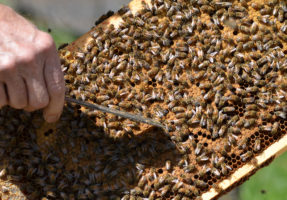
VICTORIA – Bees may be the new pocket pet for urban residents, quipped a speaker at the BC Honey Producers Association annual meeting and education day in Victoria on October 26, but government support is stronger than ever for the tiny but mighty insect.

BCHPA membership now stands at more than 750, boosting association revenues to $78,500 in the fiscal year ended July 31. The association now has more than $200,000 in assets, thanks in part to generous provincial support, requiring it to start filing regular financial reports with the province.

The strength of provincial support for apiculture was acknowledged several times throughout the day.

BCHPA president Kerry Clark pointed to the province’s allocation of $50,000 for community beekeeping and $20,000 for BCHPA initiatives.

“These are things we have not had in previous years,” he said, noting that the sector was also lucky to still have a government-paid apiculturist overseeing the sector in the province. “We still have our apiculture program and we are thankful for that.”

Provincial apiculturist Paul van Westendorp has spent three decades working with the province’s beekeepers. BC has 10 apiary inspectors, more than ever before, thanks in large measure to current agriculture minister Lana Popham.

“Right now we have a larger complement of inspectors in the province than ever before, and that is largely due to the enthusiastic support the beekeepers enjoy from our current minister,” he said.

Moreover, he reminded beekeepers, the services they receive are free.

“Have you ever wondered about that?” he asked. “If you’re a vegetable grower or a goat producer or something, and you have a problem and submit a sample for analysis at the Animal Health Centre, you pay a fee. Beekeepers are exempt. It’s remarkable.”

Popham, dubbed the Queen Bee at the event (at least of agriculture ministers), touched on the need to maintain the support as the number of colonies multiply.

“There’s many backyard beekeepers, and that is a positive thing,” she said. “[But] as the public gets more interested and more involved in beekeeping, there are some interesting challenges around that, with their education levels and their knowledge of what disease is.”

Indeed, while regional reports presented during the annual meeting highlighted record interest in keeping bees, thanks in part to public concern over pollinators, new members don’t necessarily stick around for long. A veteran apiarist termed bees the new “pocket pet,” quickly shed by amateurs when challenges arise.

This sparked questions among some delegates regarding the risks used equipment poses if it’s not properly treated and stored prior to reuse. This could lead to the spread of disease, which novice beekeepers may not recognize.

Colony losses

Nevertheless, BC bees are proving resilient. Colony losses in 2018 were about 35%, slightly above the national average of 32.6% but below the whopping 45% reported in Ontario.

Summer conditions were more of a concern for many beekeepers than overwintering, with impacts from climate change and extreme weather events flagged as a topic for further research in roundtable discussions.

Many regions reported reduced yields, save for the Peace River and Thompson-Cariboo, representatives of which reported exceptional yields of 150 to 200 pounds of honey and more per hive.

However, the Fraser Valley, Kootenays and other regions saw yields greatly reduced. Some weeks, there was nothing to collect.

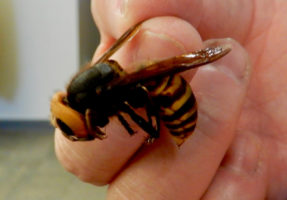
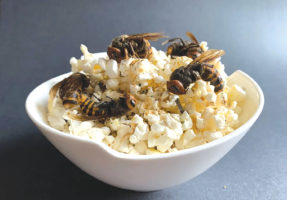
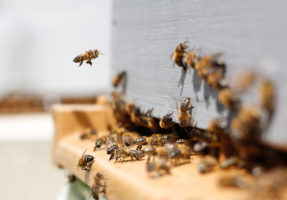
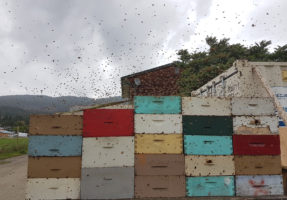
On top of low yields, producers across the province reported strong wasp activity. Many lost hives to the insect.

“We did have a huge number of wasps. I track it back to a huge number of aphids in 2017,” Clark said.

An abundant food supply last year led to a greater number of wasps establishing nests at the end of the season. Clark said the population exploded this year as a result, and when the wasps ran out of aphids they turned to honeybees.

The idea of developing more resilient strains of bees and homegrown queens garnered some interest, thanks to a presentation by Anicet Desrochers, a Quebec beekeeper who supplies queens to apiaries across Canada.

Demand for queens in Canada is in the 250,000 range, Desrochers said, and harmonizing inspection regimes to allow for the general movement of bees would open even greater opportunities.

Canada imports $2 million to $5 million worth of bees a year.

“That’s lost revenue to Canadian beekeepers,” van Westendorp said. “[Let’s] get all the provinces on the same page, so that we can move stock, have stock inspected across Canada … for the British Columbia beekeeper it would be an economic boon.”

One economic benefit not granted to beekeepers yet is a recognition of revenues from pollination services as income qualifying towards farm class status for apiaries. A decision is also expected from the Property Appeal board regarding whether or not overwintering bees on a property is a legitimate agricultural use.

Related Posts

You may be interested in these posts from the same category.

Contracts cancelled for beekeepers

Bee losses significant but not extreme

Asian Giant Hornet

BC watches Stateside hornets

Canada holds off Asian giant hornet restrictions

Beekeepers suffer colony losses

Asian Giant Hornet

Hornet surveillance plans outlined

Bee replacements grounded

Bee initiatives in focus

Bee

Colony losses have beekeepers on edge

Grading requirements changing

Previous Post: « Farm market banks on relationship-building
Next Post: Ag waste reg “nearly” done »

Copyright © 2026 Country Life in BC · All Rights Reserved