
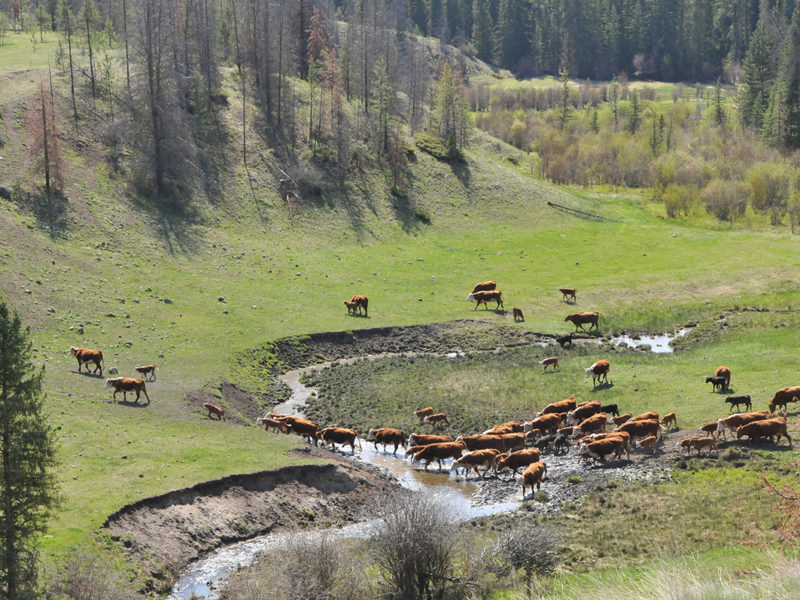
The BC Cattlemen’s Association is demanding the province maintain water storage as drought concerns mount across the southern Interior.
“We are calling on conservation groups, First Nations and local governments to join us in urging the province to immediately halt any planned decommissioning of water‑storage infrastructure,” the association said in a May 25 statement. “Agriculture currently manages over 70% of the infrastructure storing water in the province and we encourage all levels of government, conservation groups and First Nations to join us in assuming responsibility for dams and storage structures to ensure they remain functional and continue supporting long‑term watershed resilience.”
BC Cattlemen’s also called on all water users to reduce water use to protect reserves in a year that has seen little precipitation following a winter with little snowpack accumulation.
The statement followed the declaration of a watershed emergency by the Syilx Okanagan Nation Alliance on May 20 in view of snowpack levels between 9% and 69% of normal across its territory. It called for a moratorium on new surface and groundwater licences, mandatory reductions in water use and the inclusion of local governments in coordinated watershed management.
“All levels of government are called upon to prioritize long-term investment in watershed restoration, climate adaptation, wetland and riparian protection and First Nations-led stewardship and monitoring,” the Syilx declaration states.
The declaration applies to the Okanagan, Nicola, Similkameen, Kettle, Salmon, and Bessette watersheds, the latter three all having experienced temporary protection orders under the province’s Water Sustainability Act in recent years that resulted in curtailment of irrigation for forage crops.
Irrigators in the Salmon River watershed have asked the BC Ministry of Agriculture and Food for monthly meetings this year in view of dry conditions.
Water, Land and Resource Stewardship minister Randene Neill visited the Okanagan earlier this month and received an aerial tour of conditions.
Staff with Neill’s ministry provided Country Life in BC with a statement in response to the Syilx declaration noting that preparing for drought is “a top priority.”
“We are working closely with First Nations, local governments, industry, and the agricultural sector, investing in practical solutions to help British Columbians manage in times of water scarcity,” the ministry said. “The Province is focused on both preparing for drought conditions and addressing water scarcity risks.”
However, it did not note any new funding to support, maintain or expand water infrastructure.
All content on this website is copyrighted, and cannot be republished or reproduced without permission.





 Two new berries for BC