
• Menu
  • Skip to primary navigation
  • Skip to main content
  • Skip to primary sidebar

Country Life In BC Logo

The agricultural news source in British Columbia since 1915

  • Headlines
  • Calendar
  • Subscribe
  • Advertise
  • About
  • Archives
  • Contact
  • Search
  • Headlines
  • Calendar
  • Subscribe
  • Advertise
  • About
  • Archives
  • Contact
  • Search

Primary Sidebar

Originally published:

September 2023
Vol. 109 Issue 9

Subscribe Now!

Sign up for free weekly FARM NEWS UPDATES

Loading form…

Your information will not be
shared or sold ever

Stories In This Edition

Breaking point

Summer lovin’

International exports climb

Moon shines among BC grape growers

Exodus

Back 40: The line of fire raises burning questions

Viewpoint: Targeted grazing could help FireSmart communities

Water curtailments squeeze forage production

Committee report recommends apple commission

Ag Briefs: BC Tree CEO takes leave of absence

Ag Briefs: Hargreaves to lead cranberries

Ag Briefs: New federal minister

Starling control program meets expectations

New society looks to protect property rights

Marketing board chooses new entrant finalists

New funding for First Nations agriculture

Grape growers strategize for recovery

Nex gen’ hops for today’s brewers

Grasslands take carbon storage underground

Farm Story: Crop flops admid potato perfection

Off-the-grid organic farm thrives on efficiency

XY Ranch celebrates 100 years in Peace

Too close for comfort

Ranchers get the backstory on public perception

Sidebar: Build on the public’s trust, not its criticism

Small-scale goat, sheep dairies approved

Wytincks honoured at national show

Sidebar: Best in Show goes to BC producer

Sustainable practices attract a following

Fungicide resistance of botrytis studied

Farmers urge a coordinated drought response

Peary-y nice

Woodshed: Water finds its level for Gladdie, and Kenneth

Cidery harvest opportunity from old orchard

New flavours for fall

More Headlines

Follow us on Facebook

Comments Box SVG iconsUsed for the like, share, comment, and reaction icons

6 days ago

A BC Forest Practices Board investigation has found overgrazing has damaged grasslands in the Coutlee Range Unit near Merritt — and the range-use plan meant to prevent it was unenforceable. With complaints about overgrazing on the rise and grasslands covering just 1% of BC's land mass, the findings raise fresh questions about how the province manages one of its most vulnerable — and valuable — food-producing ecosyste#BCAg#BCAg ... See MoreSee Less

Link thumbnail

Board finds overgrazing rules unenforceable unmeasurable

www.countrylifeinbc.com

MERRITT – A BC Forest Practices Board investigation has found instances of non-compliance related to overgrazing have damaged open grasslands in the Mine pasture, part of the Coutlee Range Unit near...
View Comments
  • Likes: 6
  • Shares: 6
  • Comments: 6

Comment on Facebook

Several ranchers in recent years have gone into temporary non use on that range , so that means the grass should grow. But drought conditions/lack of rain and snow don’t allow that to happen . Dried up springs , creeks waterholes in various pastures add to over grazing where there is water , as livestock and everything else stay close to the water source . So even though less cattle are on it , over grazing appears. There is a large volume of horses on it 365 days/year which is wrong ! They pull grass right out of the ground when it’s just trying to grow ,, opens the door for weeds to grow in. That don’t help it. Aging infrastructure ( fences) laying on the ground, pipe line building , ( lack of commitment to fence maintenance) amongst all users contributes also to over grazing. Recreational atv users leaving gates open between pastures allows livestock to go back or ahead in pastures also expidites over grazing. Logging ( bcts) has no problem laying out cut locks on both sides of a fence , then it gets smashed down during logging and they don’t take responsibility to stand it back up or clean the cattle gaurds out when they are done , that happened 4 years ago on pasture 5 up there . I bet it is still not fixed . There are lots of contributing factors to the problem.

Tragedy of the commons.

I looked through the report. I saw nothing about the effects of noxious weeds on productive grasslands. This particular area is vulnerable because of the Ministry’a efforts to diversify the use of the Grasslands.

This pasture is under tremendous pressure not only from cattle but from irresponsible local residents who treat it as a landfill dumping all manner of household debris here. And don't even get me started on the mud bogging and camping in sensitive riparian areas. The feral horses are in this pasture 365 days a year just hammering it. Would sure be nice to see some enforcement action on people who are intentionally ripping up the grasslands and riparian areas. Cattle could be a valuable resource for rebuilding soils and native grasses in this area with the help of electric fencing and/or e-collars. The humans will be harder to manage.

The Forest and Range Practices Act was written by lawyers for global forest licencee shareholders. Results-based = unenforceable.

Also, can we talk about the impact of a pipeline being built through the middle of this field for multiple years?

View more comments

1 week ago

East Kootenay rancher Randy Reay is digging a new well after two natural water sources dried up on his Crown tenures. A new Living Lakes Canada assessment found 15% of mapped aquifers in the region are high-priority for monitoring, yet 80% of those go unmonitored. With over 48% of BC's provincial observation wells reporting below-normal groundwater levels, ranchers and researchers are sounding the alarm on water security. The story is in our March edition, and we've posted it to our website thi#BCAgk.

#BCAg
... See MoreSee Less

Link thumbnail

Water woes: groundwater under pressure across BC

www.countrylifeinbc.com

JAFFRAY – As a young boy growing up in the Kootenay-Boundary region, Randy Reay never expected to run out of water. But this year, in mid-February, his fields are bare. There is no snow halfway up t...
View Comments
  • Likes: 8
  • Shares: 7
  • Comments: 1

Comment on Facebook

Jaffrey is in the east Kootenays not kooteney boundary

2 weeks ago

BC farmers are bracing for prolonged higher input costs as war in the Middle East drives up fuel and fertilizer prices. Nitrogen fertilizer costs were already climbing before the Iran conflict began, with prices still roughly 60% above pre-pandemic levels. Farm Credit Canada warns that unlike 2022, strong commodity prices may not offset rising costs this time. Local suppliers expect supply challenges and further price increases ahead.

#BCAg
... See MoreSee Less

Link thumbnail

Fertilizer prices on the rise

www.countrylifeinbc.com

War in the Middle East has delivered a generational shock to energy prices, meaning BC farmers can expect a prolonged period of higher costs not just for fuel but also for fertilizer.
View Comments
  • Likes: 2
  • Shares: 1
  • Comments: 0

Comment on Facebook

2 weeks ago

... See MoreSee Less

View Comments
  • Likes: 1
  • Shares: 0
  • Comments: 0

Comment on Facebook

2 weeks ago

Cameron Stockdale is the new executive director of provincial farm safety organization AgSafeBC. Find out more in this week's Farm News Update from Country Life in B#BCAg#BCAg ... See MoreSee Less

Link thumbnail

New leadership at AgSafe BC

www.countrylifeinbc.com

Cameron Stockdale is the new executive director of provincial farm safety organization AgSafeBC, succeeding Wendy Bennett. Bennett left AgSafeBC in September 2025, following 12 years with the…
View Comments
  • Likes: 5
  • Shares: 1
  • Comments: 0

Comment on Facebook

Subscribe | Advertise

The agricultural news source in British Columbia since 1915
  • Email
  • Facebook

Water curtailments squeeze forage production

Producers worry shutdowns a sign of things to come

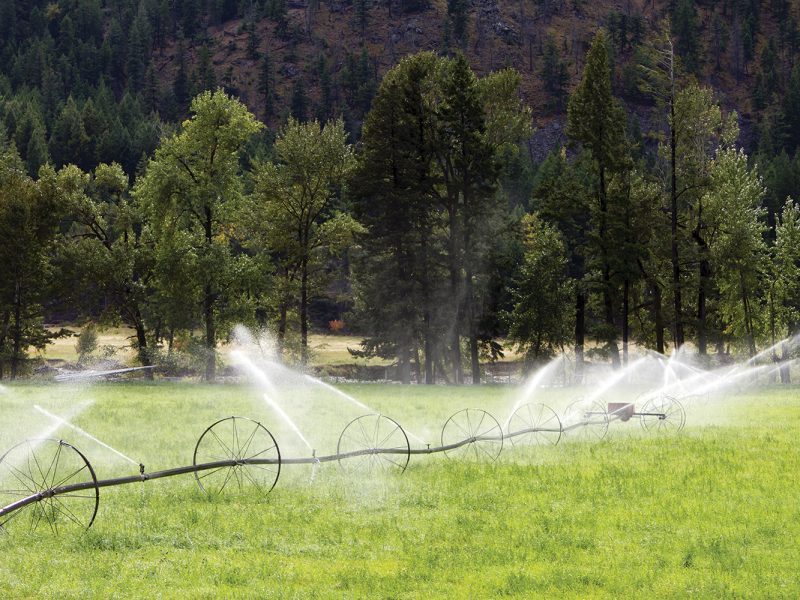
BC Ministry of Water, Land and Resource Stewardship staff are visiting farms in the Tsolum watershed to ensure compliance with groundwater licensing rules. File photo.

August 30, 2023 byPeter Mitham

KAMLOOPS – Deepening drought conditions prompted the province to ban irrigation of forage crops in four watersheds in mid-August, drawing fire from producers who say the restrictions are making a bad situation worse.

The first of the orders on August 15 banned the use of water for forage crop irrigation in the Bessette and Lower Salmon River watersheds through the end of September in order to protect fish populations. The following days saw similar orders issued under Section 88 of the Water Sustainability Act for the Tsolum and Koksilah watersheds.

“Irrigation of forage crops is one of the most water-intensive agricultural water uses,” the BC Ministry of Forests said in announcing the orders, directing affected farmers to the federal-provincial AgriStability program for support.

A total of 551 licensees or transitioning groundwater users were affected, many of whom did not anticipate the shutdowns.

“They were expecting that there would be further restrictions but they weren’t expecting it quite as soon,” says BC Cattlemen’s Association general manager Kevin Boon. “None of them knew that a shutdown was coming. … They expected at least a week’s notice.”

The province issued several notices to water licence holders, beginning with letters encouraging voluntary conservation followed by requests for 25% and 50% reductions. When streamflows fell to levels that put aquatic life at risk, the province cut off forage producers.

However, many producers say they didn’t receive any notice until shut-off notices were hand-delivered.

“Some of the producers hadn’t received any letters, even of the voluntary shutdowns, so for them it came as quite a surprise,” Boon says. “One of the things that would be beneficial in future going forward with these is that there be some given timeline.”

This wasn’t the first time some of the watersheds had been hit with curtailment orders.

Two years ago, orders were issued for four basins, including the Koksilah, Bessette Creek, Lower Salmon River and West Kettle.

In 2019, the Koksilah had the distinction of being the first basin ever placed under a curtailment order, which prompted 19 local producers to develop an irrigation schedule that would mitigate the risk of a shutdown.

But this year is different, with record dry conditions preventing low feed stocks from being replenished.

Producers typically keep a year’s worth of feed on hand, but as the livestock sector pulled together to support each other during the 2021 heat dome, wildfires and flooding, reserves dropped. Drought conditions that began last summer have also depleted reserves.

On July 25, the province announced Access to Feed, a $150,000 program delivered in partnership with the BC Cattlemen’s Association designed to match sellers of hay and feed both domestically and internationally with producers who need it. Cattlemen’s is engaging with the BC Grain Producers, BC Dairy Association, BC Forage Council and the BC Horse Council as part of the initiative.

Boon says the volume of hay needed is undetermined, but that the quest for feed is bearing fruit.

“The big part of this is giving some insight and some answers to the ranchers so that they’re equipped to make the decisions that are necessary for them to carry on their operations and produce the beef and food that’s required,” he said at the July 25 announcement. “We have individuals out searching for hay in other jurisdictions and we are finding it, and we are finding it at what I believe are reasonable prices to get here.”

Wildfire defences affected

Some areas affected by the curtailment orders are also battling wildfires, such as the Lower Salmon, which affects producers east of Westwold. Green fields are a natural fire break, meaning a ban on irrigation could be counterproductive.

“[It] isn’t sitting well,” Boon says. “When we have fires going, the irrigation is the one thing that keeps it green and helps keep fires out of the valleys by supporting green space. They’d like to keep irrigating in there in a limited capacity.”

Producers have written forests minister Bruce Ralston pleading their case but had not heard back as of August 28. Kamloops-South Thompson MLA Todd Stone of BC United has also taken up the cause.

Many producers fear what forage producers are experiencing is a sign of things to come.

While livestock groups in the Lower Mainland, which has been elevated to the highest drought level, report minimal effect on operations thanks to provisions allowing livestock watering and no local government restrictions on agricultural water use, BC Dairy Association vice-chair Sarah Sache says restrictions can’t be ruled out in the future.

“It is a major concern of farms throughout the province, but specifically in the Lower Mainland, cutting off our water is not something we expect to come our way,” she says. “[But] unprecedented is on the table now. I think as we go forward we’re likely to see all kinds of things we haven’t seen before with climate change.”

Sache farms in Rosedale, and says producers are challenged to find a way to continue grow the amount of feed locally needed to feed their animals. High land costs makes this a challenge at the best of times, but restrictions on irrigation would complicate things event further.

“We’ll continue to try to be resilient through those times,” she says. “We need to adjust to the new normal.”

The Lower Mainland is among the areas where producers are eligible to participate in the Livestock Tax Deferral Program, which allows income on livestock sold in response to drought conditions to be deferred until the following tax year, when it can be offset by livestock purchases.

This year has seen a record number of cattle move to market early in the season as producers opt to sell for record high pricing rather than pay sharply higher prices for feed. Dairy producers have also been right-sizing their herds in the face of tighter margins.

But for ranchers, the challenges are particularly acute. Typically, shipping hay into the Vanderhoof area, usually a net supplier of hay to the province but one of the hardest hit by this year’s shortage, costs $150-$180 a ton; this year, it’s closer to $450 a ton.

“The transportation to get it in there will be the deciding factor,” Boon says. “It’s going to be a tough pill for them to swallow, no matter what the price of calves are, to have a feed bill that high.”

The disbursement of $5 million in advance payments to 100 producers as well as support for the Access to  Feed program will give some producers the confidence to hold onto animals, as will scattered rain in late August, which could see restrictions in some areas lifted.

Nevertheless, the BC beef herd is on track to start next year much lower than in recent years.

BC cow-calf operations reported 353,300 head on January 1 this year, according to Statistics Canada, down from 358,600 five years earlier.

With files from Tom Walker

Related Posts

You may be interested in these posts from the same category.

Previous Post: « Island couple future-proof new farm operation
Next Post: Young ranch leaders selected »

Copyright © 2026 Country Life in BC · All Rights Reserved