• Menu
  • Skip to primary navigation
  • Skip to main content
  • Skip to primary sidebar

Country Life In BC Logo

The agricultural news source in British Columbia since 1915

  • Headlines
  • Calendar
  • Subscribe
  • Advertise
  • About
  • Archives
  • Contact
  • Search
  • Headlines
  • Calendar
  • Subscribe
  • Advertise
  • About
  • Archives
  • Contact
  • Search

Primary Sidebar

Originally published:

JUNE 2026
Vol. 112 Issue 6

Subscribe Now!

Sign up for free weekly FARM NEWS UPDATES

Loading form…

Your information will not be
shared or sold ever

Stories In This Edition

Ranchers challenge DRIPA

Wired for growth

Inaction on water criticized

New raspberry marks milestone for industry

Sidebar: New blueberry announced

Editorial: Food duds

Back 40: Build it, sure – but will farming come?

Viewpoint: Clairty needed on water allocations

Weather risks shrink insurance options

Toolkit helps farm hire, keep workers

Ag Briefs: Trade threats intensify as CUSMA review nears

Ag Briefs: BC equipment dealer rebrands

Ag Briefs: Princeton’s Jura Ranch sells

Food hub pivots to processing operations

Farm communities unite for provincial funding

BC Veg pledges value, vows change

Getting to know you

South Asian farm workers face exploitation

Federal research cuts alarm industry experts

BC Beef Day

Water woes mount for BC farmers, ranchers

Fine follows fatal Quesnel fertilizer spill

New beef code seeks producer feedback

Rest, space key to keeping dairy cows healthy

Corn outperforms hay for winter feeding

Virus targets cranberry pest without resistance

Italian roots run deep at Ciao Bella Winery

Okanagan juicer trades trailer for facility

Farm Story: There’s no words for paradise lost

Passion, purpose drive Cariboo farm forward

Deadly worm tests sheep flocks

Sidebar: Top 10 sheep diseases identified

Woodshed: Kenneth bets love on a hot air balloon

Horse Lake co-op digs deeper roots

Jude’s Kitchen: Here’s to a fresh, local, fruity summer

All content on this website is copyrighted, and cannot be republished or reproduced without permission.

More Headlines

Follow us on Facebook

Comments Box SVG iconsUsed for the like, share, comment, and reaction icons

3 weeks ago

Canada's mushroom growers will have to post countervailing duties next week following a US Department of Commerce determination that Canada's tax regime effectively subsidized growers, allowing them to cause "material injury" to US growers through their exports. Canada is a major exporter of mushrooms to the US, with the countries effectively operating as a single value chain thanks in part to one of the largest mushroom producers, South Mill Champs, headquartered in Pennsylvania.

#BCAg
... See MoreSee Less

Canadas mushroom growers will have to post countervailing duties next week following a US Department of Commerce determination that Canadas tax regime effectively subsidized growers, allowing them to cause material injury to US growers through their exports. Canada is a major exporter of mushrooms to the US, with the countries effectively operating as a single value chain thanks in part to one of the largest mushroom producers, South Mill Champs, headquartered in Pennsylvania.

#BCAg
View Comments
  • Likes: 2
  • Shares: 2
  • Comments: 0

Comment on Facebook

3 weeks ago

... See MoreSee Less

View Comments
  • Likes: 6
  • Shares: 0
  • Comments: 0

Comment on Facebook

3 weeks ago

The Jura Ranch near Princeton sold for nearly $5.3 million on May 12, the largest online ranch sale in BC in months, according to CLHBid.com, which handled the sale. The buyer was not named. Formerly owned by Rob and Kelly Lamoureux, which developed the successful Jura Grassfed brand, the ranch includes 2,625 deeded acres and a grazing licence totalling 83,698 acres. Originally offered at $4.2 million, the competitive bidding process delivered a higher value than the current market would suggest. Farm Credit Canada’s latest farmland value survey pointed to 1.7% decline in BC last year, which observers have attributed to tight margins and uncertainties related to Crown tenure.

#BCAg
... See MoreSee Less

The Jura Ranch near Princeton sold for nearly $5.3 million on May 12, the largest online ranch sale in BC in months, according to CLHBid.com, which handled the sale. The buyer was not named. Formerly owned by Rob and Kelly Lamoureux, which developed the successful Jura Grassfed brand, the ranch includes 2,625 deeded acres and a grazing licence totalling 83,698 acres. Originally offered at $4.2 million, the competitive bidding process delivered a higher value than the current market would suggest. Farm Credit Canada’s latest farmland value survey pointed to 1.7% decline in BC last year, which observers have attributed to tight margins and uncertainties related to Crown tenure.

#BCAg
View Comments
  • Likes: 40
  • Shares: 10
  • Comments: 4

Comment on Facebook

I sure hope it remains as farm land rather than a wind or solar installation.

Great grassland

yeah, who bought it? where are the checks and balances that ensure a ranch can continue being a ranch?

Uncertainty about crown land, aka native land grabs and unceded land claims being tossed around like it wasn't meant to destabilize the country?

3 weeks ago

American businessmen have quietly accumulated nearly 4,000 acres of farmland in the Robson Valley community of Dunster, sparking calls for restrictions on foreign and corporate agricultural land ownership in BC. Residents say the buy-up has driven population decline and priced out young farmers. MLAs from both parties and a UNBC professor are pointing to Quebec's new farmland protection legislation as a model BC should follo#BCAg#BCAg ... See MoreSee Less

Link thumbnail

Foreign land buyers hollow out Dunster

www.countrylifeinbc.com

DUNSTER – Purchases of swathes of farmland in the Robson Valley by wealthy American businessmen have some in BC demanding restrictions on foreign and corporate ownership of agricultural land.
View Comments
  • Likes: 28
  • Shares: 7
  • Comments: 2

Comment on Facebook

Are they using them for AI data centres?

This is a serious issue in Dunster and one that has impacts for wildlife and human neighbours.

3 weeks ago

Representatives from Quail's Gate Winery Estate Winery in West Kelowna were panellists during the Okanagan Cultivates event held at Okanagan College's Kelowna campus on May 7. The college has been hosting events like this to help elevate conversations in the community about what's grown locally and its impact on the region's food, wine and tourism industry. The Quail's Gate panel, which included Ben Stewart, discussed the long history of grape growing and winemaking in front of a large crowd who came to listen, learn and taste products from a number of local wineries and restaurants. A new $48.8M food, wine and tourism centre is now under construction at the college to open in fall 2027. The building will have modern food labs, a student-led restaurant and café and specialized training spaces for culinary, viticultu#BCAgd tourism studies.

#BCAg
... See MoreSee Less

Representatives from Quails Gate Winery Estate Winery in West Kelowna were panellists during the Okanagan Cultivates event held at Okanagan Colleges Kelowna campus on May 7. The college has been hosting events like this to help elevate conversations in the community about whats grown locally and its impact on the regions food, wine and tourism industry. The Quails Gate panel, which included Ben Stewart, discussed the long history of grape growing and winemaking in front of a large crowd who came to listen, learn and taste products from a number of local wineries and restaurants. A new $48.8M food, wine and tourism centre is now under construction at the college to open in fall 2027. The building will have modern food labs, a student-led restaurant and café and specialized training spaces for culinary, viticulture and tourism studies.

#BCAg
View Comments
  • Likes: 8
  • Shares: 0
  • Comments: 0

Comment on Facebook

Subscribe | Advertise

The agricultural news source in British Columbia since 1915
  • Email
  • Facebook

Weather risks shrink insurance options

Higher premiums, more exceptions, less coverage

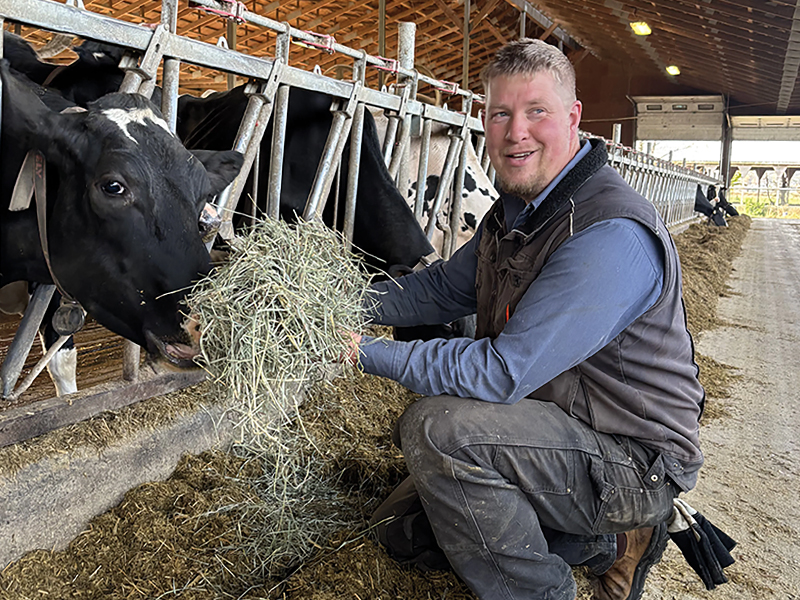
Matt Dykshoorn of B&L Dairy Farm in Abbotsford says farm insurance premiums have risen significantly over the past five years. Photo | Submitted

June 1, 2026 byKelly Sinoski

ABBOTSFORD – In the days before an atmospheric river struck the Fraser Valley last December, dairy farmer Matt Dykshoorn was already on the move.

Following a previous flood in 2021, Dykshoorn had protocols in place to protect his stock and equipment. Young cattle were moved from the lower barn, and equipment was relocated to a higher ridge before floodwaters poured across the area.

While the flood caused an estimated $74 million in insured losses in the Fraser Valley, the Dykshoorns’ loss was minimal.

“We’re in a known unprotected floodplain, so it’s deemed high risk,” says Dykshoorn, general manager of B&L Dairy Farm. “It makes us hypersensitive to weather forecasts, and we have to have a plan to protect ourselves. We have to be smart about managing our risks.”

Huge challenges

Weather-related disasters like drought, flooding and wildfires are posing huge challenges – and higher costs – for BC farmers, especially when it comes to insurance.

A rising number of claims, higher building replacement costs, lagging infrastructure investments – such as stormwater upgrades and outdated building codes – all influence the price farmers have to pay to protect themselves. In some cases, farmers can’t get insurance, while others struggle to afford coverage.

“I’m hearing daily from people who are finding it increasingly difficult to have their coverage placed, the coverage is inadequate, or the coverage is rising with no consultation or explanation of what’s going on,” says Anna Warhurst, who works for Co-operators on Vancouver Island.

“A lot of the time, we’re counselling clients on taking higher deductibles to offset premiums because, unfortunately, gone are the low-insurance days with the $200 or $500 deductible. We’re having a lot more risk management, coverage tailoring and use of deductibles than we ever had in the past.”

Weather playing bigger role

Insurance Bureau of Canada national director of consumer and industry relations Rob de Pruis says insurance costs are influenced by a variety of factors, but weather-related risks are playing a bigger role these days due to higher claims over the past decade.

Between 2000 and 2010, for instance, the insurance industry paid out an average of $700 million per year in severe weather damage in Canada. In comparison, that figure has increased over the past decade to an average of over $2 billion per year.

Some years are worse than others: 2024, for instance, was a record year for severe weather claims at $9.4 billion.

Record-setting damage means record-setting losses for insurance companies, which in turn could result in restrictions or caps on premiums.

“All of a sudden that risk gets transferred to us,” Dykshoorn says. “It’s become increasingly concerning to us farmers.”

The situation could get worse. At the end of March, the Canadian Drought Monitor found 49% of BC’s agricultural lands were classified as abnormally dry or experiencing severe drought. Data from property data analytics firm Landcor Data Corp. suggests such hotspots for weather-related events and alerts in BC are the Okanagan, Fraser Canyon, Kootenays and Thompson-Nicola, from Lillooet and Lytton to Kamloops.

Despite three floods and a recent barn fire, Dykshoorn says it hasn’t been a hassle so far to get farm insurance, although premiums have continued to climb.

The Dykshoorns’ mature milk cows, for instance, are insured at a replacement value of $5,000 a head, a value that’s gone up as cattle prices have soared over the past five years.

“Our insurance has gone up significantly in the past five or six years,” Dykshoorn says. “To date, we haven’t had to fight to get it, but I have heard from farms that have had major claims, and it becomes a real challenge.”

BC Agriculture Council policy director Paul Pryce says BCAC is also fielding reports about insurance, particularly the “ever-growing” number of exemptions or exceptions in policies.

This could include requirements for setbacks of farm structures from a watercourse, which could affect existing farms located at the elbow of a river.

“What may have been a 30-page insurance policy is rapidly becoming a 200-page insurance policy document,” Pryce says. “If the exceptions continue to grow, is the insurance there for you when you need it? Sometimes it’s difficult for a producer to wade through all those exceptions. And sometimes they may not realize they are not fully covered until the disaster hits.”

The situation is compounded by the fact the province is budgeting less for crop insurance, Pryce says, not to mention emergency management and climate resilience programs.

“We don’t know if that was a case of being a bit optimistic that there wouldn’t be a lot of insurance payouts or if it was a case of signalling the ministry would maybe be more strict in adjudicating insurance claims,” he says, “but we would like a situation where producers are compensated for losses so they’re not being unduly hassled when it comes to these things.”

Funding needed

Last month, Opposition agriculture critic and Delta South MLA Ian Paton called on the province to fund its flood strategy, saying “it’s needed now more than ever.”

The province says there continues to be several programs available to farmers to deal with flooding, while long-term work is underway to prepare for the future, including the $20 million Fraser Valley Flood Mitigation Program.

It acknowledges the base budget for the Ministry of Emergency Management and Climate Readiness is $4.7 million less compared to last year, but notes “this has not resulted in a cut to services or programs for people and communities responding to or recovering from emergencies.”

Meanwhile, both de Pruis and Warhurst recommend farmers review their policies on a regular basis to make sure they have the coverage they need. Pricing of insurance in BC is risk-based, so the higher the risk level, the higher the premium.

De Pruis says farmers can also take action to protect their properties, such as FireSmarting their lands. Before the 2016 wildfire in Fort McMurray – Canada’s costliest wildfire – there were specific rates for insurance in that community, de Pruis says. Despite the damage, insurance rates have since decreased due to the burned fuels and the work the community did on wildfire mitigation.

“The best thing a farmer or business owner can do to make sure their insurance premiums remain stable is to do a full risk assessment on what they need for insurance,” de Pruis says. “Make sure you’re reducing or eliminating the chance of claims. That will attract the best rates.”

Dykshoorn says despite the cost of insurance, it’s better to have it than not – as he found out with a recent barn fire.

“As expensive as insurance is, you’re still ahead if you ever need to make a claim,” Dykshoorn says. “We had a long stretch where it wasn’t a concern, but that’s definitely changed now.”

All content on this website is copyrighted, and cannot be republished or reproduced without permission.

Related Posts

You may be interested in these posts from the same category.

Fertilizer, fuel costs soar amid Iran conflict

Task force presents blueprint for growth

Ag Days foregrounds sector priorities

Council calls for review of farm classification rules

BCAC holds AGM

Ag leaders honoured at gala

BC farm income plummets

Budget recognizes climate risks

Orchardists seek frost assistance

BCAC lobbying event positive

Federal minister visits BC

Province consults on agritech

Previous Post: « Quesnel farm grows one venture at a time

© 2026 COUNTRY LIFE IN BC - ALL RIGHTS RESERVED