• Menu
  • Skip to primary navigation
  • Skip to main content
  • Skip to primary sidebar

Country Life In BC Logo

The agricultural news source in British Columbia since 1915

  • Headlines
  • Calendar
  • Subscribe
  • Advertise
  • About
  • Archives
  • Contact
  • Search
  • Headlines
  • Calendar
  • Subscribe
  • Advertise
  • About
  • Archives
  • Contact
  • Search

Primary Sidebar

Originally published:

MAY 2020
Vol. 106 Issue 5

Subscribe Now!

Sign up for free weekly FARM NEWS UPDATES

Loading form…

Your information will not be
shared or sold ever

Stories In This Edition

Rapid response

Worker health crisis

Spring melt floods Cariboo

Foreign Labour an essential service for fruit growers

Editorial: Watershed moments

Back Forty: COVID-19 will be a reality check for many

Viewpoint: Register now, question later to keep water rights

COVID-19 has varied impact on poultry sector

Social distancing

Honey producers keep focus on research

Beekeepers stung about import issues

Sidebar: Advocating for technology transfer

Farmland values facing headwinds

IAFBC defers major decisions

BCAC focuses on public trust with lower budget

AgSafe governance set for a shake-up

COVID-19 leads to oversupply of dairy

BC Fairs positive as large events banned

Peace growers facing multiple challenges

Co-op considers four-way fix at crossroads

Surprise audits to double

Co-op focuses on cutting costs, increasing sales

Volatility from plant shutdowns could hit BC

Island farmers renew request for local abattoir

Meat processing capacity stable despite closures

Direct marketing saves producers’ bacon

Small producers ride the online sales wave

Farm equipment dealers keep sale smoving

Strawberry growers pin survival on levies

Sidebar: Blueberry and raspberry AGMs postponed

Raspberry growers target fresh market, quality

Apple soda breaks ground in saturated market

Chilliwack family cracks open direct sales

EFB-resistant trees not out of the woods

Distillery shows resilience as it adapts to market

Home gardeners overwhelm seed companies

Sidebar: Commercial seed supply affected

Research: Viruses pursue unique strategies to evolve

Moisture sensors are not created equal

Woodshed: Kenneth gives new meaning to social isoluation

Farmers’ markets go online as channels shift

Farm Story: Pandemic forces a hard pivot to stay in the game

Cheesemaker adapts to coronavirus restrictions

Jude’s Kitchen: Stay-healty food in uneasy times

More Headlines

Follow us on Facebook

Comments Box SVG iconsUsed for the like, share, comment, and reaction icons

6 days ago

A BC Forest Practices Board investigation has found overgrazing has damaged grasslands in the Coutlee Range Unit near Merritt — and the range-use plan meant to prevent it was unenforceable. With complaints about overgrazing on the rise and grasslands covering just 1% of BC's land mass, the findings raise fresh questions about how the province manages one of its most vulnerable — and valuable — food-producing ecosyste#BCAg#BCAg ... See MoreSee Less

Link thumbnail

Board finds overgrazing rules unenforceable unmeasurable

www.countrylifeinbc.com

MERRITT – A BC Forest Practices Board investigation has found instances of non-compliance related to overgrazing have damaged open grasslands in the Mine pasture, part of the Coutlee Range Unit near...
View Comments
  • Likes: 6
  • Shares: 6
  • Comments: 6

Comment on Facebook

Several ranchers in recent years have gone into temporary non use on that range , so that means the grass should grow. But drought conditions/lack of rain and snow don’t allow that to happen . Dried up springs , creeks waterholes in various pastures add to over grazing where there is water , as livestock and everything else stay close to the water source . So even though less cattle are on it , over grazing appears. There is a large volume of horses on it 365 days/year which is wrong ! They pull grass right out of the ground when it’s just trying to grow ,, opens the door for weeds to grow in. That don’t help it. Aging infrastructure ( fences) laying on the ground, pipe line building , ( lack of commitment to fence maintenance) amongst all users contributes also to over grazing. Recreational atv users leaving gates open between pastures allows livestock to go back or ahead in pastures also expidites over grazing. Logging ( bcts) has no problem laying out cut locks on both sides of a fence , then it gets smashed down during logging and they don’t take responsibility to stand it back up or clean the cattle gaurds out when they are done , that happened 4 years ago on pasture 5 up there . I bet it is still not fixed . There are lots of contributing factors to the problem.

Tragedy of the commons.

I looked through the report. I saw nothing about the effects of noxious weeds on productive grasslands. This particular area is vulnerable because of the Ministry’a efforts to diversify the use of the Grasslands.

This pasture is under tremendous pressure not only from cattle but from irresponsible local residents who treat it as a landfill dumping all manner of household debris here. And don't even get me started on the mud bogging and camping in sensitive riparian areas. The feral horses are in this pasture 365 days a year just hammering it. Would sure be nice to see some enforcement action on people who are intentionally ripping up the grasslands and riparian areas. Cattle could be a valuable resource for rebuilding soils and native grasses in this area with the help of electric fencing and/or e-collars. The humans will be harder to manage.

The Forest and Range Practices Act was written by lawyers for global forest licencee shareholders. Results-based = unenforceable.

Also, can we talk about the impact of a pipeline being built through the middle of this field for multiple years?

View more comments

1 week ago

East Kootenay rancher Randy Reay is digging a new well after two natural water sources dried up on his Crown tenures. A new Living Lakes Canada assessment found 15% of mapped aquifers in the region are high-priority for monitoring, yet 80% of those go unmonitored. With over 48% of BC's provincial observation wells reporting below-normal groundwater levels, ranchers and researchers are sounding the alarm on water security. The story is in our March edition, and we've posted it to our website thi#BCAgk.

#BCAg
... See MoreSee Less

Link thumbnail

Water woes: groundwater under pressure across BC

www.countrylifeinbc.com

JAFFRAY – As a young boy growing up in the Kootenay-Boundary region, Randy Reay never expected to run out of water. But this year, in mid-February, his fields are bare. There is no snow halfway up t...
View Comments
  • Likes: 8
  • Shares: 7
  • Comments: 1

Comment on Facebook

Jaffrey is in the east Kootenays not kooteney boundary

2 weeks ago

BC farmers are bracing for prolonged higher input costs as war in the Middle East drives up fuel and fertilizer prices. Nitrogen fertilizer costs were already climbing before the Iran conflict began, with prices still roughly 60% above pre-pandemic levels. Farm Credit Canada warns that unlike 2022, strong commodity prices may not offset rising costs this time. Local suppliers expect supply challenges and further price increases ahead.

#BCAg
... See MoreSee Less

Link thumbnail

Fertilizer prices on the rise

www.countrylifeinbc.com

War in the Middle East has delivered a generational shock to energy prices, meaning BC farmers can expect a prolonged period of higher costs not just for fuel but also for fertilizer.
View Comments
  • Likes: 2
  • Shares: 1
  • Comments: 0

Comment on Facebook

2 weeks ago

... See MoreSee Less

View Comments
  • Likes: 1
  • Shares: 0
  • Comments: 0

Comment on Facebook

2 weeks ago

Cameron Stockdale is the new executive director of provincial farm safety organization AgSafeBC. Find out more in this week's Farm News Update from Country Life in B#BCAg#BCAg ... See MoreSee Less

Link thumbnail

New leadership at AgSafe BC

www.countrylifeinbc.com

Cameron Stockdale is the new executive director of provincial farm safety organization AgSafeBC, succeeding Wendy Bennett. Bennett left AgSafeBC in September 2025, following 12 years with the…
View Comments
  • Likes: 5
  • Shares: 1
  • Comments: 0

Comment on Facebook

Subscribe | Advertise

The agricultural news source in British Columbia since 1915
  • Email
  • Facebook

Worker health in focus

Orchards, wineries step up

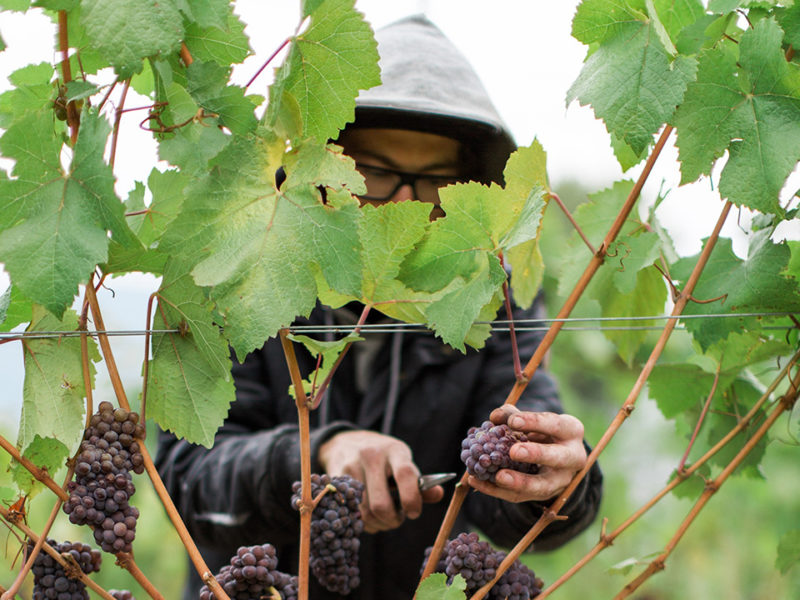
The Western Agricultural Labour Initiative is expecting to play a greater role in managing workers this year. SUBMITTED / BC WINE INSTITUTE

May 1, 2020 byPeter Mitham

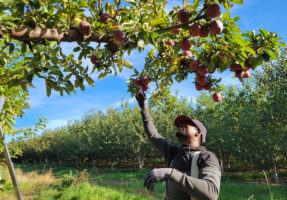
OLIVER – With foreign and domestic workers starting to arrive in the Okanagan for another season, growers are grappling with provincial health guidelines designed to limit the spread of COVID-19.

“It’s going to start the first week of May for grapes, doing some shoot-thinning in vineyards,” says Ron Forrest, the BC Fruit Growers Association liaison who connects domestic workers, including hundreds of Quebec youth, with local growers each summer. “People should start coming in between the first week of May and the third week of May.”

Given this year’s anticipated labour shortage, he was on the ground by mid-April, scouting out local campsites – legal and illegal – for workers. While the workers will be in high demand this year, the communities where they work have also voiced concerns about the seasonal influx.

Several local mayors and the South Okanagan Chamber of Commerce have all expressed fears regarding domestic migrants. Some residents worry they could incubate disease in their encampments and facilitate the spread of COVID-19 in the Okanagan.

While several provinces require new arrivals to self-isolate for 14 days, even if arriving from within Canada, BC has opted for a far more liberal regime. It has so far rejected the implementation of checkpoints or travel restrictions within the province.

However, Quebec, which has the highest rate of known infections in the country, has stringent regulations on the movement of people.

“Such travel should be confined to trips for medical reasons and work when teleworking is not possible,” Quebec regulations state. “In order to protect the most vulnerable populations, checkpoints will be established to limit travel into and out of certain territories.”

Restrictions wanted

Growers are working to address the concerns. A key element is the Loose Bay Campground on Secrest Road in Oliver, which typically sees about 300 workers living there during the summer. Cherry grower Greg Norton was instrumental in its development and fellow grower and friend Allan Patton chairs the Loose Bay Campground Society, which runs it. The Regional District of Okanagan-Similkameen designated it a campground for seasonal workers in 2017. Campers pay $5 a day or $30 a week.

“Most places don’t really have any accommodations, especially down south,” says Forrest. “One of the most important things that we have to do is get Loose Bay going.”

Several upgrades have improved servicing at the campground and more are planned this summer to ensure campers respect public health orders when it opens on May 1.

“We’re going to try to add WiFi and washing machines so people don’t have the need to go down to town that often,” says Forrest.

Local officials say Loose Bay residents will be treated as a single group.

Training required

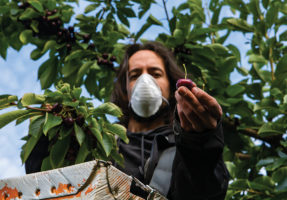
Provincial regulations governing farm workers during the pandemic were finalized on April 6. Workers must receive training on COVID-19 protocols prior to beginning work, including sanitization. The rules require employers ensure adequate distancing on the job, including during breaks, access to handwashing stations and sanitizer, and recommend providing every worker with a personal picking bucket or whatever tools they need.

“Where it is not possible to provide personal tools, the shared tools and equipment must be wiped down and cleaned with a disinfecting agent such as disposable wipes or a diluted bleach solution between uses by different employees,” the rules state.

“If you share a ladder, you’ve got to be able to wash a ladder,” says Forrest, noting that the boxes workers fill with fruit are another conundrum. “They fill it up, and then one person takes it in their hands and takes it to the tractor. How are we going to do this? Are we going to have to sanitize them before? After? These are all things that we’re going to have to figure out.”

To support on-farm measures, AgSafe BC recently made COVID-19 workplace safety materials available on its website. These include prevention procedures, an exposure control plan and employer protocols for a pandemic. Safety notices for workers and signage is also available.

Providers of essential services are protected by provincial order from liability in the event workers, by their own “gross negligence,” become infected.

However, BCFGA warns growers to expect lower productivity this year as a result of public health rules.

“Planning for lower production may be prudent,” it advised members, encouraging them to avoid sinking too much effort into their least-profitable blocks. “On the other hand, it is expected that with reduced supply, produce prices will be increasing.”

The extra cash could come in handy, as strict guidelines governing foreign workers have upped the cost of that option for growers this year. Charter flights from Mexico to Vancouver, including transfer to the Okanagan, is expected to be upwards of $1,200 per worker. An initial flight of 157 workers landed at Vancouver on April 16, and the province expected up to 1,000 workers by April 30. An additional 3,000 were expected to follow.  All told, the province welcomes about 10,000 foreign farm workers each year.

The province is covering the cost of housing and meals for incoming foreign workers during the 14-day isolation period required arrival. Ottawa is also providing employers with $1,500 per worker to cover other costs, including the $900 in wages owing during the quarantine period.

Delays in the arrival of those workers may mean some tasks go unfilled, while some workers may opt not to come during the pandemic. Another slice of the local workforce – students on working holiday visas – have been shut out by border closures. They typically account for about 15% of orchard workers.

“I think we’re not going to have enough people,” says Forrest. “One thing we’re looking at is, hopefully, some locals. That’s what we would like to have.”

While farm work would be a steep learning curve for people who might be used to working at local hotels and restaurants, the opportunities exist.

“When I first came to the Okanagan, I would be picking beside locals,” says Forrest. “This year, I’m thinking there’s no jobs at McDonald’s or anything, so hopefully we can get a few of them to come and help us.”
Related Posts

You may be interested in these posts from the same category.

COVID-19 response reviewed

Apple marketing commission proposed

Province defrays COVID-19 costs

Federal election call

Fruit growers face hard choices

Rules for young workers

Fruit growers seek workers

Farmers market returns

BCAC shifts to advocacy

Sector events start growing

BC minimum wage increases

WorkSafeBC increases inspections

Previous Post: « Co-op focuses on cutting costs, increasing sales
Next Post: Beefsteak tomatoes get smoked »

Copyright © 2026 Country Life in BC · All Rights Reserved