• Menu
  • Skip to primary navigation
  • Skip to main content
  • Skip to primary sidebar

Country Life In BC Logo

The agricultural news source in British Columbia since 1915

  • Headlines
  • Calendar
  • Subscribe
  • Advertise
  • About
  • Archives
  • Contact
  • Search
  • Headlines
  • Calendar
  • Subscribe
  • Advertise
  • About
  • Archives
  • Contact
  • Search

Primary Sidebar

Originally published:

OCTOBER 2019
Vol. 105 Issue 10

Subscribe Now!

Sign up for free weekly FARM NEWS UPDATES

Select list(s) to subscribe to


By submitting this form, you are consenting to receive marketing emails from: Country Life in BC. You can revoke your consent to receive emails at any time by using the SafeUnsubscribe® link, found at the bottom of every email. Emails are serviced by Constant Contact
Your information will not be
shared or sold ever

Stories In This Edition

ALC cracks down

Pat Jasper …

Bill will rein in activists

BC considers making premises ID mandatory

Bin there, done that

Unsung heroes

The Back Forty: It’s time government changed its narrative

Viewpoint: Banning plastic bags ignores reality

New round of changes coming to land reserve

Hullcar farmers file first NMP plans under new code

Classy champion

Most farmers support Daylight Savings Time

South Vancouver food hub to connect farmers

Egg-splaining

Dunn leaps to dairy sector

UBCO study looks at context for climate change

City Beet harvests profits from urban gardens

Forage trial presents options for producers

Growers step up to continue corn silage trials

Density key to efficient, healthy silage storage

Weather affecting corn trials

Bumper crop pushes down blueberry prices

Valley has protential to be an agritech hub

Ministry working on land use inventory

Join initiatives a priority for feeders

Best of the best

Canadian beef herd sinks to 30-year low

Familiar challenges face fourth-generation rancher

No-till seeding showcased at field day

Market Musings: Grass-fed cattle come to market with big gains

Blight-resistant trees focus of hazelnut field day

Replant, pest support for hazelnut growers

Bright berries

New packing line can handle BC’s pear crop

Mission Hilll aims to be fully organic by 2021

Research: Clean cud promotes dental health in ruminants

Remote market supports growth of local growers

Farm groups exploring food hub opportunities

Zoom! Zoom!

Chilliwack farms hopping with insects

Livestock still a main attraction at annual fair

PNE agriculture auction keeps on giving

4-H skills still key despite changes in farming

Thousands converge on Westham Island

Woodshed: Vacation time invites all kinds of cover-ups

Kootenay grower shoots forward with microgreens

Jude’s Kitchen: Harvest local

More Headlines

Follow us on Facebook

Comments Box SVG iconsUsed for the like, share, comment, and reaction icons

6 days ago

... See MoreSee Less

View Comments
  • Likes: 4
  • Shares: 0
  • Comments: 0

Comment on Facebook

7 days ago

On the last day of the BC Organic Conference, Thursday, Molly Thurston of Pearl Agricultural Consulting helped growers learn how to manage bugs such as codling moth, wireworm, and rootworm in organic growing systems. Her talk alongside Renee Prasad included hands-on activities in which participants checked out various traps and examined pests under microscopes. Be sure to look for more upcoming ag events on our online calendar at www.countrylifeinbc.com/calendar/

#BCAg
... See MoreSee Less

On the last day of the BC Organic Conference, Thursday, Molly Thurston of Pearl Agricultural Consulting helped growers learn how to manage bugs such as codling moth, wireworm, and rootworm in organic growing systems. Her talk alongside Renee Prasad included hands-on activities in which participants checked out various traps and examined pests under microscopes. Be sure to look for more upcoming ag events on our online calendar at www.countrylifeinbc.com/calendar/

#BCAg
View Comments
  • Likes: 15
  • Shares: 0
  • Comments: 0

Comment on Facebook

1 week ago

Well-known organic farmer and podcaster Jordan Marr gets interviewed by Country Life in BC’s own columnist and potato mavin Anna Helmer during the opening session of the BC Organic Conference at Harrison Hot Springs yesterday. Sessions run today (Wednesday) and Thursday and include organic and regenerative growing practices and expanding and advocating for the organic sector, all under the background of the newly launched Organic BC banner.

#BCAg
... See MoreSee Less

Well-known organic farmer and podcaster Jordan Marr gets interviewed by Country Life in BC’s own columnist and potato mavin Anna Helmer during the opening session of the BC Organic Conference at Harrison Hot Springs yesterday. Sessions run today (Wednesday) and Thursday and include organic and regenerative growing practices and expanding and advocating for the organic sector, all under the background of the newly launched Organic BC banner.

#BCAg
View Comments
  • Likes: 37
  • Shares: 2
  • Comments: 1

Comment on Facebook

Interested in finding out more about this

3 weeks ago

Today, we remember those who sacrificed their lives or their well-being for our freedom. Lest we forget. ... See MoreSee Less

Today, we remember those who sacrificed their lives or their well-being for our freedom. Lest we forget.
View Comments
  • Likes: 8
  • Shares: 0
  • Comments: 0

Comment on Facebook

1 month ago

FarmFolk CItyFolk is hosting its biennial BC Seed Gathering in Harrison Hot Springs November 27 and 28. Farmers, gardeners and seed advocates are invited to learn more about seed through topics like growing perennial vegetables for seed, advances in seed breeding for crop resilience, seed production as a whole and much more. David Catzel, BC Seed Security program manager with FF/CF will talk about how the Citizen Seed Trail program is helping advance seed development in BC. Expect newcomers, experts and seed-curious individuals to talk about how seed saving is a necessity for food security. ... See MoreSee Less

Link thumbnail

BC Seed Gathering - FarmFolk CityFolk

farmfolkcityfolk.ca

Save the date for our upcoming 2023 BC Seed Gathering happening this November 3rd and 4th at the Richmond Kwantlen Polytechnic University campus.
View Comments
  • Likes: 1
  • Shares: 0
  • Comments: 0

Comment on Facebook

Subscribe | Advertise

The agricultural news source in British Columbia since 1915
  • Email
  • Facebook

BC considers making premises ID mandatory

Provincial coordinator counters fears regarding privacy issues

Sarah Zuberbuhler photo

October 2, 2019 byMargaret Evans

VICTORIA—Since 2011, the BC Ministry of Agriculture has run a voluntary premises identification program for farm owners to voluntarily register their property and animals.

Registration helps to protect animal health and facilitates a rapid response in the event of emergencies. Anyone from hobby farmers with one or two animals to large commercial livestock operators can register.

“Premises ID deals exclusively with the premises and where they are – the farm, the feedlot, whatever the case may be,” explains Lisa Levesque, team lead, traceability and premises identification with the BC Ministry of Agriculture.

Approximately 57% of premises have been registered since the program started, but the ministry is considering a new premises ID regulation under the BC Animal Health Act. The regulation would make registration mandatory for all farms and livestock sites. Those sites include not only farms but stables, feedlots, apiaries, livestock markets, abattoirs, fairgrounds, or any facility where farm animals are present, raised, kept or disposed.

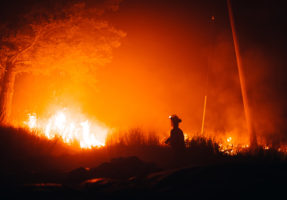
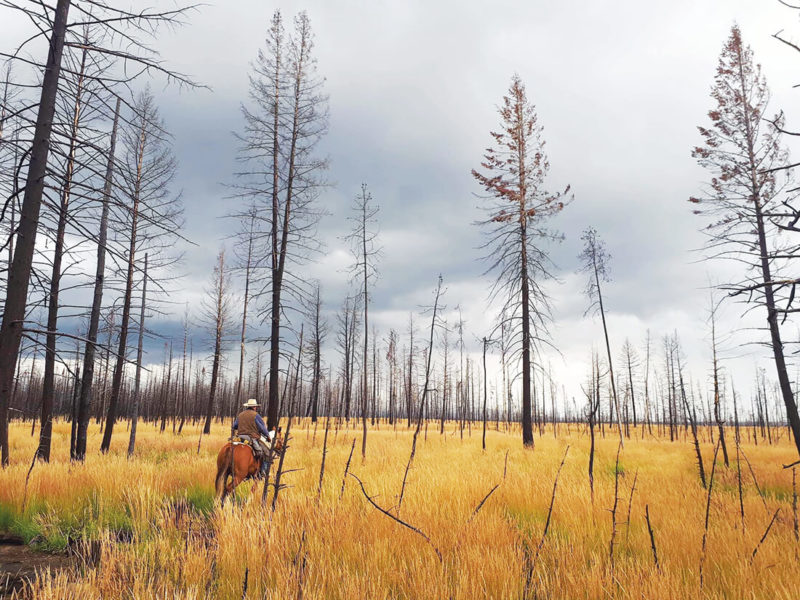
The purpose is to increase the precise tracking of any disease outbreak or any environmental emergency. During the 2017 wildfires, the premises ID program saw 130 emergency registrations for livestock owners affected by evacuation orders, improving their chances of being given re-entry permits in evacuation zones to care for their livestock.

This past summer, the ministry has been doing some outreach for feedback but there’s plenty of confusion regarding the intent of the regulation.

The plan is to identify premises only. It does not include the need to identify animals through the use of tags, tattoos or any other tracking device, explains Levesque, emphasizing that the program is exclusively for premises.

“We are just tackling the physical location which helps us to make maps of animal locations which we only use internally for emergency,” she says. “Animal identification such as tagging or tattooing is a federal responsibility, so it’s managed by the CFIA [Canadian Food Inspection Agency].”

Pushback

Levesque recognizes that there is some pushback from farm owners not wanting government involved in their businesses. Some landowners feel privacy is at stake, especially if they are small operators with just a few animals. They may not see the relevance or value of being in a government registry where data might float around and become available to others.

Levesque, however, emphasizes that no information is shared with other government agencies or researchers. The focus is on disease and environmental emergency response.

“If you have one animal or 50, if you get a communicable disease on your farm, it is still an issue and you can still transfer that,” she says, giving the example of African swine fever. “It has not made it to Canada. But from a risk perspective, if you have only one pig and it is exposed to a virulent disease, that one pig can be the trigger. Animal diseases have no boundaries and it’s not about us wanting to control the farming business, but we do want to be able to respond quickly to an emergency issue.”

An example would be the avian influenza outbreak that occurred in 2004 when there was a lack of accurate information on where chickens were actually being raised compared to the contact location. The outbreak was devastating. Many poultry farmers subsequently signed onto the premises ID concept, registering voluntarily. When the 2014-2015 outbreak happened, the program played a role in limiting the spread of the disease.

Levesque said that other examples include water contamination and flooding events, wildfires such as those in 2017 and 2018, and bovine tuberculosis.

“Those are all cases where premises ID was used. It’s not used a lot, but the information was very important for those situations,” she says.

The ministry is running a survey until October 11 regarding the proposed regulation. A discussion paper regarding the proposal and the survey can be found at [http://bit.do/Premises-ID].


Related Posts

You may be interested in these posts from the same category.

Wildfires rip through Southern Interior

Wildfire threat remains high

Ranchers facing rangeland losses

Ranchers face rangeland losses

Wildfire 2021: ‘They keep locals in the dark. That is really problematic.’

Don’t blame the wildfires

Wildfire state of emergency ends

Province announces wildfire recovery funds

Province pledges emergency funding

Record temps kill poultry

Wildfires spark emergency declaration

Livestock producers count losses

Previous Post: « City Beet harvests profits from urban gardens
Next Post: New round of changes coming to land reserve »

Copyright © 2025 Country Life in BC · All Rights Reserved