• Menu
  • Skip to primary navigation
  • Skip to main content
  • Skip to primary sidebar

Country Life In BC Logo

The agricultural news source in British Columbia since 1915

  • Headlines
  • Calendar
  • Subscribe
  • Advertise
  • About
  • Archives
  • Contact
  • Search
  • Headlines
  • Calendar
  • Subscribe
  • Advertise
  • About
  • Archives
  • Contact
  • Search

Primary Sidebar

Originally published:

MARCH 2022
Vol. 108 Issue 3

Subscribe Now!

Sign up for free weekly FARM NEWS UPDATES

Loading form…

Your information will not be
shared or sold ever

Stories In This Edition

Lucky chickens

$227m rebuild fund

Glyphosate shortage looms

Province opens ALR to agritech development

Editorial: Divorced from the earth

Back 40: Broken supply chain weakens food system

Viewpoint: BC’s emergency response needs improvement

Building back better means avoiding past mistakes

Sidebar: Grand Forks initiative protects farms

Rural, urban areas prepare for extreme weather

Ag Briefs: Property owner appeals BC SPCA seizure

Ag Briefs: Province sued over mind ban

Farm income projected to reach new heights

Potato growers brace for higher input costs

Keeping cranberries cool a hot topic

Rewarding farmers for enhancing riparian areas

Sidebar: Farmers need not apply

Diversification drives growth of organic farm

Leadership skills can help farmers cope with disaster

Winter rainbow

Compost facilities facing pushback

Cheese leads the way as BC dairies seek capacity

Island yogurt producer boosting production

Grape growers prepare for climate change

The perfect solution for farmers on the go

Small-lot egg producer awarded quota

Sidebar: Future quota draws likely limited

Broiler health in spotlight for small-lot farmers

Pest data helps with management decisions

Research: Researchers discover a world of apple microbiomes

Farms meet the demand for local food

Better berry harvester meets growers’ needs

Farm Story: Spring demands the old heave-ho

Safety in the spotlight as farms recover

Woodshed: Henderson style has chins wagging

Chilliwack teams plow past the century mark

Jude’s Kitchen: Spring has sprung! Time to make bread!


More Headlines

Follow us on Facebook

Comments Box SVG iconsUsed for the like, share, comment, and reaction icons

4 hours ago

The Township of Langley Farm and Ranch Exhibition Society is hosting a public open house this evening to gather input on plans to transform the historic Belmont Farm into an agricultural exhibition, education and heritage hub. Farmers, ranchers, and community members are invited to share their feedback. The open house is at the George Preston Rec Centre, 6-8 pm.

Township of Langley Farm and Ranch Exhibition Society
#BCAg
... See MoreSee Less

The Township of Langley Farm and Ranch Exhibition Society is hosting a public open house this evening to gather input on plans to transform the historic Belmont Farm into an agricultural exhibition, education and heritage hub. Farmers, ranchers, and community members are invited to share their feedback. The open house is at the George Preston Rec Centre, 6-8 pm. 

Township of Langley Farm and Ranch Exhibition Society 
#BCAg
View Comments
  • Likes: 4
  • Shares: 0
  • Comments: 0

Comment on Facebook

7 hours ago

The sold-out Southern Interior Horticulture show continues today. Education sessions range from rodent control to new tree fruit varieties, with the afternoon devoted to improving spraying techniques for orchardists and vineyard managers. When not listening to speakers, producers are checking the trade show.

#BCAg
... See MoreSee Less

The sold-out Southern Interior Horticulture show continues today. Education sessions range from rodent control to new tree fruit varieties, with the afternoon devoted to improving spraying techniques for orchardists and vineyard managers. When not listening to speakers, producers are checking the trade show.

#BCAg
View Comments
  • Likes: 6
  • Shares: 0
  • Comments: 0

Comment on Facebook

9 hours ago

The BC Poultry Association has lowered its avian flu biosecurity threat level from red to yellow, citing declining HPAI risk factors and fewer wild bird infections. Strong biosecurity practices helped BC limit cases this winter to 38 premises, down from 81 last year. For more, see today's Farm News Update from Country Life in #BCAg#BCAg ... See MoreSee Less

Link thumbnail

Poultry biosecurity notches down

www.countrylifeinbc.com

Declining risk factors for highly pathogenic avian influenza (HPAI) have prompted the BC Poultry Association to lower the industry’s biosecurity threat level from red to yellow. The decision…
View Comments
  • Likes: 11
  • Shares: 2
  • Comments: 1

Comment on Facebook

🐥💛

1 day ago

The application deadline for cost-shared funding through the Buy BC program is coming up on February 20. Up to $2 million through the Buy BC Partnership Program is available annually to BC producers and processors to support local marketing activities that increase consumer awareness of BC agriculture and BC food and beverages. For more information, visit buybcpartnershipprogram.ca/.

Buy BC

#BCAg
... See MoreSee Less

Link thumbnail

Home - Buy BC Partnership Program

buybcpartnershipprogram.ca

Buy BC Partnership Program Increase your visibility with Buy BC The Buy BC Partnership Program is a fundamental component of Buy BC that provides up to $2 million in cost-shared funding annually to lo...
View Comments
  • Likes: 3
  • Shares: 0
  • Comments: 0

Comment on Facebook

1 day ago

The Sik-E-Dakh (Glen Vowell) First Nation's Skeena Fresh hydroponic operation has doubled production capacity thanks to a $130,632 Northern Development Infrastructure Trust grant. Growing lettuce, kale, herbs and more in shipping containers, the operation uses 90% less water than traditional farming while providing 1,200 people with year-round access to fresh, locally grown greens. Their story is in the February edition of Country Life in BC, the agricultural news source for BC’s farmers and ranchers.

Northern Development Initiative Trust
#BCAg
... See MoreSee Less

The Sik-E-Dakh (Glen Vowell) First Nations Skeena Fresh hydroponic operation has doubled production capacity thanks to a $130,632 Northern Development Infrastructure Trust grant. Growing lettuce, kale, herbs and more in shipping containers, the operation uses 90% less water than traditional farming while providing 1,200 people with year-round access to fresh, locally grown greens. Their story is in the February edition of Country Life in BC, the agricultural news source for BC’s farmers and ranchers. 

Northern Development Initiative Trust 
#BCAg
View Comments
  • Likes: 15
  • Shares: 1
  • Comments: 0

Comment on Facebook

Subscribe | Advertise

The agricultural news source in British Columbia since 1915
  • Email
  • Facebook

Building back better means avoiding past mistakes

Going with the flow of status quo invites future disaster

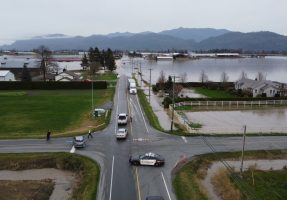
The rush to rebuild in areas of the province hammered by rain and floodwaters needs to include strategies that reduce future risk. SUBMITTED

March 1, 2022 byTom Walker

KELOWNA – Planners and decision-makers are in a difficult position as they face the challenge of creating a plan to mitigate damage from last November’s unprecedented rainfall.

On the one hand, property owners want a return to life as it was, minus the water. But at the same time, building back – even if it is better – does not guarantee that future disasters won’t be repeated.

If nothing changes, the same properties face the same potential for damage in the future, warns Tamsin Lyle, principal of Ebbwater Consulting in Vancouver.

Lyle spoke to the Okanagan Basin Water Board’s water stewardship council in February and reminded them that flooding is both natural and necessary.

“Flooding is the reason we have the wonderful farming area of the Lower Mainland,” she says. “But when flooding interacts with things we care about, we have a problem.”

That interaction caused hundreds of millions of dollars in damage in November to more than 1,100 farm properties on Sumas Prairie, in the Nicola Valley and Princeton, according to the province. Yet if planners don’t expand their toolbox of mitigation strategies, we are at risk of the same amount of damage occurring again, says Lyle.

Lyle urges planners to evolve past a singular approach to flood management.

“We need to break out of the serial engineering path,” she quips. “Don’t put so much emphasis on dikes. They do breach and last November showed us how catastrophic a breach can be. There are so many other non-structural things we could be doing.”

Restoring the more than 600 km of dikes across the Lower Mainland shows that government is responsive and is good for people, says Lyle, but it doesn’t address the fundamental risks extreme weather poses.

“We know that climate change will continue to increase the hazards of extreme weather events and we know that expanding development in the Fraser Valley will increase the numbers of people vulnerable to those events,” she says.

The latest flood event caused disruptions similar to those of the 1948 freshet, notes Lyle.

The accepted response after 1948 was to build more dikes to protect the population living on the flood plain, which is now more than 10 times what it was then.

Lyle says planners should consider three non-structural risk reduction strategies under the themes of land stewardship, land-use management and building management.

With land stewardship, planners and government work to maintain and restore natural assets and systems such as watersheds, wetlands and riparian areas.

Land use management involves developing strategies and regulations to reduce exposure. Limiting or selecting development within a flood zone reduces the number of people or businesses that could be impacted.

Sumas Prairie has much to offer as a farming location but building a processing operation such as a packing facility outside the flood zone would eliminate the risk for that business. Provincial animal and plant health labs that were closed due to flood damage also don’t need to be on the floodplain.

Building management involves strategies and regulations that can reduce the sensitivity of structures to flood damage. Building codes can require flood protection, ranging from placing structures above flood levels (Sumas Prairie homes often sit atop a berm) to using flood-resistant materials, or even constructing a permanent water barrier around a building.

Rush to rebuild

In the rush to return to normal, Lyle says planners can overlook other important values. The dikes built following the 1948 flood often failed to consider Indigenous values.

While no one would criticize the rapid rebuilding of critical highway infrastructure following the most recent floods and landslides, she says thousands of tonnes of untreated rock were dumped into important waterways in the process.

But economic forces may mandate change faster than planners, Lyle believes.

She has spoken with pension fund executives who are worried about the losses that they’re taking on real estate investments in the Fraser Valley. Banks are reluctant to lend money right now to Fraser Valley farmers, and insurers are declining coverage.

“Insurers are saying that are no longer interested in insuring as it doesn’t make sense on the financial side,” she says. “These are really powerful tools for change.”


Related Posts

You may be interested in these posts from the same category.

Sumas flooding spurs call for action

Tulip grower makes the shift to agritourism

Senate report highlights need for flood plans

Sumas Prairie farmers sue government

Flood recovery will take time

Producers urged to make emergency plans

Mortalities less than expected

Catastrophic flooding hits Fraser Valley

Previous Post: « Rewarding farmers for enhancing riparian areas
Next Post: Province opens ALR to agritech development »

Copyright © 2026 Country Life in BC · All Rights Reserved