• Menu
  • Skip to primary navigation
  • Skip to main content
  • Skip to primary sidebar

Country Life In BC Logo

The agricultural news source in British Columbia since 1915

  • Headlines
  • Calendar
  • Subscribe
  • Advertise
  • About
  • Archives
  • Contact
  • Search
  • Headlines
  • Calendar
  • Subscribe
  • Advertise
  • About
  • Archives
  • Contact
  • Search

Primary Sidebar

Originally published:

MAY 2021
Vol. 107 Issue 5

Subscribe Now!

Sign up for free weekly FARM NEWS UPDATES

Loading form…

Your information will not be
shared or sold ever

Stories In This Edition

Water licence angst

Green gold

Pandemic puts pinch on finances

Province to lift restrictions on second homes

Editorial: On the level

Back 40: Asian giant hornets aren’t welcome here

OpEd: Proposed meat regs a step in the right direction

Province plans pilot for new drought ratings

Sidebar: Universal

High snowpack limits drought

Jack Frost nips potential for huge cherry crop

Ag Briefs: Dog attacks put sheep producers on alert

Ag Briefs: Poultry scholarship established

Ag Briefs: BC Tree Fruits extends CEO contract

Letters: Build soil with carbon tax

Funding revived for local gov’t agriculture plans

Sidebar: Mission expands definition of accessory use agriculture

Record funding flowed through IAFBC last year

Lotsa tomatoes

AgSafe embraces new governance structure at AGM

ALR exclusion fails to win ag committee support

BC dairy industry sees steady demand

Dairy producers work to resolve quality issues

Tree fruit consultations off to flying start

Canada holds off Asian giant hornet restructions

Strawberry groewrs eye new varieties

Funding stopped up for raspberry replant

Beekeepers welcome technology transfer program

Island couple step up to revive local abattoir

Tech crucial to speed variety development

Research: Urban farms can contribute to food security

Building soil structure with organic compost

Locally grown asparagus fills a niche market

BC propagator awarded research grant

Understanding the methodology to farm financing

Seed bank continues legacy of seed-savers

New owners to extend Woodside Farm’s legacy

Ruckle Farm looks toward the future

Farm Story: Spring deliveries inspire the urge to get farming

Farmer-chef connections still paying off

Woodshed: Henderson between a rock and a hard place

Pandemic forces BC agricultural fairs to adapt

Jude’s Kitchen: Herbs & sprouts

More Headlines

Follow us on Facebook

Comments Box SVG iconsUsed for the like, share, comment, and reaction icons

5 hours ago

The Agricultural Land Commission is laying off staff after years of flat funding under the BC NDP. ALC chair Jennifer Dyson warns that application volumes, enforcement activity and legal obligations have all risen while its operating budget has stayed effectively flat — meaning longer wait times ahead for some services.

#BCAg
... See MoreSee Less

Link thumbnail

Land Commission lays off staff

www.countrylifeinbc.com

With no budget increase this year, the Agricultural Land Commission (ALC) is laying off six staff to make ends meet. “Ongoing financial constraints and the requirement to operate within the approved...
View Comments
  • Likes: 0
  • Shares: 3
  • Comments: 0

Comment on Facebook

6 days ago

A BC Forest Practices Board investigation has found overgrazing has damaged grasslands in the Coutlee Range Unit near Merritt — and the range-use plan meant to prevent it was unenforceable. With complaints about overgrazing on the rise and grasslands covering just 1% of BC's land mass, the findings raise fresh questions about how the province manages one of its most vulnerable — and valuable — food-producing ecosyste#BCAg#BCAg ... See MoreSee Less

Link thumbnail

Board finds overgrazing rules unenforceable unmeasurable

www.countrylifeinbc.com

MERRITT – A BC Forest Practices Board investigation has found instances of non-compliance related to overgrazing have damaged open grasslands in the Mine pasture, part of the Coutlee Range Unit near...
View Comments
  • Likes: 6
  • Shares: 6
  • Comments: 6

Comment on Facebook

Several ranchers in recent years have gone into temporary non use on that range , so that means the grass should grow. But drought conditions/lack of rain and snow don’t allow that to happen . Dried up springs , creeks waterholes in various pastures add to over grazing where there is water , as livestock and everything else stay close to the water source . So even though less cattle are on it , over grazing appears. There is a large volume of horses on it 365 days/year which is wrong ! They pull grass right out of the ground when it’s just trying to grow ,, opens the door for weeds to grow in. That don’t help it. Aging infrastructure ( fences) laying on the ground, pipe line building , ( lack of commitment to fence maintenance) amongst all users contributes also to over grazing. Recreational atv users leaving gates open between pastures allows livestock to go back or ahead in pastures also expidites over grazing. Logging ( bcts) has no problem laying out cut locks on both sides of a fence , then it gets smashed down during logging and they don’t take responsibility to stand it back up or clean the cattle gaurds out when they are done , that happened 4 years ago on pasture 5 up there . I bet it is still not fixed . There are lots of contributing factors to the problem.

Tragedy of the commons.

I looked through the report. I saw nothing about the effects of noxious weeds on productive grasslands. This particular area is vulnerable because of the Ministry’a efforts to diversify the use of the Grasslands.

This pasture is under tremendous pressure not only from cattle but from irresponsible local residents who treat it as a landfill dumping all manner of household debris here. And don't even get me started on the mud bogging and camping in sensitive riparian areas. The feral horses are in this pasture 365 days a year just hammering it. Would sure be nice to see some enforcement action on people who are intentionally ripping up the grasslands and riparian areas. Cattle could be a valuable resource for rebuilding soils and native grasses in this area with the help of electric fencing and/or e-collars. The humans will be harder to manage.

The Forest and Range Practices Act was written by lawyers for global forest licencee shareholders. Results-based = unenforceable.

Also, can we talk about the impact of a pipeline being built through the middle of this field for multiple years?

View more comments

1 week ago

East Kootenay rancher Randy Reay is digging a new well after two natural water sources dried up on his Crown tenures. A new Living Lakes Canada assessment found 15% of mapped aquifers in the region are high-priority for monitoring, yet 80% of those go unmonitored. With over 48% of BC's provincial observation wells reporting below-normal groundwater levels, ranchers and researchers are sounding the alarm on water security. The story is in our March edition, and we've posted it to our website thi#BCAgk.

#BCAg
... See MoreSee Less

Link thumbnail

Water woes: groundwater under pressure across BC

www.countrylifeinbc.com

JAFFRAY – As a young boy growing up in the Kootenay-Boundary region, Randy Reay never expected to run out of water. But this year, in mid-February, his fields are bare. There is no snow halfway up t...
View Comments
  • Likes: 8
  • Shares: 7
  • Comments: 1

Comment on Facebook

Jaffrey is in the east Kootenays not kooteney boundary

2 weeks ago

BC farmers are bracing for prolonged higher input costs as war in the Middle East drives up fuel and fertilizer prices. Nitrogen fertilizer costs were already climbing before the Iran conflict began, with prices still roughly 60% above pre-pandemic levels. Farm Credit Canada warns that unlike 2022, strong commodity prices may not offset rising costs this time. Local suppliers expect supply challenges and further price increases ahead.

#BCAg
... See MoreSee Less

Link thumbnail

Fertilizer prices on the rise

www.countrylifeinbc.com

War in the Middle East has delivered a generational shock to energy prices, meaning BC farmers can expect a prolonged period of higher costs not just for fuel but also for fertilizer.
View Comments
  • Likes: 2
  • Shares: 1
  • Comments: 0

Comment on Facebook

2 weeks ago

... See MoreSee Less

View Comments
  • Likes: 1
  • Shares: 0
  • Comments: 0

Comment on Facebook

Subscribe | Advertise

The agricultural news source in British Columbia since 1915
  • Email
  • Facebook

Canada holds off Asian giant hornet restrictions

Washington State moves to declare hornets a quarantine pest

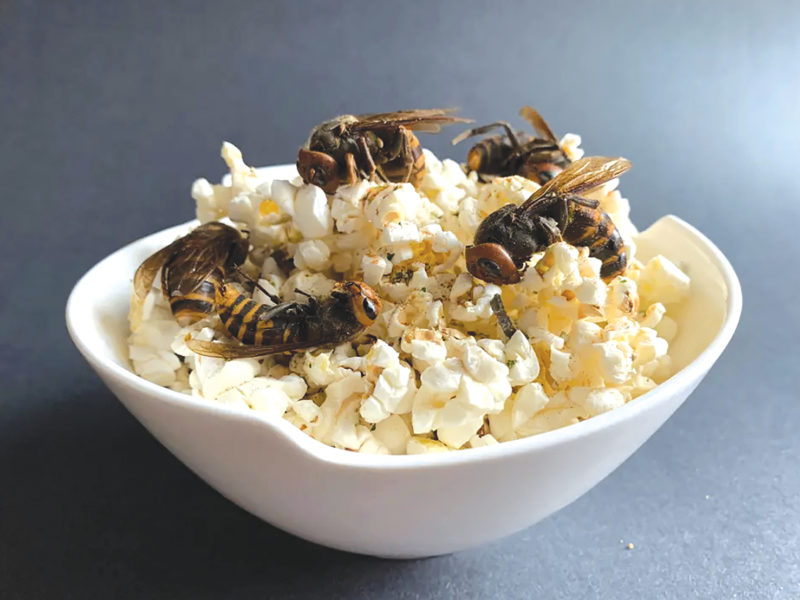
Washington State is moving to declare Asian giant hornets a quarantine pest. While a delicacy in some parts of the world, the hornets are a threat to honey bees, a critical link in the food chain. BROOKLYN BUGS

May 1, 2021 byBarbara Johnstone Grimmer

ABBOTSFORD – Canada has yet to follow the lead of Washington State and move to declare Asian giant hornet (Vespa mandarinia) a quarantine pest.

On April 7, Washington officials filed for all species in the genus Vespa to be placed on the list of quarantined pests for the state. The hornets were first reported in Washington in 2019 and an active nest was destroyed last year near Blaine.

The proposed rule would prohibit the sale of any species as well as the movement or distribution of the unwanted pest throughout the state. Washington State Department of Agriculture inspectors would be able to control and limit entry to an area within 20 metres of an infested site to enable removal of the nest and all hornets.

A public hearing will be held in May with an intended adoption date soon after.

The proposed quarantine acknowledges the risk hornets pose to agricultural crops and pollinators, as well as to humans and livestock.

If the rule is approved, federally in the US, US-APHIS will take phytosanitary actions if a quarantine pest such as Asian giant hornet is detected in an imported shipment to mitigate the threat.

But the Canadian Food Inspection Agency has taken a different approach entirely.

CFIA issued a decision document in February 2020 stating it will not declare the Asian giant hornet a quarantine pest for Canada. This means there are no restrictions on the import or movement of any commodities that may contain the insect. It  does require permits for the deliberate importation of hornets.

CFIA intercepted Asian giant hornets entering the country in luggage in 2013. But in the case of the 2019 nest found in Nanaimo, CFIA says the hornets’ origin is unknown.

International and interstate shipping may aid in their distribution. Besides sightings relatively close to coastal shipping areas, sightings to date have been close to rail lines.

Genetic analysis reveals that the 2019 Nanaimo V. mandarinia are a close match with hornets originating in Japan, and the Washington State V. mandarinia are a close match with hornets in South Korea. This is indicative of separate introductions, possibly in marine cargo.

However, deliberate smuggling may also be a source of introduction since Asian giant hornet is a commodity and a delicacy. It is not known if any business imports live hornets in any life stages, but they are known to be bred in other areas of the world for a food and medicine source.

In 2010, V. orientalis was found in Washington. V. soror was identified in downtown Vancouver in 2019, and there were several detections of V. mandarinia in Washington and BC in 2019 and 2020. In 2020, V. crabro was also detected in BC and Oregon.

BC provincial apiculturist Paul van Westendorp says import controls are Ottawa’s call, but the provinces have urged the federal government to review its inspection protocols.

“If there is a component lacking, they will beef it up. This is an ongoing discussion that we have entertained with the federal government,” says van Westendorp.

Under the international phytosanitary system, countries that designate a quarantine pest must put measures in place to prevent the pest’s entry into the country and control the pest. However, CFIA’s decision document explains that uncertainties about how the pest is entering Canada make it difficult to regulate, let alone control its movement.

There were six confirmed reports of Asian giant hornets in BC last year and 31 confirmed reports of the pest in Washington State. All confirmed sightings in BC were the result of public surveillance.

Surveillance activities in BC will continue this year. Washington surveillance efforts have already drawn 118 potential sightings, but the majority are unverified or have proven false.
 

Related Posts

You may be interested in these posts from the same category.

Poultry biosecurity notches down

Traceability reprieve for livestock

CFIA reports low honey adulteration

BC distanced from TB concerns

CFIA nabs Enderby abattoir

Contracts cancelled for beekeepers

BC control zones revoked

Avian influenza grows

Federal funding for AI response

Livestock health in spotlight

CFIA proposes traceability updates

Avian influenza returns

Previous Post: « Building soil structure with organic compost
Next Post: Farmer-chef connections still paying off »

Copyright © 2026 Country Life in BC · All Rights Reserved