• Menu
  • Skip to primary navigation
  • Skip to main content
  • Skip to primary sidebar

Country Life In BC Logo

The agricultural news source in British Columbia since 1915

  • Headlines
  • Calendar
  • Subscribe
  • Advertise
  • About
  • Archives
  • Contact
  • Search
  • Headlines
  • Calendar
  • Subscribe
  • Advertise
  • About
  • Archives
  • Contact
  • Search

Primary Sidebar

Originally published:

OCTOBER 2021
Vol. 107 Issue 10

Subscribe Now!

Sign up for free weekly FARM NEWS UPDATES

Select list(s) to subscribe to


By submitting this form, you are consenting to receive marketing emails from: Country Life in BC. You can revoke your consent to receive emails at any time by using the SafeUnsubscribe® link, found at the bottom of every email. Emails are serviced by Constant Contact
Your information will not be
shared or sold ever

Stories In This Edition

Feeling the heat on water

Good grapes

Province funds hazelnuts

Farmers left in lurch by risk-averse insurers

Fresh marketing

Editorial: A familiar problem

Back 40: Climate change action depends on political will

Viewpoint: UN Food Systems Summit sets an ambiguous agenda

Province falls short on dam safety oversight

All the elements

Orchard industry awaits government report

Sidebar: Competitiveness fund on hold

Ag Briefs: Collins wins gold for food security column

Ag Briefs: Agrologist and sector champion dies

Ag Briefs: Kelowna approves land exclusion

Ag Briefs: BC on watch for hornets

Province begins wildfire recovery payments

Beef sector sees strong demand

Thanks for the support

BC-bred females sell well in fall production sale

Sheep producers monitoring for bluetongue

Columbia River Treaty impacts reviewed

Summer weather takes toll on OK fruit

Cheesemakers felt the heat this summer

Housing rules continue to challenge farmers

National plant health lab gets new director

All’s gourd – pumpkins not squashed by heat

Female ranchers excited for mentorship opportunities

Island project establishes baseline for bugs

Show me the money!

Corn trial provides options for changing climate

High heat, low pest pressure test corn plantings

Research: Breeding a better, more nutritious apple

4-H BC: 4-H event helps develop future community leaders

Farm Story: Carrots offer a peaceful break

Plow match perseveres despite pandemic

Woodshed: There’s more than truck trouble with Delta Faye

Mesh covers control vegetable pests

Jude’s Kitchen: Fall weather calls for cool comfort food

More Headlines

Follow us on Facebook

Comments Box SVG iconsUsed for the like, share, comment, and reaction icons

2 weeks ago

The Canadian Food Inspection Agency is preparing to implement changes to its livestock traceability rules that will include mandatory computer reporting within seven days on movement of animals for veterinary appointments, community pastures, exhibitions, carcass and on-farm disposal and the births and deaths of every animal on your farm. Writer Tom Walker first brought these changes to the attention of our readers back in June 2023. We've posted his story to our website:

www.countrylifeinbc.com/cfia-proposes-traceability-updat#BCAg#BCag
... See MoreSee Less

The Canadian Food Inspection Agency is preparing to implement changes to its livestock traceability rules that will include mandatory computer reporting within seven days on movement of animals for veterinary appointments, community pastures, exhibitions, carcass and on-farm disposal and the births and deaths of every animal on your farm. Writer Tom Walker first brought these changes to the attention of our readers back in June 2023. Weve posted his story to our website: 

https://www.countrylifeinbc.com/cfia-proposes-traceability-updates/

#BCag
View Comments
  • Likes: 11
  • Shares: 21
  • Comments: 15

Comment on Facebook

I love hpw the cow in the picture hasn't even got a RFID tag in it but I digress. We can not read the link, it says "we are not permitted to read drafts". Please post again with the correct link.

Dairy farmers having been doing this several years. The app we use has become quite simple to use

Including equine?

Premise ID was slowly rolled through the country, voluntary then mandatory. Transparency and 'Consultation' has been light. Those who tried to bring this for discussion a couple years ago, because of forseen overreach, were quite often labeled conspiracy theorists and that it wasnt meant to be so heavily regulated and controlled. Gardens and seeds will be next. "Invasive species" reporting, check out the plants medicinal properties. Read the BC intentions papers. The premise ID that already heavy regulated commodities have claims to be treated different in the intentions papers on page 8. www2.gov.bc.ca/assets/gov/farming-natural-resources-and-industry/agriculture-and-seafood/food-saf...

Says i am "not allowed to preview draft".

Also concerning is the part on compliance...they can 'stumble onto' any farm and if you're not complying there are consequences.

When the CFIA stumbles into the wrong place compliance will be met with civil engagement

Says I can't preview draft

This is government overreach - Do Not Comply!

Do not comply

Fu

As if the price of beef isn't bad enough for consumers,,,,,be prepared to be gouged some more now

Ridiculous!!

Let's hold up on the beef exports tell we can get our own house in order... we need to deregulated, cheapen up the supply chain back into a 5 buck a pound rage so the good people canada can eat healthy food.. fuck your bean diets, that's retarded

This, along with the majority of new legislation pertaining to any type of farm, is a blatant squeeze on any sort of small, alternative agricultural venture. I am a massive believer in working together and sharing resources and costs and solutions - do not get me wrong - but this and the water registration among others, is an overreach (at most generous) and an absolute killer to smaller, local initiatives that LITERALLY save lives during extreme events. There is ONE ROAD into and out of my community. We don’t need or want some sort of backlogged government response when shit goes sideways. We want the ability AND SUPPORT to provide for our communities without penalty when things go badly. We want to produce sustainability for our communities. We live here, we work here, we want to STAY HERE. Stop making it harder.

View more comments

3 weeks ago

BC's minimum piece rates for 15 hand-harvested crops increased 2.6% on December 31. Crops include peaches, apricots, brussels sprouts, daffodils, mushrooms, apples, beans, blueberries, cherries, grapes, pears, peas, prune plums, raspberries and strawberries. Farm-worker piece rates in BC were increased by 11.5% in January 2019 and 6.9% in December 2024. BC’s current minimum wage sits at $17.85 per hour.

#BCAg
... See MoreSee Less

BCs minimum piece rates for 15 hand-harvested crops increased 2.6% on December 31. Crops include peaches, apricots, brussels sprouts, daffodils, mushrooms, apples, beans, blueberries, cherries, grapes, pears, peas, prune plums, raspberries and strawberries. Farm-worker piece rates in BC were increased by 11.5% in January 2019 and 6.9% in December 2024. BC’s current minimum wage sits at $17.85 per hour. 

#BCAg
View Comments
  • Likes: 10
  • Shares: 0
  • Comments: 2

Comment on Facebook

I'm not sure what they're telling us. Did peace rates have to increase so that Farm workers could make minimum wage?

They deserve it, but the general public will be whining about increased prices in the stores. Will need to make more information average to the g.p.

3 weeks ago

... See MoreSee Less

View Comments
  • Likes: 14
  • Shares: 0
  • Comments: 1

Comment on Facebook

105 Mile Ranch

4 weeks ago

... See MoreSee Less

View Comments
  • Likes: 7
  • Shares: 0
  • Comments: 0

Comment on Facebook

1 month ago

Water volumes from the Nooksack River are at levels similar to 1990 and 2021, but the province says flows should peak at 10pm tonight. The shorter duration, as well as conditions in other watercourses within the watershed and performance of flood protection infrastructure should avoid a catastrophe on the scale of 2021. However, several landslides mean road closures have once again effectively isolated the Lower Mainland from the rest of the province.

#BCAg
... See MoreSee Less

Water volumes from the Nooksack River are at levels similar to 1990 and 2021, but the province says flows should peak at 10pm tonight. The shorter duration, as well as conditions in other watercourses within the watershed and performance of flood protection infrastructure should avoid a catastrophe on the scale of 2021. However, several landslides mean road closures have once again effectively isolated the Lower Mainland from the rest of the province.

#BCAg
View Comments
  • Likes: 9
  • Shares: 3
  • Comments: 1

Comment on Facebook

Family living in Sumas WA say it's very much like '21. They have the same amount of water in their house as last time.

Subscribe | Advertise

The agricultural news source in British Columbia since 1915
  • Email
  • Facebook

Cheesemakers felt the heat this summer

Reduced milk yields created challenges meeting demand

October 1, 2021 byKate Ayers

DUNCAN – Keeping their animals cool and fields productive were challenges for many dairy farmers this summer, but those with processing facilities in their operations also struggled to ensure adequate milk production.

Dairy and artisan cheese producers on Vancouver Island and the Lower Mainland took a double hit as the heat stressed their animals and cooling equipment laboured to keep products from spoiling.

“The drought has affected our pasture. Our irrigation water tends to run out a lot sooner than it did 10 years ago. Right now, we’re on water restrictions, which reduces the amount of grass the animals have,” says Cory Spencer, co-owner of Duncan’s Haltwhistle Cheese Co. “When we had that extreme heat of 42°C, that put a lot of stress on the animals and milk production dropped because they didn’t want to eat. We noticed about a 50% drop in production during that time, but we saw it bounce back once it cooled down again.”

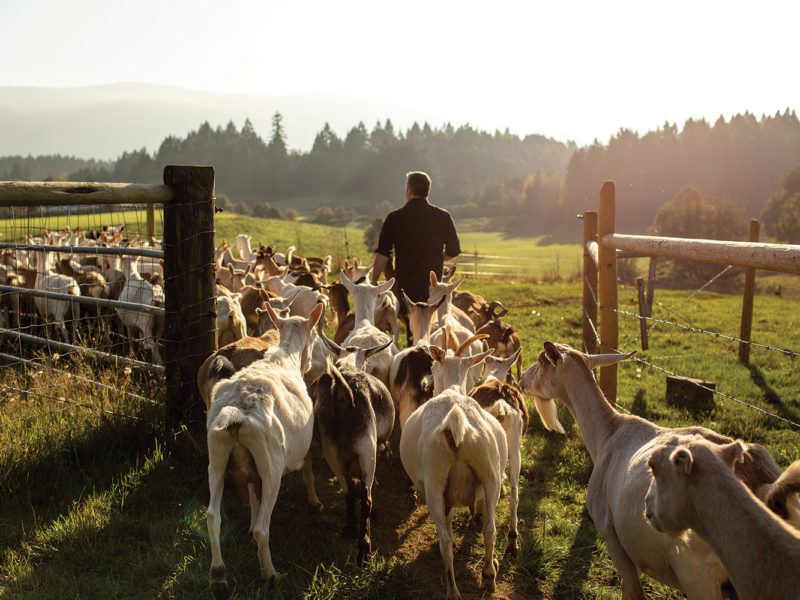
Haltwhistle sources milk from 100 goats on its farm and produces cow’s milk cheese with fluid milk from nearby Balme Ayr Farm.

The heat also put pressure on the compressors that keep the aging rooms cool, adds Spencer.

“They were working quite hard just to keep up. They aren’t really designed to work in those temperatures,” he says.

Spencer and partner Kirsten Thorarinson were forced to close their cheese shop for two days during the heatwave.

Dana Dinn of The Farm House Natural Cheeses in Agassiz also noticed a dip in production. The business produces handmade artisan cheeses and specialties from both cows and goats. Its

on-farm shop sells cheeses, butter, Greek-style yogurt, buttermilk and bottled fluid milk.

“This summer has definitely been quite the feat for us here, both on the farm and within our cheese plant. Keeping our cows and goats comfortable and well-hydrated in the heat is a full-time job in itself. The stress of the heat often causes a dip in milk production, which means less available product for our customers,” says Dinn. “Our cheese caves and refrigeration systems were all working overtime through the last heat wave, and young ripening cheese in particular is very sensitive to temperature and environmental changes. We’ve lost some cheese to the heat, that’s for sure.”

Farm House Natural Cheeses also cancelled participation in several farmers markets during the summer because the fridges in its market trucks were not equipped to handle excessive temperatures.

“All in all, it’s been hard, and we unfortunately have experienced a lot of loss,” says Dinn.

Some operations made it through the heat and drought relatively unscathed.

Resilience

Nancy Gourlay, co-founder of Little Qualicum Cheeseworks and Morningstar Farm in Parksville, credits sustainable production practices with the operation’s resilience through this summer’s challenging conditions.

The farm’s pasture management maintained sufficient forage production for the herd, even without a third cut.

“We have always believed in the environmental benefits of permanent grass pastures, both as a carbon sink and for resilience in the case of drought. While other farmers across the West were waiting for that moment when they could get on their fields with equipment and get seed into the ground – then wait for rain – we were happily watching our grass grow,” says Gourlay. “Responsible forest, vegetation and soil management will be key to agricultural sustainability in our neck of the woods.”

Continuing that legacy will be Albert Gorter and Chelsea Enns and their young son, who purchased the farm and cheese business this summer after managing Gorter’s parents’ dairy farm in Manitoba.
Related Posts

You may be interested in these posts from the same category.

Vet urges dairies to be vigilant against HPAI

Westgen looks beyond challenges

Western dairy groups streamline

New Zealand follows US challenge

Dairy compensation fund opens

Fraser Valley flooding continues

Catastrophic flooding hits Fraser Valley

Cedar Valley footage released

Promotions help secure markets

Quick action on allegations

Turning manure into renewable energy

COVID influences food demand

Previous Post: « Female ranchers excited for mentorship opportunities
Next Post: Province falls short on dam safety oversight »

Copyright © 2026 Country Life in BC · All Rights Reserved