• Menu
  • Skip to primary navigation
  • Skip to main content
  • Skip to primary sidebar

Country Life In BC Logo

The agricultural news source in British Columbia since 1915

  • Headlines
  • Calendar
  • Subscribe
  • Advertise
  • About
  • Archives
  • Contact
  • Search
  • Headlines
  • Calendar
  • Subscribe
  • Advertise
  • About
  • Archives
  • Contact
  • Search

Primary Sidebar

Originally published:

MAY 2020
Vol. 106 Issue 5

Subscribe Now!

Sign up for free weekly FARM NEWS UPDATES

Select list(s) to subscribe to


By submitting this form, you are consenting to receive marketing emails from: Country Life in BC. You can revoke your consent to receive emails at any time by using the SafeUnsubscribe® link, found at the bottom of every email. Emails are serviced by Constant Contact
Your information will not be
shared or sold ever

Stories In This Edition

Rapid response

Worker health crisis

Spring melt floods Cariboo

Foreign Labour an essential service for fruit growers

Editorial: Watershed moments

Back Forty: COVID-19 will be a reality check for many

Viewpoint: Register now, question later to keep water rights

COVID-19 has varied impact on poultry sector

Social distancing

Honey producers keep focus on research

Beekeepers stung about import issues

Sidebar: Advocating for technology transfer

Farmland values facing headwinds

IAFBC defers major decisions

BCAC focuses on public trust with lower budget

AgSafe governance set for a shake-up

COVID-19 leads to oversupply of dairy

BC Fairs positive as large events banned

Peace growers facing multiple challenges

Co-op considers four-way fix at crossroads

Surprise audits to double

Co-op focuses on cutting costs, increasing sales

Volatility from plant shutdowns could hit BC

Island farmers renew request for local abattoir

Meat processing capacity stable despite closures

Direct marketing saves producers’ bacon

Small producers ride the online sales wave

Farm equipment dealers keep sale smoving

Strawberry growers pin survival on levies

Sidebar: Blueberry and raspberry AGMs postponed

Raspberry growers target fresh market, quality

Apple soda breaks ground in saturated market

Chilliwack family cracks open direct sales

EFB-resistant trees not out of the woods

Distillery shows resilience as it adapts to market

Home gardeners overwhelm seed companies

Sidebar: Commercial seed supply affected

Research: Viruses pursue unique strategies to evolve

Moisture sensors are not created equal

Woodshed: Kenneth gives new meaning to social isoluation

Farmers’ markets go online as channels shift

Farm Story: Pandemic forces a hard pivot to stay in the game

Cheesemaker adapts to coronavirus restrictions

Jude’s Kitchen: Stay-healty food in uneasy times

More Headlines

Follow us on Facebook

Comments Box SVG iconsUsed for the like, share, comment, and reaction icons

7 days ago

... See MoreSee Less

View Comments
  • Likes: 4
  • Shares: 0
  • Comments: 0

Comment on Facebook

7 days ago

On the last day of the BC Organic Conference, Thursday, Molly Thurston of Pearl Agricultural Consulting helped growers learn how to manage bugs such as codling moth, wireworm, and rootworm in organic growing systems. Her talk alongside Renee Prasad included hands-on activities in which participants checked out various traps and examined pests under microscopes. Be sure to look for more upcoming ag events on our online calendar at www.countrylifeinbc.com/calendar/

#BCAg
... See MoreSee Less

On the last day of the BC Organic Conference, Thursday, Molly Thurston of Pearl Agricultural Consulting helped growers learn how to manage bugs such as codling moth, wireworm, and rootworm in organic growing systems. Her talk alongside Renee Prasad included hands-on activities in which participants checked out various traps and examined pests under microscopes. Be sure to look for more upcoming ag events on our online calendar at www.countrylifeinbc.com/calendar/

#BCAg
View Comments
  • Likes: 15
  • Shares: 0
  • Comments: 0

Comment on Facebook

1 week ago

Well-known organic farmer and podcaster Jordan Marr gets interviewed by Country Life in BC’s own columnist and potato mavin Anna Helmer during the opening session of the BC Organic Conference at Harrison Hot Springs yesterday. Sessions run today (Wednesday) and Thursday and include organic and regenerative growing practices and expanding and advocating for the organic sector, all under the background of the newly launched Organic BC banner.

#BCAg
... See MoreSee Less

Well-known organic farmer and podcaster Jordan Marr gets interviewed by Country Life in BC’s own columnist and potato mavin Anna Helmer during the opening session of the BC Organic Conference at Harrison Hot Springs yesterday. Sessions run today (Wednesday) and Thursday and include organic and regenerative growing practices and expanding and advocating for the organic sector, all under the background of the newly launched Organic BC banner.

#BCAg
View Comments
  • Likes: 37
  • Shares: 2
  • Comments: 1

Comment on Facebook

Interested in finding out more about this

3 weeks ago

Today, we remember those who sacrificed their lives or their well-being for our freedom. Lest we forget. ... See MoreSee Less

Today, we remember those who sacrificed their lives or their well-being for our freedom. Lest we forget.
View Comments
  • Likes: 8
  • Shares: 0
  • Comments: 0

Comment on Facebook

1 month ago

FarmFolk CItyFolk is hosting its biennial BC Seed Gathering in Harrison Hot Springs November 27 and 28. Farmers, gardeners and seed advocates are invited to learn more about seed through topics like growing perennial vegetables for seed, advances in seed breeding for crop resilience, seed production as a whole and much more. David Catzel, BC Seed Security program manager with FF/CF will talk about how the Citizen Seed Trail program is helping advance seed development in BC. Expect newcomers, experts and seed-curious individuals to talk about how seed saving is a necessity for food security. ... See MoreSee Less

Link thumbnail

BC Seed Gathering - FarmFolk CityFolk

farmfolkcityfolk.ca

Save the date for our upcoming 2023 BC Seed Gathering happening this November 3rd and 4th at the Richmond Kwantlen Polytechnic University campus.
View Comments
  • Likes: 1
  • Shares: 0
  • Comments: 0

Comment on Facebook

Subscribe | Advertise

The agricultural news source in British Columbia since 1915
  • Email
  • Facebook

COVID-19 leads to oversupply of dairy

Organic market sees upturn

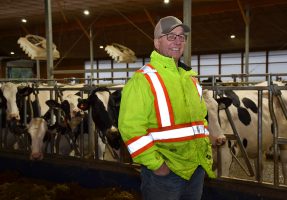
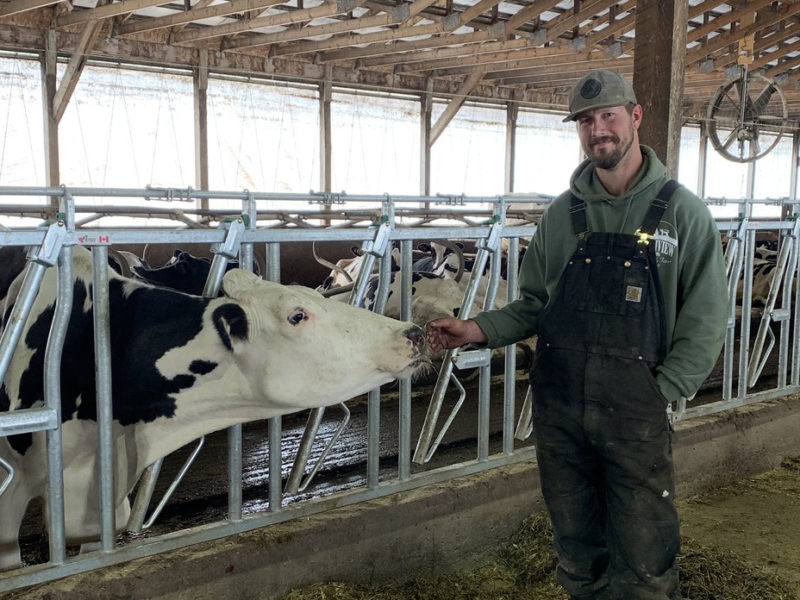
Enderby dairy farmer Michael Haak says it’s incredibly hard to see the milk his cows produce go down the drain. PHOTO / JACKIE PEARAse

May 1, 2020 byJackie Pearase

VANCOUVER – A series of unfortunate events has resulted in a slight downturn for the conventional dairy sector.

On March 19, the BC Milk Marketing Board implemented a series of incentive days for dairy producers in March, April and May after fluid milk sales at grocery stores increased 40% as consumers rushed to stock up in the face of COVID-19.

But the board cancelled the incentive days for April and May on March 31 as demand for cream fell off due to the widespread closure of restaurants and coffee shops. Starbucks, for example, announced March 20 it was closing most of its restaurants in Canada for at least two weeks; they remained closed at press time.

“That demand at grocery stores quickly came backwards. Not all the way back but it came back significantly. And on top of that, the [foodservice] sector essentially shut down,” explains BC Dairy Association general manager Jeremy Dunn.

With BC cows continuing to produce as much milk as before COVID-19 – and wildly altered buying patterns and resulting supply chain issues presenting unique challenges for the sector – producers were told to begin disposing milk on April 3.

“We’re only in a situation where about 3% of the daily milk production (in BC) is being disposed of on farms,” Dunn says. “We know the supply chain is adjusting rapidly. We are hopeful this will be a short-term situation.”

Down the drain

Enderby dairy farmer Michael Haak produces 3,000 litres of milk each day and the directive resulted in four days of hard work going down the drain.

“I was asked by our milk board to dispose of 12,000 litres,” he says. “It’s incredibly hard seeing a product we work so hard to produce not make it into the hands of British Columbians.”

Prior to milk being dumped, an industry-wide partnership led by the BCMMB allowed 10,000 four-litre jugs (40,000 litres) of milk to be donated to Food Banks BC on April 7.

Vedder Transport hauled the milk to dairy processor Saputo, which processed it, and distribution partners Sysco Canada, Associated Grocers and Save-on-Foods made sure Food Banks BC received it.

“When we have those abilities to adjust and we have excess milk and we have excess processing capacity, we’ll work to get that milk into food banks,” Dunn explains. “The last thing a farmer wants to do is to have to dispose of the milk on his farm.”

Additionally, the BCDA and the Mainland Milk Producers Association collectively donated $175,000 to Food Banks BC to purchase food staples that are in short supply.

Dunn says supply chain issues may have resulted in slower delivery times but he has been very vocal about the fact that there is no shortage of milk, meaning buying limits in stores aren’t there because there isn’t enough milk being produced.

“We communicated to government, we communicated through the Dairy Farmers of Canada, the Retail Council of Canada, the Canadian Federation of Independent Grocers saying there’s lots of milk. Please take the signs down,” he said.

Most stores had taken down limits by Easter weekend as the supply chain began adjusting, resulting in an uptick in retail sales. As a result, the milk board rescinded the disposal order on April 14.

“There’s still an excess of cream, which has been repurposed for animal feed or into clean energy through an anaerobic digester,” notes Dunn.

COVID-19 has also resulted in staffing issues for at least one processor. Another on Vancouver Island had to switch from glass to cartons after stores’ refusal to take returns resulted in a shortage of the bottles, Dunn adds.

While conventional milk is tackling its issues, the organic milk sector is going strong.

The specialty product is more reliant on fluid milk sales so reduced foodservice demand has little had impact on sales. In fact, a 3% sleeve which allows producers to ship more milk without buying quota on March 31 continues, something Mara organic dairy farmer Quentin Bruns doesn’t think will last long.

“I kind of thought that during times of tight money that people would view organic milk as a luxury item and I thought we would be the ones to be hit,” he notes. ”I’m surprised by demand increase but not convinced it will stay strong over time.”

Dunn says the rapidly changing situation is being monitored closely across the world.

“It’s a national challenge; it’s an international challenge, really,” he says. “There’s milk being disposed of on farms in Wisconsin, throughout the United States and other countries in the world, including New Zealand. So this is not unique to British Columbia or even to Canada.”
Related Posts

You may be interested in these posts from the same category.

Vet urges dairies to be vigilant against HPAI

Westgen looks beyond challenges

COVID-19 response reviewed

Western dairy groups streamline

New Zealand follows US challenge

Dairy compensation fund opens

Fraser Valley flooding continues

Catastrophic flooding hits Fraser Valley

Cedar Valley footage released

Promotions help secure markets

Quick action on allegations

Cheesemakers felt the heat this summer

Previous Post: « Island farmers renew request for local abattoir
Next Post: Co-op focuses on cutting costs, increasing sales »

Copyright © 2025 Country Life in BC · All Rights Reserved