
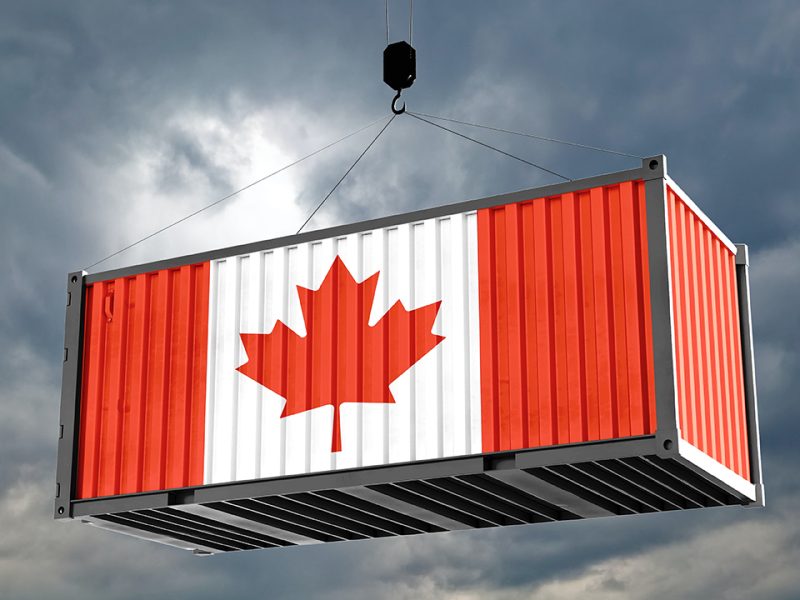
Ottawa has launched public consultations regarding the Canada-US-Mexico free trade agreement (CUSMA) ahead of a planned review by the three countries in 2026.
“We encourage members of the agriculture and agri-food sector to participate in this consultation by sharing their experiences and perspectives on CUSMA’s operation,” Agriculture and Agri-Food Canada said in a memo to stakeholders last week. “Your feedback is invaluable in helping us understand the key areas of the agreement that are working well and potential areas for improvement.”
The current took effect on July 1, 2020, following negotiations with the US during the first Trump administration. The current review comes during a period of trade uncertainty as the current Trump administration deploys tariffs to achieve its policy objectives. CUSMA provisions have shielded large segments of the Canadian economy from tariffs, but next year’s review raises the spectre of changes.
“Trilateral free trade, under CUSMA and NAFTA before it, has provided certainty for business and investors for more than 30 years,” Global Affairs Canada (GAC) said in announcing the public consultation, which runs through November 3. “CUSMA ensures high standards for trade in North America, which is important for Canadian businesses, workers and communities. This includes important outcomes in areas such as … agriculture and agri-food.”
GAC encourages “traditionally underrepresented groups” including small and medium-sized enterprises to provide feedback.
The consultation coincides with the release of a Farm Credit Canada (FCC) analysis estimating that Canada could diversify its trade flows by shifting $11.6 billion worth of agri-food exports to domestic markets as well as existing and new international trade partners. This would reduce Canada’s agri-food exports to the US to $23 billion, making it the recipient of just half of Canada’s total agri-food exports (versus 75% in 2023).
FCC anticipates “buy Canadian” initiatives shifting $2.6 billion worth of product to domestic markets, while foreign markets could receive an additional $9 billion.
All content on this website is copyrighted, and cannot be republished or reproduced without permission.









 Gulf Island entrepreneurs eye food security