• Menu
  • Skip to primary navigation
  • Skip to main content
  • Skip to primary sidebar

Country Life In BC Logo

The agricultural news source in British Columbia since 1915

  • Headlines
  • Calendar
  • Subscribe
  • Advertise
  • About
  • Archives
  • Contact
  • Search
  • Headlines
  • Calendar
  • Subscribe
  • Advertise
  • About
  • Archives
  • Contact
  • Search

Primary Sidebar

Originally published:

APRIL 2023
Vol. 109 Issue 4

Subscribe Now!

Sign up for free weekly FARM NEWS UPDATES

Select list(s) to subscribe to


By submitting this form, you are consenting to receive marketing emails from: Country Life in BC. You can revoke your consent to receive emails at any time by using the SafeUnsubscribe® link, found at the bottom of every email. Emails are serviced by Constant Contact
Your information will not be
shared or sold ever

Stories In This Edition

Back to business
$200 million draws fire
Farmland values ease
Delta farmland gets new lease on life
Editorial: Genuine connection
Back 40: Different worldviews, common ground
Viewpoint: Unlocking an unsustainable trajectory
Crossroads ahead for BC farmland
Ag industry hub sparks regional interest in OK
Show offs
Ag Briefs: New “underused” home tax has a wide impact
Ag Briefs: Richard Ranch hosts bull sale
Ag Briefs: Canadian Foodgrains Bank supproted
Ag Briefs: Poultry leaders recognized
Province steps up surveillance after sting operation
Watershed strategy coulg hang ag out to dry
Flood victims struggle with recovery deadline
Sidebar: Disaster Financial Assistance funds inconsequential for producers
Rising ferry fares sink producer profits
Sidebar: Ferry traffic another hurdle for island producers
Fruit growers keep calm, carry on at convention
Signs of spring
Producers at a loss with elk damages
New AI insights shared at poultry conference
Birds of a feather
Sidebar: Vaccination under discussion
Potato growers buoyed by strong markets
Rising cost of dairy production drives agenda
Export markets focus of upbeat cherry meeting
Sidebar: Provincial survey tracks spread of Little Cherry Disease
Cranberry crop dips in 2022 but growers optimistic
New rules for pesticide applications
Sidebar: Spraying tips
Rodenticide restrictions now permanent
Homemade food rules are too restrictive
Sunflowers are multi-purpose helpers
Boosting value with great apples
Farm Story: Heavy lifting not a retirement plan
New soil assessment tool in development
Woodshed Chronicless: Just when things start going right, stuff happens
BC breeder wins national Jersey award
Jude’s Kitchen: Celebratory foods for friends and family

More Headlines

Follow us on Facebook

Comments Box SVG iconsUsed for the like, share, comment, and reaction icons

6 days ago

... See MoreSee Less

View Comments
  • Likes: 4
  • Shares: 0
  • Comments: 0

Comment on Facebook

6 days ago

On the last day of the BC Organic Conference, Thursday, Molly Thurston of Pearl Agricultural Consulting helped growers learn how to manage bugs such as codling moth, wireworm, and rootworm in organic growing systems. Her talk alongside Renee Prasad included hands-on activities in which participants checked out various traps and examined pests under microscopes. Be sure to look for more upcoming ag events on our online calendar at www.countrylifeinbc.com/calendar/

#BCAg
... See MoreSee Less

On the last day of the BC Organic Conference, Thursday, Molly Thurston of Pearl Agricultural Consulting helped growers learn how to manage bugs such as codling moth, wireworm, and rootworm in organic growing systems. Her talk alongside Renee Prasad included hands-on activities in which participants checked out various traps and examined pests under microscopes. Be sure to look for more upcoming ag events on our online calendar at www.countrylifeinbc.com/calendar/

#BCAg
View Comments
  • Likes: 15
  • Shares: 0
  • Comments: 0

Comment on Facebook

1 week ago

Well-known organic farmer and podcaster Jordan Marr gets interviewed by Country Life in BC’s own columnist and potato mavin Anna Helmer during the opening session of the BC Organic Conference at Harrison Hot Springs yesterday. Sessions run today (Wednesday) and Thursday and include organic and regenerative growing practices and expanding and advocating for the organic sector, all under the background of the newly launched Organic BC banner.

#BCAg
... See MoreSee Less

Well-known organic farmer and podcaster Jordan Marr gets interviewed by Country Life in BC’s own columnist and potato mavin Anna Helmer during the opening session of the BC Organic Conference at Harrison Hot Springs yesterday. Sessions run today (Wednesday) and Thursday and include organic and regenerative growing practices and expanding and advocating for the organic sector, all under the background of the newly launched Organic BC banner.

#BCAg
View Comments
  • Likes: 37
  • Shares: 2
  • Comments: 1

Comment on Facebook

Interested in finding out more about this

3 weeks ago

Today, we remember those who sacrificed their lives or their well-being for our freedom. Lest we forget. ... See MoreSee Less

Today, we remember those who sacrificed their lives or their well-being for our freedom. Lest we forget.
View Comments
  • Likes: 8
  • Shares: 0
  • Comments: 0

Comment on Facebook

1 month ago

FarmFolk CItyFolk is hosting its biennial BC Seed Gathering in Harrison Hot Springs November 27 and 28. Farmers, gardeners and seed advocates are invited to learn more about seed through topics like growing perennial vegetables for seed, advances in seed breeding for crop resilience, seed production as a whole and much more. David Catzel, BC Seed Security program manager with FF/CF will talk about how the Citizen Seed Trail program is helping advance seed development in BC. Expect newcomers, experts and seed-curious individuals to talk about how seed saving is a necessity for food security. ... See MoreSee Less

Link thumbnail

BC Seed Gathering - FarmFolk CityFolk

farmfolkcityfolk.ca

Save the date for our upcoming 2023 BC Seed Gathering happening this November 3rd and 4th at the Richmond Kwantlen Polytechnic University campus.
View Comments
  • Likes: 1
  • Shares: 0
  • Comments: 0

Comment on Facebook

Subscribe | Advertise

The agricultural news source in British Columbia since 1915
  • Email
  • Facebook

Homemade food rules are too restrictive

Rules work against greater food security, critics say

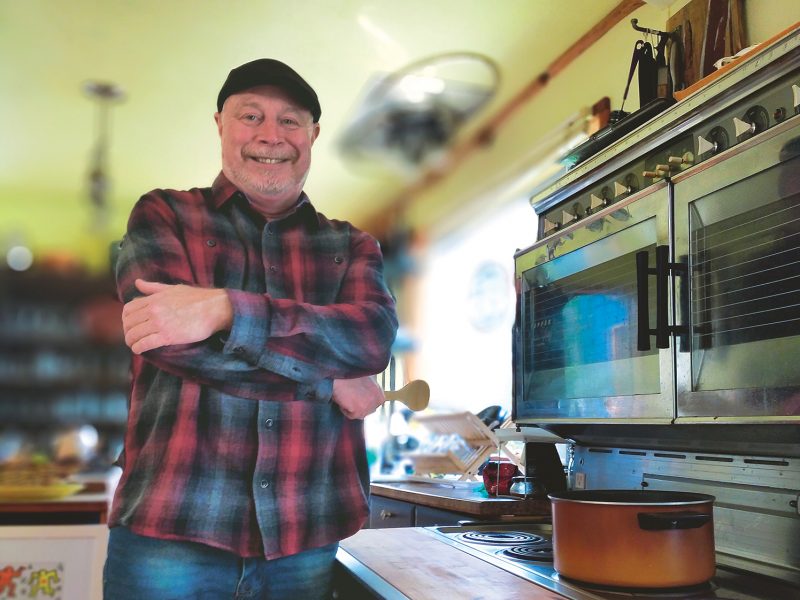
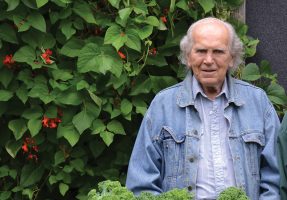
Pender Island’s Michael Cowan wants the BC Ministry of Health to reduce regulations surrounding homemade “cottage foods” as a way to increase food security and support rural and remote communities. SANDRA TRETICK

April 1, 2023 bySandra Tretick

PENDER ISLAND – While Canadian grocery retailers were called to Ottawa in March to account for last year’s record profits amid double-digit food inflation, one micro food producer in the southern Gulf Islands has been lobbying for changes to regulations on the production and sale of cottage foods.

Rising grocery costs and issues of food insecurity irk Pender Island resident Michael Cowan, who used to make soup and bake bread in his home for sale at the local farmers market and to his neighbours. This came to a crashing halt when a food inspector from the Vancouver Island Health Authority (VIHA) contacted him and a second vendor in January.

While bread falls within the low-risk category for food-borne illness and can be baked at home for sale at a market, it cannot be sold from home under the BC Food Premises Regulation.

“That very same loaf of bread that I would sell at the market, I cannot sell to a neighbour who’s housebound and is food insecure,” says Cowan, who calls this distinction illogical. “I don’t understand what’s so bad if [I’m] following food safety guidelines.”

Soup is considered high-risk and selling it involves “far too many hoops,” according to Cowan, who has completed FoodSafe training.

In an email, Island Health says the current provincial food safety regulations and guidelines do not vary geographically within BC. Unless the food product is a lower-risk food in accordance with the BC Temporary Food Market Guidelines and solely offered for sale at a temporary food market, home preparation of food for public sale is not allowed. Health approval or a permit is required and the food must be prepared at an approved commercial kitchen.

When they observe issues of non-compliance, health authorities work with food operators, including vendors and market managers, to ensure compliance. Island Health environmental health officers conduct more than 7,000 restaurant, food facility and store inspections each year, including farmers market vendors.

Dawn Larden, coordinator of the Salt Spring Saturday Market, says VIHA has been working with food vendors to meet requirements so they can sell food that is safe for the public. Vendors at the Tuesday farmers market and Saturday market were invited to a meeting in February to learn about the requirements and have their questions answered. Larden says more meetings will be held if there is demand.

“Both the market and VIHA are behind the food vendors,” says Larden. “We are looking at a common kitchen at the middle school for the vendors to share and use.”

Back on Pender, Cowan says the cost to use the commercial kitchen at the local community hall isn’t viable for his volume of sales and he wouldn’t be able to pass on the added cost to his customers.

Rather than sitting down and shutting up, as some Penderites advised him to do, Cowan has been trying to work within the system to effect legislative changes that would allow people to sell homemade food. He believes this is especially important in rural and remote communities.

“In the last 24 months, the fragility of our food system has become very [apparent],” Cowan adds. “These laws need to change.”

Cowan would like the BC government to take a page from cottage food laws south of the border.

“Every state in the US allows the sale of cottage foods. In all those states, I can sell low-risk foods from my house up to a certain dollar value,” he says. “Most states allow only the sale of shelf-stable foods. In some states, like Wyoming and Utah, they allow people to sell nearly all types of homemade foods, including meals and perishable foods.”

Wyoming’s Food Freedom Act allows “unimpeded access to healthy food from known sources” and introduced the concept of an “informed end-consumer” – the last person to purchase a product. Consumers are informed that the vendor they’re patronizing is not licensed, regulated or inspected, and they can’t resell the product they’re buying.

“I really think we need to look at this through more of a systems lens and recognize that it does impact seniors aging in place, single-parent families, marginalized and vulnerable communities,” says Cowan. “It speaks directly to food security and that is why the [BC] Minister of Agriculture needs to leverage the situation and relax the rules somewhat.”

In an email, the BC Ministry of Health says the existing guideline supports the processing of low-risk foods in home kitchens for sale in temporary markets. Staff are also considering an expansion that includes Internet sales and direct sales from the home. Alberta and Ontario have already been contacted but there’s a lot of work ahead.

There are no plans at this time to allow the sale of “high-risk” foods prepared in a home kitchen.

It’s an issue that BC Liberal agriculture critic Ian Paton has been tackling for years. A year ago, he made a second attempt to have home-based foods acknowledged through a private member’s bill, the Home-Based Craft Food Act. It failed to move beyond first reading but he received a number of phone calls from people he didn’t know who thanked him for raising the issue.

Not one to back down, Paton is planning to bring it forward again if the situation doesn’t change, next time with a focus on high-risk foods.

“We want to try and get people in agriculture growing food that they want to turn into an end product, especially in our rural areas where you’re hundreds of kilometres away from a commercial kitchen,” Paton says.

Meanwhile, the House of Commons Standing Committee on Agriculture and Agri-Food has been looking into global food insecurity and food price inflation.

During questioning, Galen Weston, president of Loblaw Companies Ltd., whose chains include Real Canadian Superstore, No Frills and Wholesale Club, denied that grocery chain profits are the reason behind food inflation.

“Food inflation is a global problem,” said Weston, adding that grocery retailers should be able to make reasonable profits, such as $1 on $25 of sales, or 4% of sales.

Pender Island was not immune to skyrocketing grocery prices this past winter.

“I had a cauliflower over $8. In Sidney the next day it was three bucks. A cucumber was $7 this winter and in Sidney it was $2,” says Cowan. “We’re facing inflation in Canada that’s reaching a four-decade high. People are feeling the pinch.”

Canada’s Food Price Report predicts a 5% to 7% food price increase in 2023, with the most substantial increases in vegetables, dairy and meat. Canadians will continue to feel the effects of high food inflation and insecurity. Contributing factors include climate change, supply chain disruptions, carbon taxes, geopolitical factors and rising transportation costs.

The report is an annual collaboration between research partners Dalhousie University, the University of Guelph, the University of Saskatchewan and UBC.

Related Posts

You may be interested in these posts from the same category.

Cowichan title decision creates uncertainty

Indigenous agriculture faces regulatory reality

Popham back as ag minister

Gala honours agricultural leaders

BCAC lobbying event positive

Province consults on agritech

Province doubles vet seats

Province opens ALR to agritech development

ALR opened for agritech

Province allows secondary homes

Government needs to step up farm support

Previous Post: « EcoFarm rebrands, expands mandate
Next Post: Tulip grower makes the shift to agritourism »

Copyright © 2025 Country Life in BC · All Rights Reserved