• Menu
  • Skip to primary navigation
  • Skip to main content
  • Skip to primary sidebar

Country Life In BC Logo

The agricultural news source in British Columbia since 1915

  • Headlines
  • Calendar
  • Subscribe
  • Advertise
  • About
  • Archives
  • Contact
  • Search
  • Headlines
  • Calendar
  • Subscribe
  • Advertise
  • About
  • Archives
  • Contact
  • Search

Primary Sidebar

Originally published:

DECEMBER 2020
Vol. 106 Issue 12

Subscribe Now!

Sign up for free weekly FARM NEWS UPDATES

Loading form…

Your information will not be
shared or sold ever

Stories In This Edition

Abattoirs eye pandemic funding

Water fight

Turkey sales strengthen

Orchardists forge ahead following late-season freeze

Editorial: Back to the future

Back 40: Pandemic gives leaders a bosst, but what about farmers

Viewpoint: BC agriculture set to ead food conversations

Kamloops farmers push back on irrigation plan

Sidebar: A new tool for municipalities

ILT puts broiler farms on the defensive

Snowed under

Antimicrobial phase-out delayed

BC Tree Fruits makeover gets green light

Keremeos supply store closes

Province rethinks land matching pitch

Ag Briefs: Land commission appts announced

Ag Briefs: Blueberry council set for elections

Ag Briefs: Award honours young agrologist

Ag Briefs: Horticultural loss

Ag in the Classroom prepares for change

Beekeepers go virtual for 100th anniversary

Sidebar: Pandemic puts pause on bee research

Island farmers frustrated by ferry waits

Slaughter limitations forcing producers out

Livestock specialist has close ties to ranching

Cattle take lead in fire prevention efforts

New food hub planned for Salmon Arm

Passion and schooling pay off for young grower

Cleanfarms looks into ag plastic recycling program

Robotic strawberry picker on the horizon

Agritech venture aims to unite data management

Sidebar: Microsoft moves in

Up in smoke

New tool helps farmers avoid nutrient runoff

Peace region weather network expanded

Sidebar: Adaption network hosts webinar series

Tarps provide targeted alternative to cover crops

Orchardists making greater use of decisionaid system

Asian parasitoids come to the rescue of berry growers

Research: Keeping cows’ reproductive cycle on track

Agroforestry project makes farm viable

Young farmers encouraged to cultivate resilience

Farm Story: A change of season brings a change of mind

Universal broadband fund cheers farmers

Woodshed: New beginnings for Deborah and Susan

4-H members finish season at virtual Ag Expo

Jude’s Kitchen: Classic festive appies for the holidays

More Headlines

Follow us on Facebook

Comments Box SVG iconsUsed for the like, share, comment, and reaction icons

6 days ago

A BC Forest Practices Board investigation has found overgrazing has damaged grasslands in the Coutlee Range Unit near Merritt — and the range-use plan meant to prevent it was unenforceable. With complaints about overgrazing on the rise and grasslands covering just 1% of BC's land mass, the findings raise fresh questions about how the province manages one of its most vulnerable — and valuable — food-producing ecosyste#BCAg#BCAg ... See MoreSee Less

Link thumbnail

Board finds overgrazing rules unenforceable unmeasurable

www.countrylifeinbc.com

MERRITT – A BC Forest Practices Board investigation has found instances of non-compliance related to overgrazing have damaged open grasslands in the Mine pasture, part of the Coutlee Range Unit near...
View Comments
  • Likes: 6
  • Shares: 6
  • Comments: 6

Comment on Facebook

Several ranchers in recent years have gone into temporary non use on that range , so that means the grass should grow. But drought conditions/lack of rain and snow don’t allow that to happen . Dried up springs , creeks waterholes in various pastures add to over grazing where there is water , as livestock and everything else stay close to the water source . So even though less cattle are on it , over grazing appears. There is a large volume of horses on it 365 days/year which is wrong ! They pull grass right out of the ground when it’s just trying to grow ,, opens the door for weeds to grow in. That don’t help it. Aging infrastructure ( fences) laying on the ground, pipe line building , ( lack of commitment to fence maintenance) amongst all users contributes also to over grazing. Recreational atv users leaving gates open between pastures allows livestock to go back or ahead in pastures also expidites over grazing. Logging ( bcts) has no problem laying out cut locks on both sides of a fence , then it gets smashed down during logging and they don’t take responsibility to stand it back up or clean the cattle gaurds out when they are done , that happened 4 years ago on pasture 5 up there . I bet it is still not fixed . There are lots of contributing factors to the problem.

Tragedy of the commons.

I looked through the report. I saw nothing about the effects of noxious weeds on productive grasslands. This particular area is vulnerable because of the Ministry’a efforts to diversify the use of the Grasslands.

This pasture is under tremendous pressure not only from cattle but from irresponsible local residents who treat it as a landfill dumping all manner of household debris here. And don't even get me started on the mud bogging and camping in sensitive riparian areas. The feral horses are in this pasture 365 days a year just hammering it. Would sure be nice to see some enforcement action on people who are intentionally ripping up the grasslands and riparian areas. Cattle could be a valuable resource for rebuilding soils and native grasses in this area with the help of electric fencing and/or e-collars. The humans will be harder to manage.

The Forest and Range Practices Act was written by lawyers for global forest licencee shareholders. Results-based = unenforceable.

Also, can we talk about the impact of a pipeline being built through the middle of this field for multiple years?

View more comments

1 week ago

East Kootenay rancher Randy Reay is digging a new well after two natural water sources dried up on his Crown tenures. A new Living Lakes Canada assessment found 15% of mapped aquifers in the region are high-priority for monitoring, yet 80% of those go unmonitored. With over 48% of BC's provincial observation wells reporting below-normal groundwater levels, ranchers and researchers are sounding the alarm on water security. The story is in our March edition, and we've posted it to our website thi#BCAgk.

#BCAg
... See MoreSee Less

Link thumbnail

Water woes: groundwater under pressure across BC

www.countrylifeinbc.com

JAFFRAY – As a young boy growing up in the Kootenay-Boundary region, Randy Reay never expected to run out of water. But this year, in mid-February, his fields are bare. There is no snow halfway up t...
View Comments
  • Likes: 8
  • Shares: 7
  • Comments: 1

Comment on Facebook

Jaffrey is in the east Kootenays not kooteney boundary

2 weeks ago

BC farmers are bracing for prolonged higher input costs as war in the Middle East drives up fuel and fertilizer prices. Nitrogen fertilizer costs were already climbing before the Iran conflict began, with prices still roughly 60% above pre-pandemic levels. Farm Credit Canada warns that unlike 2022, strong commodity prices may not offset rising costs this time. Local suppliers expect supply challenges and further price increases ahead.

#BCAg
... See MoreSee Less

Link thumbnail

Fertilizer prices on the rise

www.countrylifeinbc.com

War in the Middle East has delivered a generational shock to energy prices, meaning BC farmers can expect a prolonged period of higher costs not just for fuel but also for fertilizer.
View Comments
  • Likes: 2
  • Shares: 1
  • Comments: 0

Comment on Facebook

2 weeks ago

... See MoreSee Less

View Comments
  • Likes: 1
  • Shares: 0
  • Comments: 0

Comment on Facebook

2 weeks ago

Cameron Stockdale is the new executive director of provincial farm safety organization AgSafeBC. Find out more in this week's Farm News Update from Country Life in B#BCAg#BCAg ... See MoreSee Less

Link thumbnail

New leadership at AgSafe BC

www.countrylifeinbc.com

Cameron Stockdale is the new executive director of provincial farm safety organization AgSafeBC, succeeding Wendy Bennett. Bennett left AgSafeBC in September 2025, following 12 years with the…
View Comments
  • Likes: 5
  • Shares: 1
  • Comments: 0

Comment on Facebook

Subscribe | Advertise

The agricultural news source in British Columbia since 1915
  • Email
  • Facebook

Kamloops farmers push back on irrigation plan

System upgrades could cost $14 million

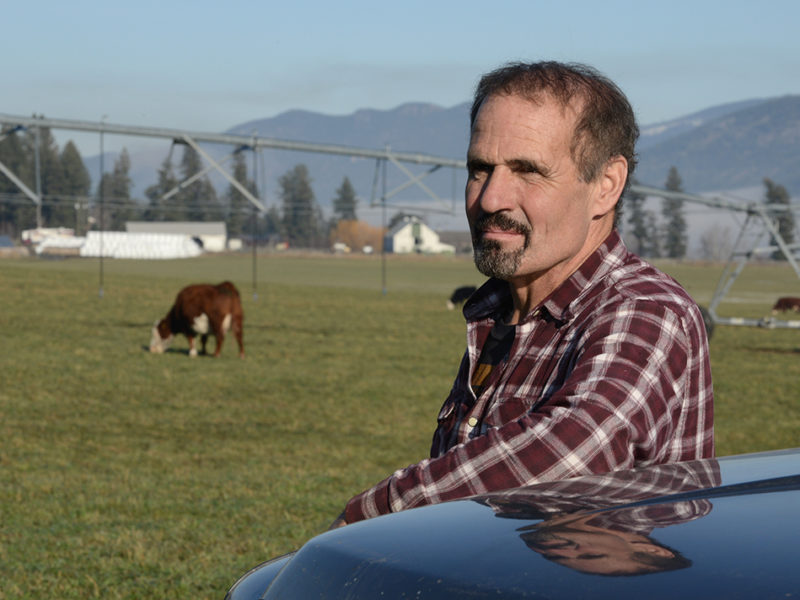
WATER FIGHT: A $14 million upgrade of the Noble Creek Irrigation System in Kamloops has been shelved after property owners like Jon Peachey took exception to the plan. The city would pay $2.8 million of the project, leaving $11.2 million to be paid by the 47 property owners in the service area. The proposal would have left Peachey on the hook, he figures, for just under $2.6 million. The story is on page 7. PHOTO / MURRAY MITCHELL

December 1, 2020 byJack

KAMLOOPS – A group of irrigation water users in Kamloops received a reprieve on a city plan to undertake a $14 million system upgrade that would leave users on the hook for the bulk of that cost.

Representatives of the Noble Creek Irrigation System petitioned Kamloops city council November 3 to cancel the local area service (LAS) the city planned to implement to recover 80% of the project’s cost from NCIS users.

Kamloops had committed to funding $2.8 million of the project but the 47 property owners within the service area would need to pay their share of the remaining $11.2 million based on parcel size.

The cost per property ranged from just over $5,000 to over $1.9 million to be paid as a one-time sum or as an annual payment on the parcel’s property tax over 30 years, with interest accruing on the amount owing.

Kamloops cattle rancher Jon Peachey says the interest would bankrupt his 248-acre farm.

“I am significantly impacted with the cost of this because I can only irrigate arable acres but I would have to pay for the total acreage if the LAS procedure went through,” he says. “The proposed LAS would cost me just under $2.6 million. With interest, by my calculation, payment for irrigation water would be approximately $175,000 per year if current water charges remain the same and the LAS is implemented. This translates to $1,400 per acre per year for the next 30 years, which makes my farm completely non-viable. … There’s no hope of competing in that circumstance; it’s a hopeless situation.”

Ailing system

The process around the NCIS began in 2016 when city staff requested council’s direction on the future operation of the financially failing and aging system, some of it dating back to 1968. Much of the system is constructed with asbestos cement pipe that has an approximate lifespan of 60 years.

Kamloops-based engineering firm Urban Systems released a condition assessment of the system to Kamloops council in mid-February. It provides recommendations for repairs and upgrades to the system including a new concrete reservoir at a cost of almost $4.2 million.

Users received notice of the need for the upgrades in a letter from the city on October 21. The letter gave the option of opposing the LAS via a counter-petition.

“The last time we were consulted was July 31, 2019. It’s been 15 months and then we received another crummy letter,” says farmer Adam Woodward, speaking on behalf of 40 NCIS users.

He says the group could easily defeat the LAS through the assigned process.

“We’re confident that we can, however it’s not a good use of time and taxpayers’ money,” says Woodward of the family-run Woodward Christmas Trees and Woodward Cider Co. “More importantly, if we don’t reject it now, it says we do accept the process and associated costs to the users, which we currently don’t.”

Woodward says the Urban Systems report provides good information on the system but users take exception to the city going ahead with the entire project regardless of people’s ability to pay.

“It appeared that city staff just grabbed the report and elected to choose all the optional items that were in there,” he notes. “If this goes forward, it will simply put farmers out of business, devalue our land, and how does that benefit the community?”

Riverbend Orchard co-owner Carole Gillis applauds the city for its work to offer winter stock water to NCIS users but says more effort is needed around consultation with farmers.

She suggests the creation of an agricultural advisory committee as recommended in the city’s agricultural area plan.

“I would suggest that if that an (AAC) had been established, we might not find ourselves in this place because I would argue that the farmers represented on the (NCIS) collectively embody every single aspect of the strategies and goals of your local agricultural area plan. And we can only do so if we have access to irrigation as the plan acknowledges.”

Debbie Woodward of Woodward Christmas Trees says the system is subsidized by about $130,000 annually because rates have not increased since 2001.

“If we’d had an increase of even 3% per year, the revenue you are enjoying now would actually be double what it is today.”

NCIS requested that council halt the LAS process, create an AAC, do an agricultural economic assessment on the land, enhance infrastructure management, and seek funding from provincial and federal levels of government for a portion of the project costs.

Influenced by the arguments, council voted to stop the LAS process on November 3.

Clunky process

“This has been a bit of a clunky process,” notes councillor Arjun Singh. “I understand the angst and respect how the users feel hearing about this at a time when they feel they haven’t had a lot of time to work with it and touch and feel what we’re proposing here. We have been trying very hard to figure out how to make this work.”

Councillor Bill Sarai says it is important for them to support local agriculture.

“I want you guys to succeed. I don’t want a farm to go under for a financial reason. I don’t think that’s what we’re here for. We need to find a solution and I think that’s what local governments are for.”

Mayor Ken Christian welcomes the creation of an AAC to encompass the numerous farming communities within the Kamloops region including Heffley Creek, Knutsford, Campbell Creek and Barnhartvale.

“I think there’s enough interest there that we could have an engagement group that would feed information through to council through a community relations committee,” he says.

Christian says the city is constantly seeking outside funding for such projects but much of the funds offered by higher levels of government are for domestic, not agricultural water projects.

He takes exception to NCIS users comparing Kamloops agricultural water rates to those in Kelowna. He says NCIS users have a separate domestic potable water system (created in 2010 at a cost of $5.5 million) whereas the Kelowna systems are shared by domestic and agricultural users.

Christian says it is unfair for the NCIS system to be subsidized by domestic water rates because none of Kamloops’ other agricultural water systems are subsidized.

He suggests that NCIS users consider taking over the system and undertake repairs as needed, a plan the city cannot follow because it is obligated to bring the system up to the engineering standard.

“There’s a bit of a disconnect because the users out there wouldn’t normally go for that complete reconstruction; they would probably do something that was much less expensive. They have the ability to do that; we unfortunately don’t,” he explains.

After reversing the LAS process, the city released decisions made at closed council meetings leading up to the recommendation to implement the LAS process.

Christian instructed city staff that further NCIS discussions be open to the public.

“I want to have that discussion occur in an open session of council so it’s like any other matter that comes before us on a regular basis until it’s resolved,” he says. “The one thing I know for sure is that system will fail. What I don’t want when it does fail is people pointing fingers saying you didn’t do this or you didn’t do that. I want to have good, frank, open discussions about what the future is. We can’t ignore this problem.”


Related Posts

You may be interested in these posts from the same category.

Watershed strategy could hang ag out to dry

No licence, no problem

Spallumcheen plans agri-industrial zone

Water licence angst

Farm plans offer new opportunities for ranchers

Kelowna water rates proposed

Previous Post: « Province rethinks land matching pitch
Next Post: Abattoirs eye pandemic funding »

Copyright © 2026 Country Life in BC · All Rights Reserved