• Menu
  • Skip to primary navigation
  • Skip to main content
  • Skip to primary sidebar

Country Life In BC Logo

The agricultural news source in British Columbia since 1915

  • Headlines
  • Calendar
  • Subscribe
  • Advertise
  • About
  • Archives
  • Contact
  • Search
  • Headlines
  • Calendar
  • Subscribe
  • Advertise
  • About
  • Archives
  • Contact
  • Search

Primary Sidebar

Originally published:

JANUARY 2026
Vol. 112 Issue 1

Subscribe Now!

Sign up for free weekly FARM NEWS UPDATES

Select list(s) to subscribe to


By submitting this form, you are consenting to receive marketing emails from: Country Life in BC. You can revoke your consent to receive emails at any time by using the SafeUnsubscribe® link, found at the bottom of every email. Emails are serviced by Constant Contact
Your information will not be
shared or sold ever

Stories In This Edition

Sumas floods again

Winter blues

Biosecurity holds line against HPAI

Task force presents blueprint for growth

Soaking it up

Editorial: Next year is here

Back 40: What a difference a year can make

Viewpoint: Collaboration key to shaping the future of ag

Different year, similar flood

BC milk testers on strike over mileage

Ag Briefs: Co-op windup delayed by legal wrangling

Ag Briefs: Shuswap watershed funding available

Ag Briefs: CFIA reports low honey adulterations

Collaboration takes centre stage at dairy meetings

Lawsuits drive ranchers call for DRIPA’s repeal

Ranchers face off against BC Hydro

Monette properties on the auction block

Preview: Pacific Ag Show tackles farming challenges

Preview: Growing knowledge

Islands Ag Show builds resilience for farmers

Organic BC launches with sector conference

Sidebar: Organic industry awards

Irrigation set to play a larger role in BC

BC blueberry growers set council priorities

Farm Story: January farm planning: all talk, no change

BC women break barriers in agriculture

Proper tools enhance worker safety, well-being

Woodshed: Sparks fly as Christopher and Astrid meet

BC 4-H scores hat treick at the Royal Winter Fair

Jude’s Kitchen: Make January fun with new foods, flavours

More Headlines

Follow us on Facebook

Comments Box SVG iconsUsed for the like, share, comment, and reaction icons

5 days ago

The Canadian Food Inspection Agency is preparing to implement changes to its livestock traceability rules that will include mandatory computer reporting within seven days on movement of animals for veterinary appointments, community pastures, exhibitions, carcass and on-farm disposal and the births and deaths of every animal on your farm. Writer Tom Walker first brought these changes to the attention of our readers back in June 2023. We've posted his story to our website:

www.countrylifeinbc.com/cfia-proposes-traceability-updat#BCag#BCag
... See MoreSee Less

The Canadian Food Inspection Agency is preparing to implement changes to its livestock traceability rules that will include mandatory computer reporting within seven days on movement of animals for veterinary appointments, community pastures, exhibitions, carcass and on-farm disposal and the births and deaths of every animal on your farm. Writer Tom Walker first brought these changes to the attention of our readers back in June 2023. Weve posted his story to our website: 

https://www.countrylifeinbc.com/cfia-proposes-traceability-updates/

#BCag
View Comments
  • Likes: 11
  • Shares: 21
  • Comments: 16

Comment on Facebook

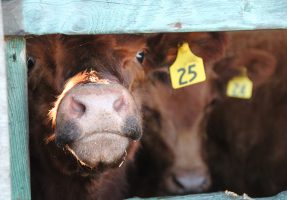
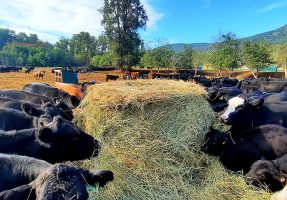
I love hpw the cow in the picture hasn't even got a RFID tag in it but I digress. We can not read the link, it says "we are not permitted to read drafts". Please post again with the correct link.

Dairy farmers having been doing this several years. The app we use has become quite simple to use

Including equine?

Premise ID was slowly rolled through the country, voluntary then mandatory. Transparency and 'Consultation' has been light. Those who tried to bring this for discussion a couple years ago, because of forseen overreach, were quite often labeled conspiracy theorists and that it wasnt meant to be so heavily regulated and controlled. Gardens and seeds will be next. "Invasive species" reporting, check out the plants medicinal properties. Read the BC intentions papers. The premise ID that already heavy regulated commodities have claims to be treated different in the intentions papers on page 8. www2.gov.bc.ca/assets/gov/farming-natural-resources-and-industry/agriculture-and-seafood/food-saf...

Says i am "not allowed to preview draft".

Also concerning is the part on compliance...they can 'stumble onto' any farm and if you're not complying there are consequences.

When the CFIA stumbles into the wrong place compliance will be met with civil engagement

Says I can't preview draft

This is government overreach - Do Not Comply!

Do not comply

Fu

As if the price of beef isn't bad enough for consumers,,,,,be prepared to be gouged some more now

Ridiculous!!

Let's hold up on the beef exports tell we can get our own house in order... we need to deregulated, cheapen up the supply chain back into a 5 buck a pound rage so the good people canada can eat healthy food.. fuck your bean diets, that's retarded

This, along with the majority of new legislation pertaining to any type of farm, is a blatant squeeze on any sort of small, alternative agricultural venture. I am a massive believer in working together and sharing resources and costs and solutions - do not get me wrong - but this and the water registration among others, is an overreach (at most generous) and an absolute killer to smaller, local initiatives that LITERALLY save lives during extreme events. There is ONE ROAD into and out of my community. We don’t need or want some sort of backlogged government response when shit goes sideways. We want the ability AND SUPPORT to provide for our communities without penalty when things go badly. We want to produce sustainability for our communities. We live here, we work here, we want to STAY HERE. Stop making it harder.

Country Life in BC the link doesn't work

View more comments

2 weeks ago

BC's minimum piece rates for 15 hand-harvested crops increased 2.6% on December 31. Crops include peaches, apricots, brussels sprouts, daffodils, mushrooms, apples, beans, blueberries, cherries, grapes, pears, peas, prune plums, raspberries and strawberries. Farm-worker piece rates in BC were increased by 11.5% in January 2019 and 6.9% in December 2024. BC’s current minimum wage sits at $17.85 per hour.

#BCAg
... See MoreSee Less

BCs minimum piece rates for 15 hand-harvested crops increased 2.6% on December 31. Crops include peaches, apricots, brussels sprouts, daffodils, mushrooms, apples, beans, blueberries, cherries, grapes, pears, peas, prune plums, raspberries and strawberries. Farm-worker piece rates in BC were increased by 11.5% in January 2019 and 6.9% in December 2024. BC’s current minimum wage sits at $17.85 per hour. 

#BCAg
View Comments
  • Likes: 10
  • Shares: 0
  • Comments: 2

Comment on Facebook

I'm not sure what they're telling us. Did peace rates have to increase so that Farm workers could make minimum wage?

They deserve it, but the general public will be whining about increased prices in the stores. Will need to make more information average to the g.p.

2 weeks ago

... See MoreSee Less

View Comments
  • Likes: 12
  • Shares: 0
  • Comments: 0

Comment on Facebook

3 weeks ago

... See MoreSee Less

View Comments
  • Likes: 7
  • Shares: 0
  • Comments: 0

Comment on Facebook

1 month ago

Water volumes from the Nooksack River are at levels similar to 1990 and 2021, but the province says flows should peak at 10pm tonight. The shorter duration, as well as conditions in other watercourses within the watershed and performance of flood protection infrastructure should avoid a catastrophe on the scale of 2021. However, several landslides mean road closures have once again effectively isolated the Lower Mainland from the rest of the province.

#BCag
... See MoreSee Less

Water volumes from the Nooksack River are at levels similar to 1990 and 2021, but the province says flows should peak at 10pm tonight. The shorter duration, as well as conditions in other watercourses within the watershed and performance of flood protection infrastructure should avoid a catastrophe on the scale of 2021. However, several landslides mean road closures have once again effectively isolated the Lower Mainland from the rest of the province.

#BCAg
View Comments
  • Likes: 9
  • Shares: 3
  • Comments: 1

Comment on Facebook

Family living in Sumas WA say it's very much like '21. They have the same amount of water in their house as last time.

Subscribe | Advertise

The agricultural news source in British Columbia since 1915
  • Email
  • Facebook

Lawsuits drive ranchers’ call for DRIPA’s repeal

BC Cattlemen’s backs calls for a reset on reconciliation

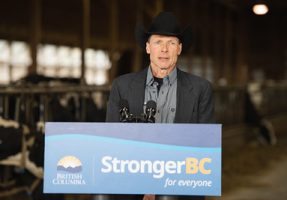
BC Cattlemen's president Werner Stump says producers are worried about DRIPA overpowering other provincial legislation and suggests repealing the act to create an economically sustainable solution for all British Columbians. BC CATTLEMEN’S ASSOCIATION

January 1, 2026 byTom Walker

KAMLOOPS – A raft of lawsuits is a symptom of the province’s dysfunctional reconciliation process, ranchers say, and point to the need for a reset.

Exhibit A is a 10-year-old land claim the Stk’emlupsemc te Secwepemc Nation (SSN), made up of the Tk’emlúps and Skeetchestn bands, filed in BC Supreme Court in 2015 to assert Aboriginal title over 1.25 million hectares of BC’s Interior, including the entire city of Kamloops and Sun Peaks ski resort.

The move was originally seen as pushback against plans for the controversial Ajax mine just south of Kamloops. The province declined to issue an environmental certificate for the mine in December 2017, but the land claim continued to slowly make its way through the courts with a case conference being held as recently as September. No date has been set for the trial.

But following BC Supreme Court‘s decision in August recognizing the Cowichan Tribes’ Aboriginal title over 300 hectares of land in Richmond, the case has come back to the fore.

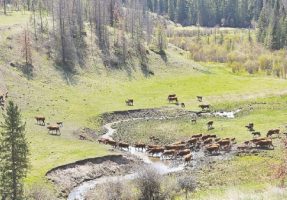
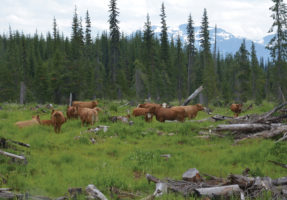
Cattle ranching is the main agricultural activity within the SSN claim area. Ranch operations have a home base with fee simple title, but the backbone of their operations is range land tenure. Depending on the conditions, cattle can spend from six to 10 months grazing Crown land.

To reassure ranchers in the wake of the Cowichan Tribes decision, the Tk̓emlúps te Secwépemc and the City of Kamloops released a joint statement on December 12.

“The fundamentals of property ownership in Kamloops remain unchanged, and day-to-day life continues as normal,” it states. “The SSN Aboriginal title claim remains in early stages. No declarations have been made, and the claim does not seek private or city-owned land.”

But a precedent exists in the Supreme Court of Canada’s 2014 decision recognizing Aboriginal title over lands claimed by the Tsilhqotʼin Nation. While no private property has been affected, the Tsilhqotʼin hold Aboriginal title to land that includes grazing tenures previously held between ranchers and the provincial government, and they have been impacted.

Grazing licences within the Tsilhqot’in title area have been fully transferred to the nation for administration. Tenure length has changed from 25 years to three years, and the BC Cattlemen’s Association says there have been added costs for tenure administration.

BC Cattlemen’s assistant general manager Elaine Russell says that cattlemen hold some 200 Crown tenures within the SSN claim area, which include grazing leases, grazing licences and woodlots. Changing them could have a significant effect on a rancher’s business.

Kamloops Stockmen’s Association president Paul Devick, also a director with BC Cattlemen’s, ranches just north of Kamloops on the way to Sun Peaks, property his family has tended for 120 years.

The Devicks have fee-simple title to 4,500 acres and a licence to use Crown land for range that covers 40,000 acres. That land base supports a herd of 970 cow-calf pairs, a 1,000-head feedlot and a provincially inspected abattoir.

“It’s the uncertainty that’s the biggest problem,” says Devick. “One day I read something that is very worrisome, and the next day the government says something else.”

The way to settle this is through all parties working together, not through litigation and statements in the media, he told Country Life in BC.

“As far as I am concerned, this whole process right now is driving a nail right through reconciliation,” says Devick.

He notes that any change in the tenure system could affect the range his cows use, and their access to water.

“If any of our fee-simple land is affected, we have nothing; we can’t grow the feed for our cows, and we can’t bank for our business,” he says.

The uncertainties increased following a December 5 decision from the BC Court of Appeal declaring BC’s Mineral Tenure Act, and specifically, the online mineral claim-staking system it permits, is inconsistent with the Crown’s duty to consult as outlined in the province’s Declaration of the Rights of Indigenous Peoples’ Act (DRIPA).

The impacts could be far-reaching, as it sets up all provincial statutes to fall.

BC Cattlemen’s president Werner Stump says that having DRIPA “overpower” all other provincial legislation has producers worried.

“Absolutely, this could affect all other acts and regulations we work under, from the tenure application process to water licences, dam registration, even replacing burned-out fencing,” Stump points out. “Every piece of legislation is no longer what we have come to understand.”

Reconciliation is very important to Stump and all members of BC Cattlemen’s, but he says there’s a larger issue in play.

“What direction are we going here in the province?” he asks. “When we are looking at government-to-government decision-making and having First Nations as equal partners with our government, we are putting leaders of a small percentage of the population whom the majority did not elect and are not responsible to us on an equal footing with leaders that we did elect. How is that the definition of democracy?”

It also deepens division rather than contributing to reconciliation.

“We are not reconciling different cultures in society with the pathway we are following now,” he says.

BC Premier David Eby is on record saying he will consider amending DRIPA to avoid it being used as a tool to strike down other legislation.

“That might be one way to go,” Stump says. “But I suggest there is a much cleaner way. We need to repeal DRIPA and start from scratch and put together a solution that is economically sustainable and works for all of us here in British Columbia.”

Related Posts

You may be interested in these posts from the same category.

Breathing new life into historic ranches

Corn helps improve soil but fails grazing test

Province lacks reconciliation roadmap: ranchers

Beef herd drops

Feed available but stocks low

BC Cherry holds AGM

Land Act changes deferred

Land Act firestorm

Dam violations face fines

Rangeland forage allocation studied

Communication critical to solve water issues

Investment foundation grows

Previous Post: « CFIA proposes traceability updates

Copyright © 2026 Country Life in BC · All Rights Reserved