
• Menu
  • Skip to primary navigation
  • Skip to main content
  • Skip to primary sidebar

Country Life In BC Logo

The agricultural news source in British Columbia since 1915

  • Headlines
  • Calendar
  • Subscribe
  • Advertise
  • About
  • Archives
  • Contact
  • Search
  • Headlines
  • Calendar
  • Subscribe
  • Advertise
  • About
  • Archives
  • Contact
  • Search

Primary Sidebar

Originally published:

January 2018
Vol. 104 Issue 1

Subscribe Now!

Sign up for free weekly FARM NEWS UPDATES

Loading form…

Your information will not be
shared or sold ever

Stories In This Edition

Peace will be flooded

Groundwater fee postponed

Standing strong

Sidebar: New year, new treaty

No quick fix for contaminated acquifer

Editorial: Watershed moment

Back 40: To better times ahead: hope is in our DNA

OpEd: BC agriculture needs its foreign workers

Dairy production meeting quota increases

Holstein Breeders celebrate progressive year

National unity a concern for dairy farmers

Producers waiting on FIRB review

Challenges, changes face young farmers

Outstanding effort

Steele steps down as fruit growers’ president

Sidebar: BCFGA adopts new bylaws

Lettuce build

BC to bear brunt of food price increases in 2018

Risk assessment research gets funding boost

New year, new start

Profitability should be to the goal of marketing

Sidebar: Seven deadly sins of (just about any) marketing

Abbotsford hosts AgRefresh open houses

Labour elusive for nursery sector

Ag show celebrates 20 years and growing

Hort course the backbone of show

Sidebar: Public trust workshops

Dairy, innovation expos part of show

Expo starts with tours of diverse dairy operations

Forestry, forage co-exist at demonstration site

Opportunities for Cariboo grass-fed beef

Sustainable success

Sidebar: First grad for ranching program

OYF winners show a willingness to innovate

Research: Space program elevates pot

research to new high

Food recovery benefits livestock farmers

Sidebar: Alternative connections

New objectives come with new WestGen barn

Surrey business group recognizes ag leaders

Greenhouse safety protocols save the day

Goat farmers get behind new dairy association

Sidebar: Dairy goat owners learn from one another

Scrapie eradication possible with certification program

National EFP program still a work in progress

Cutting-edge technology could hold key to varroa mites

Sidebar: What is RNAi?

Community gaming grants open February 1

Wannabe Farmer: Overcoming obstacles

Sweet smell of success on just eight acres

Sidebar: Strength in numbers

Sidebar: Award-winning shift in business

Woodshed Chronicles: Henderson figures any

idiot can drive a tractor

Jude’s Kitchen: Pretty edible

More Headlines

Follow us on Facebook

Comments Box SVG iconsUsed for the like, share, comment, and reaction icons

6 days ago

A BC Forest Practices Board investigation has found overgrazing has damaged grasslands in the Coutlee Range Unit near Merritt — and the range-use plan meant to prevent it was unenforceable. With complaints about overgrazing on the rise and grasslands covering just 1% of BC's land mass, the findings raise fresh questions about how the province manages one of its most vulnerable — and valuable — food-producing ecosyste#BCAg#BCAg ... See MoreSee Less

Link thumbnail

Board finds overgrazing rules unenforceable unmeasurable

www.countrylifeinbc.com

MERRITT – A BC Forest Practices Board investigation has found instances of non-compliance related to overgrazing have damaged open grasslands in the Mine pasture, part of the Coutlee Range Unit near...
View Comments
  • Likes: 6
  • Shares: 6
  • Comments: 6

Comment on Facebook

Several ranchers in recent years have gone into temporary non use on that range , so that means the grass should grow. But drought conditions/lack of rain and snow don’t allow that to happen . Dried up springs , creeks waterholes in various pastures add to over grazing where there is water , as livestock and everything else stay close to the water source . So even though less cattle are on it , over grazing appears. There is a large volume of horses on it 365 days/year which is wrong ! They pull grass right out of the ground when it’s just trying to grow ,, opens the door for weeds to grow in. That don’t help it. Aging infrastructure ( fences) laying on the ground, pipe line building , ( lack of commitment to fence maintenance) amongst all users contributes also to over grazing. Recreational atv users leaving gates open between pastures allows livestock to go back or ahead in pastures also expidites over grazing. Logging ( bcts) has no problem laying out cut locks on both sides of a fence , then it gets smashed down during logging and they don’t take responsibility to stand it back up or clean the cattle gaurds out when they are done , that happened 4 years ago on pasture 5 up there . I bet it is still not fixed . There are lots of contributing factors to the problem.

Tragedy of the commons.

I looked through the report. I saw nothing about the effects of noxious weeds on productive grasslands. This particular area is vulnerable because of the Ministry’a efforts to diversify the use of the Grasslands.

This pasture is under tremendous pressure not only from cattle but from irresponsible local residents who treat it as a landfill dumping all manner of household debris here. And don't even get me started on the mud bogging and camping in sensitive riparian areas. The feral horses are in this pasture 365 days a year just hammering it. Would sure be nice to see some enforcement action on people who are intentionally ripping up the grasslands and riparian areas. Cattle could be a valuable resource for rebuilding soils and native grasses in this area with the help of electric fencing and/or e-collars. The humans will be harder to manage.

The Forest and Range Practices Act was written by lawyers for global forest licencee shareholders. Results-based = unenforceable.

Also, can we talk about the impact of a pipeline being built through the middle of this field for multiple years?

View more comments

1 week ago

East Kootenay rancher Randy Reay is digging a new well after two natural water sources dried up on his Crown tenures. A new Living Lakes Canada assessment found 15% of mapped aquifers in the region are high-priority for monitoring, yet 80% of those go unmonitored. With over 48% of BC's provincial observation wells reporting below-normal groundwater levels, ranchers and researchers are sounding the alarm on water security. The story is in our March edition, and we've posted it to our website thi#BCAgk.

#BCAg
... See MoreSee Less

Link thumbnail

Water woes: groundwater under pressure across BC

www.countrylifeinbc.com

JAFFRAY – As a young boy growing up in the Kootenay-Boundary region, Randy Reay never expected to run out of water. But this year, in mid-February, his fields are bare. There is no snow halfway up t...
View Comments
  • Likes: 8
  • Shares: 7
  • Comments: 1

Comment on Facebook

Jaffrey is in the east Kootenays not kooteney boundary

2 weeks ago

BC farmers are bracing for prolonged higher input costs as war in the Middle East drives up fuel and fertilizer prices. Nitrogen fertilizer costs were already climbing before the Iran conflict began, with prices still roughly 60% above pre-pandemic levels. Farm Credit Canada warns that unlike 2022, strong commodity prices may not offset rising costs this time. Local suppliers expect supply challenges and further price increases ahead.

#BCAg
... See MoreSee Less

Link thumbnail

Fertilizer prices on the rise

www.countrylifeinbc.com

War in the Middle East has delivered a generational shock to energy prices, meaning BC farmers can expect a prolonged period of higher costs not just for fuel but also for fertilizer.
View Comments
  • Likes: 2
  • Shares: 1
  • Comments: 0

Comment on Facebook

2 weeks ago

... See MoreSee Less

View Comments
  • Likes: 1
  • Shares: 0
  • Comments: 0

Comment on Facebook

2 weeks ago

Cameron Stockdale is the new executive director of provincial farm safety organization AgSafeBC. Find out more in this week's Farm News Update from Country Life in B#BCAg#BCAg ... See MoreSee Less

Link thumbnail

New leadership at AgSafe BC

www.countrylifeinbc.com

Cameron Stockdale is the new executive director of provincial farm safety organization AgSafeBC, succeeding Wendy Bennett. Bennett left AgSafeBC in September 2025, following 12 years with the…
View Comments
  • Likes: 5
  • Shares: 1
  • Comments: 0

Comment on Facebook

Subscribe | Advertise

The agricultural news source in British Columbia since 1915
  • Email
  • Facebook

Lettuce build

January 1, 2018 byPeter Mitham

Coldstream Ranch sells land to Quebec-based salad maker

VERNON – Coldstream Ranch, east of Vernon, has sold 700 acres to Canada’s largest vegetable grower.

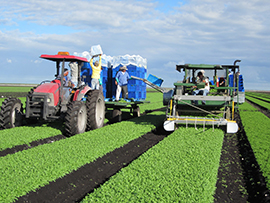
Quebec-based VegPro International Inc. bought the south-facing site to grow baby greens for its Fresh Attitude brand of salad packs. The deal also gives it land to build a 72,000-square-foot processing and distribution facility that will allow VegPro to serve customers across Western Canada.

“VegPro approached us because they thought it was the most suitable place in the province to grow their produce,” says Keith Balcaen, owner of Coldstream Ranch.

Coldstream wasn’t actively marketing parcels of its 9,000-acre property. VegPro approached the ranch after a month of scouting properties from Vancouver Island to the Cariboo.

“They couldn’t find anything with a big enough acreage that’s irrigated,” says Balcaen.

With close to 6,000 acres on the East Coast in Quebec as well as Florida, VegPro has become a primary supplier of salads to Loblaws Companies Ltd. It also supplies Costco and Wal-Mart, all of which currently serve Western Canada with salad greens trucked in from California.

“Growing in Canada and being a local producer was always top of their mind, and to do that they had to find an area where they would be able to grow,” says Jonathan Blais, a former senior relationship manager with Farm Credit Canada who joined VegPro at the end of October to oversee development of its Coldstream facility.

“The Okanagan seemed to be the best area, with a lot of heat and minimal rain and access to water, and Coldstream Ranch was a great location because we were able to secure enough land to size this operation to where we wanted it to be,” says Blais.

Construction of the packing plant and distribution facility begins this month. Approximately 200 acres will be planted this spring, with plans to grow production to more than 600 acres within three years. Ultimately, the vision calls for organic certification of the acreage.

“They’ve tried to do it on the East Coast, but it’s a bit challenging to do,” says Blais. “They see the Okanagan as an area where they’re going to be able to do organic production.”

Production will occur between April and October. Rather than develop greenhouses for winter greens, produce for the packing plant will come from the US – either Washington or California. This echoes operations in Quebec, which touts an “East Coast Advantage” because greens aren’t shipped in from across the continent.

“It makes more sense in terms of trucking because everything is about freshness,” says Blais.

The project represents a $60 million investment by VegPro, a sum that covers the purchase price and development costs for the processing facility and farm.

Affordability

VegPro isn’t the first operation to expand to the BC Interior. Farm Credit Canada’s annual survey of farmland values points to lower land costs as a key factor drawing both existing and new entrants to central and northern BC.

Several dairy operations from the Lower Mainland have expanded to the North Okanagan, while ranchers such as Blue Goose Cattle Co. of Toronto and Langley’s Central Park Farms have established herds in the Thompson-Okanagan.

Coldstream Ranch itself acquired approximately 2,000 acres last year, which means the deal with VegPro won’t diminish its own holdings.

“We’re really not shrinking at all,” says Balcaen.

Coldstream will continue to run 2,400 cow-calf pairs across the 9,000 acres it owns as well as the million acres of Crown range it leases. It also operates a 5,000-head feedlot.

By selling to VegPro, however, the ranch brings more land into production without distracting from its own focus.

“I’m very set on making sure that while we’re here, it doesn’t get all chopped up,” Balcaen says. “I’d like to keep it in ag, and into specialty [production] like this is awesome.”

Previous deals saw tracts sold to orchardists Bill Sandher and David Geen but field vegetables represent diversification. Moreover, the processing plant will add up to 200 jobs and augment the local tax base.

“I thought it was a real asset – a good move for our local community,” says Balcaen. “Anything we’ve done we’ve tried to be constructive and beneficial to our community.”
Related Posts

You may be interested in these posts from the same category.

Previous Post: « New year, new start
Next Post: Hort course the backbone of Pacific Ag Show »

Copyright © 2026 Country Life in BC · All Rights Reserved