• Menu
  • Skip to primary navigation
  • Skip to main content
  • Skip to primary sidebar

Country Life In BC Logo

The agricultural news source in British Columbia since 1915

  • Headlines
  • Calendar
  • Subscribe
  • Advertise
  • About
  • Archives
  • Contact
  • Search
  • Cart
  • Checkout
  • Headlines
  • Calendar
  • Subscribe
  • Advertise
  • About
  • Archives
  • Contact
  • Search
  • Cart
  • Checkout

Primary Sidebar

Current Issue:

NOVEMBER 2026
Vol. 112 Issue 11

Subscribe Now!

Sign up for free weekly FARM NEWS UPDATES

Loading form…

Your information will not be
shared or sold ever

Follow us on Facebook

Comments Box SVG iconsUsed for the like, share, comment, and reaction icons

6 hours ago

... See MoreSee Less

View Comments
  • Likes: 3
  • Shares: 0
  • Comments: 0

Comment on Facebook

6 hours ago

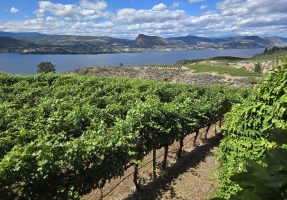
Fall chores. Near Oliver, fruit tree and vine grower Chamkaur Gill cleans up the first fall pruning on his cherry trees on November 6. He says the first prune took off new growth, but he'll do a second pruning to try to ensure a better cherry crop on these trees in 2027 than in 202#BCAg#BCAg ... See MoreSee Less

Fall chores. Near Oliver, fruit tree and vine grower Chamkaur Gill cleans up the first fall pruning on his cherry trees on November 6. He says the first prune took off new growth, but hell do a second pruning to try to ensure a better cherry crop on these trees in 2027 than in 2026. 

#BCAg
View Comments
  • Likes: 6
  • Shares: 1
  • Comments: 0

Comment on Facebook

23 hours ago

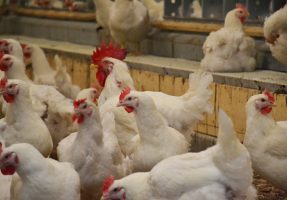
BC has detected this fall's first case of highly pathogenic avian influenza in a commercial poultry flock in Chilliwack. Canadian Food Inspection Agency staff confirmed the detection on November 6, relatively late compared to previous years. However, disease pressure has been high, with 16 cases in wild birds across the Lower Mainland and multiple detections in Manitoba and Alberta since early September. Strong biosecurity protocols are in place to protect the industry, and BC dairy producers are also on alert, with detections in 43 herds south of the border in Eastern Washington this fa#BCAg#BCAg ... See MoreSee Less

BC has detected this falls first case of highly pathogenic avian influenza in a commercial poultry flock in Chilliwack. Canadian Food Inspection Agency staff confirmed the detection on November 6, relatively late compared to previous years. However, disease pressure has been high, with 16 cases in wild birds across the Lower Mainland and multiple detections in Manitoba and Alberta since early September. Strong biosecurity protocols are in place to protect the industry, and BC dairy producers are also on alert, with detections in 43 herds south of the border in Eastern Washington this fall.

#BCAg
View Comments
  • Likes: 26
  • Shares: 16
  • Comments: 48

Comment on Facebook

not from backyard Coops? shocking

No ostriches to kill this year…

Just so everyone knows culling infected birds happens in almost every country around the world. It's standard procedure. Unless you want to get sick or have a pandemic I would stop pooping on CFIA.

So many opinions, so few actual farmers.

Do people realize that it has affected dairy herds in the USA and it is not unheard of it affecting equine?

Chicks are vaxx right after hatching...google it ..

Avian flu is so bad at our local park in the valley. We stopped counting bodies at 20 (all cackling geese) on a walk this past Wednesday. The infected were all falling down & couldn’t stand very well - it was incredibly heartbreaking. An ACO was there to pick up bodies and goes there each day. He said they’re falling out of the sky. He told us that people need to call Environment Canada when you see infected birds, so they can be made aware of the numbers. Do NOT touch or attempt to rescue them. 😢

Funny this never happened for all the years I worked chicken barns ..

🐂💩

Oh of course

CFIA is up to no good once again

I think my cousin's the one that infected them he said he's got bird flu

They really need to thin out the wild water foul in Saskatchewan seen lots of sick and dead geese. Also not much left for deer population. Not sure if its cwd or coyotes maybe wheater what evere it is its kicking the hell out of the deer

Ahhh the good ol bird flu PROPAGANDA rears its ugly head again

The CFIA or any agency should show the proof the Avian Flu actually exists or at the very least the virus has been isolated.

BS

It’s crazy the government can come up with a MRNA vaccine for everything but the bird flu…

Nothing but constantly attacking our food source

Ya ok

On to their next cull

Maybe if they weren't all overcrowded in barns!

Keep feeding them Bio hazardous waste, confined feces ridden or sterile barns-

If we are really serious about bird flu and other zoonotic pandemics like covid-19 and Swine flu then we need to stop this neanderthal habit of ramming animals down our throat three times a day. The source of Highly pathogenic bird flu is factory farmed chickens, and that continues to be their Reservoir. If the H5zmN1 strain mutates so that it can pass human to human, something the World Health Organisation has warned is totally possible, then the resulting carnage will make covid-19 look like a sniffle.

well, that is the absolutely ONLY answer, just keep slaughtering animals - I call BS

Here we go again.

View more comments

3 days ago

With the province signalling no new money for farm water infrastructure, BC producers are turning to collaboration to secure water storage. In the Salmon River watershed, where temporary protection order curtailed forage irrigation again this summer, producers will host a public information session in Salmon Arm on December 9. The BC Wildlife Federation is backing their efforts, saying farmers and conservationists want the same outcomes. For more, see today's Farm News Update from Country Life in BC: [www.countrylifeinbc.com/momentum-builds-for-water-solution#BC

#BC
... See MoreSee Less

With the province signalling no new money for farm water infrastructure, BC producers are turning to collaboration to secure water storage. In the Salmon River watershed, where temporary protection order curtailed forage irrigation again this summer, producers will host a public information session in Salmon Arm on December 9. The BC Wildlife Federation is backing their efforts, saying farmers and conservationists want the same outcomes. For more, see todays Farm News Update from Country Life in BC: [https://www.countrylifeinbc.com/momentum-builds-for-water-solutions/]

#BC
View Comments
  • Likes: 21
  • Shares: 12
  • Comments: 3

Comment on Facebook

Has anyone considered the introduction of analogue beaver dams or possibly beaver families if the sites would support them. there are projects with beavers in lagging watersheds in the States.

I just wish they would also look at Chase Creek (from Pillar Lake to the South Thompson River.......it's a complete mess.

That entire program was just an exercise is harvesting information from producers. There was so few projects approved considering they boasted about having millions upon millions available.

6 days ago

... See MoreSee Less

View Comments
  • Likes: 5
  • Shares: 4
  • Comments: 0

Comment on Facebook

Subscribe | Advertise

The agricultural news source in British Columbia since 1915
  • Email
  • Facebook

BC farmland values drop

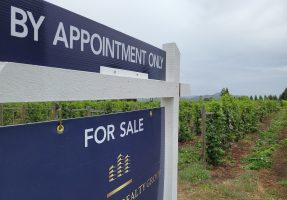
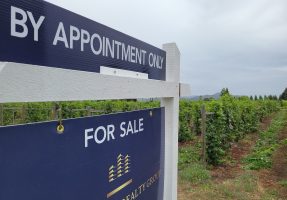
Farmland values are easing in BC, according to the latest report from Farm Credit Canada. Photo | Myrna Stark Leader

October 14, 2026 byPeter Mitham

BC was the sole province in Canada to see farmland values decline in the first half of this year, according to a Farm Credit Canada (FCC) report released October 7.

The mid-year survey of farmland values across the country indicates a 1.9% drop in the first six months of this year, furthering the 1.7% drop reported for 2025.

The result was a 3.9% drop in the 12 months ended June – one of the steepest 12-month declines since the mid-1980s. It exceeds the 3.1% decline reported for 2024, which amounted to a moderation in values during a dramatic run-up coinciding with the pandemic.

On average, BC farmland increased by nearly 49% between 2019 and 2023, but now sits at 43% above its pre-pandemic value.

“Overall, growth momentum has shifted from the provinces that led the post-pandemic surge toward the Prairies, particularly Alberta,” FCC reported. “Ontario and British Columbia have experienced the sharpest normalization.

FCC says demand remains strong “for productive, well-located land,” while noting that “higher input costs, tighter margins and regional supply constraints are making buyers more selective.”

In BC, this is playing out in steady demand in the Cariboo-Chilcotin region but limited sales activity.

“Recent value softening did not signal a broader market downturn,” FCC reported. “In the South Coast and on Vancouver Island, values were stabilizing, although longer exposure periods and increased listing inventory continued to place downward pressure on these markets.”

Property transfer data from the BC Ministry of Finance indicates a 25% drop in farm property sales in the first six months of this year versus a year earlier. The most active regions were the Peace, with 104 properties changing hands (down 30% from a year ago), and the Fraser Valley, with 68 properties changing hands (up 24% from a year ago).

Outlying areas including the North Coast and Kitimat-Stikine regions saw the largest gains in activity, but off a low base. Central Okanagan farm property sales posted the strongest increase (up 87% versus a year ago) among the major commercial production regions.

All content on this website is copyrighted, and cannot be republished or reproduced without permission.
Related Posts

You may be interested in these posts from the same category.

Long-term problems demand long-term support

Fertilizer, fuel costs soar amid Iran conflict

Vancouver Island attracts small-lot buyers

Fertilizer prices on the rise

Avian influenza returns

BC farmland values flat

CUSMA consultations begin

BC growers look beyond tariff turbulence

Okanagan drives increase in land values

Beef herd drops

BC farmland values see strong growth

Farmland lease rates

Previous Post: « Interior melons find a Costco market
Next Post: BC growers see rising input costs »

© 2026 COUNTRY LIFE IN BC - ALL RIGHTS RESERVED