• Menu
  • Skip to primary navigation
  • Skip to main content
  • Skip to primary sidebar

Country Life In BC Logo

The agricultural news source in British Columbia since 1915

  • Headlines
  • Calendar
  • Subscribe
  • Advertise
  • About
  • Archives
  • Contact
  • Search
  • Headlines
  • Calendar
  • Subscribe
  • Advertise
  • About
  • Archives
  • Contact
  • Search

Primary Sidebar

Originally published:

OCTOBER 2020
Vol. 106 Issue 10

Subscribe Now!

Sign up for free weekly FARM NEWS UPDATES

Select list(s) to subscribe to


By submitting this form, you are consenting to receive marketing emails from: Country Life in BC. You can revoke your consent to receive emails at any time by using the SafeUnsubscribe® link, found at the bottom of every email. Emails are serviced by Constant Contact
Your information will not be
shared or sold ever

Stories In This Edition

BC Beef set to launch

All in the Family

Peace leads farmland sales

Second residences allowed in ALR until July 2021

Ready for the season

Editorial: Turkey run

Back 40: Some things about farming never change

Viewpoint: Growing craft beer sector built on community connections

BC Tree Fruits prepares to sell assets, apples

Sidebar: No quick fix

Cherry growers slammed by record losses

Pickers – and choosers

Animal rights activists land in court

Meat producers frustrated by consultations

A2 milk launch aimed at lactose-intolerant

Ag Briefs: Northern Health signs on with FeedBC

Ag Briefs: Cranberry outlook brightens

Ag Briefs: Agriculture nabs recovery funding

Ag Briefs: North Okanagan reaches farmers

Pandemic delays review of anti-dumping order

Potato field day showcases new varieties

Province tightens rules for employers

Peace grain growers gather bitter harvest

Learning to do

Vancouver Island grain harvest looks promising

Slaughter waste receives fresh funding

Ranchers threaten litigation over treaty negotiations

Sweet sale

Sidebar: Rancers seek compensation for Chilcotin land losses

Ardill Ranch receives Century Farm award

Sidebar: The long haul

Research: Regenerative ranching counters climate change

A new generation keeps the family greenhouse growing

Hazelnut growers on the lookout for invasive stink bug

New president for BC Hazelnut

First-gen farmers plot a vision for success

New research director puts people first

Reflective tarps piloted in FV blubeberries

Speciality mushroom growers come into their own

Seeking insights

Dairy success is about attention to detail

Woodshed: To Rocky’s end, and flirting with danger

Green bean trials target large grower needs

Farm Story: There’s plenty to put the dynamite in the family dynamic

AITC rolls out virtual options for teachers

Jude’s Kitchen: Brunch for a bunch

More Headlines

Follow us on Facebook

Comments Box SVG iconsUsed for the like, share, comment, and reaction icons

6 days ago

... See MoreSee Less

View Comments
  • Likes: 4
  • Shares: 0
  • Comments: 0

Comment on Facebook

6 days ago

On the last day of the BC Organic Conference, Thursday, Molly Thurston of Pearl Agricultural Consulting helped growers learn how to manage bugs such as codling moth, wireworm, and rootworm in organic growing systems. Her talk alongside Renee Prasad included hands-on activities in which participants checked out various traps and examined pests under microscopes. Be sure to look for more upcoming ag events on our online calendar at www.countrylifeinbc.com/calendar/

#BCAg
... See MoreSee Less

On the last day of the BC Organic Conference, Thursday, Molly Thurston of Pearl Agricultural Consulting helped growers learn how to manage bugs such as codling moth, wireworm, and rootworm in organic growing systems. Her talk alongside Renee Prasad included hands-on activities in which participants checked out various traps and examined pests under microscopes. Be sure to look for more upcoming ag events on our online calendar at www.countrylifeinbc.com/calendar/

#BCAg
View Comments
  • Likes: 15
  • Shares: 0
  • Comments: 0

Comment on Facebook

1 week ago

Well-known organic farmer and podcaster Jordan Marr gets interviewed by Country Life in BC’s own columnist and potato mavin Anna Helmer during the opening session of the BC Organic Conference at Harrison Hot Springs yesterday. Sessions run today (Wednesday) and Thursday and include organic and regenerative growing practices and expanding and advocating for the organic sector, all under the background of the newly launched Organic BC banner.

#BCAg
... See MoreSee Less

Well-known organic farmer and podcaster Jordan Marr gets interviewed by Country Life in BC’s own columnist and potato mavin Anna Helmer during the opening session of the BC Organic Conference at Harrison Hot Springs yesterday. Sessions run today (Wednesday) and Thursday and include organic and regenerative growing practices and expanding and advocating for the organic sector, all under the background of the newly launched Organic BC banner.

#BCAg
View Comments
  • Likes: 37
  • Shares: 2
  • Comments: 1

Comment on Facebook

Interested in finding out more about this

3 weeks ago

Today, we remember those who sacrificed their lives or their well-being for our freedom. Lest we forget. ... See MoreSee Less

Today, we remember those who sacrificed their lives or their well-being for our freedom. Lest we forget.
View Comments
  • Likes: 8
  • Shares: 0
  • Comments: 0

Comment on Facebook

1 month ago

FarmFolk CItyFolk is hosting its biennial BC Seed Gathering in Harrison Hot Springs November 27 and 28. Farmers, gardeners and seed advocates are invited to learn more about seed through topics like growing perennial vegetables for seed, advances in seed breeding for crop resilience, seed production as a whole and much more. David Catzel, BC Seed Security program manager with FF/CF will talk about how the Citizen Seed Trail program is helping advance seed development in BC. Expect newcomers, experts and seed-curious individuals to talk about how seed saving is a necessity for food security. ... See MoreSee Less

Link thumbnail

BC Seed Gathering - FarmFolk CityFolk

farmfolkcityfolk.ca

Save the date for our upcoming 2023 BC Seed Gathering happening this November 3rd and 4th at the Richmond Kwantlen Polytechnic University campus.
View Comments
  • Likes: 1
  • Shares: 0
  • Comments: 0

Comment on Facebook

Subscribe | Advertise

The agricultural news source in British Columbia since 1915
  • Email
  • Facebook

Meat producers frustrated by consultations

Action, not talk, needed from province, say small growers

Small-Scale Meat Producers Association executive director Julia Smith

October 1, 2020 byTom Walker

MERRITT – BC meat producers are frustrated that the province is spending more time studying how to help them than getting on with acting on its findings.

The BC Ministry of Agriculture released an intentions paper September 14 aimed at modernizing rural slaughter practices, but Julia Smith of the Small-Scale Meat Producers Association says the government doesn’t seem to realize the urgency of the situation.

“The intentions paper talks about undertaking a risk assessment project to support development options for rural meat production,” says Smith. “It’s too late for that now. Many operations simply cannot survive another round of consultations.”

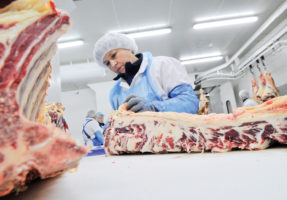
Smith says the slaughter and cut and wrap capacity in BC is facing a serious crisis that will only accelerate in the coming months. Abattoirs are already cancelling bookings that were made months ago, she says, and producers are being left with literally nowhere to process their animals legally.

“The government has an opportunity here to provide relief and oversight during a global pandemic that could be a catalyst for long-lasting, progressive change in the future,” she notes.

But the government already knows that. It first began talking with the industry back in 2016. There were numerous consultations and a standing committee of the legislature delivered a report on the situation in 2018.

Nova Woodbury, executive director of the BC Association of Abattoirs, says her members are tired of saying the same things.

“I have 10 Word documents open right now that are past submissions I have made to the ministry and I am trying to consolidate them into yet again another response,” she said.

This is the worst time of the year to try and talk to the industry, Smith adds.

“September is not the time of year to initiate meaningful consultation with the farmers and ranchers,” she says. “Implement some emergency measures now and continue to consult through the winter to hammer out more permanent changes for the spring.”

Overall, the intentions the province outlines are good and reflect what many in the industry have been saying. They include increasing the standards of inspection for class D and E plants to more closely align their uninspected slaughter practices with those of inspected class A and B processors.

“This paper provides the support the industry has been asking for and gives reassurance to members of the public that food safety and animal welfare standards are going to be enforced,” says Woodbury.

The paper follows the province’s decision in August to consolidate all meat inspection in the province under the agriculture ministry’s Meat Inspection Branch, a change effective December 1. (While the branch oversaw inspections at class A and B plants, D and E facilities were under the BC Ministry of Health.)

The intentions paper focuses on four key areas: public health and safety, innovation, regulatory efficiency and strengthening the provincial food supply.

Public health and safety is where improving oversight, increasing inspections and updating codes of practice for D and E facilities fall.

Virtual inspections, post mortem inspections and third-party involvement in inspections is part of innovation. The framework for D and E processors could also be updated.

Regulatory efficiency will be addressed by working with FrontCounter BC to improve the licensing process.

Aiming to strengthen the provincial food supply, the government acknowledges that demand is increasing for local meat. But that isn’t a new or unexpected issue, Smith points out.

“We were already struggling to meet the growing demand long before COVID hit,” she says. “A resilient and diverse local food supply chain isn’t something we should have just in case the ‘real’ food supply chain breaks down. It should be the norm and we need appropriate infrastructure and regulations that reflect this.”

The deadline for public feedback is November 16*. The province promises to begin making regulatory and policy changes by the end of the year.

Woodbury hopes there is money for the government to follow through. She notes that the meat inspection branch moved to cut costs last year by mandating restrictions on overtime.

Smith urges the province to use taxpayers’ dollars wisely.

“Instead of spending money on more consultation, spend it to support abattoirs to expand, local butchers to expand, and new people to open slaughter and butcher facilities,” she says.

With the province announcing $1.5 billion in funding last month for economic recovery from the COVID-19 pandemic, Smith believes there’s no better time for action.

“If we were ever going to make something happen quickly, it is now,” she says.

[The deadline for feedback was extended to November 16 after this story went to press.]
Related Posts

You may be interested in these posts from the same category.

Spallumcheen cuts, wraps deal for butcher hub

Insurer steps up to cover farmgate abattoirs

Poultry gatherings banned

Abattoir closure leaves producers scrambling

Avian influenza returns

Salmon Arm abattoir closes

Women offer ‘cutting-edge’ skills

Historic relief package delivered

New licences, new inspections

Challenges linger for meat plants

Provincial meat licensing overhaul effective October

BC abattoir volume up 30% in 2020

Previous Post: « A new generation keeps the family greenhouse growing
Next Post: BC Tree Fruits prepares to sell assets, apples »

Copyright © 2025 Country Life in BC · All Rights Reserved