
• Menu
  • Skip to primary navigation
  • Skip to main content
  • Skip to primary sidebar

Country Life In BC Logo

The agricultural news source in British Columbia since 1915

  • Headlines
  • Calendar
  • Subscribe
  • Advertise
  • About
  • Archives
  • Contact
  • Search
  • Headlines
  • Calendar
  • Subscribe
  • Advertise
  • About
  • Archives
  • Contact
  • Search

Primary Sidebar

Originally published:

May 2018
Vol. 104 Issue 5

Subscribe Now!

Sign up for free weekly FARM NEWS UPDATES

Loading form…

Your information will not be
shared or sold ever

Stories In This Edition

Fraser Valley bee shortage overstated

Still waiting: ag waste regs

Cannabis shift delivers hit to vegetable sector

Peter’s legacy

Editorial: The straight dope

Back Forty: Our best friend deserves greater recognitiontory

Overheard: Farmers should embrace First Nations model

Change is coming, fast and furious

Foundation effective in fueling ag projects

New meat producer association launched

Sidebar: On board

Traceability regs to include animal movement

Report recommends FN approval on tenures

Province urged to regulate farmhouse size

Dairy group highlights industry needs on tour

Ottawa plays hardball with Agassiz leases

IAF showcases innovative ag projects

Neonics in water not from farm operations

Potato growers need to exploit opportunities

Spuds in tubs

Vegetable commission optimistic

Sidebar: Variety update

MacAulay grilled over farm labour issues

Apiarists want pollination income to count

Sidebar: BCHPA launches pollinator health study

Raspberry growers increase board size

Popham meets with berry growers

Hazelnut growers flush with optimism

Ranchers schooled in disaster preparation

Westgen eyes beef semen sales for growth

Big prize money draws big entries

Holstein auction sets new sale benchmark

North 40 bull tops Vanderhoof sale

Reclaiming market share in a global economy

Day-neutrals show promise for strawberry fields

Weather skews results in Peace variety trials

Salal berries have market potential

Vole control in blueberries

Wannabe: When tragedy brings us together

Watchful eye

Woodshed Chronicles: Henderson masterminds an apology

Jude’s Kitchen: Celebrate May with beef on the ‘barbie’

More Headlines

Follow us on Facebook

Comments Box SVG iconsUsed for the like, share, comment, and reaction icons

4 hours ago

The Township of Langley Farm and Ranch Exhibition Society is hosting a public open house this evening to gather input on plans to transform the historic Belmont Farm into an agricultural exhibition, education and heritage hub. Farmers, ranchers, and community members are invited to share their feedback. The open house is at the George Preston Rec Centre, 6-8 pm.

Township of Langley Farm and Ranch Exhibition Society
#BCAg
... See MoreSee Less

The Township of Langley Farm and Ranch Exhibition Society is hosting a public open house this evening to gather input on plans to transform the historic Belmont Farm into an agricultural exhibition, education and heritage hub. Farmers, ranchers, and community members are invited to share their feedback. The open house is at the George Preston Rec Centre, 6-8 pm. 

Township of Langley Farm and Ranch Exhibition Society 
#BCAg
View Comments
  • Likes: 4
  • Shares: 0
  • Comments: 0

Comment on Facebook

7 hours ago

The sold-out Southern Interior Horticulture show continues today. Education sessions range from rodent control to new tree fruit varieties, with the afternoon devoted to improving spraying techniques for orchardists and vineyard managers. When not listening to speakers, producers are checking the trade show.

#BCAg
... See MoreSee Less

The sold-out Southern Interior Horticulture show continues today. Education sessions range from rodent control to new tree fruit varieties, with the afternoon devoted to improving spraying techniques for orchardists and vineyard managers. When not listening to speakers, producers are checking the trade show.

#BCAg
View Comments
  • Likes: 6
  • Shares: 0
  • Comments: 0

Comment on Facebook

9 hours ago

The BC Poultry Association has lowered its avian flu biosecurity threat level from red to yellow, citing declining HPAI risk factors and fewer wild bird infections. Strong biosecurity practices helped BC limit cases this winter to 38 premises, down from 81 last year. For more, see today's Farm News Update from Country Life in #BCAg#BCAg ... See MoreSee Less

Link thumbnail

Poultry biosecurity notches down

www.countrylifeinbc.com

Declining risk factors for highly pathogenic avian influenza (HPAI) have prompted the BC Poultry Association to lower the industry’s biosecurity threat level from red to yellow. The decision…
View Comments
  • Likes: 11
  • Shares: 2
  • Comments: 1

Comment on Facebook

🐥💛

1 day ago

The application deadline for cost-shared funding through the Buy BC program is coming up on February 20. Up to $2 million through the Buy BC Partnership Program is available annually to BC producers and processors to support local marketing activities that increase consumer awareness of BC agriculture and BC food and beverages. For more information, visit buybcpartnershipprogram.ca/.

Buy BC

#BCAg
... See MoreSee Less

Link thumbnail

Home - Buy BC Partnership Program

buybcpartnershipprogram.ca

Buy BC Partnership Program Increase your visibility with Buy BC The Buy BC Partnership Program is a fundamental component of Buy BC that provides up to $2 million in cost-shared funding annually to lo...
View Comments
  • Likes: 3
  • Shares: 0
  • Comments: 0

Comment on Facebook

1 day ago

The Sik-E-Dakh (Glen Vowell) First Nation's Skeena Fresh hydroponic operation has doubled production capacity thanks to a $130,632 Northern Development Infrastructure Trust grant. Growing lettuce, kale, herbs and more in shipping containers, the operation uses 90% less water than traditional farming while providing 1,200 people with year-round access to fresh, locally grown greens. Their story is in the February edition of Country Life in BC, the agricultural news source for BC’s farmers and ranchers.

Northern Development Initiative Trust
#BCAg
... See MoreSee Less

The Sik-E-Dakh (Glen Vowell) First Nations Skeena Fresh hydroponic operation has doubled production capacity thanks to a $130,632 Northern Development Infrastructure Trust grant. Growing lettuce, kale, herbs and more in shipping containers, the operation uses 90% less water than traditional farming while providing 1,200 people with year-round access to fresh, locally grown greens. Their story is in the February edition of Country Life in BC, the agricultural news source for BC’s farmers and ranchers. 

Northern Development Initiative Trust 
#BCAg
View Comments
  • Likes: 15
  • Shares: 1
  • Comments: 0

Comment on Facebook

Subscribe | Advertise

The agricultural news source in British Columbia since 1915
  • Email
  • Facebook

New meat producer association launched

Group will give united voice to small-scale livestock farmers seeking slaughter capacity

April 30, 2018 byMyrna Stark Leader

MERRITT – Small-scale meat producers across BC are banding together to form a new association representing farmers and ranchers who raise meat outside of the conventional system.

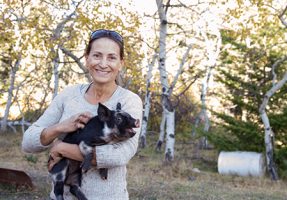
The Small-Scale Meat Producers Association was founded by primary producers and their supporters following several months of online Facebook discussions that garnered the interest of about 75 ranchers and farmers. The online group was started by Julia Smith of Blue Sky Ranch in Merritt, which produces pork.

“Through our online discussions about the state of services for small meat producers who are facing real challenges when it comes to abattoir services and availability, we decided the best way to have a stronger voice was to form an association,” Smith explains.

In March, the group began the process of registering as a non-profit society in BC.

The efforts coincided with a BC Ministry of Agriculture consultation launched March 20 aimed at supporting rural slaughter capacity. Small abattoirs and other stakeholders were asked for feedback and suggestions on how to improve rural abattoir licensing in BC, which many small producers have identified as an issue. The consultations were slated to conclude by April 30.

The province asked current and former holders of abattoirs with D and E licences to describe their experiences with administration, licensing, operations and food safety. Presenters had an opportunity to discuss ideas that could enhance local slaughter capacity throughout the province.

Class D licence holders are allowed to slaughter up to 11,340 kilograms (25,000 pounds) of their own or other people’s animals per year for direct sale to consumers or to food businesses such as restaurants and meat shops in the region the meat was produced. They must also operate in one of the 10 regional districts that have been designated as rural remote areas: Central Coast, Kitimat-Stikine, Mount Waddington, Northern Rockies, Powell River, Skeena-Queen Charlotte, Squamish-Lillooet, Stikine, Strathcona (mainland and Discovery Islands portion only) and Sunshine Coast.

Class E licence holders may slaughter up to 4,536 kilograms (10,000 pounds) of their own animals for direct sale to consumers only in the area the meat was produced.

There are currently 19 D-class licence holders and 27 E-class licence holders in BC.

The ministry promised to also gather input from key stakeholders, including the BC Association of Abattoirs, the BC Cattlemen’s Association, and regional health authorities.

“It’s positive they want to consult but I wrote to the department because I wanted their consultation to be broadened to include those of us in the production side who are concerned,” says Smith. “If you’re growing animals, you need some place to have them processed and right now, capacity at local abattoirs and butcher shops doesn’t exist, which means you should have an opportunity to provide input.”

Throughout April, the new association will be consulting with its members specifically to provide the ministry with broader industry feedback for consideration.

Jim Ross of Havesome Hogs in Slocan Park is the regional representative for the Central Kootenays. Ross began raising sheep and hogs 12 years ago.

Ross, who also works as an IT consultant, has an E-class licence that allows him to slaughter on the farm but today he sends most of the carcasses to expert butchers for cutting prior to direct sale to customers.

He has easy access to butchers who cut, process and wrap his meat but like many farmers with E licences, the 10,000-pound limit doesn’t allow him to make a living growing food. If he wants to sell to a retailer or restaurant and follow current regulations, he must haul his live animals more than two hours away, investing in equipment and time he doesn’t have for no additional profit.

“I don’t discount the work done by abattoirs, but feel hauling animals for over two hours is against my values and how my animals deserve to be treated,” he said.

Ross is no stranger to fighting the ministry, which previously refused to renew his licence on the grounds he could use a newly established portable abattoir just down the road. After he supplied a letter from that operator saying that he won’t be able to deal with Ross’s animals, the ministry renewed his licence.

But there’s a catch: he can’t hold his E licence and use the abattoir down the road under current regulations. This is why he supports the new association.

“I’ve swam against the current for eight years. It’s a lot of work and you don’t accomplish anything. It’s easy to ignore Jim Ross and his concerns, but it’s harder to ignore an association with many members,” Ross says.

In addition to a stronger lobby, he says joining forces with other small-scale meat producers enables the sharing of information and ideas across the province.

It also stands to ensure everyone, both large and small-scale producers, are playing by the same rules.

“For every legal licence, I estimate there are at least 10 selling meat on the black market and their customers don’t report them because they want the meat,” says Ross. “One of the challenges is how the government will bring these folks into the tent so all producers and consumers are protected in the event something goes wrong. I support all farmers but would rather we played by the same rules.”

BC agriculture minister Lana Popham says BC’s meat inspection system is being addressed as part of the “Feed BC” element of her mandate.

Small-scale meat producers who would like to be involved can join the association at [www.smallscalemeat.ca] or [smallscalemeat@gmail.com].
Related Posts

You may be interested in these posts from the same category.

Processor capacity challenges small-scale farmers

Previous Post: « Salal berries have market potential
Next Post: Traceability regs to include animal movement Sheep»

Copyright © 2026 Country Life in BC · All Rights Reserved