• Menu
  • Skip to primary navigation
  • Skip to main content
  • Skip to primary sidebar

Country Life In BC Logo

The agricultural news source in British Columbia since 1915

  • Headlines
  • Calendar
  • Subscribe
  • Advertise
  • About
  • Archives
  • Contact
  • Search
  • Headlines
  • Calendar
  • Subscribe
  • Advertise
  • About
  • Archives
  • Contact
  • Search

Primary Sidebar

Originally published:

AUGUST 2024
Vol. 110 Issue 8

Subscribe Now!

Sign up for free weekly FARM NEWS UPDATES

Select list(s) to subscribe to


By submitting this form, you are consenting to receive marketing emails from: Country Life in BC. You can revoke your consent to receive emails at any time by using the SafeUnsubscribe® link, found at the bottom of every email. Emails are serviced by Constant Contact
Your information will not be
shared or sold ever

Stories In This Edition

Good Karma

Hothouse growers tap glass ceiling

Rancher honoured with medal

Wildfires threaten ranches

Editorial: Grounded knowledge

Back 40: Here comes the sun

Viewpoint: Have chicken, will travel — and educate

Farmers reeling from extreme weather impacts

Ottawa prepares to offer farmland for land claims

Ag Briefs: BC woes fuel Business Risk Management discussions

Ag Briefs: Anju Bill leaves blueberries

Ag Briefs: BC Milk caught out

Cherry growers pan inadequate replant funding

Sidebar: No grower left behind

The state of vines

Peach report bullish on future opportunities

WorkSafeBC 2025 rates announced

New Columbia River treaty on the horizon

Salmonn farm ban sends warning to land-based farms

BC wildfires put a spotlight on soil health

Research council provides valuable insight to ranchers

Top dollar

Clean sweep

Mobile abattoir supports OK producers

Farm Story: Tough love yields sweet rewards

Farming Karma scales up on-farm processing

Snake smarts critical skillset for OK workers

Woodshed: Roses blossom but Delta asks thorny questions

Lavender farm adds calm to pain releif, food

Jude’s Kitchen: Feature fresh produce at patio parties

More Headlines

Follow us on Facebook

Comments Box SVG iconsUsed for the like, share, comment, and reaction icons

6 days ago

... See MoreSee Less

View Comments
  • Likes: 4
  • Shares: 0
  • Comments: 0

Comment on Facebook

7 days ago

On the last day of the BC Organic Conference, Thursday, Molly Thurston of Pearl Agricultural Consulting helped growers learn how to manage bugs such as codling moth, wireworm, and rootworm in organic growing systems. Her talk alongside Renee Prasad included hands-on activities in which participants checked out various traps and examined pests under microscopes. Be sure to look for more upcoming ag events on our online calendar at www.countrylifeinbc.com/calendar/

#BCAg
... See MoreSee Less

On the last day of the BC Organic Conference, Thursday, Molly Thurston of Pearl Agricultural Consulting helped growers learn how to manage bugs such as codling moth, wireworm, and rootworm in organic growing systems. Her talk alongside Renee Prasad included hands-on activities in which participants checked out various traps and examined pests under microscopes. Be sure to look for more upcoming ag events on our online calendar at www.countrylifeinbc.com/calendar/

#BCAg
View Comments
  • Likes: 15
  • Shares: 0
  • Comments: 0

Comment on Facebook

1 week ago

Well-known organic farmer and podcaster Jordan Marr gets interviewed by Country Life in BC’s own columnist and potato mavin Anna Helmer during the opening session of the BC Organic Conference at Harrison Hot Springs yesterday. Sessions run today (Wednesday) and Thursday and include organic and regenerative growing practices and expanding and advocating for the organic sector, all under the background of the newly launched Organic BC banner.

#BCAg
... See MoreSee Less

Well-known organic farmer and podcaster Jordan Marr gets interviewed by Country Life in BC’s own columnist and potato mavin Anna Helmer during the opening session of the BC Organic Conference at Harrison Hot Springs yesterday. Sessions run today (Wednesday) and Thursday and include organic and regenerative growing practices and expanding and advocating for the organic sector, all under the background of the newly launched Organic BC banner.

#BCAg
View Comments
  • Likes: 37
  • Shares: 2
  • Comments: 1

Comment on Facebook

Interested in finding out more about this

3 weeks ago

Today, we remember those who sacrificed their lives or their well-being for our freedom. Lest we forget. ... See MoreSee Less

Today, we remember those who sacrificed their lives or their well-being for our freedom. Lest we forget.
View Comments
  • Likes: 8
  • Shares: 0
  • Comments: 0

Comment on Facebook

1 month ago

FarmFolk CItyFolk is hosting its biennial BC Seed Gathering in Harrison Hot Springs November 27 and 28. Farmers, gardeners and seed advocates are invited to learn more about seed through topics like growing perennial vegetables for seed, advances in seed breeding for crop resilience, seed production as a whole and much more. David Catzel, BC Seed Security program manager with FF/CF will talk about how the Citizen Seed Trail program is helping advance seed development in BC. Expect newcomers, experts and seed-curious individuals to talk about how seed saving is a necessity for food security. ... See MoreSee Less

Link thumbnail

BC Seed Gathering - FarmFolk CityFolk

farmfolkcityfolk.ca

Save the date for our upcoming 2023 BC Seed Gathering happening this November 3rd and 4th at the Richmond Kwantlen Polytechnic University campus.
View Comments
  • Likes: 1
  • Shares: 0
  • Comments: 0

Comment on Facebook

Subscribe | Advertise

The agricultural news source in British Columbia since 1915
  • Email
  • Facebook

Peach report bullish on future opportunities

More acres needed to feed a growing population

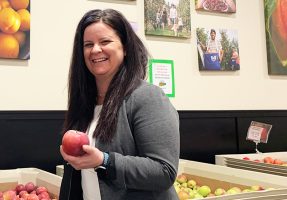
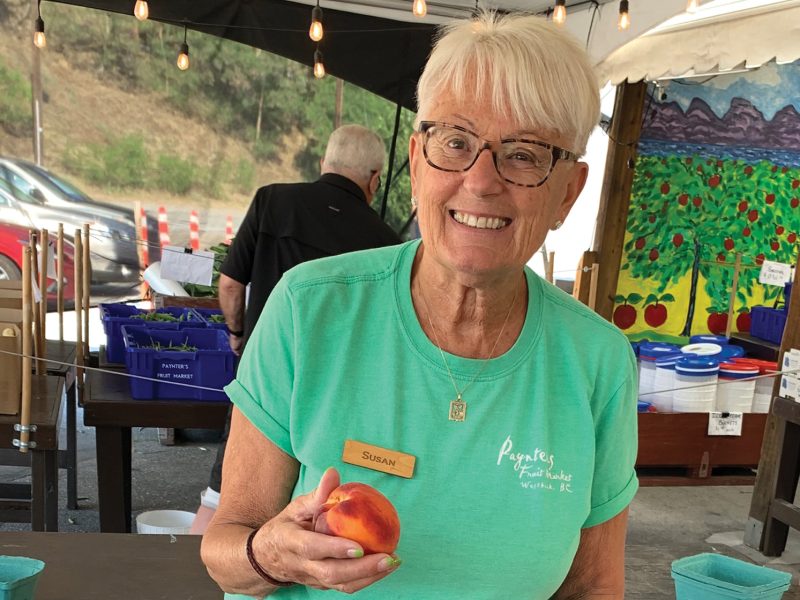
Susan Herring, manager at Paynters Fruit Market in West Kelowna, shows off a ‘just trucked’ peach from California. “The truck came in at 6:30 this morning,” says Herring. “They are different from our Okanagan peaches but I really like them.” | TOM WALKER

August 1, 2024 byTom Walker

KELOWNA – Fred Steele remembers the sound of peach trees cracking in the cold.

“They were going off like a rifle shot,” the former BC Fruit Growers Association president recalls. “The temperature had dropped quickly in the fall of 2007 and there was still sap in the trunks that froze and the trees just spilt apart.”

While climate change experts predict that suitable growing areas will expand north, cold snaps like the one experienced in BC fruit regions this January show that temperature extremes are also more likely.

“This year, peach buds were impacted as far south as Oregon,” says East Kelowna orchardist Hank Markgraf. “I’m pretty happy to be just growing apples right now.”

Soft fruit can be a higher value crop and represents a diversity of income for an Okanagan grower, but with no peaches, apricots or nectarines this year, a significantly reduced cherry and plum crop and the likelihood of substantial damage to many trees, many growers wonder if it’s still worth it.

“I still think so,” says Jennay Oliver of Paynters Fruit Market in West Kelowna. “Soft fruit is 40% of what we grow on our own farm and we bring in fruit from other growers as well.”

Oliver says the trees they have renewed in the last several years are doing well.

“I just walked the orchard yesterday and the blocks of trees that we planted last year and several years ago have come through the cold fine, but our 25-year-old block we will have to pull out and replant,” she says. “It’s a lesson learned; we should have replanted them a few years ago. The older trees are not able to withstand these winters that are so extreme.”

Oliver is a staunch proponent of buy-local, but is currently bringing in peaches and plums from California.

“I had a hard time with it at the beginning, but I realized places like Loblaws import fruit all the time.” she notes. “We have large signs explaining what we are doing and where the product is from – like we do with our local products – and our customers are fine with it. I’ve had good feedback. They know we don’t have local fruit.”

The first peaches were from Georgia, and Oliver will bring in Washington fruit later in the season.

“They have good flavour, but it’s very hard to compare with an Okanagan peach right off the tree,” she says.

Oliver remains optimistic in a business where positive thinking is essential.

“That’s kind of the roller coaster you sign up for when you start farming,” she says.

While growers like Oliver are renewing their existing orchards, South Okanagan fruit grower Pinder Dahliwal has already replanted some peach trees that were damaged by the January deep freeze.

The BC Fruit Growers Association has investigated the long-term potential of the soft fruit industry in BC as part of requirements for funding under the province’s Perennial Crop Renewal Program.

Its report in February concluded “growth opportunities for the sector are significant.”

“There is a potential for soft fruit to make growers money,” says BCFGA project manager Gail Nelson. “The study was a way of identifying what those opportunities are, if there is an opportunity for expanding the industry, and where should efforts be focused.”

The most immediate growth opportunity the study identified is to displace in-season imports with BC soft fruits.

“BC consumers still rely on imported soft fruits in-season to meet the demand,” the report says. Growers could increase production by 28% for nectarines and 7% for peaches and still only just be meeting the current in-season demand of local consumers.

Seven percent doesn’t seem like much but it’s a farm gate value of more than $600,000.

The five-year average for peach production in the province is around 10 million pounds of peaches with a farm gate value of

$8.8 million, according to BC Ministry of Agriculture and Food data.

The study points to an opportunity to extend the domestic market.

As a fresh-market commodity, soft fruit has a limited sales window, spanning from early July into late September, but retailers are already switching gears to apples and pears at that point.

“The market assessment identified the need for a generic marketing campaign,” notes Nelson. “There is also an opportunity to work with retailers and extend that sale period.”

There is stability in soft fruit.

“Prices have been fairly steady over the years, while grapes prices can be more volatile,” Nelson notes.

Growth in cherry production may be leading to potential market saturation and apples prices have been low for years.

There is growth potential in the long-term as well.

BC and Alberta anticipate significant population growth in the next two decades, the report notes. Meeting the fresh local fruit demands of this growing population will require growth in soft fruit acreage, which currently sits at about 1,000 acres.

Nelson expects that replant funds under the new enhanced replant program will be available to growers in the fall. But access to planting material could be an issue, she says.

Plants elusive

Clean plant material from local nurseries is limited and imports are difficult, she explains.

“There is a CFIA regulation that all imported peach plant material be fumigated with methyl bromide to prevent the introduction of Oriental fruit moth, a pest which is not present in BC at this time,” she notes. “US nurseries have to comply with their own regulations and to follow BC standards would be costly for their business for a small market, and the process is also hard on the trees.”

There has been work over the last several years to adopt a systems approach, a series of best practices that would eliminate the chances of OFM coming in without the need of fumigation.

BCFGA’s tree fruit nursery stock access committee is actively working with Pacific Northwest suppliers, the Canadian Food Inspection Agency and its US counterparts to understand the requirements for a sustainable supply of material, Nelson says.

A pilot program will be organized that could have nursery trees brought into BC as early as next spring.

“Growers have told me that if they had better access to plant material they would plant more soft fruit, but at times they end up planting grapes because vines are available and they don’t want to leave the land unproductive,” Nelson says.

Related Posts

You may be interested in these posts from the same category.

Federal budget kills Living Labs

Cherry bonanza no jubilee

Arts leads BCFGA forward

Tesche leaving BCFGA

United front for fruit growers

Apple growers discuss marketing commission

BC Fruit Growers list test orchard

New fruit co-op discussed

BC Tree Fruits shuts down

Stabilization initiative yet to bear fruit

Veteran orchardist dies

BCFGA holds pre-election rally

Previous Post: « BC Tree gets credit protection
Next Post: Moderate potato crop expected »

Copyright © 2025 Country Life in BC · All Rights Reserved