• Menu
  • Skip to primary navigation
  • Skip to main content
  • Skip to primary sidebar

Country Life In BC Logo

The agricultural news source in British Columbia since 1915

  • Headlines
  • Calendar
  • Subscribe
  • Advertise
  • About
  • Archives
  • Contact
  • Search
  • Headlines
  • Calendar
  • Subscribe
  • Advertise
  • About
  • Archives
  • Contact
  • Search

Primary Sidebar

Originally published:

January 2020
Vol. 106 Issue 1

Subscribe Now!

Sign up for free weekly FARM NEWS UPDATES

Loading form…

Your information will not be
shared or sold ever

Stories In This Edition

Province signals ALR changes

Winter wonderland

Growers support piece rates

High-priced harvest heading for sweet success

Editorial: A new start

Back Forty: The service economy steps away from the land

Viewpoint: Subsistence farming is a thing of the past, isn’t it?

Cherry growers see record crop losses in 2019

Agricultural impacts from new rail trail sought

Small farmers raise concerns about CanadaGap

BC food costs set to rise

Farmers’ institutes gather for second annual meeting

Foodlands trust initiative inches forward

Sidebar: Two proponents short-listed for Sandown farm

Shifting climate brings changes to vineyard practices

Bright future

Processing plant will cut transportation costs

Date change bolsters turnout at dairy meetings

BC Holstein set pace for Canada in 2019

Trade deals remain top issue

Dairy honours Jim Thompson

BC’s largest farm show kicks off new year

Pacific Ag Show keeps up with changing times

Sidebar: Ag innovation day

Sidebar: CannaTech West back for second year

Popular dairy tour will feature lots of variety

Sidebar: Dairy Expo continues at ag show

Bison could be key to climate change resilence

Research: Clay improves degradability of dairy feed

Consumers, producers need mutual understanding

Deep learning helps root out weeds

Langley farmers see beauty in small lots

Commission offers new guide for hog production

Young farmers are making global waves

Fatal sheep diseases are largely preventable

Labour of love keeps historic farm in family

Glyphosate may be safe, but its days are numbered

Woodshed: Susan embarks on her secret rendevous

Farm Story: The farm roars headlong into winter

Jude’s Kitchen: Comforting crockpot meals keep it simple

More Headlines

Follow us on Facebook

Comments Box SVG iconsUsed for the like, share, comment, and reaction icons

2 hours ago

The Agricultural Land Commission is laying off staff after years of flat funding under the BC NDP. ALC chair Jennifer Dyson warns that application volumes, enforcement activity and legal obligations have all risen while its operating budget has stayed effectively flat — meaning longer wait times ahead for some services.

#BCAg
... See MoreSee Less

Link thumbnail

Land Commission lays off staff

www.countrylifeinbc.com

With no budget increase this year, the Agricultural Land Commission (ALC) is laying off six staff to make ends meet. “Ongoing financial constraints and the requirement to operate within the approved...
View Comments
  • Likes: 0
  • Shares: 1
  • Comments: 0

Comment on Facebook

6 days ago

A BC Forest Practices Board investigation has found overgrazing has damaged grasslands in the Coutlee Range Unit near Merritt — and the range-use plan meant to prevent it was unenforceable. With complaints about overgrazing on the rise and grasslands covering just 1% of BC's land mass, the findings raise fresh questions about how the province manages one of its most vulnerable — and valuable — food-producing ecosyste#BCAg#BCAg ... See MoreSee Less

Link thumbnail

Board finds overgrazing rules unenforceable unmeasurable

www.countrylifeinbc.com

MERRITT – A BC Forest Practices Board investigation has found instances of non-compliance related to overgrazing have damaged open grasslands in the Mine pasture, part of the Coutlee Range Unit near...
View Comments
  • Likes: 6
  • Shares: 6
  • Comments: 6

Comment on Facebook

Several ranchers in recent years have gone into temporary non use on that range , so that means the grass should grow. But drought conditions/lack of rain and snow don’t allow that to happen . Dried up springs , creeks waterholes in various pastures add to over grazing where there is water , as livestock and everything else stay close to the water source . So even though less cattle are on it , over grazing appears. There is a large volume of horses on it 365 days/year which is wrong ! They pull grass right out of the ground when it’s just trying to grow ,, opens the door for weeds to grow in. That don’t help it. Aging infrastructure ( fences) laying on the ground, pipe line building , ( lack of commitment to fence maintenance) amongst all users contributes also to over grazing. Recreational atv users leaving gates open between pastures allows livestock to go back or ahead in pastures also expidites over grazing. Logging ( bcts) has no problem laying out cut locks on both sides of a fence , then it gets smashed down during logging and they don’t take responsibility to stand it back up or clean the cattle gaurds out when they are done , that happened 4 years ago on pasture 5 up there . I bet it is still not fixed . There are lots of contributing factors to the problem.

Tragedy of the commons.

I looked through the report. I saw nothing about the effects of noxious weeds on productive grasslands. This particular area is vulnerable because of the Ministry’a efforts to diversify the use of the Grasslands.

This pasture is under tremendous pressure not only from cattle but from irresponsible local residents who treat it as a landfill dumping all manner of household debris here. And don't even get me started on the mud bogging and camping in sensitive riparian areas. The feral horses are in this pasture 365 days a year just hammering it. Would sure be nice to see some enforcement action on people who are intentionally ripping up the grasslands and riparian areas. Cattle could be a valuable resource for rebuilding soils and native grasses in this area with the help of electric fencing and/or e-collars. The humans will be harder to manage.

The Forest and Range Practices Act was written by lawyers for global forest licencee shareholders. Results-based = unenforceable.

Also, can we talk about the impact of a pipeline being built through the middle of this field for multiple years?

View more comments

1 week ago

East Kootenay rancher Randy Reay is digging a new well after two natural water sources dried up on his Crown tenures. A new Living Lakes Canada assessment found 15% of mapped aquifers in the region are high-priority for monitoring, yet 80% of those go unmonitored. With over 48% of BC's provincial observation wells reporting below-normal groundwater levels, ranchers and researchers are sounding the alarm on water security. The story is in our March edition, and we've posted it to our website thi#BCAgk.

#BCAg
... See MoreSee Less

Link thumbnail

Water woes: groundwater under pressure across BC

www.countrylifeinbc.com

JAFFRAY – As a young boy growing up in the Kootenay-Boundary region, Randy Reay never expected to run out of water. But this year, in mid-February, his fields are bare. There is no snow halfway up t...
View Comments
  • Likes: 8
  • Shares: 7
  • Comments: 1

Comment on Facebook

Jaffrey is in the east Kootenays not kooteney boundary

2 weeks ago

BC farmers are bracing for prolonged higher input costs as war in the Middle East drives up fuel and fertilizer prices. Nitrogen fertilizer costs were already climbing before the Iran conflict began, with prices still roughly 60% above pre-pandemic levels. Farm Credit Canada warns that unlike 2022, strong commodity prices may not offset rising costs this time. Local suppliers expect supply challenges and further price increases ahead.

#BCAg
... See MoreSee Less

Link thumbnail

Fertilizer prices on the rise

www.countrylifeinbc.com

War in the Middle East has delivered a generational shock to energy prices, meaning BC farmers can expect a prolonged period of higher costs not just for fuel but also for fertilizer.
View Comments
  • Likes: 2
  • Shares: 1
  • Comments: 0

Comment on Facebook

2 weeks ago

... See MoreSee Less

View Comments
  • Likes: 1
  • Shares: 0
  • Comments: 0

Comment on Facebook

Subscribe | Advertise

The agricultural news source in British Columbia since 1915
  • Email
  • Facebook

Processing plant will cut transportation costs

Milk concentrate will halve volumes being moved

File photo

January 1, 2020 byDavid Schmidt

VANCOUVER – The Western Milk Pool (WMP) has taken the first step in decreasing the cost of moving milk around the four western provinces and potentially increasing processing capacity in the West.

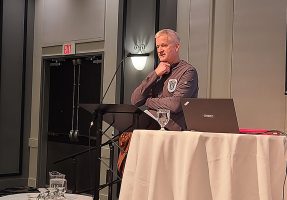
“We have been working on strategies (to reduce freight costs and increase processing capacity) for the past three years,” BC Milk Marketing Board director Tom Hoogendoorn told producers at the BCMMB fall producer meeting in Vancouver, November 27.

To do that, WMP has formed Dairy Innovation West (DIW), a new company jointly owned by the four western milk marketing boards. DIW will build a new dairy concentration facility near Red Deer, Alberta. Construction will begin in April, with completion by March 2021.

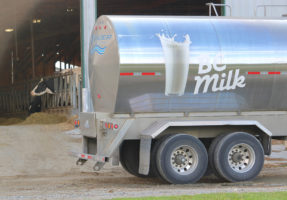
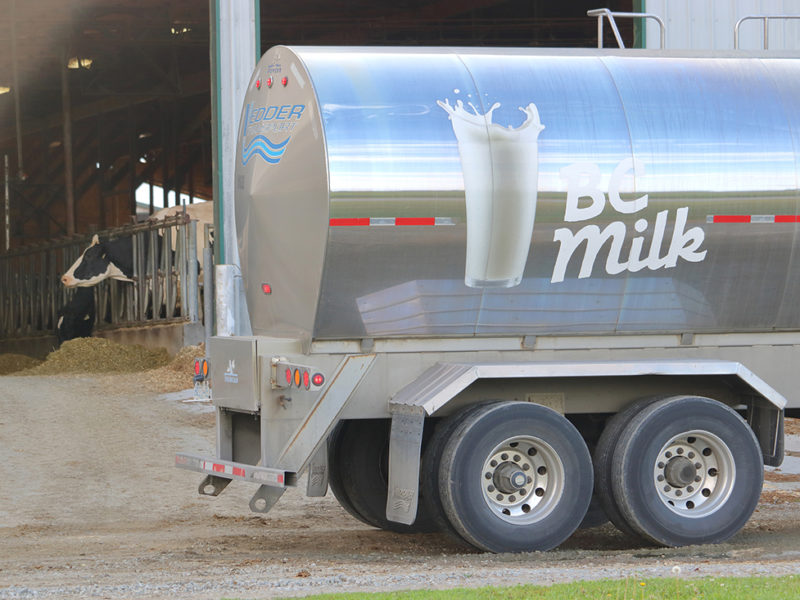
The first facility of its kind in Canada, DIW will remove water from raw milk to create concentrated whole milk, concentrated skim milk, ultra-filtered milk and cream and permeate for use by dairy processors. In itself, DIW will not increase capacity. Instead,  it will be part of the “transportation infrastructure,” reducing milk volume by at least 50%.

As fewer larger plants replace smaller plants, it has become necessary for the WMP to move milk longer distances, often across provincial borders. Reducing the volume of milk being moved will reduce freight costs for producers throughout the WMP.

“It’s the future of milk movement,” Hoogendoorn said, with WMP chair Harry Hartman of Manitoba adding it will ensure the pool gets “the right amount of milk to the right plant at the right time.”

Holtman stressed that it will also reduce the industry’s environmental footprint.

“By halving the number of trucks moving milk across provinces, it will reduce trucking emissions by 50%.”

Vitalus under contract

The plant will be financed through the WMP transportation fund and operated under contract by Abbotsford-based Vitalus Nutrition Inc. Vitalus already has drying and processing plants in Abbotsford and Winnipeg. The plant is intended to be a non-profit enterprise although no one would say when producers will see a payback through decreased freight charges.

Alberta, Saskatchewan and Manitoba have already approved DIW but it still needs BC’s approval. BCMMB chair Ben Janzen says producers “overwhelmingly” supported the concept at recent closed-door meetings and BCMMB is now working through the regulatory requirements with the BC Farm Industry Review Board and the BC Ministry of Agriculture.

Both Janzen and Vitalus president Philip Vanderpol say the new plant, which will be able to handle 300 million litres, will not initially increase processing capacity.

“The capacity of the dryers has not changed but they will now receive a combination of raw and concentrated milk,” Vanderpol explained.

“We still need to work on getting more processing capacity,” Janzen said, adding that may be on its way.

“If we can get the volume of milk we need, we can make that happen,” he said coyly.

Vanderpol is more forthcoming, saying the concentrated milk will allow processors to increase capacity at a lower cost.

“It’s definitely something I’m considering,” he said.
 

Related Posts

You may be interested in these posts from the same category.

Greater interest in dairy

Vet urges dairies to be vigilant against HPAI

Westgen looks beyond challenges

Western dairy groups streamline

New Zealand follows US challenge

Dairy compensation fund opens

Fraser Valley flooding continues

Catastrophic flooding hits Fraser Valley

Cedar Valley footage released

Promotions help secure markets

Quick action on allegations

Cheesemakers felt the heat this summer

Previous Post: « Bison could be key to climate change resilience
Next Post: Small farmers raise concerns about CanadaGAP »

Copyright © 2026 Country Life in BC · All Rights Reserved