• Menu
  • Skip to primary navigation
  • Skip to main content
  • Skip to primary sidebar

Country Life In BC Logo

The agricultural news source in British Columbia since 1915

  • Headlines
  • Calendar
  • Subscribe
  • Advertise
  • About
  • Archives
  • Contact
  • Search
  • Headlines
  • Calendar
  • Subscribe
  • Advertise
  • About
  • Archives
  • Contact
  • Search

Primary Sidebar

Originally published:

April 2018
Vol. 104 Issue 4

Subscribe Now!

Sign up for free weekly FARM NEWS UPDATES

Loading form…

Your information will not be
shared or sold ever

Stories In This Edition

Labour trouble

OYF winners from Kootenays

Loan program will focus on female farm entrepreneurs

Editorial: Telling the story

Back Forty: Political succession has its perks and pitfalls

Op Ed: Research is a focus of BC’s grape and wine sector

Lack of processor capacity limits quota increases

Raw milk advocates take case to Victoria

Pig Trace identifies over 900 BC hog producers

Organic growers provide feedback on ALR

COABC changes governance structure

Organic growers prep for new labelling regs

Above-normal snowpacks cause for concern

Senate hearing highlights climate change concerns

BC egg producers ramp up production

Sidebar: Call for collaboration

Ag spending up, but don’t say “fire”

Trump wrong on NAFTA

Chicken growers demand pricing parity

Allocations clawed back as demand dwindles

Sidebar: Supply management debate

Ag Brief: Fruit industry mourns leader Greg Norton

Ag Brief: ALR draws feedback

Ag Brief: BC rancher to head Canadian Cattlemen’s

Ag Brief: Provincial lab vindicated

Farmers’ markets aiming for greater share

Cannabis smoke screen

Cherry growers eye Korea

Market champions

Making the right call in a horrible situation

Optimistic outlook for beef sector

Bull buyers on a mission

Soil, cover crop management highlights workshop

Fibresheds give local movement new meaning

Compensation available for sheep losses

Research: Study considers optimism & pessimism in calves

Weeds a big challenge for forage producers

Cranberry growers wrestle with low yields

Sidebar: Election postponed

Sanding and cranberry plant health

US consumers buy up non-browning apples

Foodgrains tour to Nepal makes a difference

Sidebar: Career options

Sale benefits those in need

4-H BC: The grand prize

Wannabe Farmer: Patience is a virtue embraced by farmers

Woodshed Chronicles: The Massey takes Henderson for a spin

Jude’s Kitchen: Spring greens

More Headlines

Follow us on Facebook

Comments Box SVG iconsUsed for the like, share, comment, and reaction icons

6 days ago

A BC Forest Practices Board investigation has found overgrazing has damaged grasslands in the Coutlee Range Unit near Merritt — and the range-use plan meant to prevent it was unenforceable. With complaints about overgrazing on the rise and grasslands covering just 1% of BC's land mass, the findings raise fresh questions about how the province manages one of its most vulnerable — and valuable — food-producing ecosyste#BCAg#BCAg ... See MoreSee Less

Link thumbnail

Board finds overgrazing rules unenforceable unmeasurable

www.countrylifeinbc.com

MERRITT – A BC Forest Practices Board investigation has found instances of non-compliance related to overgrazing have damaged open grasslands in the Mine pasture, part of the Coutlee Range Unit near...
View Comments
  • Likes: 6
  • Shares: 6
  • Comments: 6

Comment on Facebook

Several ranchers in recent years have gone into temporary non use on that range , so that means the grass should grow. But drought conditions/lack of rain and snow don’t allow that to happen . Dried up springs , creeks waterholes in various pastures add to over grazing where there is water , as livestock and everything else stay close to the water source . So even though less cattle are on it , over grazing appears. There is a large volume of horses on it 365 days/year which is wrong ! They pull grass right out of the ground when it’s just trying to grow ,, opens the door for weeds to grow in. That don’t help it. Aging infrastructure ( fences) laying on the ground, pipe line building , ( lack of commitment to fence maintenance) amongst all users contributes also to over grazing. Recreational atv users leaving gates open between pastures allows livestock to go back or ahead in pastures also expidites over grazing. Logging ( bcts) has no problem laying out cut locks on both sides of a fence , then it gets smashed down during logging and they don’t take responsibility to stand it back up or clean the cattle gaurds out when they are done , that happened 4 years ago on pasture 5 up there . I bet it is still not fixed . There are lots of contributing factors to the problem.

Tragedy of the commons.

I looked through the report. I saw nothing about the effects of noxious weeds on productive grasslands. This particular area is vulnerable because of the Ministry’a efforts to diversify the use of the Grasslands.

This pasture is under tremendous pressure not only from cattle but from irresponsible local residents who treat it as a landfill dumping all manner of household debris here. And don't even get me started on the mud bogging and camping in sensitive riparian areas. The feral horses are in this pasture 365 days a year just hammering it. Would sure be nice to see some enforcement action on people who are intentionally ripping up the grasslands and riparian areas. Cattle could be a valuable resource for rebuilding soils and native grasses in this area with the help of electric fencing and/or e-collars. The humans will be harder to manage.

The Forest and Range Practices Act was written by lawyers for global forest licencee shareholders. Results-based = unenforceable.

Also, can we talk about the impact of a pipeline being built through the middle of this field for multiple years?

View more comments

1 week ago

East Kootenay rancher Randy Reay is digging a new well after two natural water sources dried up on his Crown tenures. A new Living Lakes Canada assessment found 15% of mapped aquifers in the region are high-priority for monitoring, yet 80% of those go unmonitored. With over 48% of BC's provincial observation wells reporting below-normal groundwater levels, ranchers and researchers are sounding the alarm on water security. The story is in our March edition, and we've posted it to our website thi#BCAgk.

#BCAg
... See MoreSee Less

Link thumbnail

Water woes: groundwater under pressure across BC

www.countrylifeinbc.com

JAFFRAY – As a young boy growing up in the Kootenay-Boundary region, Randy Reay never expected to run out of water. But this year, in mid-February, his fields are bare. There is no snow halfway up t...
View Comments
  • Likes: 8
  • Shares: 7
  • Comments: 1

Comment on Facebook

Jaffrey is in the east Kootenays not kooteney boundary

2 weeks ago

BC farmers are bracing for prolonged higher input costs as war in the Middle East drives up fuel and fertilizer prices. Nitrogen fertilizer costs were already climbing before the Iran conflict began, with prices still roughly 60% above pre-pandemic levels. Farm Credit Canada warns that unlike 2022, strong commodity prices may not offset rising costs this time. Local suppliers expect supply challenges and further price increases ahead.

#BCAg
... See MoreSee Less

Link thumbnail

Fertilizer prices on the rise

www.countrylifeinbc.com

War in the Middle East has delivered a generational shock to energy prices, meaning BC farmers can expect a prolonged period of higher costs not just for fuel but also for fertilizer.
View Comments
  • Likes: 2
  • Shares: 1
  • Comments: 0

Comment on Facebook

2 weeks ago

... See MoreSee Less

View Comments
  • Likes: 1
  • Shares: 0
  • Comments: 0

Comment on Facebook

2 weeks ago

Cameron Stockdale is the new executive director of provincial farm safety organization AgSafeBC. Find out more in this week's Farm News Update from Country Life in B#BCAg#BCAg ... See MoreSee Less

Link thumbnail

New leadership at AgSafe BC

www.countrylifeinbc.com

Cameron Stockdale is the new executive director of provincial farm safety organization AgSafeBC, succeeding Wendy Bennett. Bennett left AgSafeBC in September 2025, following 12 years with the…
View Comments
  • Likes: 5
  • Shares: 1
  • Comments: 0

Comment on Facebook

Subscribe | Advertise

The agricultural news source in British Columbia since 1915
  • Email
  • Facebook

Research is a focus of BC’s grape and wine sector

Viewpoint

July 4, 2018 byHans Buchler

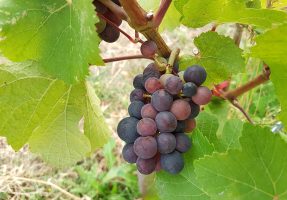
The British Columbia grape and wine industry began investing in research around 15 years ago, first with levies collected under the research and development committee of the BC Wine Institute and, since 2006, through the British Columbia Wine Grape Council (BCWGC), established under the BC Farming and Fishing Industries Development Act.

The grower and winery community realized early on that industry-initiated and funded research could make a considerable contribution to the success of the sector. From the beginning, optimization of the quality aspects of grapes and wine and the sustainability of the entire value chain with particular emphasis on the environment have been the two main focal points of our efforts.

Over the past few years, we have built on earlier efforts to develop the Sustainable Winegrowing Program [sustainablewinegrowingbc.ca], which is now beginning to gain momentum in the wine, grape and hospitality sectors. We hope that the quest for continuous improvement, which is the foundation of any sustainability program, will become the norm for the majority of our members.
Research efforts supporting the goal of sustainability include, for example, investigations into the use of cover crops to reduce climbing cutworm and other insect pests and increasing populations of beneficial organisms. General reduction of pesticide use through better understanding and modelling of disease and pest complexes is a priority for current and future research.

The increasing adoption of regulated deficit irrigation based on years of work conducted by Agriculture and Agri-Food Canada researchers has not only contributed to the overall improvement in grape quality, but has also resulted in sometimes considerable reduction in water consumption.

The quality of BC wines has consistently improved over the last two decades, which has greatly contributed to the ongoing increase in market share of BC wines in this province, in Alberta and the rest of Canada. The research activities that have contributed to this outcome are too many to list, but the research team at the federal Summerland Research and Development Centre and those at UBC, both in the Okanagan and Vancouver, have been the main contributors.

Successful participation in the two Growing Forward five-year funding cycles led the BCWGC to decide to further enhance partnerships and collaboration with the three other wine-producing provinces. Together with its counterparts in Nova Scotia, Ontario and Quebec, it developed a joint application for funding through the Science Cluster envelope under the new Canadian Agricultural Partnership (CAP).

This application for the five-year successor program to Growing Forward 2 is lead by the Canadian Grapevine Certification Network (CGCN). The CGCN was incorporated in early 2017 as a national not-for-profit corporation with the mandate to develop and implement standards and procedures for improving the phytosanitary status of domestic grapevine propagation material.

Because the CGCN is the only national organization representing grapegrower associations from all four provinces, choosing this body to head the Canadian Grape and Wine Science Cluster was a natural fit.

Proposal

In January of this year, we submitted a project proposal covering 29 research activities of national priority. Providing funding comes through, these will be undertaken in federal, academic and private research settings across the country. The CGCN will be in charge of co-ordinating the research and administering the finances. Knowledge and technology transfer to all related industries in the country will be of critical importance.

The application, titled Fostering the Sustainable Growth of the Canadian Grape and Wine Sector, has been grouped under seven theme areas, covering everything from pest control issues using new, environmentally benign approaches, to enhancing the quality of wine through a broad spectrum of management practices in the field and winery.

One of the high priority areas is the ongoing investigation and mitigation of a number of virus diseases that threaten vineyards in most major grape-growing regions across the globe.
Some of these viral infections can have a negative economic impact by reducing yield and impacting grape maturity and quality. As there is currently no cure for any of these viruses, early detection and elimination from existing plantings and propagation blocks is critical. This requires a well-co-ordinated effort, starting with diagnosis and vector control and then proceeding to elimination of infected material and replanting with virus free, clean stock.

All of this requires support from a broad range of research disciplines and fits perfectly within the mandate of the CGCN.

As the consuming public becomes more and more concerned with how crops are grown and processed, research will play a critical role in finding new solutions that comply with the principles of environmental sustainability.

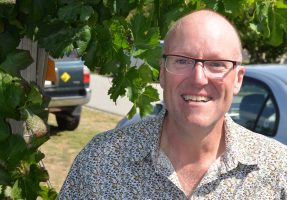
Hans Buchler is chair of the Canadian Grapevine Certification Network and a director of the BC Wine Grape Council. He grows grapes at Park Hill Vineyards in Oliver.
Related Posts

You may be interested in these posts from the same category.

Vineyards enter new year with recovery in sight

Warm winter stalls icewine

Phylloxera found on Vancouver Island

Growers, wineries welcome sustainability launch

Cold snap hits Okanagan fruit growers

Wineries reopen amid COVID-19

Top grape grower recognized

Icewine harvest begins

Autumn showers dampen harvest

Grape diversification in play

Clean plants build confidence

Grape growers honoured

Previous Post: « Optimistic outlook for beef sector
Next Post: Labour trouble »

Copyright © 2026 Country Life in BC · All Rights Reserved