• Menu
  • Skip to primary navigation
  • Skip to main content
  • Skip to primary sidebar

Country Life In BC Logo

The agricultural news source in British Columbia since 1915

  • Headlines
  • Calendar
  • Subscribe
  • Advertise
  • About
  • Archives
  • Contact
  • Search
  • Headlines
  • Calendar
  • Subscribe
  • Advertise
  • About
  • Archives
  • Contact
  • Search

Primary Sidebar

Originally published:

MAY 2019
Vol. 105 Issue 5

Subscribe Now!

Sign up for free weekly FARM NEWS UPDATES

Select list(s) to subscribe to


By submitting this form, you are consenting to receive marketing emails from: Country Life in BC. You can revoke your consent to receive emails at any time by using the SafeUnsubscribe® link, found at the bottom of every email. Emails are serviced by Constant Contact
Your information will not be
shared or sold ever

Stories In This Edition

Caribou recovery plan has ranchers worried

What on earth?

Opposition slams ALC bill

Sidebar: Protection & pushback

Global rhubarb glut hits home for BC growers

Editorial: Truth in labelling

Back Forty: So you don’t believe in climate change

Viewpoint: Don’t blame the cows for global warming

Ag council’s lobbying efforts produce results

Learning a new skill

Foundation’s nest egg for funding projects increases

Greenhouse growers see rebound in acreage

Province will hold the line on piece rates

New CEO aims to kindle team spirit at co-op

Shrinking hog industry faces disease threats

FIRB decision prompts rethink of pricing scheme

Beekeepers see potential in technology transfer

AgSafe markes quarter century

Raspberries hit hard by harsh February

Good deal

Blueberry growers anxious for new varieties

Biological controls for pests in demand

Sidebar: Pesticides in play

Growers urged to focus on fresh

Westgen celebrates 75 years of excellence

Top seller was no-show at Holstein sale

Spring show attracts exhibitors from Quebec

Cheesemakers unite to grow niche market

Range use permits under greater scrutiny

Sidebar: Range use plans go digital

Market Musings: Top bulls sell for top dollar at spring sales

Grapegrowers share sustainability objectives

Grape specialist honoured for dedication

Hazelnut production expands across BC

Sidebar: Pest pressures

Supporters take to AITC’s Sips & Sprouts

Research: Cultured meat fails to impress researchers

UAVs undergo testing for pesticide delivery

Sustainability goes beyond saving farmland

Father and daughter roll with the last of the steel wheels

Woodshed: Susan Henderson is warming to country life

Farm initiative puts heart back in agriculture

Wannabe: Farming is more than just a job

Surplus, cull fruit finds new purpose as tasty snacks

Jude’s Kitchen: Special food for special moms

More Headlines

Follow us on Facebook

Comments Box SVG iconsUsed for the like, share, comment, and reaction icons

7 days ago

... See MoreSee Less

View Comments
  • Likes: 4
  • Shares: 0
  • Comments: 0

Comment on Facebook

7 days ago

On the last day of the BC Organic Conference, Thursday, Molly Thurston of Pearl Agricultural Consulting helped growers learn how to manage bugs such as codling moth, wireworm, and rootworm in organic growing systems. Her talk alongside Renee Prasad included hands-on activities in which participants checked out various traps and examined pests under microscopes. Be sure to look for more upcoming ag events on our online calendar at www.countrylifeinbc.com/calendar/

#BCAg
... See MoreSee Less

On the last day of the BC Organic Conference, Thursday, Molly Thurston of Pearl Agricultural Consulting helped growers learn how to manage bugs such as codling moth, wireworm, and rootworm in organic growing systems. Her talk alongside Renee Prasad included hands-on activities in which participants checked out various traps and examined pests under microscopes. Be sure to look for more upcoming ag events on our online calendar at www.countrylifeinbc.com/calendar/

#BCAg
View Comments
  • Likes: 15
  • Shares: 0
  • Comments: 0

Comment on Facebook

1 week ago

Well-known organic farmer and podcaster Jordan Marr gets interviewed by Country Life in BC’s own columnist and potato mavin Anna Helmer during the opening session of the BC Organic Conference at Harrison Hot Springs yesterday. Sessions run today (Wednesday) and Thursday and include organic and regenerative growing practices and expanding and advocating for the organic sector, all under the background of the newly launched Organic BC banner.

#BCAg
... See MoreSee Less

Well-known organic farmer and podcaster Jordan Marr gets interviewed by Country Life in BC’s own columnist and potato mavin Anna Helmer during the opening session of the BC Organic Conference at Harrison Hot Springs yesterday. Sessions run today (Wednesday) and Thursday and include organic and regenerative growing practices and expanding and advocating for the organic sector, all under the background of the newly launched Organic BC banner.

#BCAg
View Comments
  • Likes: 37
  • Shares: 2
  • Comments: 1

Comment on Facebook

Interested in finding out more about this

3 weeks ago

Today, we remember those who sacrificed their lives or their well-being for our freedom. Lest we forget. ... See MoreSee Less

Today, we remember those who sacrificed their lives or their well-being for our freedom. Lest we forget.
View Comments
  • Likes: 8
  • Shares: 0
  • Comments: 0

Comment on Facebook

1 month ago

FarmFolk CItyFolk is hosting its biennial BC Seed Gathering in Harrison Hot Springs November 27 and 28. Farmers, gardeners and seed advocates are invited to learn more about seed through topics like growing perennial vegetables for seed, advances in seed breeding for crop resilience, seed production as a whole and much more. David Catzel, BC Seed Security program manager with FF/CF will talk about how the Citizen Seed Trail program is helping advance seed development in BC. Expect newcomers, experts and seed-curious individuals to talk about how seed saving is a necessity for food security. ... See MoreSee Less

Link thumbnail

BC Seed Gathering - FarmFolk CityFolk

farmfolkcityfolk.ca

Save the date for our upcoming 2023 BC Seed Gathering happening this November 3rd and 4th at the Richmond Kwantlen Polytechnic University campus.
View Comments
  • Likes: 1
  • Shares: 0
  • Comments: 0

Comment on Facebook

Subscribe | Advertise

The agricultural news source in British Columbia since 1915
  • Email
  • Facebook

Shrinking hog industry faces disease threats

Porcine epidemic diarrhea (PED) reached Alberta in January

April 30, 2019 byDavid Schmidt

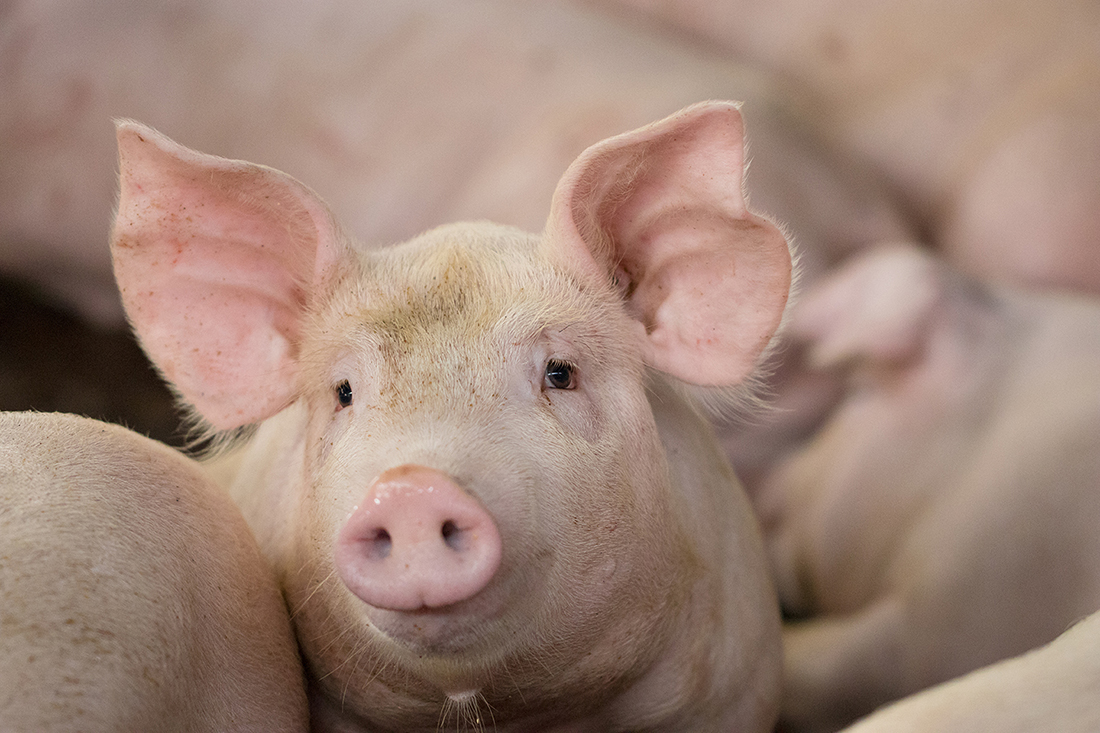
ABBOTSFORD – There are reportedly over 1,000 hog producers in BC but only nine farms were represented at the BC Hog Marketing Commission and BC Pork Producers Association annual meetings in Abbotsford, April 3.

Still, BCHMC and BCPPA general manager Christine Koch considers that an excellent turnout, noting there are only 15 producers registered with the commission and five of those are situated outside the Fraser Valley. To be registered as a commercial producer, a farm must produce or be able to produce at least 300 hogs a year. Registered producers must also be validated annually under the Canadian Pork Excellence (food safety and animal welfare) program.

Both BCHMC chair Bert van Dalfsen and BCPPA president Jack DeWit said the commission and the association are working with each other and with local producers and processors to find opportunities to expand and improve the local industry, which continues to shrink.

Koch noted the industry lost two more producers in 2018 while a third opted to depopulate. Overall production numbers declined 4%. Market hogs decreased by 7% while round hogs (small hogs traditionally sold whole into the Asian market) increased by 4%.

Given the small size of the industry, producers voted to reduce the number of elected commission directors from three to two, effective with this fall’s election.

The commission presented a draft of the new general orders it expected to adopt later in April. Van Dalfsen said the new orders no longer reference pricing and clean up some definitions. He said the rewrite has been a long time coming, noting it was initiated in 2014 by then-chair Gary Rolston and then-general manager Geraldine Auston.

Meanwhile, the association contracted Serecon Consultants of Edmonton to review the rendering program and look at potential options. Serecon’s study determined rendering is still the best option, calling it, “the least damaging to the financial wellbeing of the sector (and) provide the highest level of biosecurity assurance which is a critical consideration given the current concerns over African swine fever (ASF).”

ASF is one of two diseases that could devastate BC hog production. The other is porcine epidemic diarrhea (PED). Neither is yet in BC.

Nevertheless, BC’s only dedicated swine veterinarian, Dr. Josh Waddington, warned local producers, “We’re at a risk level we’ve never been at before.”

If either disease arrives, Waddington expects PED would only affect individual farms while ASF would likely impact the entire industry.

ASF has exploded in Eurasia, particularly China, but has yet to appear in North America. It does not affect humans but can cause up to 100% mortality in hogs.

PED is in North America but was previously restricted to the US Midwest, Ontario, Quebec and parts of Manitoba. That changed in January when it appeared on a farm in Alberta. Since then, three more Alberta farms have come down with the disease, the latest being on March 18. A coronavirus, PED takes about six to eight weeks to move through a farm, causing almost 100% mortality in piglets during that time.

PED can be transmitted on persons or vehicles while ASF is generally transmitted through plasma protein, typically by feeding pork products to pigs.

“We don’t use porcine plasma in BC feed so if ASF appears here it will likely show up first in backyard hogs,” Waddington said. On the other hand, he believes PED is more likely to start on commercial piggeries.

“We are at risk from Alberta hogs coming into BC on a daily basis and driving right past some of our major producers,” Waddington said.

He notes there is a large variation in processor and driver biosecurity and a lack of good truck-wash facilities in BC.

“We have to figure out how to wash trucks better and producers need to improve their on-farm biosecurity,” he said.

Waddington is a member of the Canada West Swine Health Intelligence Network (CWSHIN), which he calls, “a real good tool for me as a sole practitioner in BC.”

Since former BC swine veterinarian Dr. Chris Byra retired as CWSHIN manager last spring, it has been coordinated by PEI-based epidemiologist Dr. Jette Christensen. She told producers CWSHIN’s goal is to detect diseases early and integrate information on responses.

“We are vets sharing information,” Christensen said. “Every quarter, we have a teleconference to discuss what’s happened in the four western provinces in the previous quarter. Each vet submits his clinical impressions – are things getting worse or better – and we coordinate that with lab reports and abattoir data. By combining data and analyzing it, we add value.”

Unfortunately, CWSHIN currently only gets abattoir data from federally inspected plants. Christensen says CWSHIN is working on ways to expand its data collection to include BC’s provincially licenced plants.

 

Related Posts

You may be interested in these posts from the same category.

Hog producers face changes to code of practice

China reopens meat markets

Record high pork stocks

Previous Post: « Farm initiative puts heart back in agriculture
Next Post: Greenhouse growers see rebound in acreage »

Copyright © 2025 Country Life in BC · All Rights Reserved