• Menu
  • Skip to primary navigation
  • Skip to main content
  • Skip to primary sidebar

Country Life In BC Logo

The agricultural news source in British Columbia since 1915

  • Headlines
  • Calendar
  • Subscribe
  • Advertise
  • About
  • Archives
  • Contact
  • Search
  • Headlines
  • Calendar
  • Subscribe
  • Advertise
  • About
  • Archives
  • Contact
  • Search

Primary Sidebar

Originally published:

January 2020
Vol. 106 Issue 1

Subscribe Now!

Sign up for free weekly FARM NEWS UPDATES

Select list(s) to subscribe to


By submitting this form, you are consenting to receive marketing emails from: Country Life in BC. You can revoke your consent to receive emails at any time by using the SafeUnsubscribe® link, found at the bottom of every email. Emails are serviced by Constant Contact
Your information will not be
shared or sold ever

Stories In This Edition

Province signals ALR changes

Winter wonderland

Growers support piece rates

High-priced harvest heading for sweet success

Editorial: A new start

Back Forty: The service economy steps away from the land

Viewpoint: Subsistence farming is a thing of the past, isn’t it?

Cherry growers see record crop losses in 2019

Agricultural impacts from new rail trail sought

Small farmers raise concerns about CanadaGap

BC food costs set to rise

Farmers’ institutes gather for second annual meeting

Foodlands trust initiative inches forward

Sidebar: Two proponents short-listed for Sandown farm

Shifting climate brings changes to vineyard practices

Bright future

Processing plant will cut transportation costs

Date change bolsters turnout at dairy meetings

BC Holstein set pace for Canada in 2019

Trade deals remain top issue

Dairy honours Jim Thompson

BC’s largest farm show kicks off new year

Pacific Ag Show keeps up with changing times

Sidebar: Ag innovation day

Sidebar: CannaTech West back for second year

Popular dairy tour will feature lots of variety

Sidebar: Dairy Expo continues at ag show

Bison could be key to climate change resilence

Research: Clay improves degradability of dairy feed

Consumers, producers need mutual understanding

Deep learning helps root out weeds

Langley farmers see beauty in small lots

Commission offers new guide for hog production

Young farmers are making global waves

Fatal sheep diseases are largely preventable

Labour of love keeps historic farm in family

Glyphosate may be safe, but its days are numbered

Woodshed: Susan embarks on her secret rendevous

Farm Story: The farm roars headlong into winter

Jude’s Kitchen: Comforting crockpot meals keep it simple

More Headlines

Follow us on Facebook

Comments Box SVG iconsUsed for the like, share, comment, and reaction icons

6 days ago

... See MoreSee Less

View Comments
  • Likes: 4
  • Shares: 0
  • Comments: 0

Comment on Facebook

7 days ago

On the last day of the BC Organic Conference, Thursday, Molly Thurston of Pearl Agricultural Consulting helped growers learn how to manage bugs such as codling moth, wireworm, and rootworm in organic growing systems. Her talk alongside Renee Prasad included hands-on activities in which participants checked out various traps and examined pests under microscopes. Be sure to look for more upcoming ag events on our online calendar at www.countrylifeinbc.com/calendar/

#BCAg
... See MoreSee Less

On the last day of the BC Organic Conference, Thursday, Molly Thurston of Pearl Agricultural Consulting helped growers learn how to manage bugs such as codling moth, wireworm, and rootworm in organic growing systems. Her talk alongside Renee Prasad included hands-on activities in which participants checked out various traps and examined pests under microscopes. Be sure to look for more upcoming ag events on our online calendar at www.countrylifeinbc.com/calendar/

#BCAg
View Comments
  • Likes: 15
  • Shares: 0
  • Comments: 0

Comment on Facebook

1 week ago

Well-known organic farmer and podcaster Jordan Marr gets interviewed by Country Life in BC’s own columnist and potato mavin Anna Helmer during the opening session of the BC Organic Conference at Harrison Hot Springs yesterday. Sessions run today (Wednesday) and Thursday and include organic and regenerative growing practices and expanding and advocating for the organic sector, all under the background of the newly launched Organic BC banner.

#BCAg
... See MoreSee Less

Well-known organic farmer and podcaster Jordan Marr gets interviewed by Country Life in BC’s own columnist and potato mavin Anna Helmer during the opening session of the BC Organic Conference at Harrison Hot Springs yesterday. Sessions run today (Wednesday) and Thursday and include organic and regenerative growing practices and expanding and advocating for the organic sector, all under the background of the newly launched Organic BC banner.

#BCAg
View Comments
  • Likes: 37
  • Shares: 2
  • Comments: 1

Comment on Facebook

Interested in finding out more about this

3 weeks ago

Today, we remember those who sacrificed their lives or their well-being for our freedom. Lest we forget. ... See MoreSee Less

Today, we remember those who sacrificed their lives or their well-being for our freedom. Lest we forget.
View Comments
  • Likes: 8
  • Shares: 0
  • Comments: 0

Comment on Facebook

1 month ago

FarmFolk CItyFolk is hosting its biennial BC Seed Gathering in Harrison Hot Springs November 27 and 28. Farmers, gardeners and seed advocates are invited to learn more about seed through topics like growing perennial vegetables for seed, advances in seed breeding for crop resilience, seed production as a whole and much more. David Catzel, BC Seed Security program manager with FF/CF will talk about how the Citizen Seed Trail program is helping advance seed development in BC. Expect newcomers, experts and seed-curious individuals to talk about how seed saving is a necessity for food security. ... See MoreSee Less

Link thumbnail

BC Seed Gathering - FarmFolk CityFolk

farmfolkcityfolk.ca

Save the date for our upcoming 2023 BC Seed Gathering happening this November 3rd and 4th at the Richmond Kwantlen Polytechnic University campus.
View Comments
  • Likes: 1
  • Shares: 0
  • Comments: 0

Comment on Facebook

Subscribe | Advertise

The agricultural news source in British Columbia since 1915
  • Email
  • Facebook

Small farmers raise concerns about CanadaGAP

Record-keeping isn’t as onerous as it seems, says specialist

January 1, 2020 byTom Walker

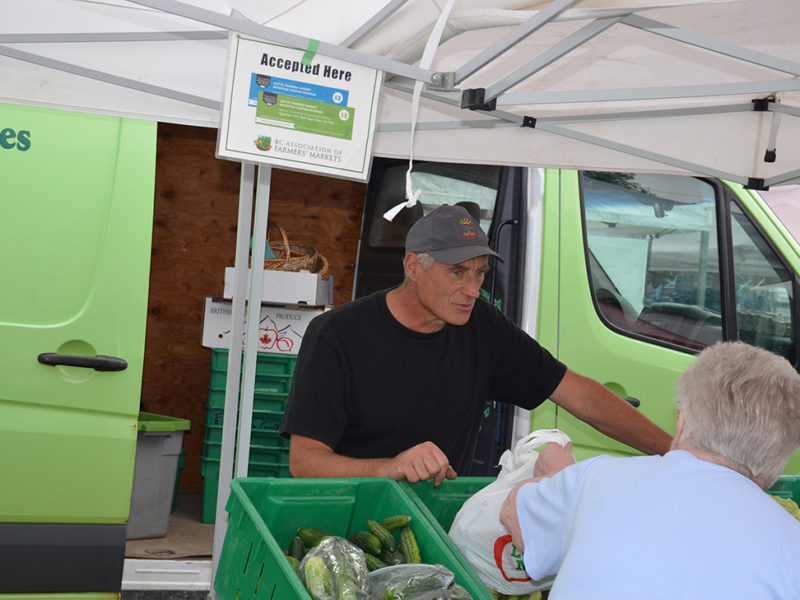
VERNON – Government efforts to provide greater assurances of food safety are creating apprehension among smaller farmers regarding the additional work they will face in order to satisfy customer requirements.

Randy Irwin, corporate retail operations manager with Vernon-based Nature’s Fare Market, sums up the situation well.

“The problem with CanadaGAP is that it is government-supported but not government-operated,” he says. “And it’s not mandatory, but increasingly that is the direction it appears to be going.”

The increased emphasis on safety doesn’t sit well with Wolfe Wessel of Green Croft Gardens in Grindrod.

“Does that mean I haven’t produced any safe food for the past 30 years?” he asks. “I’m a little offended.”

Wessel, a mixed vegetable farmer, says that the amount of detailed paper work required to achieve CanadaGAP certification – about an hour each day – is simply not worth the effort unless he increases his prices. And that’s not feasible.

“There is a certain point where people will not pay more,” he says. “They will give up and go to Wal-Mart and buy a Chinese carrot.”

Wessel has sold to Nature’s Fare in the past, but he’s not sure he will be able to continue.

Nature’s Fare promotes organic, local and community. With locations across the Okanagan and the Lower Mainland, it’s in a position to source from smaller local growers.

“Local organic growers are our lifeline,” says Irwin. “We have a mandate in our produce department to source local first, regardless of the price.”

The formula has worked for the company since its founding 25 years ago, but the recent purchase of the company by Buy-Low Foods, part of the Jim Pattison Group, may bring changes.

While the company has always required its organic produce to be certified, it’s still developing a policy for CanadaGAP.

“We are currently engaging a dialogue with all of our stakeholders as we assess CanadaGAP and the other certifications which our local growers are currently involved with. We wish to continue to foster the long-standing relationships we have built with our local partners and ensure our customers have access to the very best local organic produce.”

Too detailed

John Hofer, who runs Wise Earth Farms in Kelowna with his partner Brenda Paterson, says they won’t be embracing CanadaGAP.

Wise Earth produces 35 different vegetables through the growing season. Hofer says CanadaGAP requires detailed records for each vegetable as well as each variety.

“We supply rainbow carrots as well as regular carrots, and each type requires a different set of record-keeping,” he notes.

Wise Earth could scale back the number of crops it grows, but that isn’t its business model.

Hofer says CanadaGAP is a step towards European standards that allow for maximum traceability. That’s not a bad thing, but he doesn’t think it should put undue constraints on small farmers like himself and Wessel. They shouldn’t be forced to act like large-volume, commodity producers.

“Our farmers’ market customers know us for the variety of produce that we sell,” says Hofer.

He plans to focus more on small independent stores in the Kelowna area.

“I get it if your produce is going to end up in Ontario,” he says. “But our vegetables never leave the Okanagan. … We are seeking out those that want to support local.”

BC Ministry of Agriculture food safety specialist Elsie Friesen is the province’s key trainer and a strong advocate for the program. She says CanadaGAP doesn’t necessarily limit what small producers can do.

“Ultimately, yes, the fewer the crops (or the same family of crops) makes it easier,” she says. “However, it is only the very specific items for specific crops that differ that need the extra attention.”

She said specific practices such as pesticide sprays on particular crops or fields will require separate documentation, but that’s understandable from a traceability standpoint.

“It makes it easier to do inventory accounting, and ensuring the correct pesticide was sprayed as per label requirements,” she explains.

She emphasized that growers can choose the form of record-keeping that suits them.

“It is up to the producer to decide how to keep records, as long as records are kept by which the auditor can trace the product from seeding to spraying to harvesting, and transportation to buyer,” she says.

And growers don’t have to use the forms that are provided.

“If you have an invoice from the supplier that lists the specific chemical that you purchased, you could write a spray record on the back of the invoice and a harvest date and that would be acceptable to the auditor,”  she says.

“Growers need to come out to workshops,” says Friesen, who will discuss CanadaGAP at the Pacific Agriculture Show in Abbotsford at the end of January. “And they should come more than once.”
 

Related Posts

You may be interested in these posts from the same category.

CanadaGAP participation drops

The perfect solution for farmers on the go

CanadaGAP expands options

CanadaGAP participation drops

New round of traceability funding available

BC considers making premises ID mandatory

Sheep

New year, new funding

Traceability regulations expected next year

Sheep

Traceability regs to include animal movement

Previous Post: « Processing plant will cut transportation costs
Next Post: Cherry growers see record crop losses in 2019 »

Copyright © 2025 Country Life in BC · All Rights Reserved